Longevity Blueprint 2026: 7 Habits With the Strongest Evidence for a Longer Life
Key Takeaway
Here's an uncomfortable truth about the longevity space: most people are overcomplicating it. They're stacking 14 supplements, wearing three wearables, tracking glucose while ignoring sleep, and spending thousands of dollars a year on interventions that don't move the needle. Meanwhile, the things t
Affiliate Disclosure: BetterVitals may earn a commission from purchases made through links in this article, at no additional cost to you. This supports our independent research and analysis. We only recommend products we believe in after thorough evaluation.
Medical Disclaimer
This article is for educational purposes only and is not a substitute for professional medical advice, diagnosis, or treatment. Always consult your healthcare provider before making health decisions.
Longevity Blueprint 2026: 7 Habits With the Strongest Evidence for a Longer Life
Here's an uncomfortable truth about the longevity space: most people are overcomplicating it. They're stacking 14 supplements, wearing three wearables, tracking glucose while ignoring sleep, and spending thousands of dollars a year on interventions that don't move the needle. Meanwhile, the things that actually matter — consistent sleep, regular movement, metabolic awareness, and basic supplementation — get buried under a mountain of biohacking noise.
This guide is the antidote. We've distilled thousands of hours of research, product testing, and longevity science into the essential health tech stack for 2026 — organized around the five pillars that the evidence actually supports. No fluff, no affiliate-driven recommendations, no $500/month supplement stacks with weak evidence.
Meta description: The 7 highest-ROI longevity habits, ranked by evidence strength: sleep, exercise, diet, supplements, labs, stress, and environment — with the research behind each and exactly where to start in 2026.
The 5 Pillars of Longevity Optimization
Before we get into products, you need to understand the framework. Longevity research — from the Blue Zones studies to Peter Attia's "Medicine 3.0" approach to the latest aging biology — converges on five domains that determine how long you live and how well you live:
- Sleep — The foundation of everything. Poor sleep accelerates biological aging faster than almost any other modifiable factor.
- HRV & Stress Resilience — Heart rate variability is the best real-time proxy for autonomic nervous system health and recovery capacity.
- Metabolic Health — How your body processes energy. Insulin resistance is the gateway to nearly every chronic disease of aging.
- Exercise & Recovery — The single most powerful longevity intervention. No drug, supplement, or device comes close.
- Targeted Supplementation — Filling the gaps that diet alone can't cover, with evidence-backed compounds at meaningful doses.
The products in this guide are tools that help you optimize each pillar. They're not magic — they're measurement and accountability systems that make the fundamentals stick.
Pillar 1: Sleep Tracking & Optimization
Sleep is where longevity begins. A 2023 meta-analysis in Sleep Medicine Reviews found that consistently sleeping less than 6 hours per night increases all-cause mortality risk by 12%. Another study in JAMA Internal Medicine linked poor sleep quality (independent of duration) to accelerated epigenetic aging — meaning your biological age advances faster than your chronological age when you sleep badly.
The problem is that most people have no idea how well they actually sleep. Subjective sleep quality ("I slept fine") correlates poorly with objective measurements like deep sleep percentage, HRV during sleep, and sleep efficiency.
The Pick: Oura Ring Gen 4
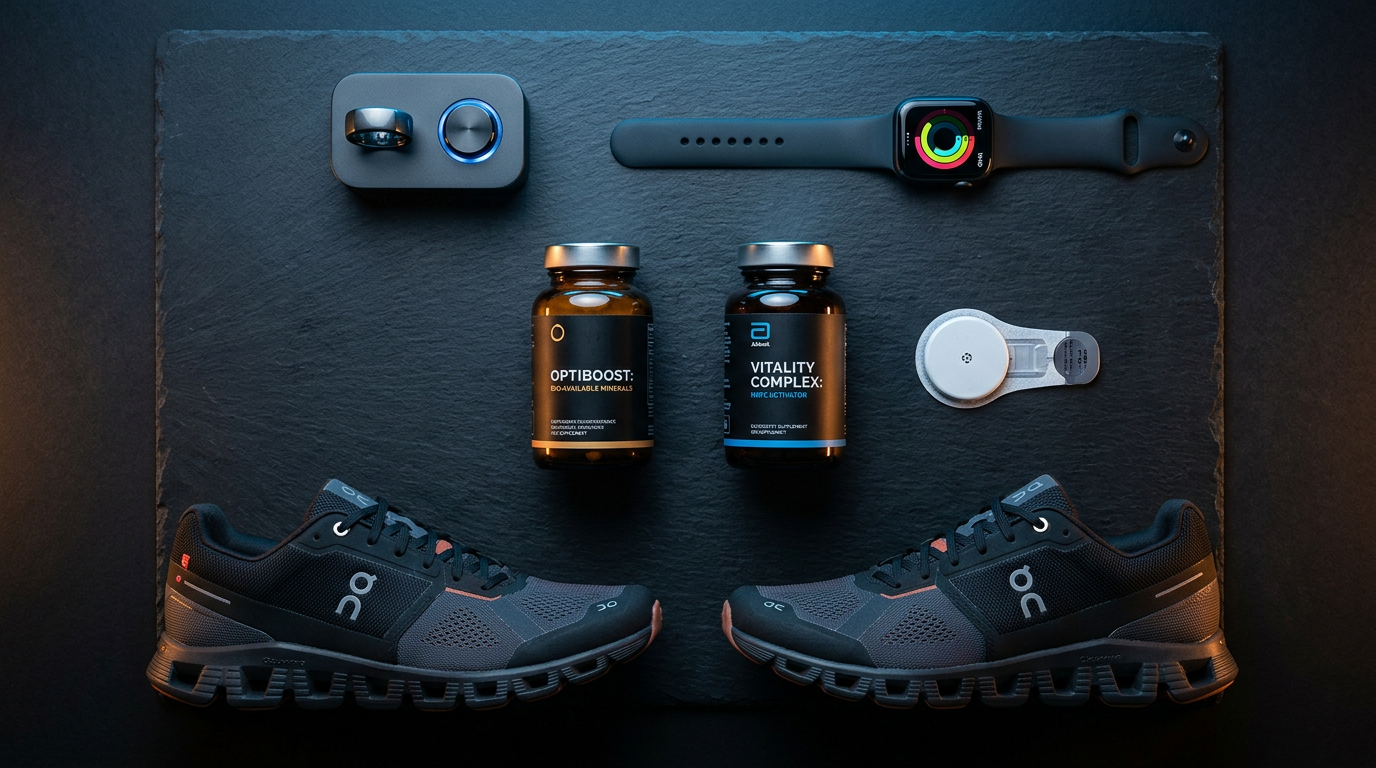
The Oura Ring Gen 4 is the best consumer sleep tracker available. Its finger-based PPG sensor provides medical-grade sleep staging accuracy, and the Readiness Score gives you a single number each morning that tells you whether your body recovered overnight.
Why it wins for sleep:
- Sleep staging accuracy comparable to clinical polysomnography
- Tracks skin temperature deviation (early illness and cycle detection)
- 6-8 day battery life means you never miss a night
- Readiness Score integrates HRV, resting HR, temperature, and sleep quality
For a deeper dive into how sleep affects aging, read our Sleep & Longevity Guide. For comparisons with other sleep trackers, see Best Sleep Trackers.
Upgrade: Eight Sleep Pod 4
If you want to go beyond tracking and actually improve your sleep, the Eight Sleep Pod 4 is the most impactful sleep product we've tested. It dynamically adjusts your mattress temperature throughout the night — cool during deep sleep phases, warm before your wake-up time. Users consistently report 15-30% increases in deep sleep within the first week.
Pillar 2: HRV & Autonomic Health Monitoring
Heart rate variability is the single most informative biomarker available from consumer wearables. It reflects the balance between your sympathetic (fight-or-flight) and parasympathetic (rest-and-digest) nervous systems. Higher HRV means your body is more resilient, adaptive, and recovered. Lower HRV signals stress, overtraining, illness, or poor recovery.
For longevity, HRV matters because autonomic dysfunction — chronic sympathetic dominance — accelerates cardiovascular aging, increases inflammation, and impairs immune function. A 2020 study in The Lancet Digital Health found that continuously low HRV was an independent predictor of cardiovascular events, even in otherwise healthy adults.
The Pick: Oura Ring Gen 4 (again)
The Oura Ring doubles as the best consumer HRV tracker. It measures RMSSD during your deepest sleep phase, which is the most physiologically stable and reproducible window for HRV measurement. The 7-day trend view shows whether your autonomic health is improving or declining.
If you're more of an athlete focused on training load, the Whoop 4.0 is the better choice — its Strain Coach uses HRV to recommend daily training intensity, and the recovery journal helps you identify which behaviors (alcohol, caffeine, late meals) actually affect your recovery.
For a full comparison, see our Oura Ring vs. Whoop head-to-head. For a broader look at HRV wearables, check Best Wearables for HRV and our guide to HRV Apps.
Pillar 3: Metabolic Health & Glucose Monitoring
Metabolic health might be the most underappreciated pillar of longevity. Only 6.8% of American adults are metabolically healthy, according to a 2022 Journal of the American College of Cardiology analysis. That means 93% of the population has at least one suboptimal metabolic marker — elevated blood glucose, insulin resistance, high triglycerides, or unfavorable HDL/LDL ratios.
Insulin resistance is the gateway drug to nearly every chronic disease of aging: type 2 diabetes, cardiovascular disease, Alzheimer's (increasingly called "type 3 diabetes"), and certain cancers. The earlier you catch metabolic dysfunction, the easier it is to reverse.
The Pick: Levels Health
Levels Health transforms raw glucose data into actionable metabolic insights. Their Metabolic Score rates each meal on a 1-10 scale based on your personal glucose response, making it immediately obvious which foods work for your body and which don't.
Why it matters for longevity:
- Identifies foods that spike your glucose (even "healthy" ones — individual responses vary wildly)
- Tracks time-in-range, the percentage of your day spent in optimal glucose territory
- Integrates with Oura and Whoop to correlate glucose with sleep and recovery
- Gamifies metabolic health in a way that drives long-term behavior change
You don't need to wear a CGM forever — even 2-3 months of data reveals your personal metabolic patterns and transforms how you eat. For more on whether a CGM is right for you, read CGM for Non-Diabetics and How to Regulate Glucose Naturally.
Browse All Products
Explore our evidence-based product reviews across every health category.
Pillar 4: Exercise & Recovery
If you could only do one thing for longevity, exercise is the answer. A landmark 2022 study in JAMA Internal Medicine analyzing 100,000+ adults found that the mortality benefit of exercise was nearly linear — more movement meant less death — with the sweet spot around 150-300 minutes of moderate activity per week plus 2 sessions of strength training.
The longevity exercise prescription, based on the current evidence:
- Zone 2 cardio (3-4x/week, 30-60 min) — Builds mitochondrial density, improves fat oxidation, strengthens the aerobic base. This is the foundation.
- Strength training (2-3x/week) — Preserves muscle mass and bone density, the two things that decline fastest with age and most directly cause frailty.
- VO2 max work (1-2x/week) — High-intensity intervals that push your cardiovascular ceiling. VO2 max is the single strongest predictor of all-cause mortality — stronger than smoking, diabetes, or hypertension.
- Flexibility and stability (daily) — Prevents injury, maintains range of motion, supports independence in later decades.
The Pick: Whoop 4.0 (for training guidance)
The Whoop 4.0 is the best wearable for managing training load. Its Day Strain score quantifies cardiovascular load on a 0-21 scale, and the Strain Coach recommends daily targets based on your recovery. This prevents the two biggest exercise mistakes: overtraining (too much strain with insufficient recovery) and undertraining (playing it too safe when your body is ready for more).
For a comprehensive breakdown of the exercise-longevity connection, read our guide to Exercise & Longevity.
Pillar 5: Targeted Supplementation
Supplements are the most overhyped and underthought pillar of longevity. Most people either take nothing or take everything — neither approach is optimal. The evidence supports a short list of compounds at meaningful doses, targeting gaps that modern diets consistently fail to fill.
The Core Stack
Based on our review of the clinical evidence (full analysis in Best Supplements for Longevity):
Tier 1 — Strong human evidence:
- Omega-3 fatty acids (EPA/DHA) — 2-3g/day. Reduces cardiovascular mortality, systemic inflammation, and cognitive decline. The most evidence-backed longevity supplement.
- Vitamin D3 — 2000-5000 IU/day (adjust based on blood levels). Most adults are deficient. Supports immune function, bone health, and metabolic regulation.
- Magnesium — 300-400mg/day (glycinate or threonate forms). Involved in 300+ enzymatic processes. Most adults are deficient. Supports sleep quality, HRV, and muscle recovery.
Tier 2 — Promising evidence:
- Creatine monohydrate — 3-5g/day. Originally a gym supplement, now recognized for neuroprotective effects and muscle preservation with aging.
- NAD+ precursors (NMN/NR) — These reliably raise NAD+ levels, which decline with age. The longevity data in humans is still emerging, but the biological rationale is strong.
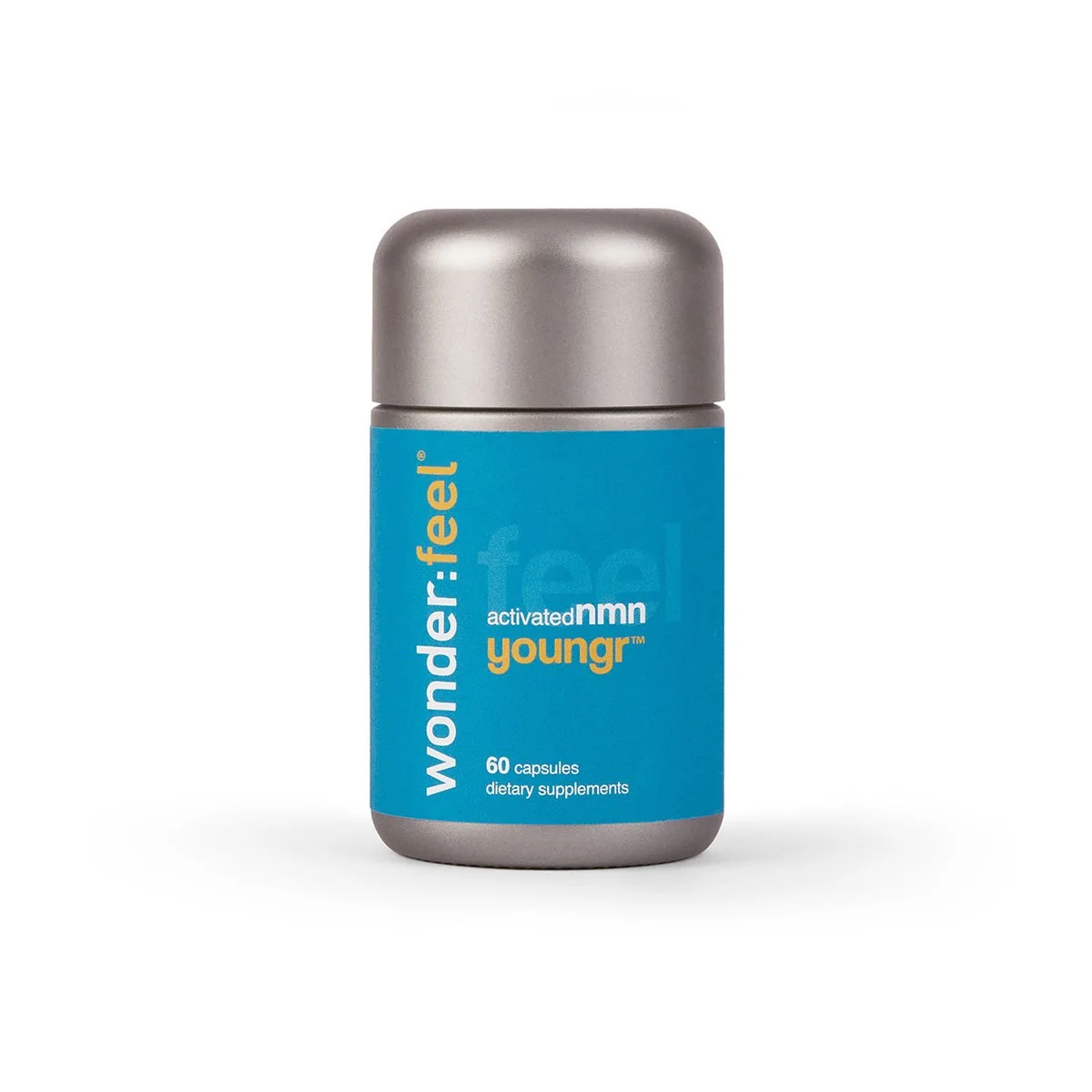
The Pick: Wonderfeel Youngr NMN
If you're going to invest in one premium longevity supplement beyond the basics, Wonderfeel Youngr is our top NMN choice. It combines NMN with resveratrol, vitamin D3, and ergothioneine in a single capsule. The formulation is evidence-informed and the brand is transparent about dosing.
For a complete primer, see AG1 Athletic Greens as a convenient all-in-one base, and read our full supplement longevity guide for detailed evidence breakdowns.
The Complete 2026 Longevity Stack
Here's the full recommended stack, organized by priority:
| Priority | Pillar | Product | Monthly Cost | Why |
|---|---|---|---|---|
| 1 | Sleep + HRV | Oura Ring Gen 4 | $6/mo (subscription) | Best sleep and HRV tracking in one device |
| 2 | Exercise | Whoop 4.0 | $30/mo | Training load management and strain guidance |
| 3 | Sleep quality | Eight Sleep Pod 4 | ~$34/mo (financed) | Active temperature regulation for deeper sleep |
| 4 | Metabolic health | Levels Health | ~$100/mo (2-3 months) | Glucose insights that transform eating habits |
| 5 | Supplements | Core stack (Omega-3, D3, Mg, creatine) | ~$40-60/mo | Evidence-backed gap filling |
| 6 | Supplements | Wonderfeel Youngr | ~$70/mo | Premium NAD+ support for cellular aging |
Total estimated monthly cost: $180-300/mo depending on which products you adopt.
If you can only afford one thing
Get the Oura Ring Gen 4. It covers two pillars (sleep + HRV), costs $349 upfront with a $6/month optional subscription, and provides more actionable health data than any other single device. Pair it with the Tier 1 supplement stack (~$40/month) and a consistent exercise routine, and you've covered 80% of the longevity equation for under $50/month ongoing.
Get smarter about health tech
Deal alerts, new reviews, and health tips — delivered weekly. No spam.
Unsubscribe anytime. We respect your inbox.
What This Blueprint Doesn't Include (and Why)
Red light therapy — The evidence is real but niche. Benefits for skin health, wound healing, and possibly mitochondrial function, but not enough to make a top-5 pillar for most people.
Peptides — BPC-157, thymosin beta-4, and others show promise in animal models but lack robust human clinical trials. The regulatory landscape is murky and sourcing quality is inconsistent.
Rapamycin / metformin — Both have legitimate longevity research behind them, but they're prescription medications with side effects that require physician oversight. Not appropriate for a consumer health tech guide.
Hyperbaric oxygen therapy — Interesting telomere and senescent cell data from small trials, but the cost ($100+/session) and time commitment make it impractical for most people.
We focus on what's evidence-backed, accessible, and actionable for the majority of health-conscious adults. As the evidence evolves, so will this blueprint.
Building Your Stack: Where to Start
Don't buy everything at once. The longevity game is decades long — start with the foundations and layer in optimization over time.
Month 1: Fix your sleep. Get an Oura Ring or similar sleep tracker. Establish a consistent bedtime. Aim for 7-8 hours of sleep opportunity per night. Start walking 30 minutes daily.
Month 2-3: Add structured exercise. Zone 2 cardio 3x/week, strength training 2x/week. Consider Whoop if you want strain guidance. Start Tier 1 supplements (omega-3, vitamin D, magnesium).
Month 4-5: Explore metabolic health. Try a CGM like Levels for 2-3 months to map your personal glucose responses. Adjust your diet based on what you learn.
Month 6+: Optimize and maintain. Add premium supplements if budget allows. Consider Eight Sleep for sleep quality. Focus on consistency over novelty — the best health tech stack is the one you actually use every day.
FAQ
How much does a full longevity tech stack cost?
The complete stack described here runs $180-300/month, but you don't need everything. An Oura Ring ($6/month after the hardware purchase) plus basic supplements ($40-60/month) covers the most impactful pillars for under $70/month ongoing. Start there and add incrementally.
Do I really need wearables, or is "listening to my body" enough?
Subjective self-assessment is unreliable for the metrics that matter most. Studies show people consistently overestimate their sleep quality and underestimate their stress levels. Wearables provide objective data that reveals patterns you can't feel — like how alcohol suppresses your HRV for 48 hours, or how your deep sleep drops on nights you eat late.
What's the single most impactful change for longevity?
Exercise, and it's not close. A 2022 JAMA Internal Medicine study found that going from sedentary to 150 minutes of moderate activity per week reduced all-cause mortality by approximately 20%. No supplement, device, or biohack comes close to that effect size. Start with daily walks and build from there.
Should I use a CGM if I'm not diabetic or pre-diabetic?
For 2-3 months, yes — if you're curious about metabolic health and can afford it. The insights you gain about your personal glucose responses to specific foods are genuinely useful and persist long after you stop wearing the sensor. After the initial learning period, most healthy people don't need ongoing CGM monitoring. Read our full take in CGM for Non-Diabetics.
How do I know if this stuff is actually working?
Track three metrics over 6-12 months: (1) your HRV trend — it should be stable or rising, (2) your resting heart rate — it should be stable or declining, (3) your sleep efficiency — it should be above 85%. These are the most reliable consumer-accessible proxies for cardiovascular and autonomic health. For deeper validation, get annual blood work (lipid panel, HbA1c, inflammation markers) and consider a biological age test.
Is this blueprint based on Peter Attia / Bryan Johnson / Andrew Huberman protocols?
It's informed by longevity research that all of them reference, but it's not a copy of any single protocol. Bryan Johnson's Blueprint costs $2M+/year and involves interventions most people can't access. Attia's "Medicine 3.0" framework is excellent but physician-directed. Huberman's recommendations are evidence-informed but sometimes extrapolate from limited data. This guide focuses on what's practical, affordable, and well-supported for regular humans who don't have a personal medical team.
Featured Products
Products mentioned in this article

Related Guides
More articles you might find helpful
Best Bed Cooling Systems 2026: Eight Sleep vs Cheaper Alternatives
**Disclosure:** Product CTAs on this page currently go to manufacturer sites (no affiliate tracking yet). Better Vitals may earn a commission once partner links are live — rankings and "skip if" calls won't change when we swap URLs. We only recommend gear we'd put on a shortlist for a specific type
Is the Oura Membership Worth It in 2026? (And How to Skip It)
*Updated July 2026*
Oura Ring Price in 2026: Every Model, Subscription & Real Total Cost
*Updated July 2026*

Written by
Steve Luu
Health tech researcher