How to Regulate Blood Sugar Naturally: Evidence-Based Strategies
Key Takeaway
Your body regulates blood sugar constantly. It's one of the most fundamental things your metabolism does. But modern life — processed foods, sedentary habits, chronic stress — can throw that system out of whack.
Affiliate Disclosure: BetterVitals may earn a commission from purchases made through links in this article, at no additional cost to you. This supports our independent research and analysis. We only recommend products we believe in after thorough evaluation.
Medical Disclaimer
This article is for educational purposes only and is not a substitute for professional medical advice, diagnosis, or treatment. Always consult your healthcare provider before making health decisions.
How to Regulate Blood Sugar Naturally: Evidence-Based Strategies
Your body regulates blood sugar constantly. It's one of the most fundamental things your metabolism does. But modern life — processed foods, sedentary habits, chronic stress — can throw that system out of whack.
The good news: you have more control than you think. Here's what actually works for regulating glucose — without a CGM, without expensive supplements, without obsession.
Quick Verdict
What works:
- Fiber-first meals
- Movement after eating
- Prioritizing protein and fat
- Sleep and stress management
What doesn't work:
- Obsessing over "good" vs "bad" foods
- Avoiding all carbs
- Buying expensive supplements
What Is Glucose Regulation?
Every time you eat, your body breaks down carbohydrates into glucose. Your pancreas releases insulin to shuttle that glucose into your cells for energy. When this system works smoothly, your blood sugar stays in a healthy range.
When it doesn't work smoothly — when you become insulin resistant — glucose builds up in your bloodstream. That's when problems start: inflammation, energy crashes, weight gain, and eventually type 2 diabetes.
The goal isn't to eliminate glucose. It's to help your body handle it well.
What "Normal" Actually Looks Like
For reference, the standard clinical ranges (from the American Diabetes Association) are:
- Normal fasting glucose: 70–99 mg/dL
- Prediabetes: fasting 100–125 mg/dL, or HbA1c of 5.7–6.4%
- Diabetes: fasting 126 mg/dL or higher on repeat testing, or HbA1c of 6.5%+
Two things worth knowing about these numbers. First, temporary post-meal rises are completely normal — glucose is supposed to go up after you eat; what matters is how high, and how quickly it comes back down. Second, only a physician-ordered lab test can actually tell you which category you're in. Home devices are useful for spotting patterns, not for diagnosis.
Strategy 1: The Plate Method
This is the simplest, most sustainable approach. At every meal:
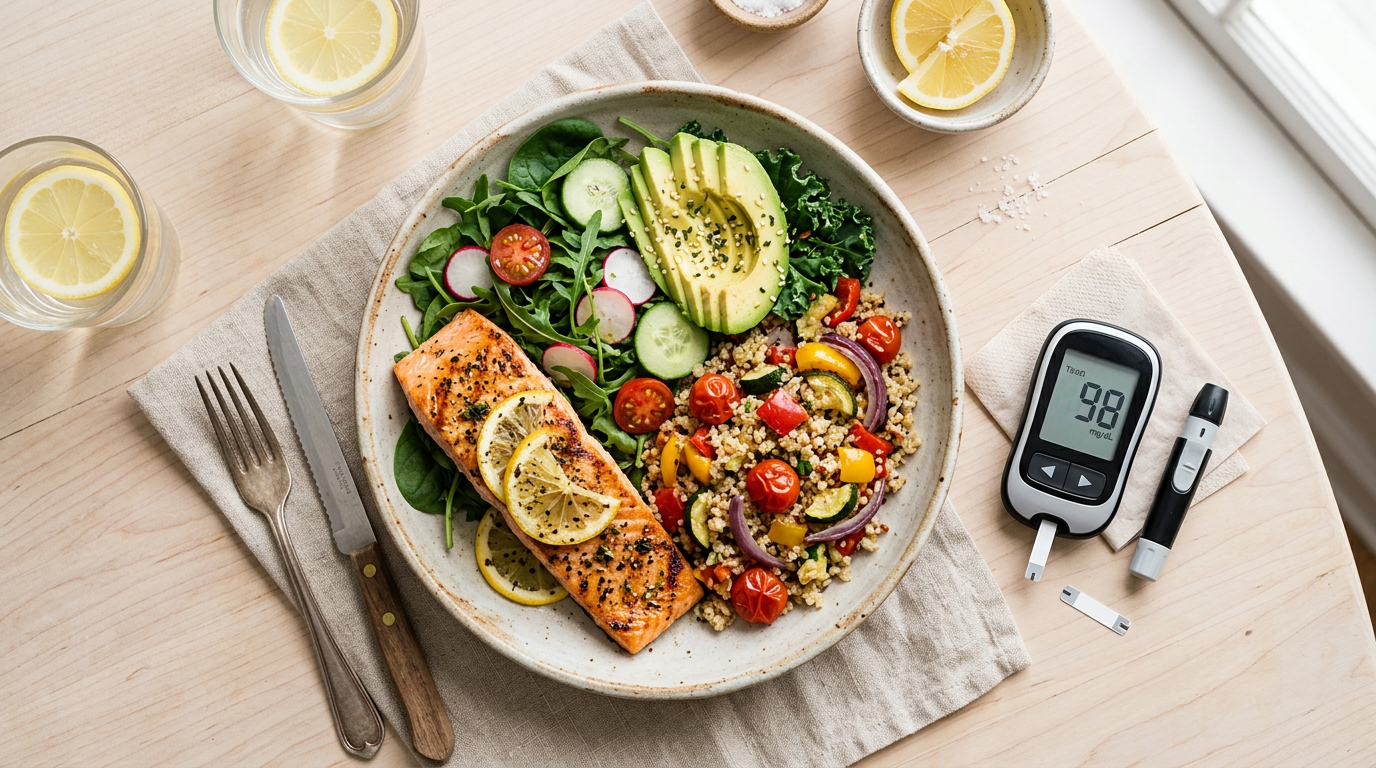
- Half your plate: Vegetables (especially leafy greens, broccoli, peppers)
- Quarter your plate: Protein (chicken, fish, eggs, tofu, legumes)
- Quarter your plate: Carbohydrates (rice, potatoes, quinoa, fruit)
The fiber from vegetables slows down glucose absorption. Protein and fat do the same. This isn't about restriction — it's about balance.
Bonus move — meal sequencing. The order you eat a meal in changes its glucose impact. Eating the vegetables and protein first and saving the carbohydrates for last slows how quickly glucose hits your bloodstream — the fiber and protein essentially form a buffer in your digestive tract. It costs nothing, requires no food changes at all, and research on food-order effects has repeatedly shown flatter post-meal curves from this one habit. If you adopt a single strategy from this article, make it this one plus the post-meal walk below.
Strategy 2: Eat Foods That Actually Have Fiber
Fiber is the secret weapon for glucose control. It slows digestion, feeds your gut bacteria, and prevents blood sugar spikes.
High-fiber foods to prioritize:
- Leafy greens (spinach, kale, arugula)
- Broccoli and cauliflower
- Berries (especially blueberries)
- Legumes (lentils, chickpeas, black beans)
- Oats (steel-cut, not instant)
- Nuts and seeds
The goal: 25-35 grams of fiber per day. Most people get less than 15. That's a problem.
A practical tip: ramp up gradually. Jumping from 12 grams to 35 overnight is a recipe for digestive misery. Add one high-fiber food per week — beans in one lunch, berries at breakfast — and let your gut adapt.
Strategy 3: Move After Meals
This is one of the most underrated strategies. A 10-15 minute walk after meals can reduce glucose spikes by 20-30%.
Why it works: Muscle contractions pull glucose from your blood without needing as much insulin.
What counts:
- Walking
- Light cycling
- Standing and stretching
- Cleaning up the kitchen
You don't need a hard workout. Just don't sit immediately after eating.
Timing matters more than intensity. The window that counts is roughly the 30–90 minutes after you start eating — that's when glucose from the meal is arriving in your bloodstream and your muscles can intercept it. A gentle walk during that window beats an intense workout three hours later, at least for flattening that specific meal's curve.
Strategy 4: Prioritize Sleep
Poor sleep messes with your glucose regulation in two ways:
- Insulin sensitivity drops — after just one bad night of sleep, your body becomes less efficient at handling glucose
- Hunger hormones shift — ghrelin increases, leptin decreases, making you crave high-calorie foods
What matters:
- Consistent sleep schedule (same wake time daily, even weekends)
- 7-8 hours per night
- Cool, dark room
This is also why glucose problems and sleep problems tend to spiral together: a bad night raises next-day glucose and cravings, the resulting late-night snacking disrupts the next night's sleep, and the loop feeds itself. Breaking it from the sleep side — a fixed wake time is the single highest-leverage habit — often improves the food side automatically.
Browse All Products
Explore our evidence-based product reviews across every health category.
Strategy 5: Manage Stress
Chronic stress = chronic cortisol = elevated blood sugar. Your liver dumps glucose when you're stressed — it's an evolutionary response to help you fight or flee.
Stress management strategies:
- Breathing exercises (5-10 minutes daily)
- Walking in nature
- Meditation or prayer
- Social connection
- Adequate sleep (they all connect)
Strategy 6: Don't Fear Carbohydrates — Choose Smart Ones
Carbohydrates aren't the enemy. But the type matters enormously.
Better choices:
- Whole grains (quinoa, brown rice, oats)
- Vegetables and fruit
- Legumes
Worse choices (eat less often):
- White bread, white rice
- Sugary drinks and desserts
- Processed snacks
- Most "low-fat" products (they replace fat with sugar)
The key isn't eliminating carbs — it's choosing ones that come with fiber, protein, and nutrients.
One nuance that surprises people: liquid carbs behave differently than solid ones. Juice, soda, and sweetened coffee drinks hit your bloodstream far faster than the same sugars eaten in whole-food form, because there's no fiber and no chewing to slow absorption. If you change nothing else about your diet, swapping sweet drinks for water or unsweetened alternatives is one of the highest-impact single moves available.
Strategy 7: Consider Intermittent Fasting
Time-restricted eating — like 16:8 (16 hours fasting, 8-hour eating window) — can improve insulin sensitivity for many people.
How it works: You give your digestive system a break, and your body becomes more efficient at using insulin.
How to start:
- Skip breakfast, eat between 12pm-8pm
- Or eat normally but stop at 7pm
- No calories during fasting window (black coffee and water are fine)
Note: This isn't for everyone. If you have a history of eating disorders, skip this. And if you take any glucose-lowering medication, don't start fasting without talking to your doctor — the combination can drive blood sugar dangerously low.
Strategy 8: Build Muscle
Muscle is a glucose sink. The more muscle you have, the more places your body has to store glucose.
What works:
- Resistance training 2-4x per week
- Bodyweight exercises (pushups, squats, lunges)
- Progressive overload (gradually getting stronger)
You don't need a gym. Bodyweight exercises at home work.
Unlike the post-meal walk, which helps the meal you just ate, this is the long-game strategy: more muscle mass improves your baseline insulin sensitivity around the clock, including while you sleep. It's slower to pay off — think months, not days — but it's the most durable change on this list.
What About Supplements?
Supplements are exactly that — supplementary. They can't fix a poor diet. But some have evidence:
- Magnesium: Many people are deficient; magnesium helps insulin function
- Berberine: Some evidence it works similarly to metformin (talk to your doctor first)
- Chromium: Mixed evidence; probably not harmful, probably not helpful
- Omega-3: Reduces inflammation, which helps metabolic health
Don't spend money on "glucose support" blends that promise quick fixes. Food first.
Get smarter about health tech
Deal alerts, new reviews, and health tips — delivered weekly. No spam.
Unsubscribe anytime. We respect your inbox.
How to Know It's Working — and When to See a Doctor
You don't need a device to notice progress. Realistic markers, in rough order of appearance:
- Weeks 1–2: Steadier energy through the afternoon, fewer post-lunch crashes, less intense cravings between meals
- Weeks 2–4: Better sleep, easier appetite control, post-meal sluggishness fading
- Months 2–3: Measurable changes — this is the earliest an HbA1c test (which reflects roughly three months of average glucose) can show your work
If you want objective numbers, ask your doctor for a fasting glucose and HbA1c before you start and again after three months. That before-and-after is more meaningful than any consumer gadget's readout.
See a doctor promptly — don't self-manage — if you have: persistent excessive thirst or urination, unexplained weight loss, blurred vision, wounds that heal slowly, or recurring episodes of shakiness and sweating that food relieves. These are symptoms worth proper evaluation, not lifestyle-blog territory. The same goes if you have strong risk factors (family history of type 2 diabetes, previous gestational diabetes, or a prior prediabetes result): the strategies in this article are exactly what's recommended alongside medical care, but they should be alongside it, not instead of it.
Do You Need a CGM for Any of This?
No — every strategy above works without one, which is the point of this article. Where a continuous glucose monitor earns its keep is personalization: glucose responses vary a lot between individuals, and a two-week sensor experiment can show you which specific foods spike you and verify that fixes like meal sequencing and post-meal walks are working on your body. Treat it as an educational tool for a few weeks, not a permanent appendage — and know that no consumer CGM can diagnose anything. If you're curious, our CGM for non-diabetics guide and best CGM roundup cover the honest case for and against.
The Bottom Line
For dietary strategies that support both glucose control and healthy aging, see our best diets for longevity guide.
You don't need a CGM, expensive supplements, or extreme diets to regulate glucose well. You need:
- Balanced meals with fiber (carbs last on the plate)
- Movement after eating
- Consistent sleep
- Stress management
- Regular strength training
- Smart carbohydrate choices
That's it. The basics work. They're just not as exciting as the latest biohack.
FAQ
Does intermittent fasting help regulate glucose?
For many people, yes. Time-restricted eating can improve insulin sensitivity. Start with 12 hours overnight and build up to 16. Skip it if you have a history of disordered eating, and talk to your doctor first if you take any glucose-lowering medication.
Is keto good for blood sugar?
Keto can lower blood sugar in the short term, but it's not necessary for most people and can be hard to sustain. A balanced diet with smart carb choices is more practical long-term.
How long does it take to improve glucose regulation?
Most people see improvements within 2-4 weeks of consistent diet and exercise changes — steadier energy and fewer crashes first, with measurable lab changes (like HbA1c) taking about three months. The key word is "consistent."
Do I need to test my glucose at home?
If you're generally healthy, probably not. If you have prediabetes risk factors or diabetes, talk to your doctor about appropriate testing. A short-term CGM experiment can be educational for identifying your personal spike foods, but it's optional and not diagnostic.
Is fruit bad for blood sugar?
No. Whole fruit contains fiber that slows glucose absorption. The sugar in fruit is not the same as added sugar. Eat the fruit, skip the juice.
Can exercise reverse prediabetes?
Yes. Studies show that moderate exercise (150 minutes per week) can significantly improve insulin sensitivity and may reverse prediabetes.
Does the order you eat food really matter?
Yes — this is one of the better-supported "free" strategies. Eating fiber and protein before the carbohydrates in a meal slows glucose absorption and produces a flatter post-meal curve than eating the same foods carbs-first. It requires zero dietary sacrifice, which is why it's such an easy first habit.
Does coffee raise blood sugar?
Black coffee has minimal direct glucose impact for most people, though caffeine can transiently reduce insulin sensitivity in some individuals — responses vary. The real culprit is what's added: a large sweetened coffee drink is effectively a liquid dessert. If you're working on glucose, keep the coffee and drop the syrup.
What does a blood sugar spike feel like?
Often nothing at all — which is why they go unnoticed. When symptoms do show up, the classic pattern is post-meal sleepiness, brain fog, or an energy crash 1–3 hours after eating, sometimes with rebound hunger or sugar cravings as glucose falls. Frequent, symptomatic crashes are worth mentioning to your doctor.
How does alcohol affect blood sugar?
It cuts both ways. Sugary cocktails and beer can spike glucose, while alcohol itself impairs the liver's glucose release for hours afterward — which can push blood sugar lower overnight, a particular concern for anyone on glucose-lowering medication. Moderation, food alongside drinks, and skipping sweet mixers cover most of the risk for healthy adults.
What is a normal blood sugar level?
Standard fasting range is 70–99 mg/dL; 100–125 mg/dL signals prediabetes and 126+ (confirmed on repeat testing) indicates diabetes. Post-meal rises are normal and expected — glucose climbing after eating isn't a problem in itself; chronically high peaks and slow recovery are. Only physician-ordered labs can classify you, so use these numbers for context, not self-diagnosis.
Disclaimer: This article contains affiliate links. We may earn a commission if you purchase through our links, at no additional cost to you. This content is not medical advice — consult your clinician before making changes to your diet, exercise, or glucose management, especially if you take medication or have a diagnosed condition.
Featured Products
Products mentioned in this article


Related Guides
More articles you might find helpful
CGM for Non-Diabetics: Is It Worth the Hype?
You've seen them on Twitter. Influencers wearing little sensors on their arms, posting screenshots of their blood sugar curves. "Look at my glucose spike after eating pizza!" They call it "metabolic optimization." They call it "biohacking."
Cold Plunge Benefits: What the Science Actually Says
Cold plunging is having a moment. Every biohacker's Instagram shows ice baths, cold plunge pools are popping up in gyms, and Andrew Huberman's podcast made it mainstream.
How Does Sleep Affect Longevity? What the Science Actually Says
The connection between sleep and lifespan isn't subtle. It's not some hippy-dippy wellness claim. The data is stark: people who consistently sleep less than 6 hours per night have a 12-15% higher risk of dying from any cause compared to those sleeping 7-8 hours. As an illustrative comparison, some r

Written by
Steve Luu
Health tech researcher