Best Health Tracking Devices for Sleep Quality in 2026
Key Takeaway
Sleep tracking has gotten good enough to be genuinely useful. That's the good news.
Affiliate Disclosure: BetterVitals may earn a commission from purchases made through links in this article, at no additional cost to you. This supports our independent research and analysis. We only recommend products we believe in after thorough evaluation.
Medical Disclaimer
This article is for educational purposes only and is not a substitute for professional medical advice, diagnosis, or treatment. Always consult your healthcare provider before making health decisions.
Best Health Tracking Devices for Sleep Quality in 2026
Sleep tracking has gotten good enough to be genuinely useful. That's the good news.
The bad news? Most people are using their sleep data wrong. They obsess over a single night's score, panic when they see a "72" on their Oura Ring, and then do absolutely nothing to change their actual habits. The device becomes an expensive anxiety generator instead of a tool.
A sleep tracker is only valuable if it changes your behavior. The number on your wrist this morning is borderline meaningless. The trend over three weeks? That's gold. That's what tells you whether cutting caffeine after noon or shifting your bedtime by 30 minutes actually made a measurable difference.
We've tested the major sleep tracking devices of 2026 — worn them, slept on them, cross-referenced their data. If you want the deeper "why" behind sleep optimization, our guide on sleep and longevity covers the science. This article is about the tools.
What Actually Matters in Sleep Tracking
Before we get into specific devices, let's be honest about what consumer sleep trackers can and can't do.
The gold standard for sleep measurement is polysomnography (PSG) — a clinical sleep study where electrodes are attached to your scalp, face, and chest. PSG measures brain waves (EEG), eye movements, and muscle activity directly. It's how sleep researchers define sleep stages: light sleep (N1, N2), deep sleep (N3), and REM.
No wearable does this. Not even close.
What wearables do is estimate sleep stages using proxy signals — heart rate, HRV, movement, and sometimes blood oxygen and skin temperature. These proxies are surprisingly good at total sleep time and sleep efficiency. They're decent at distinguishing REM from non-REM. They're mediocre at separating light from deep sleep on any given night.
A 2023 validation study in Sleep found that most consumer wearables overestimated total sleep time by 15-30 minutes and had sleep stage agreement rates of 60-75%. Not terrible — but it means your device might tell you 1.5 hours of deep sleep when PSG would say 1.1 hours.
So what actually matters when choosing a sleep tracker?
Consistency over accuracy. If a device consistently overestimates your deep sleep by 10 minutes, that's fine — you can still see trends. What matters is that the error is stable night to night so the trends are real.
Overnight HRV tracking. This is arguably more valuable than sleep staging. Your HRV during sleep reflects autonomic nervous system recovery and is one of the best objective markers of whether your body is actually recovering. Devices that sample HRV continuously through the night (not just a snapshot) give you much better data.
Comfort. The best sleep tracker is one you actually wear. A $500 device sitting in your nightstand drawer is worth nothing. If a wristband bothers you at night, you won't use it. If a ring feels natural, you will.
Trend visibility. How well does the app surface weekly and monthly trends? A great sensor paired with a bad app equals a bad product.
Wrist & Finger Trackers
These are the devices you wear. Each has a different philosophy about what matters most.
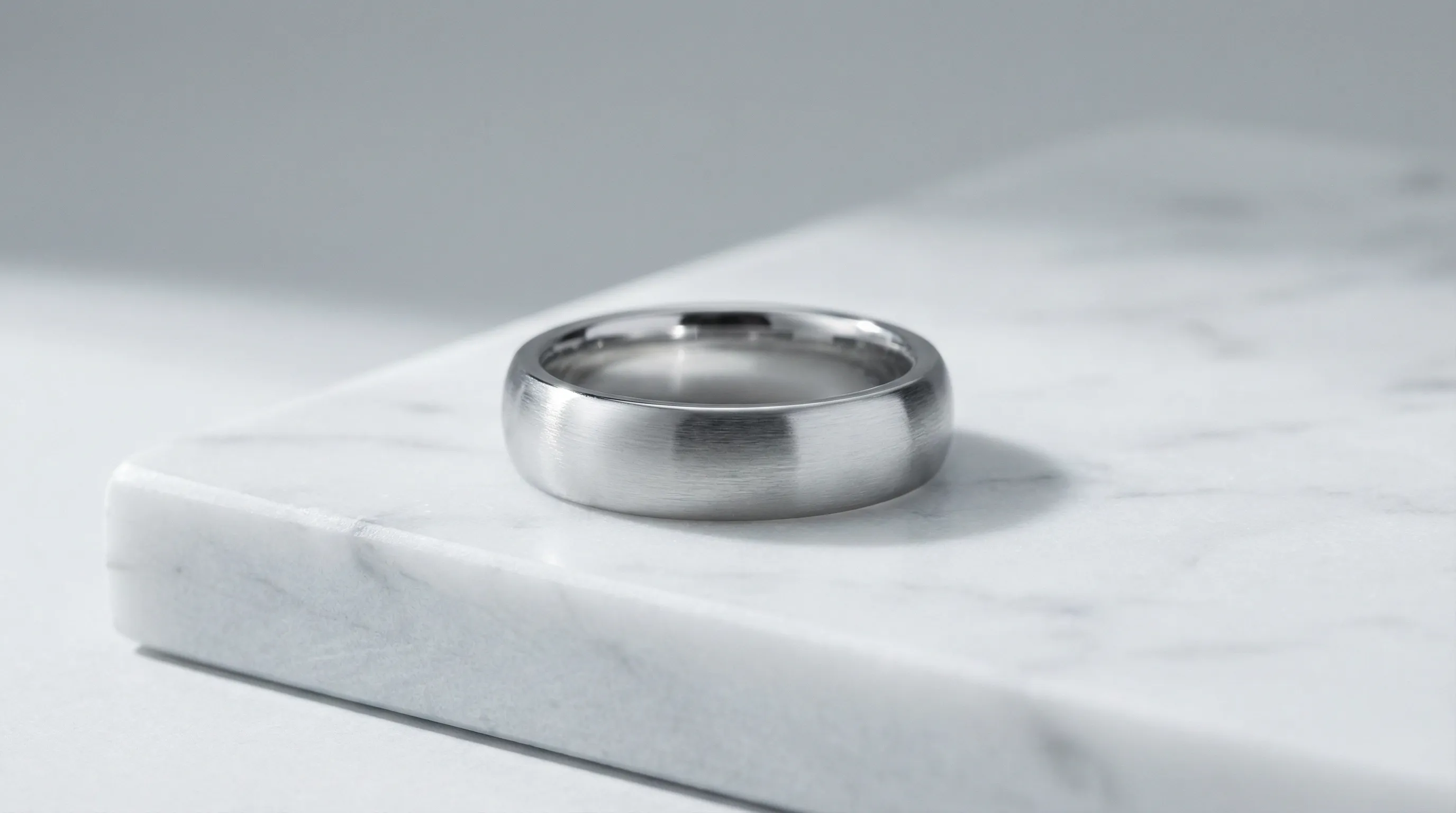
Oura Ring Gen 4 — Best Overall for Sleep
Price: ~$350 + $6/month membership | Form factor: Titanium ring
The Oura Ring Gen 4 is our top pick for sleep tracking, and it's not particularly close.
Why? Comfort and consistency. You wear it on your finger. You forget it's there. That means you actually wear it every night, which means you actually get useful data. Wristbands wake people up, slip around, get sweaty. The Oura Ring just sits there.
The real strength is overnight tracking: resting heart rate, HRV (5-minute averages across the entire night), body temperature deviation, respiratory rate, and sleep stages. The sleep staging algorithm has been validated against PSG with roughly 79% epoch-by-epoch agreement — better than most competitors.
What it does well:
- Best-in-class comfort for sleep — you genuinely forget you're wearing it
- Excellent overnight HRV trending with continuous sampling
- Temperature deviation tracking catches illness before you feel symptoms
- Clean app with strong weekly/monthly trend views
- Readiness Score integrates sleep, HRV, and temperature into a single actionable metric
What it doesn't do well:
- Sleep staging still isn't perfect — deep sleep numbers can fluctuate oddly night to night
- The $6/month subscription is required for most useful features (raw data is locked behind the paywall)
- No real-time heart rate display during workouts — this is a sleep-first device
- Ring sizing can be tricky; get the free sizing kit first
- Battery life is 5-7 days, which is fine but means one more thing to charge
Best for: People who want the most accurate, least intrusive sleep tracker. If your primary goal is understanding and improving sleep quality, this is the device.
For a head-to-head with its main competitor, see our Oura Ring vs Whoop comparison.
Whoop 4.0 — Best for Recovery-Focused Users
Price: Subscription-only (~$30/month, device included) | Form factor: Wrist/bicep strap
The Whoop 4.0 approaches sleep differently than Oura. It doesn't care about your sleep score in isolation — it cares about whether you slept enough to recover from yesterday's strain.
This recovery-first framework is Whoop's killer feature. It tracks "Strain" throughout the day (a cardiovascular load metric), then tells you exactly how much sleep you need tonight. Trained hard? You might need 8.5 hours. Rest day? 7 hours might suffice. It's dynamic, personalized, and genuinely useful for active people.
Sleep tracking includes stages, HRV, respiratory rate, blood oxygen, and skin temperature. Continuous HRV monitoring is excellent — comparable to Oura's.
What it does well:
- Strain-to-recovery framework is the best system for athletes and fitness enthusiasts
- Sleep Coach tells you when to go to bed and how much sleep you need — and it's usually right
- Continuous HRV monitoring is top-tier
- Screenless design means no light pollution in bed
- Works on wrist, bicep, or with special apparel (boxers, sports bras)
What it doesn't do well:
- Subscription-only model means you're paying ~$360/year indefinitely — you never own the device
- Wristband can be uncomfortable for some sleepers, especially side sleepers
- Sleep staging accuracy is slightly below Oura's in validation studies
- No smart alarm (vibrating wake feature is basic)
- The app is information-dense, which can overwhelm people who just want a sleep score
Best for: Athletes, CrossFitters, runners, and anyone whose training load varies significantly day to day. If you want your sleep data contextualized against your physical output, Whoop is the best at this.
Our Oura Ring vs Whoop breakdown goes deeper into how these two compare across every dimension.
Apple Watch Ultra 2 — Most Versatile Smartwatch
Price: ~$799, no subscription | Form factor: Smartwatch
The Apple Watch Ultra 2 is a smartwatch that happens to track sleep — not the other way around. That distinction matters.
The Ultra 2 tracks sleep stages, blood oxygen, wrist temperature, and respiratory rate. The data is reasonable. But compared to dedicated sleep devices, the Apple Watch has a fundamental problem: battery life. You need to charge it daily, and if you're wearing it to bed, when exactly do you charge it? Most users end up with a charging routine during evening wind-down or their morning shower. It works, but it's friction Oura doesn't have.
What it does well:
- One device for everything — notifications, fitness, health, and sleep
- No subscription fee for any health features
- FDA-cleared ECG and blood oxygen monitoring
- Sleep staging improving with each watchOS update
What it doesn't do well:
- Daily charging makes consistent sleep tracking harder
- Sleep staging accuracy trails Oura and Whoop
- Bulky on the wrist for side sleepers
- Sleep insights are basic compared to dedicated trackers
Best for: People who already wear an Apple Watch and want "good enough" sleep data without buying another device.
Garmin Fenix 8 — Best for Fitness-Focused Sleepers
Price: ~$900-$1,000, no subscription | Form factor: Rugged smartwatch
The Garmin Fenix 8 is a beast of a fitness watch that also tracks sleep well. Garmin's sleep tracking includes stages, HRV (via "HRV Status"), Body Battery (their recovery metric), blood oxygen, and respiration.
Body Battery deserves special mention — it's an energy-level metric that drains during the day and recharges during sleep. It's surprisingly intuitive and often matches how you actually feel better than a raw sleep score.
The big advantage over Apple Watch: battery life. The Fenix 8 lasts 10-16 days. You charge it once every two weeks and it silently tracks every night. No routine management.
What it does well:
- Exceptional battery life means you never miss a night of tracking
- Body Battery and HRV Status are genuinely useful recovery metrics
- No subscription — all features included
- Training Load and Training Readiness integrate sleep with fitness data
What it doesn't do well:
- Large and heavy — the Fenix 8 is a chunky watch to wear to bed
- Sleep staging accuracy is behind Oura
- Garmin Connect app is powerful but cluttered
- Expensive if you don't need the outdoor/fitness features
Best for: Runners, hikers, and multi-sport athletes who want one device for training AND sleep. If you're already in the Garmin ecosystem, the sleep tracking is good enough that you don't need a second device.
Bed-Based Trackers
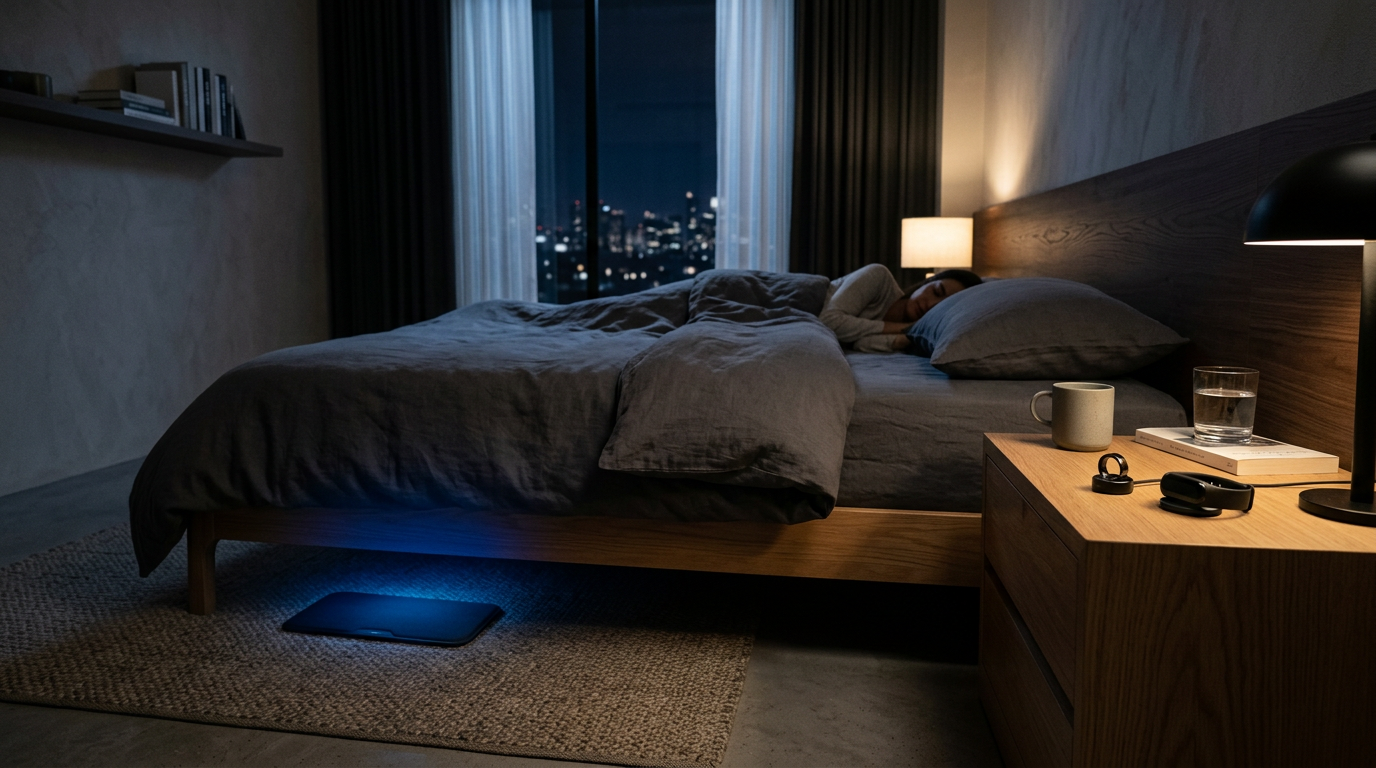
Not everyone wants to wear something to bed. Bed-based trackers measure sleep through your mattress using movement, heart rate (via ballistocardiography), and breathing patterns — and some can actively change your sleep environment.
Eight Sleep Pod 4 — Best for Active Sleep Optimization
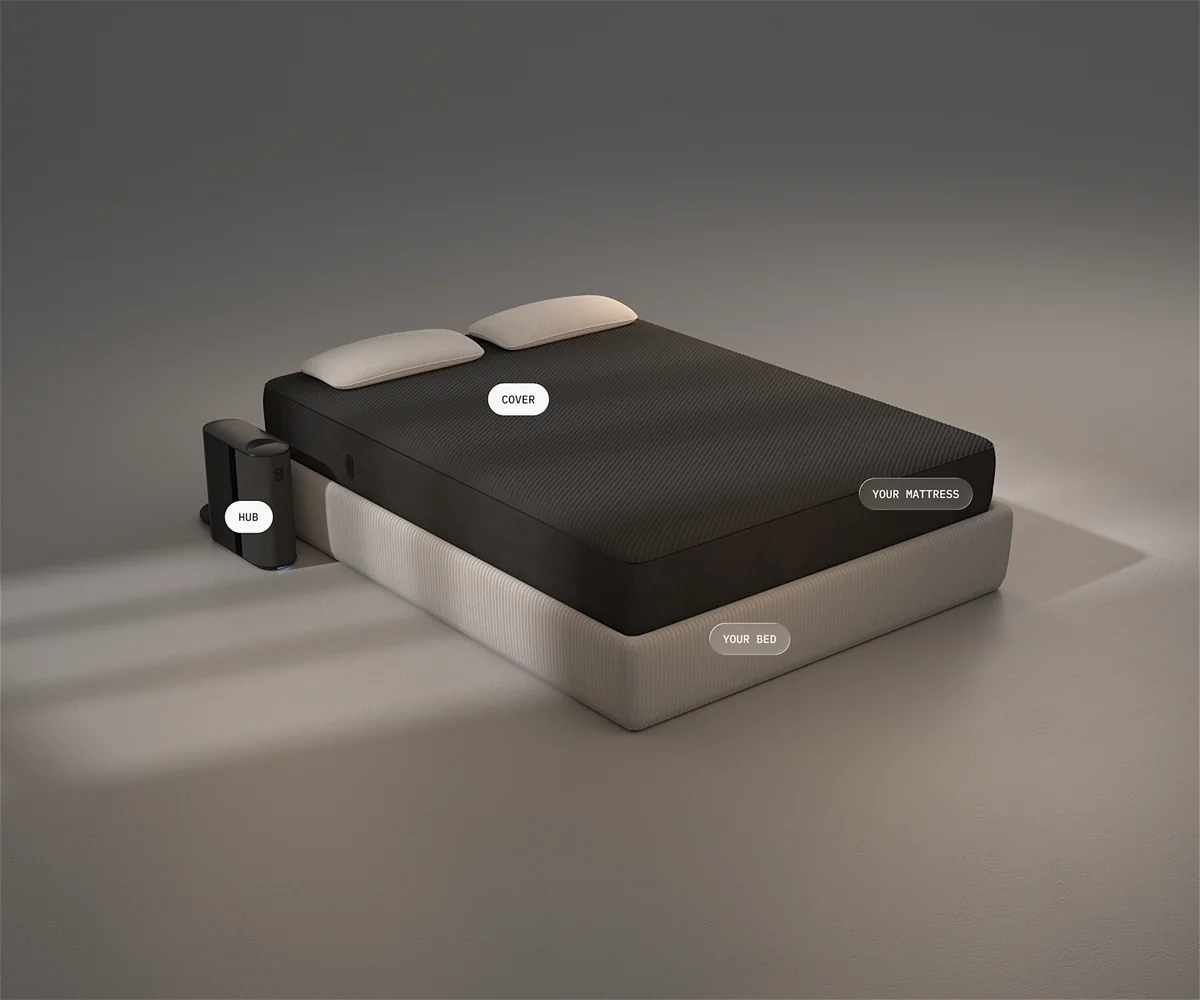
Price: ~$2,000-$2,400 + $14/month subscription | Form factor: Mattress cover with hub
The Eight Sleep Pod 4 isn't just a sleep tracker — it's a sleep intervention device. Wearables tell you what happened. Eight Sleep changes what's happening in real time.
The AutoPilot feature cools your bed during sleep onset (when core temperature needs to drop), warms slightly during deep sleep, cools again during later cycles, and gently warms you before your alarm. After a few weeks of learning your patterns, it runs automatically.
Sleep tracking uses embedded sensors for heart rate, HRV, respiratory rate, and movement — no wearable needed. Accuracy is respectable, though not quite at Oura's level for staging.
What it does well:
- Active temperature regulation is genuinely transformative for hot sleepers
- AutoPilot learns and adapts — it gets better over time
- Sleep tracking without wearing anything
- Dual-zone temperature for couples
- Integrates sleep data with temperature adjustments in a feedback loop no wearable can match
What it doesn't do well:
- Expensive upfront AND has a subscription — see our Eight Sleep vs ChiliPad comparison for the full cost breakdown
- Subscription locks key features including AutoPilot
- Sleep staging accuracy is behind the best wearables
- Hub is bulky and needs to be near your bed
- If the WiFi drops or the app glitches, your temperature settings reset
Best for: Hot sleepers, couples with different temperature preferences, and anyone who's tried improving sleep hygiene and still wakes up sweating. This is the only device on this list that actively fixes a sleep problem rather than just measuring it.
Withings Sleep Mat — Best Non-Wearable Option
Price: ~$130, no subscription | Form factor: Under-mattress pad
The Withings Sleep Mat is the quiet achiever on this list. Slides under your mattress, plugs into the wall, tracks sleep stages, heart rate, respiratory rate, and snoring. No charging. No wearing anything. No subscription.
It won't win accuracy competitions against Oura or Whoop. The pneumatic sensors detect pressure changes from movement and cardiac rhythm through the mattress — inherently less precise than optical heart rate tech in wearables. But it's consistent, which is what matters for trends.
Where it shines is accessibility. $130. No subscription. No maintenance. It just works, every night, without any effort.
What it does well:
- Truly zero-effort sleep tracking — nothing to wear, charge, or think about
- No subscription, low price
- Snoring detection with intensity tracking
- Integrates with Withings Health Mate ecosystem (scale, blood pressure, etc.)
- Smart home integration (IFTTT) can trigger lights, thermostat based on sleep/wake
What it doesn't do well:
- Sleep staging accuracy is the weakest on this list
- No HRV tracking — a significant limitation for serious optimizers
- Doesn't work well with two people in the same bed (unless each has their own mat)
- No temperature or blood oxygen sensing
- Can shift out of position if you have a thick or pillow-top mattress
Best for: People who want basic sleep data with zero friction and no ongoing cost. Great for older adults or anyone who finds wearables uncomfortable or complicated.
Browse All Products
Explore our evidence-based product reviews across every health category.
Quick Comparison Table
| Device | Price | Subscription | Sleep Staging | HRV Tracking | Comfort | Battery/Power | Best For |
|---|---|---|---|---|---|---|---|
| Oura Ring Gen 4 | $350 | $6/mo | Excellent | Excellent | Best | 5-7 days | Sleep optimization |
| Whoop 4.0 | Included | $30/mo | Very Good | Excellent | Good | 4-5 days | Athletes & recovery |
| Apple Watch Ultra 2 | $799 | None | Good | Good | Fair | 1-1.5 days | All-in-one smartwatch |
| Garmin Fenix 8 | $900+ | None | Good | Very Good | Fair | 10-16 days | Fitness + sleep |
| Eight Sleep Pod 4 | $2,000+ | $14/mo | Good | Good | N/A | Plugged in | Temperature control |
| Withings Sleep Mat | $130 | None | Fair | None | N/A | Plugged in | Zero-effort tracking |
How to Actually Use Sleep Data
Having a sleep tracker is step one. Using it properly is where most people fail.
Look at 7-day and 30-day trends, not individual nights. A single night's data is noisy. One data point tells you almost nothing. But when you zoom out to weekly and monthly views, real patterns emerge — the effect of alcohol, late caffeine, exercise timing, or bedroom temperature on your sleep.
Use your tracker to run experiments. Pick one variable. Change it for two weeks. See what happens to your trends. No screens for 30 minutes before bed. Bedroom temperature at 65°F instead of 70°F. No caffeine after 1 PM. Your sleep tracker becomes the measurement tool for personal experiments.
Pay more attention to HRV trends than sleep scores. Sleep scores are algorithmically derived composite numbers — useful shorthand, but they obscure details. Your overnight HRV trend is a more direct measure of autonomic recovery. If your HRV baseline is gradually increasing over months, your sleep is improving regardless of what the nightly score says.
Don't compare your numbers to other people. HRV is highly individual. A 25-year-old athlete might have a resting HRV of 80ms; a healthy 55-year-old might sit at 30ms. Both can be optimal. What matters is YOUR trend relative to YOUR baseline.
Set a consistent bedtime and track adherence. The single most impactful sleep intervention — more than any supplement, device, or hack — is going to bed and waking up at the same time every day. Your tracker will reveal how consistent you actually are versus how consistent you think you are.
Get smarter about health tech
Deal alerts, new reviews, and health tips — delivered weekly. No spam.
Unsubscribe anytime. We respect your inbox.
The Bottom Line
For most people: the Oura Ring Gen 4. Best balance of accuracy, comfort, and usability. You wear it, forget about it, and get excellent data.
For athletes: the Whoop 4.0 gives you the best recovery-focused framework, though the subscription adds up.
For hot sleepers: the Eight Sleep Pod 4 does something no wearable can — it actively fixes the problem instead of just documenting it.
For zero friction: the Withings Sleep Mat is a quiet bargain at $130.
If you already have an Apple Watch Ultra 2 or Garmin Fenix 8 on your wrist, the sleep tracking is good enough that you probably don't need a second device — just make sure you're actually looking at the data.
The tracker doesn't improve your sleep. Your decisions do. The tracker just makes your decisions smarter.
FAQ
How accurate are consumer sleep trackers compared to a sleep study?
Consumer devices agree with polysomnography (the clinical gold standard) about 60-75% of the time on sleep stage classification. They're best at total sleep time, decent at REM, and weakest at distinguishing light from deep sleep. For clinical diagnosis of sleep disorders, you still need a proper sleep study. Wearables are tools for tracking trends, not medical diagnosis.
Is the Oura Ring really better than Whoop for sleep?
For pure sleep tracking, yes — Oura is more comfortable overnight and has slightly higher validation accuracy. But Whoop is better if you want sleep data integrated with daily training strain and recovery. Our Oura Ring vs Whoop comparison covers this in detail.
Do I need both a wearable and a bed-based tracker?
For most people, no. There's significant overlap. The exception: if you want temperature control (Eight Sleep) and accurate sleep staging (Oura) — those serve different functions. Using both is overkill for anyone who isn't deeply invested in sleep optimization.
Can sleep trackers detect sleep apnea?
Some devices flag potential issues — Withings has a snoring detector, Oura and Whoop track blood oxygen dips that can correlate with apnea events. But no consumer device can diagnose sleep apnea. If your tracker consistently shows low blood oxygen or your partner reports loud snoring with gasping, see a sleep specialist for a proper sleep study.
Are subscription-based sleep trackers worth the ongoing cost?
It depends. Oura's $6/month unlocks insights that genuinely improve the product. Whoop's $30/month includes the hardware — you're paying for the device on installment. Eight Sleep's $14/month gates AutoPilot, which is the main reason to buy it. If you won't actively engage with features behind the paywall, go with Garmin, Apple Watch, or Withings — all subscription-free.
What's the single best thing I can do to improve my sleep tracker data?
Go to bed at the same time every night. Seriously. Consistent sleep timing is the single biggest lever for improving every metric your tracker measures — HRV, deep sleep percentage, sleep efficiency, sleep latency. No device, supplement, or bedroom hack comes close to the impact of a stable circadian rhythm. Your tracker will show you this within two weeks of consistency.
Featured Products
Products mentioned in this article


Related Guides
More articles you might find helpful
Wonderfeel Youngr vs NOVOS Boost (2026): Which NMN Wins?
*Updated July 2026*
Most Accurate CGM in 2026: MARD Scores Compared (Every Sensor)
*Updated July 2026*
Dexcom Stelo vs Abbott Lingo (2026): Accuracy, Price, App Compared
*Updated July 2026*

Written by
Steve Luu
Health tech researcher