Best Apps for HRV: Analysis, Training & Stress Management
Key Takeaway
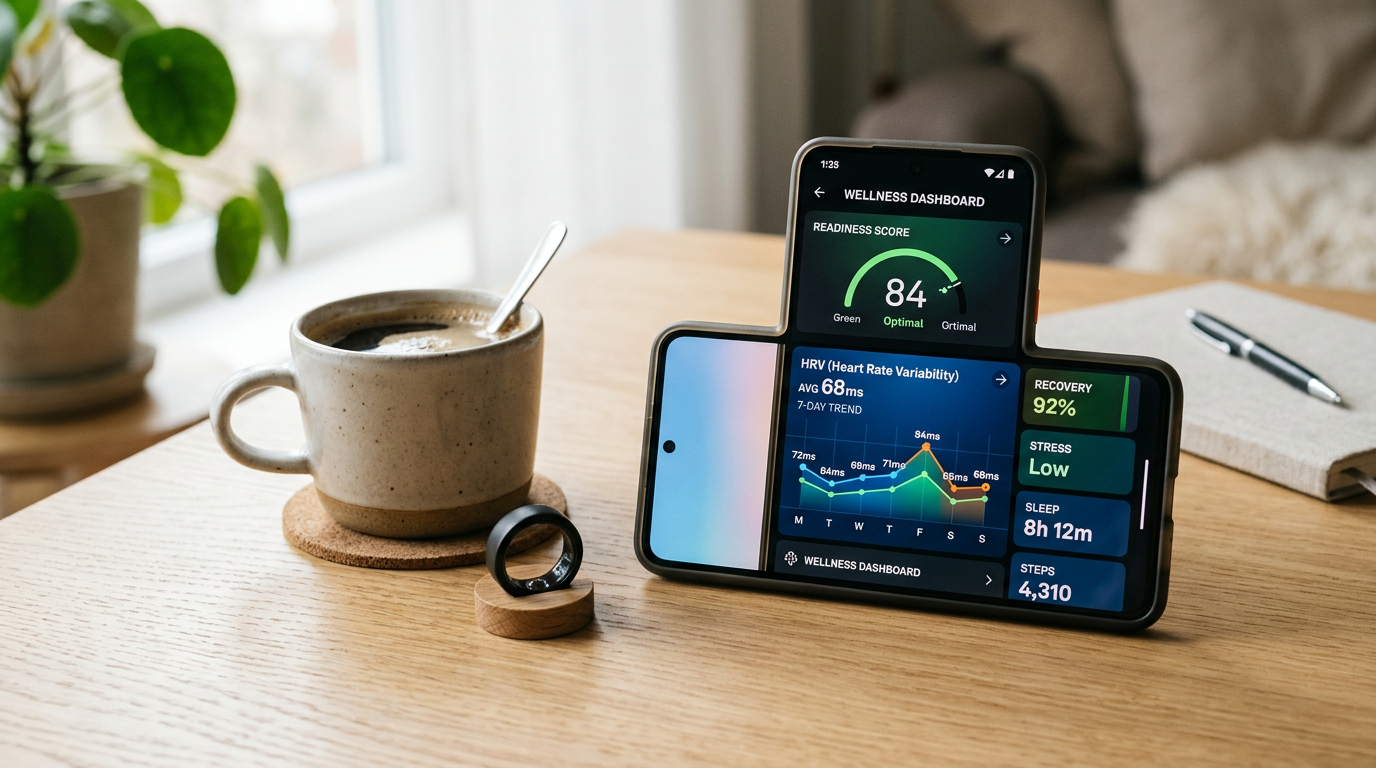
You can own the best HRV hardware on the planet and still get garbage insights if your software is bad. This is the dirty secret of the wearable industry: the sensor is only half the equation. Maybe less than half. The app that interprets your data — how it scores your readiness, how it displays tre
Affiliate Disclosure: BetterVitals may earn a commission from purchases made through links in this article, at no additional cost to you. This supports our independent research and analysis. We only recommend products we believe in after thorough evaluation.
Medical Disclaimer
This article is for educational purposes only and is not a substitute for professional medical advice, diagnosis, or treatment. Always consult your healthcare provider before making health decisions.
Best Apps for HRV: Analysis, Training & Stress Management
You can own the best HRV hardware on the planet and still get garbage insights if your software is bad. This is the dirty secret of the wearable industry: the sensor is only half the equation. Maybe less than half. The app that interprets your data — how it scores your readiness, how it displays trends, whether it actually helps you do something with the numbers — that's where the real value lives.
If you've read our complete guide to heart rate variability, you know that HRV is one of the most useful biomarkers available to regular people. It reflects autonomic nervous system balance, recovery status, and stress load in a single number. But raw HRV data is just millisecond intervals between heartbeats. Without good software to process it, you're staring at noise.
So let's cut through the clutter. Here's what actually matters in an HRV app, which ones are worth your time, and which ones are trying to nickel-and-dime you with subscriptions for features that should be free.
What to Look for in an HRV App
Before we get into specific apps, here's what separates a useful HRV app from a pretty dashboard that doesn't actually help you:
Morning readiness score. The single most actionable HRV metric is a morning reading taken at the same time every day. A good app will guide you through this, track your personal baseline, and tell you whether today is a push-hard day or a back-off day. If the app doesn't emphasize consistency in measurement timing, it doesn't understand HRV.
Long-term trend analysis. Day-to-day HRV fluctuates wildly. That's normal. What matters is the 7-day, 30-day, and 90-day trend. Is your baseline drifting up (good — you're adapting) or down (bad — you're accumulating stress or overtraining)? An app that only shows you today's number without trend context is nearly useless.
Guided breathing and biofeedback. HRV isn't just something you passively track. Resonance frequency breathing — typically around 6 breaths per minute — is one of the most evidence-backed ways to acutely improve HRV and activate your parasympathetic nervous system. Apps that integrate real-time biofeedback during breathing sessions add genuine value.
Data export. This one matters more than most people realize. If you can't export your data as CSV or sync it with Apple Health / Health Connect, you're locked into one ecosystem. Your health data should be yours.
Measurement method. Some apps use the phone camera (photoplethysmography), some connect to chest straps, some pull from wearables. Camera-based readings are convenient but less accurate than a chest strap like the Polar H10. The best apps support multiple input methods and are transparent about accuracy trade-offs.
Best HRV Analysis Apps
These are standalone apps — meaning you don't need a specific wearable to use them. Most work with a chest strap, finger sensor, or your phone's camera.
Elite HRV — Best Free Option
Price: Free (premium tier available) Platforms: iOS, Android Input: Bluetooth chest straps, some finger sensors
Elite HRV has been around since the early days of consumer HRV tracking, and it remains the best free option for most people. The core workflow is simple: wake up, strap on a chest sensor, take a 2.5-minute morning reading, and get a readiness score.
What it does well:
- Clean morning readiness protocol with guided timing
- Solid trend tracking with 7-day rolling averages
- Free tier is genuinely useful — not a crippled demo
- Exports to CSV and Apple Health
- Large community and good educational resources
Where it falls short:
- The interface feels dated compared to newer apps
- Advanced analytics (frequency domain, Poincare plots) are locked behind the premium tier
- Camera-based measurement isn't available — you need a Bluetooth sensor
- Development pace has slowed noticeably in recent years
Who it's for: Anyone starting out with HRV tracking who wants a reliable, no-cost baseline. Pair it with a $50 Polar H10 chest strap and you have a clinical-grade morning readiness system for less than the cost of one month of some wearable subscriptions.
HRV4Training — Best for Athletes and Researchers
Price: $9.99 one-time purchase (iOS), free with limitations (Android) Platforms: iOS, Android Input: Phone camera, Bluetooth chest straps, Apple Watch
HRV4Training is what happens when actual researchers build an app. Created by Marco Altini, a PhD researcher in machine learning and physiology, this app takes HRV seriously in a way that most consumer products don't.
What it does well:
- Camera-based measurement that's been validated in peer-reviewed studies — this is rare
- Outstanding trend analysis with coefficient of variation (CV) tracking
- Correlates HRV with training load, sleep, nutrition, and subjective wellness tags
- One-time purchase on iOS. No subscription. Refreshing, honestly
- Integrates with TrainingPeaks, Strava, and Apple Health
- The blog and research notes from Altini are worth reading on their own
Where it falls short:
- The UI is functional, not beautiful. It looks like a researcher built it (because one did)
- Android version is less polished than iOS
- The depth of data can be overwhelming for beginners
- No built-in guided breathing or biofeedback features
Who it's for: Serious athletes, coaches, and data nerds who want the most scientifically rigorous consumer HRV app available. If you're training for a marathon or managing periodization, this is the gold standard. The one-time price is also a refreshing departure from the subscription-everything model.
Welltory — Best All-in-One Wellness Dashboard
Price: Free tier available; Premium ~$10/month or ~$50/year Platforms: iOS, Android Input: Phone camera, Apple Watch, Bluetooth devices, integrations with Oura/Garmin/Fitbit
Welltory tries to be the hub that connects all your health data — HRV, sleep, activity, productivity — into one dashboard. It's ambitious and mostly pulls it off.
What it does well:
- Excellent camera-based HRV measurement with clear guided protocol
- Connects to a huge number of data sources (Oura, Garmin, Apple Health, Google Fit, Fitbit, even RescueTime)
- Good at surfacing correlations: "Your HRV drops 15% on days you sleep less than 6 hours"
- Stress and energy scores are intuitive for non-technical users
- Slick, modern interface
Where it falls short:
- The free tier is fairly limited — expect nudges to upgrade constantly
- Subscription pricing adds up, especially when you're already paying for wearable subscriptions
- Some of the "insights" feel generic rather than truly personalized
- Data export options are limited compared to HRV4Training
- Privacy-conscious users may be uncomfortable with how much data it aggregates
Who it's for: People who use multiple health devices and want a single dashboard to tie everything together. If you're already wearing an Oura Ring and an Apple Watch, Welltory can pull both data streams and give you a unified picture. Just be aware of the subscription cost stacking on top of whatever else you're already paying.
Kubios HRV — Best for Clinical-Grade Analysis
Price: Free tier; Premium ~$90/year Platforms: iOS, Android (originally desktop software) Input: Bluetooth chest straps, some wearables
Kubios started as desktop software used in clinical research — the kind of tool you'd find in a university physiology lab. They've since released a mobile app, and it retains that clinical DNA.
What it does well:
- The most comprehensive HRV analysis available in a consumer app, period
- Time-domain, frequency-domain, and nonlinear analysis (Poincare plots, detrended fluctuation analysis)
- Readiness and stress indices based on validated algorithms
- Used in over 1,000 published scientific studies — the credibility is real
- Artifact correction that filters out bad beats from your reading
Where it falls short:
- The premium price is steep — $90/year is real money for an analysis app
- Overwhelming for anyone who doesn't know what RMSSD, LF/HF ratio, or SD1/SD2 mean
- Mobile app still feels like desktop software squeezed into a phone screen
- No camera-based measurement — requires a chest strap or compatible sensor
- No built-in training or breathing features
Who it's for: Clinicians, researchers, and advanced practitioners who need publication-grade HRV metrics. If you're a sports scientist or a physician using HRV in practice, Kubios is probably already on your radar. For most consumers, this is overkill — but it's nice to know it exists if you want to go deep.
Best Companion Apps (Wearable-Specific)
If you already own a wearable, your device's companion app is probably your primary HRV interface. Here's how the major ones stack up. (For a deeper comparison of the hardware itself, see our best wearables for HRV tracking guide.)
Oura App
The Oura Ring Gen 4 pairs with one of the best companion apps in the wearable space. HRV is measured passively overnight — no morning ritual required. The Readiness Score is a weighted composite of HRV, resting heart rate, body temperature, and sleep quality.
Strengths: Beautiful design, actionable readiness scores, excellent sleep staging, passive overnight HRV tracking that requires zero effort.
Weaknesses: Requires a $6/month membership to access most HRV insights (the free tier is gutted). Limited HRV detail — you get a nightly average, not the granular beat-by-beat data a chest strap provides. No real-time biofeedback features.
WHOOP App
The WHOOP 4.0 app is built around three scores: Recovery, Strain, and Sleep. Recovery is heavily HRV-driven and updates every morning based on your overnight data.
Strengths: The Strain Coach feature — which tells you in real time how much more training load you can handle today — is genuinely useful. Journal feature lets you tag behaviors (alcohol, caffeine, supplements) and correlates them with HRV over time. The community and coaching features are strong.
Weaknesses: No device purchase — it's $30/month all-in. That's $360/year for hardware and software bundled together, which is the most expensive option by far. You can't use the app without the WHOOP strap. Data export exists but isn't intuitive.
Apple Health + Apple Watch
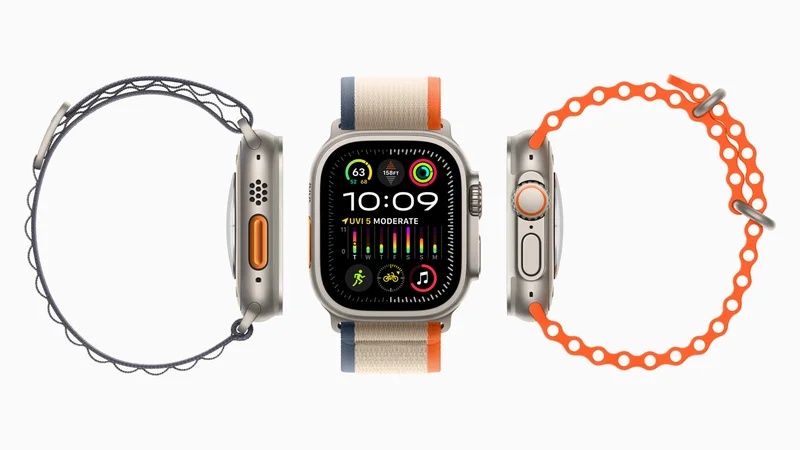
The Apple Watch Ultra 2 records HRV passively throughout the day and overnight. The data lives in Apple Health, which is arguably the best health data aggregation platform available — open, private, and interoperable.
Strengths: HRV data is stored in Apple Health and accessible to any third-party app. No subscription required. The ecosystem is massive. Overnight HRV tracking happens automatically.
Weaknesses: Apple's own Health app does almost nothing with HRV data — it shows you a chart, and that's it. No readiness score, no trend analysis, no actionable insights. You essentially need a third-party app (like HRV4Training or Welltory) to make the data useful. Apple treats HRV as raw data, not a feature.
Browse All Products
Explore our evidence-based product reviews across every health category.
Best Breathing & Biofeedback Apps
This is where HRV tracking goes from passive monitoring to active training. These apps use your HRV data to guide breathing sessions that directly improve autonomic nervous system balance.
Breathe (Apple Watch Built-In)
Apple's built-in Breathe app is the simplest entry point. It guides you through slow breathing sessions and records a quick HRV snapshot. It's basic, it's free, and it's already on your wrist.
The reality: It's fine for building a breathing habit, but it doesn't provide real-time HRV biofeedback. You're following a fixed breathing pattern without knowing whether it's actually shifting your autonomic state. Think of it as training wheels — useful to start, but you'll outgrow it.
Resonance Breathing Apps (Elite HRV, Breathe+)
Several dedicated apps offer resonance frequency breathing with real-time HRV feedback. You breathe at a guided pace while watching your HRV respond in real time. When you hit your personal resonance frequency (usually 4.5-7 breaths per minute), you'll see HRV spike — and that visual feedback is powerful for building the habit.
Elite HRV includes a basic biofeedback breathing module in its free tier. Apps like Breathe+ and BreathBall offer more customizable sessions. The key is real-time feedback from a sensor — without it, you're just doing timed breathing, which is still beneficial but less targeted.
Calm and Headspace — HRV-Adjacent
Calm and Headspace are meditation apps, not HRV apps. But they're worth mentioning because both have added integration with Apple Health and wearable data. Headspace in particular has experimented with showing how meditation sessions affect your heart rate and HRV metrics.
The honest take: These are great meditation apps. The HRV integration is more of a marketing feature than a core function. If you already use Calm or Headspace, the HRV data is a nice bonus. But don't buy either of them for HRV training — they're not designed for that. Use a dedicated biofeedback app instead.
Free vs. Paid: Is It Worth It?
Let's talk about subscription fatigue, because it's real in this space.
If you're already paying for an Oura membership ($6/month), or a WHOOP subscription ($30/month), or a Garmin Connect+ plan — adding another $10-15/month for a standalone HRV app feels excessive. And it is.
Here's the honest breakdown:
The free tier is enough if: You want a morning readiness score and basic trend tracking. Elite HRV's free tier plus a chest strap will get you 80% of the value at minimal cost. Apple Health stores your data for free.
Paying makes sense if: You're a serious athlete who needs training load correlation (HRV4Training's one-time $10 is a steal), or you're a clinician who needs clinical-grade metrics (Kubios is worth the $90/year for professional use).
Paying doesn't make sense if: You're already getting HRV insights from your wearable's companion app and you'd be paying for a second layer of analysis that tells you roughly the same thing. Two apps saying "your recovery is low today" doesn't make you recover faster.
The subscription trap: Some apps offer a compelling free trial, then lock core features behind a paywall that renews automatically. Before committing, ask yourself: does this app give me insights I can't get from my existing wearable app? If the answer is "not really," save your money.
My recommendation for most people: start with your wearable's built-in app. If you hit its limitations — maybe you want better trend analysis, or you want to correlate HRV with specific behaviors — then add one dedicated app. Not three. Not five. One.
Get smarter about health tech
Deal alerts, new reviews, and health tips — delivered weekly. No spam.
Unsubscribe anytime. We respect your inbox.
The Bottom Line
The best HRV app depends on what you're trying to do:
- Just starting out? Elite HRV (free) + a Polar H10 chest strap. Simple, reliable, no subscription.
- Serious athlete? HRV4Training. One-time purchase, research-grade analysis, integrates with your training platforms.
- Multiple wearables, want one dashboard? Welltory. But budget for the subscription.
- Clinical or research use? Kubios. Nothing else comes close for analytical depth.
- Already own a wearable? Start with its companion app. Oura's is excellent. WHOOP's is solid (if pricey). Apple's needs third-party help.
The most important thing isn't which app you pick. It's consistency. A morning HRV reading taken every day with a mediocre app is infinitely more valuable than sporadic readings from the fanciest app in the store. Pick one, stick with it for 30 days, and let the trends tell the story.
For help choosing the right hardware to pair with your app, check out our guide to the best wearables for HRV tracking.
FAQ
Do I need a separate HRV app if I already have an Oura Ring or WHOOP?
For most people, no. The companion apps for Oura and WHOOP provide solid HRV insights — morning readiness, trend tracking, and recovery scores. A standalone app makes sense only if you need deeper analysis (like frequency-domain metrics), want to correlate HRV with training load in a platform like TrainingPeaks, or if you're dissatisfied with the insights your wearable provides. Don't pay for redundancy.
Can I measure HRV accurately with just my phone camera?
Yes, but with caveats. Phone camera-based PPG (photoplethysmography) has been validated in studies — HRV4Training's camera measurement, for example, has published accuracy data. However, it's less reliable than a dedicated chest strap like the Polar H10, particularly if your hands are cold, you move during measurement, or lighting conditions are poor. For a morning readiness check, camera-based measurement is good enough. For clinical analysis, use a chest strap.
What's the best free HRV app?
Elite HRV offers the most complete free experience — morning readiness scores, trend tracking, and data export without paying a dime. You'll need a Bluetooth chest strap or compatible sensor (no camera measurement). Apple Health is also free and stores HRV data from Apple Watch, but it doesn't analyze or interpret the data — you'll need a third-party app to make it actionable. For an overview of what HRV actually measures and why it matters, see our complete HRV guide.
Is HRV4Training worth the price?
At $9.99 one-time on iOS, HRV4Training is arguably the best value in the entire HRV app market. You get peer-reviewed camera measurement, excellent trend analysis, training load correlation, and no subscription. Compare that to apps charging $10-15/month for similar (or inferior) features. If you're an athlete or a data-driven health optimizer, it's worth it several times over.
How often should I measure my HRV with an app?
Once per day, first thing in the morning, before getting out of bed. Consistency matters far more than frequency. Some wearables (Oura, WHOOP, Apple Watch) measure continuously overnight, which gives you a passive nightly average without any effort. If you're using a standalone app with a chest strap, the morning reading is the gold standard. Don't obsess over intraday fluctuations — your HRV will bounce around during the day based on meals, stress, caffeine, and a dozen other variables. The morning baseline is what tells the real story.
Can breathing apps actually improve my HRV?
Yes — and this is one of the better-supported findings in the HRV literature. Resonance frequency breathing (slow, paced breathing around 6 breaths per minute) has been shown to acutely increase HRV during the session and, with consistent practice over weeks, can improve resting HRV baseline. A 2019 meta-analysis in Applied Psychophysiology and Biofeedback found that HRV biofeedback training produced significant improvements in both HRV metrics and self-reported stress. The key word is "consistent" — a one-off session feels nice, but the real benefits come from daily practice over 4-8 weeks.
Featured Products
Products mentioned in this article


Related Guides
More articles you might find helpful
Best Bed Cooling Systems 2026: Eight Sleep vs Cheaper Alternatives
**Disclosure:** Product CTAs on this page currently go to manufacturer sites (no affiliate tracking yet). Better Vitals may earn a commission once partner links are live — rankings and "skip if" calls won't change when we swap URLs. We only recommend gear we'd put on a shortlist for a specific type
Is the Oura Membership Worth It in 2026? (And How to Skip It)
*Updated July 2026*
Oura Ring Price in 2026: Every Model, Subscription & Real Total Cost
*Updated July 2026*

Written by
Steve Luu
Health tech researcher