Is the Oura Membership Worth It in 2026? (And How to Skip It)
Key Takeaway
Updated July 2026
Affiliate Disclosure: BetterVitals may earn a commission from purchases made through links in this article, at no additional cost to you. This supports our independent research and analysis. We only recommend products we believe in after thorough evaluation.
Medical Disclaimer
This article is for educational purposes only and is not a substitute for professional medical advice, diagnosis, or treatment. Always consult your healthcare provider before making health decisions.
Is the Oura Membership Worth It in 2026? (And How to Skip It)
Meta description: Is the $5.99/month Oura Membership worth it in 2026? What it gates, what the free tier keeps, and the best no-subscription alternatives.
Updated July 2026
Short answer: if you're buying an Oura Ring, yes — the $5.99/month membership is worth it, because without it the ring is barely functional. The free tier shows just three bare daily scores and strips out sleep stages, HRV trends, temperature data, and essentially every insight the hardware exists to generate. The real question isn't "should I pay for the membership?" — it's "should I buy into a subscription wearable at all?" If the recurring fee grates, the Ultrahuman Ring Air delivers most of the experience for $349 flat, no subscription, ever.
What the Oura Membership Costs
- $5.99/month, or $69.99/year (save ~$2)
- First month typically free with a new ring
- On top of the ring itself: $349 (Silver/Black) to $499 (Gold/Ceramic) — full price breakdown in our Oura Ring price guide
- Three-year cost of ownership: ~$559 for a base ring
- Auto-renews until cancelled; you can cancel anytime from your account and keep the free tier
What You Get — and What the Free Tier Keeps
Without membership (free tier): three daily scores — Sleep, Readiness, Activity — as bare numbers, plus basic ring settings. That's it.
With membership:
- Detailed sleep analysis — stages (deep, REM, light), latency, timing, efficiency; the core of why people buy Oura
- HRV trends and overnight curves — essential for recovery tracking
- Body temperature trends — illness early-warning and cycle tracking
- Readiness insights — the why behind the score, not just the number
- Daytime stress, VO2 max estimates, cardiovascular age
- Long-term trend views — weeks/months/years of your data
- Integrations including the glucose overlay with Dexcom Stelo
The gating is aggressive by design. Reviewers and users have said it since launch: the free tier isn't a lite product, it's a demo.
What the Membership Feels Like in Daily Use
The pricing tables only tell you so much. Here's what the paid experience actually delivers day to day, based on long-term wear:
Mornings start with the Readiness score plus its contributors — resting heart rate, HRV balance, body temperature deviation, and how your recent sleep and activity stack up against your own baseline. On a rough night, you don't just see a lower number; you see which input dragged it down, which is what makes the score actionable rather than decorative.
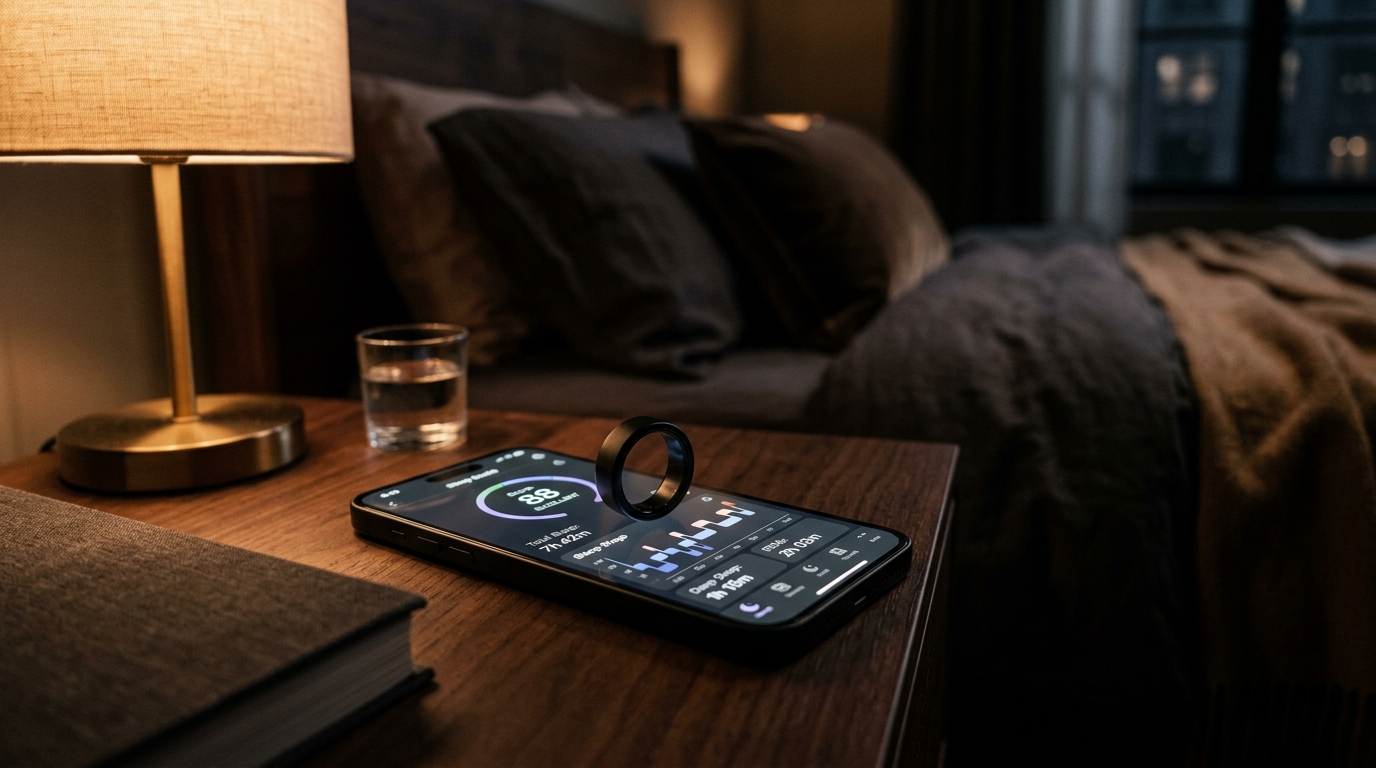
The sleep view shows a full hypnogram (your night mapped across light, deep, and REM), sleep efficiency, how long it took you to fall asleep, and timing consistency. Over weeks, the patterns become more useful than any single night: late meals, alcohol, and late workouts all leave visible fingerprints.
Tags let you log behaviors — caffeine, alcohol, late screen time, magnesium, travel — and the app surfaces how those tags correlate with your sleep and readiness over time. This is where the membership quietly earns its fee: after two to three months of data, you're no longer reading generic advice, you're reading your own patterns.
Temperature trends are the sleeper feature. Because the ring tracks nightly deviations from your personal baseline, a sustained rise often shows up a day or so before you feel a cold coming on, and the same signal powers Oura's cycle-tracking features.
None of this exists on the free tier. That's the honest trade: the hardware collects the data either way, but the interpretation layer — the entire product, really — is rented.
The Honest Math
$69.99/year on a $349 ring means the membership costs ~20% of the hardware price annually, forever. Three-year total: ~$559, or about $15.50/month for the full experience.
Is the data worth $15.50/month? Our take from long-term wear (full verdict in the Oura Ring 4 review): for sleep-first users, yes — Oura's sleep staging, temperature sensitivity, and app polish remain the best in consumer wearables, and the insights genuinely compound over months of trend data. For activity-first users, no — a Garmin or Apple Watch does more for training with no mandatory subscription.
Browse All Products
Explore our evidence-based product reviews across every health category.
How Oura's Model Compares to Other Wearables
Context matters when judging the fee:
- WHOOP is subscription-only — no upfront hardware cost, but roughly $239/year, making it meaningfully more expensive than Oura over a multi-year horizon. Details in our Oura vs WHOOP comparison.
- Fitbit Premium is optional at around $10/month — but Fitbit's free tier is genuinely usable, unlike Oura's.
- Garmin and Apple Watch charge nothing recurring for their core health metrics; you pay once for hardware.
- Ultrahuman and RingConn bundle everything into the hardware price with no subscription at all.
So Oura sits in an awkward middle: cheaper per year than WHOOP, but with the most restrictive free tier in the category. You're not paying for premium extras — you're paying to switch the product on.
Who Should Pay — and Who Shouldn't
The membership earns its fee if you:
- Care most about sleep quality and recovery, not workout tracking
- Will actually open the app a few times a week and act on trends
- Want illness early-warning signals or temperature-based cycle tracking
- Value long-term data — the product genuinely gets better after months of baseline
Skip Oura entirely (not just the membership) if you:
- Mainly want training features, GPS, or a screen — a Garmin or Apple Watch does far more with no mandatory fee
- Know from experience that you abandon wearables after the novelty fades; a subscription turns an unused gadget into a recurring charge
- Are philosophically done with subscriptions — that's a legitimate position, and the alternatives below are built for you
How to Skip the Subscription Entirely
If the recurring fee is the dealbreaker, you have real options in 2026:
- Ultrahuman Ring Air — $349, no subscription, ever. The closest like-for-like: sleep, HRV, temperature, recovery scores, all features included in the hardware price. Three-year cost $349 vs Oura's ~$559. Oura still wins on sleep-staging accuracy and app maturity; Ultrahuman closes the gap each quarter. Our head-to-head comparison covers the details.
- RingConn — cheaper still, no subscription, more basic app; the budget entry in our best Oura alternatives guide.
- Keep an Oura on the free tier — defensible only if you literally want three daily numbers; almost nobody stays satisfied with it.
- Don't pre-pay years of membership before you've worn a ring — buy monthly for the first two months, confirm you actually check the app, then switch to annual.
Practical Tips Before You Subscribe
- Use the free first month deliberately. Wear the ring every night, tag your caffeine and alcohol, and check the app daily. If you're not opening it by week three, you have your answer before the first charge.
- Monthly first, annual later. The annual plan only saves about $2/year — there's no meaningful penalty for testing on monthly billing first.
- The membership follows your account, not the ring. If you upgrade hardware later, your subscription carries over — you don't pay twice.
- Buying secondhand? The previous owner must unpair the ring from their account first, and you'll still need your own membership for full features — so used rings save on hardware, not on the subscription.
- Cancelling is low-risk. Your historical data stays on your account; you drop to the free tier, and insights unlock again if you resubscribe.
Get smarter about health tech
Deal alerts, new reviews, and health tips — delivered weekly. No spam.
Unsubscribe anytime. We respect your inbox.
A Note on What This Data Is — and Isn't
The Oura Ring is a wellness device, not a medical one. Its heart rate, HRV, temperature, and sleep-stage figures are estimates from optical and thermal sensors — good enough for spotting trends against your own baseline, but not a substitute for clinical measurement. Sleep staging approximates what a sleep lab measures; it doesn't equal it. A temperature deviation is a prompt to rest, not a diagnosis. If you have symptoms — palpitations, suspected sleep apnea, persistent fatigue — see a physician rather than self-diagnosing from an app, with or without a membership.
Bottom Line
If you buy an Oura Ring, budget the $69.99/year as part of the purchase price — the free tier is not a real product, and pretending otherwise leads to buyer's remorse. The membership is fairly priced for what sleep-first users get, and the insights genuinely improve with months of data. But if a permanent subscription on a $349 device offends you on principle, don't compromise: buy the Ultrahuman Ring Air and own the whole experience outright.
Frequently Asked Questions
Is the Oura membership worth it?
Yes, if you're committed to an Oura Ring — without the $5.99/month membership you lose sleep stages, HRV trends, temperature data, and nearly every insight, leaving three bare scores. The better framing: decide whether you want a subscription wearable at all. If not, the Ultrahuman Ring Air ($349, no subscription) is the strongest alternative.
Can you use an Oura Ring without a subscription?
Technically yes, practically no. The free tier shows only three daily scores — Sleep, Readiness, Activity — with no sleep stages, no HRV trends, no temperature insights, and no long-term data. Almost all of the ring's value sits behind the membership, which is why most reviewers treat it as a required cost.
How much is the Oura subscription in 2026?
$5.99/month or $69.99/year. Combined with the ring ($349–$499), first-year cost runs about $419 for a base finish, and roughly $559 over three years. New rings typically include the first month free.
Which smart rings have no subscription?
The Ultrahuman Ring Air ($349) and RingConn are the leading no-subscription smart rings in 2026 — every feature is included in the hardware price. Ultrahuman is the closest to Oura in capability; RingConn is the budget pick. Samsung's Galaxy Ring also runs subscription-free within the Samsung ecosystem.
Does Oura ever discount the membership?
Effectively no — hardware gets $50–$100 discounts around Black Friday and New Year, but the membership price has stayed fixed. The only savings levers are the annual plan (~$2/year cheaper than monthly) and the free first month bundled with new rings.
What happens if I cancel the Oura membership?
The ring keeps syncing and you drop to the free tier: three bare daily scores with no stages, trends, or insights. Your historical data remains attached to your account, and full analysis unlocks again if you resubscribe — so cancelling is reversible, not destructive.
Does the membership transfer if I upgrade to a new ring?
Yes. The membership is tied to your Oura account, not the physical ring, so upgrading hardware doesn't restart or duplicate the subscription. Your baseline and historical data carry over as well.
Do I still need the membership with a used or older Oura Ring?
Yes — Gen 3 and Ring 4 both require the same membership for full features, and a secondhand ring must be unpaired by its previous owner before you can set it up. Buying used saves on hardware but not on the recurring fee.
Is the Oura membership HSA/FSA eligible?
The ring itself is commonly HSA/FSA eligible in the US; treatment of the membership fee varies by plan administrator, so check before assuming. Details are in our Oura Ring price guide.
Disclaimer: This article contains affiliate links. We may earn a commission if you purchase through our links, at no additional cost to you. All opinions are our own and based on thorough research and testing. Prices verified July 2026 and subject to change.
Featured Products
Products mentioned in this article

Related Guides
More articles you might find helpful
Best Bed Cooling Systems 2026: Eight Sleep vs Cheaper Alternatives
**Disclosure:** Product CTAs on this page currently go to manufacturer sites (no affiliate tracking yet). Better Vitals may earn a commission once partner links are live — rankings and "skip if" calls won't change when we swap URLs. We only recommend gear we'd put on a shortlist for a specific type
Oura Ring Price in 2026: Every Model, Subscription & Real Total Cost
*Updated July 2026*
Best CGM for Type 2 Diabetes Without Insulin (2026): OTC Options Compared
*Updated July 2026*

Written by
Steve Luu
Health tech researcher