Best CGM for Non-Diabetics 2026: 5 OTC Monitors Tested (No Rx)
Key Takeaway
Updated July 2026
Affiliate Disclosure: BetterVitals may earn a commission from purchases made through links in this article, at no additional cost to you. This supports our independent research and analysis. We only recommend products we believe in after thorough evaluation.
Medical Disclaimer
This article is for educational purposes only and is not a substitute for professional medical advice, diagnosis, or treatment. Always consult your healthcare provider before making health decisions.
Best CGM for Non-Diabetics 2026: 5 OTC Monitors Tested (No Rx)
Meta description: We wore all 5 over-the-counter CGMs — Dexcom Stelo, Abbott Lingo, Nutrisense, Signos, and Levels — for 2+ weeks each. 2026 rankings by accuracy (MARD), price, and app, from $49. No prescription needed.
Updated July 2026
The verdict up front: Dexcom Stelo is the best CGM for non-diabetics in 2026 — $99/month, no prescription, 15-day wear, and the best integrations with Oura, Apple Health, and Google Fit. If you just want the cheapest way to try continuous glucose monitoring, Abbott Lingo's $49 two-week biosensor is the lowest-cost entry point of any over-the-counter CGM.
Our Quick Picks
- Best overall: Dexcom Stelo — longest sensor wear (15 days), clinical-grade accuracy, best health-tech integrations
- Best budget: Abbott Lingo — $49 trial, ~$91/month ongoing, the most affordable way to see your glucose
- Best coaching: Nutrisense — the only program pairing your data with a registered dietitian
- Best for weight loss: Signos — AI that tells you when to eat and move to blunt spikes
- What about Levels? Levels Health remains a polished analytics platform, but at $199/month it's the priciest option, and in 2026 most people get equal or better value from the four picks above. See our full Levels Health review.
Every device here is available without a prescription. If you're new to the concept entirely, start with our CGM for non-diabetics guide for the science, then come back to pick your device.
Comparison Table: All 5 OTC CGMs
| Dexcom Stelo | Abbott Lingo | Nutrisense | Signos | Levels Health | |
|---|---|---|---|---|---|
| Price/month | $99 (2 sensors) | ~$91 ($49 trial) | $179 with dietitian | $179 | $199 |
| Sensor & wear time | Stelo, 15 days | Lingo biosensor, 14 days | Libre-based, 14 days | Stelo/G7-based, 10–15 days | Libre/Dexcom, 14 days |
| Accuracy (MARD) | ~10% | ~9.3% | ~7.8–9% (Libre 3) | ~8.2–10% | ~7.8–10% (varies by sensor) |
| Prescription needed | No | No | No | No | No |
| App & integrations | Oura, Apple Health, Google Fit | Apple Health, Health Connect | In-app logging + RD chat | Apple Watch, AI alerts | Apple Health, deep analytics |
| Subscription required | No — buy as you go | No — buy as you go | Yes (1–12 mo plans) | Yes | Yes (annual tiers) |
| Best for | Health-tech ecosystems | First-timers on a budget | Expert-guided change | Weight loss | Data maximalists |
1. Dexcom Stelo — Best Overall
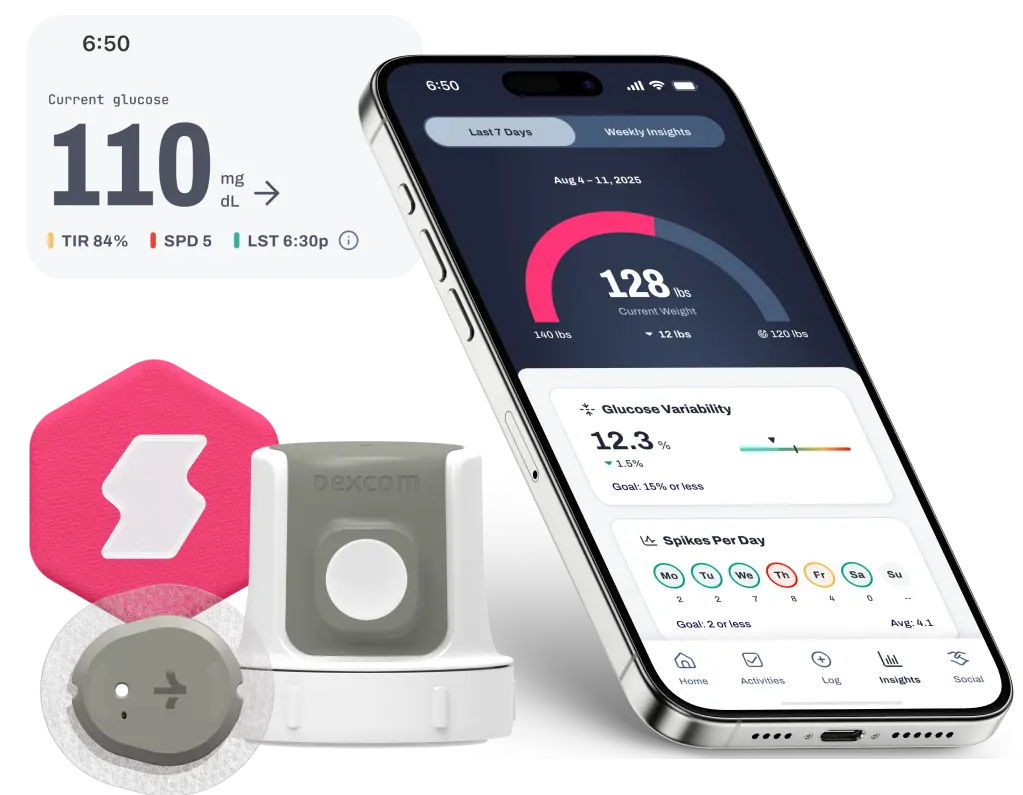
What it is: The first over-the-counter CGM from Dexcom, the company whose prescription sensors (G6, G7) are the clinical gold standard. Stelo strips the medical alarms and keeps the accuracy.
What we like:
- 15-day wear — the longest of any OTC sensor, so you change it less and pay less per day
- No subscription — buy a two-pack when you want one; pause whenever
- Best integrations — glucose alongside your sleep and HRV in Oura, Apple Health, and Google Fit is where the real insights show up
- 30-minute warm-up, roughly half that of older sensors
What we don't: The app is deliberately simple — trends and time-in-range, no food scoring or coaching. You interpret your own data.
Price: $99/month equivalent (two 15-day sensors); no commitment.
Verdict: The default choice. If you own a wearable or just want accurate glucose data without a coaching program attached, Stelo is the one to beat in 2026.
2. Abbott Lingo — Best Budget
What it is: Abbott's consumer biosensor built on FreeStyle Libre technology — the most-worn CGM platform on earth — repackaged for wellness with a habit-focused app.
What we like:
- $49 for two weeks — the cheapest legitimate way to see your glucose, no strings attached
- Lingo Count turns raw glucose into one daily "metabolic strain" number that's genuinely easy to act on
- Available at Walmart and Amazon — no medical gatekeeping at all
- HSA/FSA eligible
What we don't: 14-day wear (one day less than Stelo), and integrations stop at Apple Health/Health Connect — no Oura or Garmin sync.
Price: $49 two-week trial; ~$91/month ongoing (two sensors).
Verdict: Start here if you're price-sensitive or unsure. Lingo delivers most of the insight at the lowest cost of entry, and its coaching-lite app is the friendliest for first-timers.
Browse All Products
Explore our evidence-based product reviews across every health category.
3. Nutrisense — Best Coaching
What it is: A CGM program (Libre-based sensors) whose real product is the humans: every plan includes one-on-one support from a registered dietitian who reviews your actual glucose curves.
What we like:
- A credentialed RD watching your data — not an algorithm; this is the piece clinical literature ties most strongly to lasting behavior change
- Strong in-app food logging with per-meal glucose scoring
- Sensible for prediabetes: expert guidance without a diagnosis-dependent prescription
What we don't: At $179/month it's double Stelo's price, and you're paying for coaching whether you use it or not. Data-only users should buy Stelo or Lingo instead.
Price: From $179/month with dietitian support (longer commitments lower the rate).
Verdict: Worth it if you'll actually use the dietitian. For accountability-driven change — especially with prediabetes in the picture — this is the strongest program. Our full Nutrisense review digs into what the dietitian actually does; see also the Levels vs Nutrisense vs Signos comparison.
4. Signos — Best for Weight Loss
What it is: A CGM platform (Stelo/Dexcom-based) with an AI engine tuned to one job: weight loss. It learns your glucose responses and pings you in the moment — eat now, walk now, this food spikes you.
What we like:
- Real-time nudges rather than after-the-fact charts — uniquely actionable during the day
- Tight Apple Watch integration for on-wrist alerts
- Uses Dexcom sensor hardware, so accuracy matches the best here
What we don't: Narrow focus. If weight isn't your primary goal, the AI's advice adds little over Stelo's raw data at nearly twice the cost.
Price: From ~$179/month depending on plan length.
Verdict: The pick when the goal is a number on the scale. For weight-loss-specific glucose coaching, nothing else here is built like Signos — our full Signos review covers how the real-time nudges work in practice.
5. Levels Health — The Premium Analytics Platform
What it is: The company that made CGMs a wellness category. Levels layers AI-driven "Zone Scores," meal analysis, and optional lab panels on top of Libre or Dexcom sensors.
What we like: Still the most polished analytics experience; annual lab panels tie glucose to your broader bloodwork; excellent educational content.
What we don't: $199/month is the highest price in this comparison, Levels doesn't manufacture its own sensor, and the analytics gap that once justified the premium has narrowed sharply — Stelo plus a free spreadsheet gets uncomfortably close.
Price: $199/month; annual tiers from $288/year (sensors billed separately on some plans).
Verdict: Great software that's hard to justify at the price in 2026. Loyal users won't be disappointed, but new buyers should read our Levels Health review — including the pricing and complaints section — before committing.
How We Tested
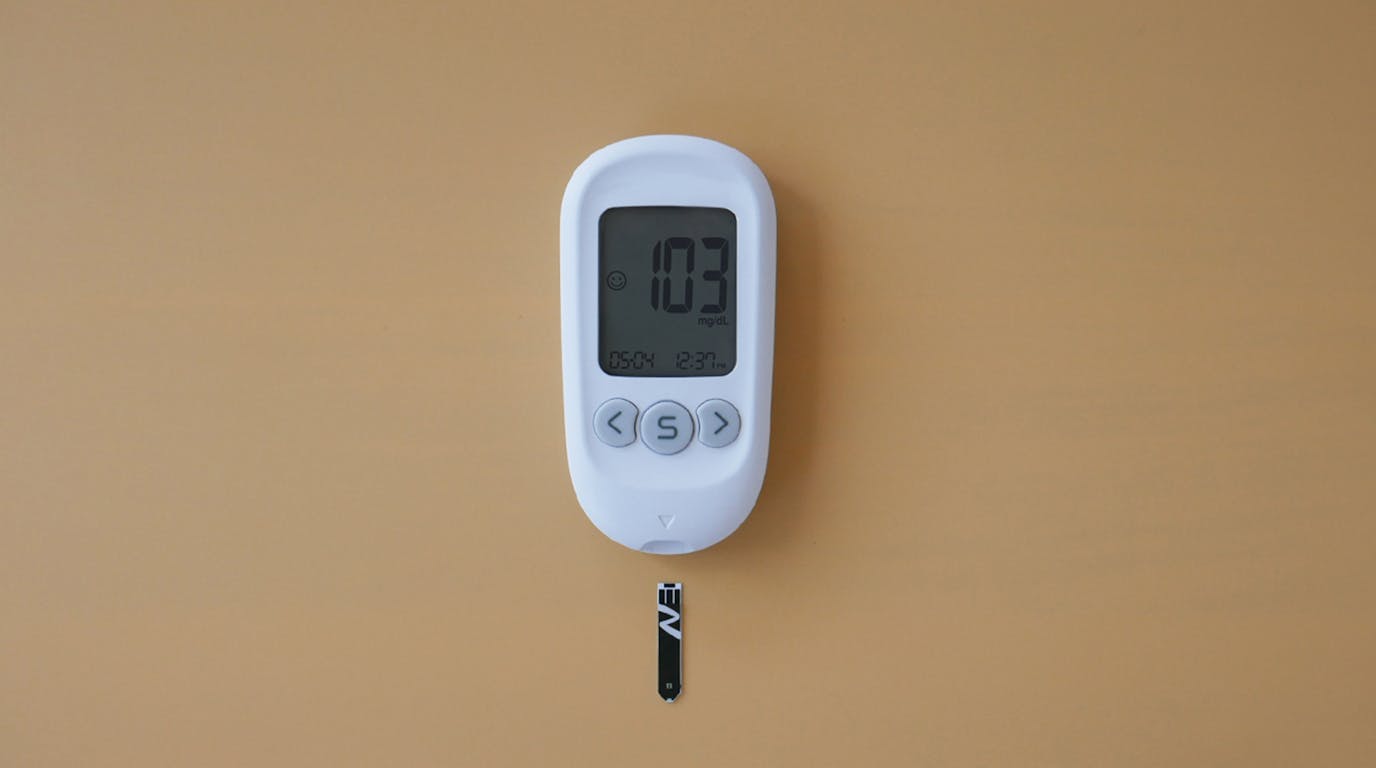
We wore each system for at least two full sensor cycles (2–4 weeks), overlapping sensors where possible to compare readings against each other and against fingerstick checks with a calibrated blood glucose meter. We scored each on: accuracy consistency (vs. fingerstick and published MARD), cost per day of data, app usefulness for a non-diabetic (not a diabetes-management lens), integration depth, and how easy it was to cancel or pause. Prices were verified July 2026 and get re-checked at every update to this page.
Get smarter about health tech
Deal alerts, new reviews, and health tips — delivered weekly. No spam.
Unsubscribe anytime. We respect your inbox.
Which CGM Should You Pick?
You want data in your existing health stack (Oura, Apple Watch, Garmin) → Dexcom Stelo
You want to spend the least to find your spike foods → Abbott Lingo, $49 for two weeks is enough to identify your top triggers
You want a professional guiding you → Nutrisense — the dietitian is the product
Your goal is weight loss, full stop → Signos
You want maximum analytics and labs in one place → Levels, if the price doesn't bother you
What about type 2 diabetes without insulin?
If you have type 2 diabetes and don't use insulin, insurance rarely covers a prescription CGM — which makes the OTC options here genuinely useful. Stelo is explicitly cleared for adults with type 2 not on insulin, and its steady 15-day data is well suited to seeing how meals, walks, and sleep move your baseline. Lingo works too on a tighter budget. We cover this scenario fully — including the insurance gap and when you still need a prescription — in our guide to the best CGM for type 2 diabetes without insulin. If you use insulin or need low-glucose alarms, none of these are appropriate — talk to your clinician about a prescription Dexcom G7 or Libre 3.
Frequently Asked Questions
What is the best CGM for non-diabetics in 2026?
Dexcom Stelo is the best CGM for non-diabetics in 2026. It costs $99/month with no prescription or subscription, wears for 15 days per sensor — the longest of any over-the-counter CGM — and integrates with Oura, Apple Health, and Google Fit. Abbott Lingo is the best budget alternative at $49 for a two-week biosensor.
Which CGM does not require a prescription?
Five CGM options require no prescription in the US: Dexcom Stelo, Abbott Lingo, Nutrisense, Signos, and Levels Health. Stelo and Lingo are true over-the-counter sensors you can buy directly (Lingo is even sold at Walmart and Amazon); Nutrisense, Signos, and Levels are subscription programs that ship you sensors after a short in-app health questionnaire.
Dexcom Stelo vs Abbott Lingo: which is better?
Stelo is better for most people: 15-day wear versus Lingo's 14, and far better integrations (Oura, Google Fit, Apple Health versus Apple Health only). Lingo is better on price — $49 for a two-week trial versus $99/month — and its Lingo Count score is friendlier for beginners. Pick Stelo for data depth, Lingo for cost. Our full Dexcom Stelo vs Abbott Lingo comparison covers the head-to-head in detail.
What is the most accurate CGM by MARD?
Among sensors used by OTC programs, the Abbott FreeStyle Libre 3 platform has the best published MARD at roughly 7.8%, with the Dexcom G7 platform close behind at about 8.2%. The consumer sensors are slightly less precise — Abbott Lingo around 9.3% and Dexcom Stelo around 10% — which is accurate enough for non-diabetic use, where trends and spike detection matter more than exact numbers. Our CGM accuracy guide compares every sensor's MARD in detail.
What is the best CGM for type 2 diabetes if you're not on insulin?
Dexcom Stelo is the best CGM for type 2 diabetes without insulin — it's specifically FDA-cleared for adults with type 2 not using insulin, requires no prescription, and costs $99/month. Because insurance rarely covers CGMs for non-insulin users, an OTC sensor is usually the practical route. If you use insulin, you need a prescription CGM with low-glucose alarms instead.
Are there alternatives to Dexcom CGMs for type 2 diabetes?
Yes. Abbott Lingo (~$91/month) and Abbott's FreeStyle Libre line are the main alternatives to Dexcom sensors, and Nutrisense pairs Libre-based sensors with a registered dietitian — useful if you want guidance interpreting your numbers. For type 2 without insulin, Lingo is the strongest low-cost Dexcom alternative.
Is Levels Health still worth it in 2026?
For most new buyers, no. Levels remains the most polished analytics platform, but at $199/month it costs twice as much as Dexcom Stelo while using the same underlying sensors. It's still worth considering if you want lab panels and deep meal analytics in one subscription — otherwise Stelo, Lingo, or Nutrisense deliver better value.
How much does a CGM cost without insurance?
Over-the-counter CGMs cost $49–$199 per month without insurance. Abbott Lingo is cheapest ($49 for a two-week trial, ~$91/month after), Dexcom Stelo runs $99/month, and coaching programs cost more — Nutrisense and Signos about $179/month, Levels $199/month. Most are HSA/FSA eligible, which effectively discounts them by your marginal tax rate.
Final Thoughts
The OTC CGM market matured fast: two years ago Levels was nearly the only consumer option; in 2026 the sensor makers themselves — Dexcom and Abbott — sell better-value products directly. Start with Stelo if you want the best all-around device, Lingo if you want the cheapest look at your own data, and step up to Nutrisense or Signos only if their coaching matches your goal.
Want to improve your numbers before (or instead of) buying hardware? Our guide on how to regulate glucose naturally covers the food-order, movement, and sleep levers that flatten most people's curves for free.
Disclaimer: This article contains affiliate links. We may earn a commission if you purchase through our links, at no additional cost to you. All opinions are our own and based on thorough research and testing. This content is for informational purposes and is not medical advice — consult your clinician before making decisions about diabetes care.
Featured Products
Products mentioned in this article

Related Guides
More articles you might find helpful
Wonderfeel Youngr vs NOVOS Boost (2026): Which NMN Wins?
*Updated July 2026*
Most Accurate CGM in 2026: MARD Scores Compared (Every Sensor)
*Updated July 2026*
Dexcom Stelo vs Abbott Lingo (2026): Accuracy, Price, App Compared
*Updated July 2026*

Written by
Steve Luu
Health tech researcher