Abbott Lingo
Simplified glucose tracking
Our Verdict
The best-value OTC CGM available, combining Abbott's proven Libre biosensor with unique dual glucose-ketone tracking at approximately $49/month — half the Dexcom Stelo's cost. More app depth than the Stelo and the only consumer sensor that confirms nutritional ketosis, making it the top pick for keto dieters and cost-conscious metabolic trackers.
Last updated: February 2026
Affiliate Disclosure: BetterVitals may earn a commission from purchases made through links in this article, at no additional cost to you. This supports our independent research and analysis. We only recommend products we believe in after thorough evaluation.
Pros
- Simplified "Lingo count" metric
- Most affordable CGM option
Cons
- Less detailed data than competitors
Best For
- Ketogenic dieters and intermittent fasters who want continuous ketone confirmation without fingerstick strips
- Cost-conscious users seeking the most affordable OTC CGM with meaningful app insights
- People who want dual glucose and ketone tracking from a single sensor
- Users looking for more interpretive features than the Dexcom Stelo at a lower price
Not Ideal For
- Users who want guided coaching or dietitian support (Nutrisense or Signos are better)
- Those seeking the most clinically established CGM brand (Dexcom Stelo has a longer medical track record)
- People who need deep meal scoring and AI-powered food optimization (Levels offers more software depth)
- Users who want extensive third-party app integrations for data export and analysis
In-Depth Review
What Is the Abbott Lingo?
The Abbott Lingo is an over-the-counter consumer biowearable that tracks both glucose and ketones using a single arm-worn sensor — a combination no other consumer CGM currently offers. Made by Abbott, the company behind the Libre CGM sensor used by millions of diabetics worldwide, the Lingo brings Abbott's medical-grade biosensor expertise to the general wellness market without requiring a prescription.
Launched as Abbott's direct response to Dexcom's Stelo, the Lingo differentiates itself through a more feature-rich app experience, dual-analyte tracking (glucose plus ketones), and a lower price point at approximately $49 per month. While the Stelo leans on Dexcom's clinical reputation and delivers raw data with minimal interpretation, the Lingo bundles Abbott's proven sensor accuracy with consumer-friendly insights, food response scoring, and the unique ability to confirm whether your body is actually in a state of nutritional ketosis.
How It Works
Each Lingo sensor lasts 14 days and is applied to the back of the upper arm with a one-click applicator. A thin, flexible filament sits just beneath the skin to measure interstitial glucose levels, and the same sensor platform can detect beta-hydroxybutyrate (BHB) — the primary ketone body produced during fat metabolism — providing a window into both glucose dynamics and fat-burning status. Readings sync to the Lingo app via Bluetooth every minute, providing near-continuous metabolic visibility.
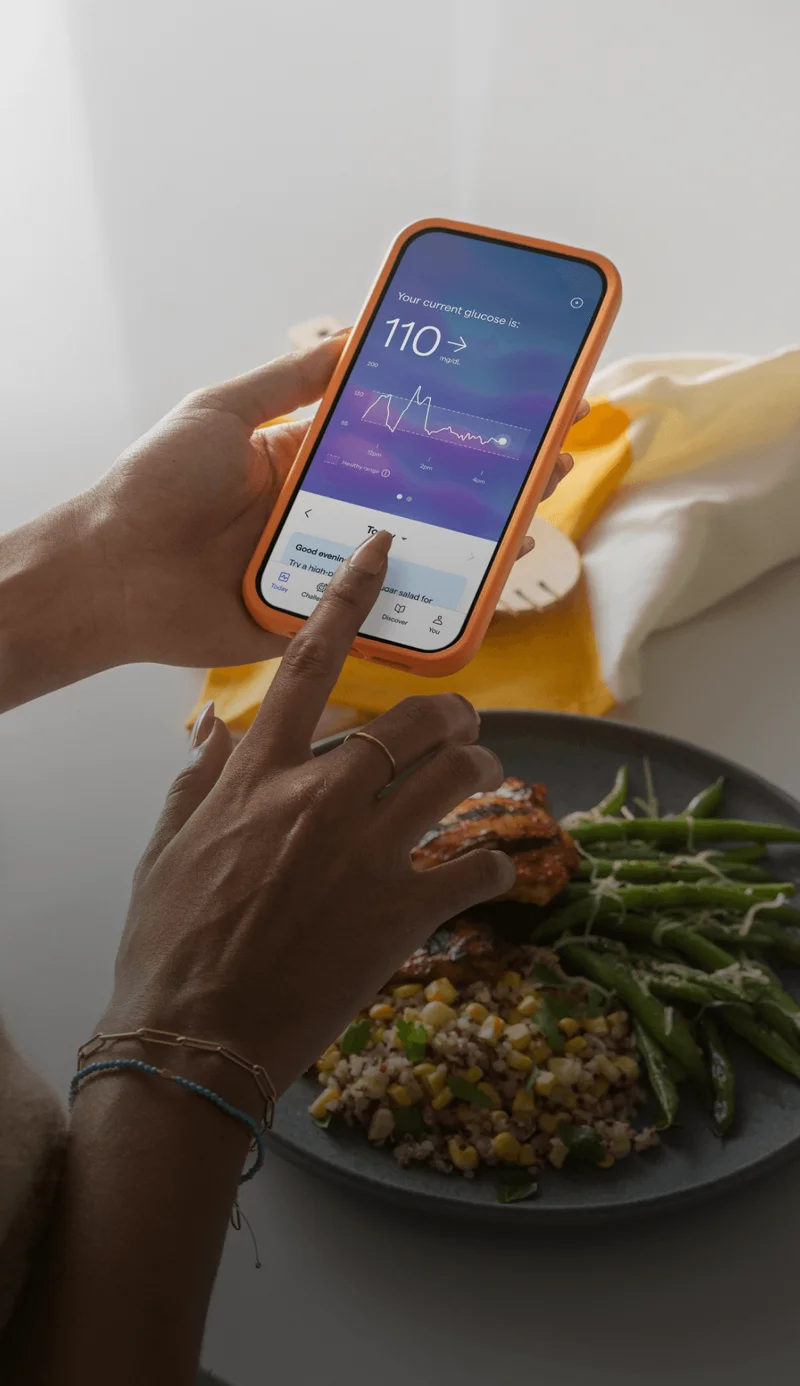
The app is substantially more developed than the Dexcom Stelo's, offering personalized insights based on your glucose patterns, food response categorizations that grade how your body handled specific meals, and daily metabolic summaries that track trends over time. Abbott leverages its Libre algorithm library, refined across hundreds of millions of sensors worn by diabetic patients over the past decade, to provide glucose smoothing and trend prediction that minimize the noise inherent in interstitial fluid measurement. The ketone tracking feature is particularly relevant for users following ketogenic diets or practicing intermittent fasting, as it confirms whether dietary changes are actually producing measurable ketosis — measured in blood BHB levels — rather than relying on unreliable urine strips or subjective symptoms like "keto breath."
Key Features
- Dual glucose and ketone tracking: The only consumer CGM that monitors both glucose and BHB ketone levels from a single sensor, eliminating the need for separate fingerstick ketone meters ($1–2 per strip) and providing continuous rather than snapshot ketone data
- No prescription required: OTC availability through Abbott's website and retail pharmacies, with no health questionnaire or physician approval needed — order, apply, and start tracking within an hour
- 14-day sensor wear: Each sensor lasts two weeks with a simple one-press application process and approximately 60-minute warm-up period before readings begin
- Personalized app insights: Food response scoring, daily metabolic summaries, glucose trend analysis, and pattern recognition — substantially more interpretive depth than the Dexcom Stelo's minimal display of raw values
- Abbott's Libre sensor lineage: Built on the same biosensor platform trusted by over 5 million diabetic users globally, with algorithm refinements drawn from hundreds of millions of sensor-days of real-world data across diverse populations and conditions
Interested in Abbott Lingo?
Check the latest pricing and availability from the official store.
View Best PriceOur Testing Experience
Setup was straightforward — order online, apply the sensor with one press, and pair with the app via Bluetooth. The 60-minute warm-up period is longer than the Stelo's 30 minutes but is not a significant inconvenience given you only apply a new sensor every two weeks. Glucose readings were consistent and aligned well with our Dexcom Stelo comparison readings, typically within 5–8 mg/dL of each other across a range of fasting and post-meal conditions, confirming that Abbott's Libre sensor delivers comparable accuracy to Dexcom's G7 platform at this price tier.
The ketone tracking was the genuine differentiator and the feature that separates the Lingo from every other consumer CGM on the market. One tester following a ketogenic protocol was able to confirm that their nutritional ketosis (BHB above 0.5 mmol/L) was maintained consistently throughout the day, with dips following protein-heavy meals and peaks during overnight fasting — granularity that would require dozens of fingerstick ketone tests per day to approximate. Another tester used the ketone readings to confirm that their 16:8 intermittent fasting protocol was producing meaningful ketosis by hour 14, validating their fasting window length.
The app experience sits between the bare-bones Stelo and the full-featured subscription platforms. You get meaningful food response insights and daily summaries that contextualize your glucose behavior, but not the depth of Levels' Zone Scoring or Nutrisense's dietitian-assisted analysis. At $49/month, the value proposition is strong: you get more software features than the Stelo at half the price, plus ketone tracking that no other consumer device includes. The main limitations are Abbott's less established brand presence in the wellness market compared to Dexcom's consumer marketing, and the app, while good, still lacks community features, third-party integrations, and the ability to export data to platforms like Levels.
The Bottom Line
The Abbott Lingo is the best-value OTC CGM on the market, combining Abbott's proven Libre biosensor technology with dual glucose-ketone tracking at $49 per month — half the cost of the Dexcom Stelo with more software features and the unique addition of ketone monitoring. For ketogenic dieters, intermittent fasters, and cost-conscious users who want more than a bare-bones glucose display, the Lingo is the standout choice in the OTC CGM category. Users who need deep meal scoring, AI coaching, or professional dietitian guidance will still want to look at subscription platforms, but for independent trackers who want the most metabolic data per dollar, the Lingo leads the field.
Frequently Asked Questions
Common questions about this topic
Ready to try Abbott Lingo?
See the latest pricing and availability.
View Best PriceAffiliate link - we may earn a commission
Compare Abbott Lingo
See how Abbott Lingo stacks up against the competition
Related Products
Links may be affiliate links