Dexcom Stelo vs Abbott Lingo (2026): Accuracy, Price, App Compared
Key Takeaway
Updated July 2026
Affiliate Disclosure: BetterVitals may earn a commission from purchases made through links in this article, at no additional cost to you. This supports our independent research and analysis. We only recommend products we believe in after thorough evaluation.
Medical Disclaimer
This article is for educational purposes only and is not a substitute for professional medical advice, diagnosis, or treatment. Always consult your healthcare provider before making health decisions.
Dexcom Stelo vs Abbott Lingo (2026): Accuracy, Price, App Compared
Meta description: Dexcom Stelo vs Abbott Lingo, worn simultaneously: accuracy, price, sensor life, apps, and integrations — which OTC CGM fits which person in 2026.
Updated July 2026
Quick verdict: Dexcom Stelo wins for ongoing tracking — 15-day sensors, no subscription, and integrations with Oura, Apple Health, and Google Fit that Lingo can't match. Abbott Lingo wins for getting started — $49 for a two-week biosensor and the friendliest beginner app in the category. The honest recommendation for most first-timers is both, in sequence: learn on a $49 Lingo, then switch to Stelo if you decide you want continuous data.
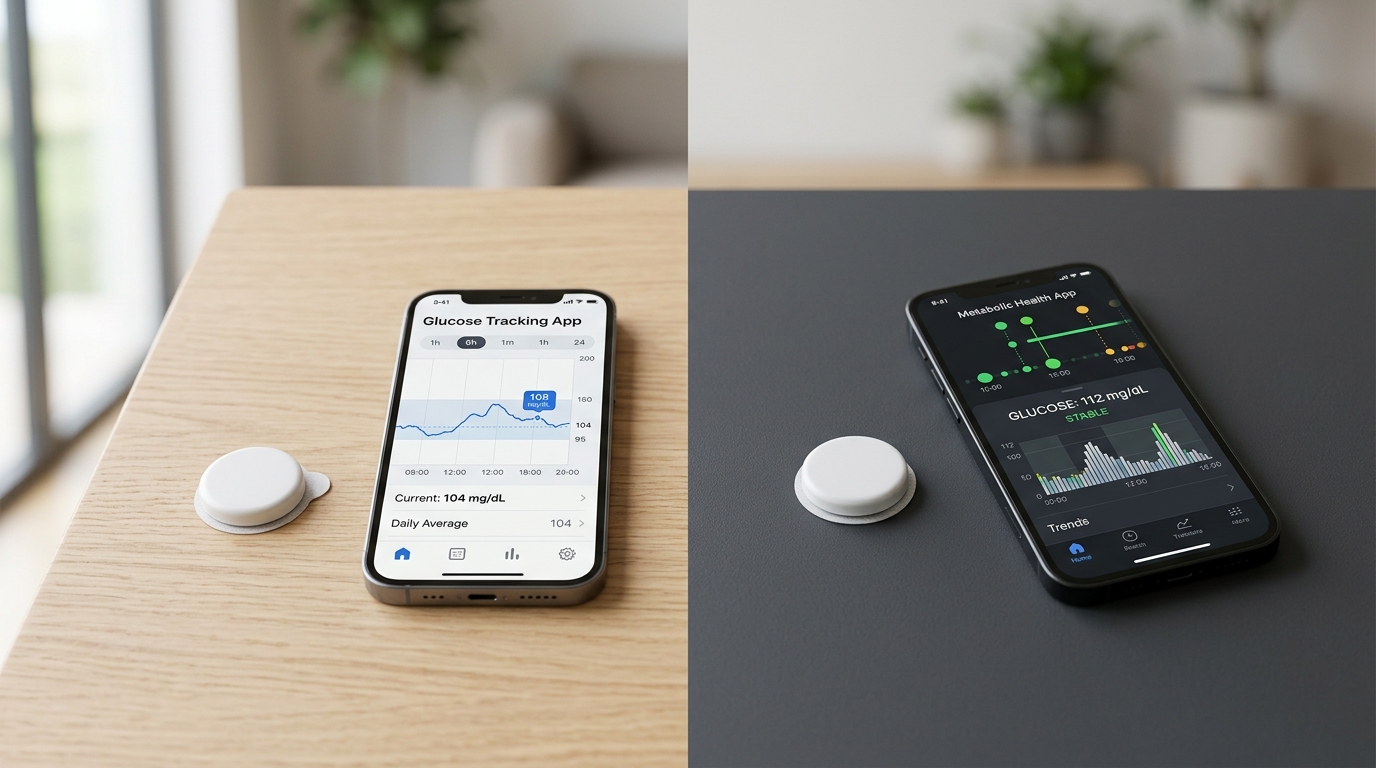
These are the only two true over-the-counter CGMs in 2026 — sensors you buy directly from the manufacturer with no prescription, no membership program, and no coaching upsell. We wore them simultaneously, one on each arm, to compare readings head to head.
Before the comparison, the framing that applies to both: these are wellness devices for adults not on insulin — educational tools that show you patterns, not diagnostic instruments. Neither can diagnose prediabetes or diabetes, neither has medical alarms, and glucose responses are individual enough that your results won't match anyone else's. If a suspected medical condition is what brought you here, physician-ordered labs come first; a sensor comes after, if at all.
Stelo vs Lingo at a Glance
| Dexcom Stelo | Abbott Lingo | |
|---|---|---|
| Price | $99/month (2 sensors); $49.99 single | $49 two-week trial; ~$91/month ongoing |
| Sensor life | 15 days | 14 days |
| Accuracy (MARD) | ~10% | ~9.3% |
| Reading frequency | Every 5 minutes | Every minute |
| Warm-up | 30 minutes | ~1 hour |
| Integrations | Oura, Apple Health, Google Fit | Apple Health, Health Connect |
| App philosophy | Raw data, minimal coaching | Lingo Count score + habit coaching |
| Where to buy | Dexcom.com | Walmart, Amazon, Lingo site |
| Subscription | None | None |
| HSA/FSA | Yes | Yes |
Wearing Them: Effectively Identical
Both sensors apply to the back of the upper arm with a spring-loaded applicator — a one-second click, a brief pinch, and then you forget they're there. Both survived our full test through daily showers, workouts, and sleep without adhesive failure, and both sit low-profile enough that sleeves and seatbelts don't catch.
The shared quirks are platform-universal too. Day-one readings are the noisiest on both (tissue settles around the filament over the first 12–24 hours — don't judge either sensor by its first evening), both produce occasional false "compression lows" if you sleep directly on the sensor arm, and both lag fingerstick blood glucose by 5–15 minutes because they read interstitial fluid. Warm-up differs slightly — Stelo goes live in about 30 minutes, Lingo takes around an hour — but over a two-week wear that's trivia.
One cadence difference is worth knowing: Lingo records a reading every minute, Stelo every five minutes. In practice the five-minute curve captures every spike and trend that matters — glucose doesn't move meaningfully faster than that — so treat this as a spec-sheet difference, not a real one.
Accuracy: Effectively a Tie
On paper Lingo edges ahead — Abbott's published MARD is about 9.3% versus roughly 10% for Stelo. In practice, wearing both at once, the two curves tracked each other closely all day. Lingo read slightly lower during fast post-meal rises; Stelo smoothed spikes a touch more. Both showed the universal CGM quirks: compression lows when you sleep on the sensor arm, and a 5–15 minute lag behind fingerstick blood glucose.
For the wellness use case — which foods spike me, does a post-meal walk help, how does bad sleep move my baseline — either sensor is more than accurate enough. Don't choose on MARD. (For what MARD actually measures and why sub-point differences are mostly methodological noise, see our CGM accuracy guide.)
Price: Lingo Wins the Start, Stelo Wins the Marathon
Lingo's $49 two-week sensor is the cheapest CGM experiment in existence. You can buy it at Walmart with your groceries. Two weeks is genuinely enough to find your top trigger foods and test the classic fixes (protein first, carbs last, walking after dinner).
Stelo's economics win over time. $99 buys 30 days of wear (two 15-day sensors) versus about $91 for 28 days of Lingo — nearly identical per day. But Stelo's 15-day sensors mean fewer changes per year, and Dexcom sells singles at $49.99 when you just want an occasional check-in month.
Zoom out to a year and the pattern most buyers should actually follow becomes obvious. Continuous wear costs roughly $1,100–1,200 on either platform — real money for data that stops surprising you once you've learned your patterns. The far better value curve is front-loaded learning plus periodic check-ins: one intensive month or two at the start (call it $100–200), then a single sensor two or three times a year to re-test after diet changes, new routines, or just as a habit audit — $150–250 annually, total. Both platforms support this perfectly because neither has a subscription to cancel; Stelo's $49.99 singles and Lingo's $49 sensor are interchangeable for the check-in role.
Browse All Products
Explore our evidence-based product reviews across every health category.
The Apps: Coaching vs Clean Data
This is the real fork in the road.
Lingo teaches. Its Lingo Count converts your glucose responses into one daily "metabolic strain" number with a target, plus short lessons and habit challenges. For someone who has never seen their glucose before, it's the fastest path from data to changed behavior. The cost: the raw curves live a tap deeper, and experienced users tend to outgrow the gamification within a month or two.
Stelo shows. A glucose curve, time-in-range, spike detection, event logging — and then it gets out of your way. There's no meal scoring and no coaching. If you'd rather interpret your own data (or pipe it somewhere else), this restraint is exactly right.
Neither app pushes medical-style alerts, because neither is a medical alarm device — Stelo surfaces gentle spike notifications and Lingo frames everything through its daily Count. If what you need is urgent-low alarms (chiefly insulin users), neither of these is your product; that's prescription-CGM territory.
Integrations: Stelo's Decisive Advantage
Stelo syncs with Oura, Apple Health, and Google Fit. Lingo stops at Apple Health and Health Connect.
If you wear an Oura Ring, this decides the comparison by itself — glucose overlaid on your sleep and HRV data is where the compounding insights live (we consistently saw elevated fasting glucose after poor-sleep nights, a pattern invisible in a glucose-only app). Our full Stelo review covers this in depth; the Lingo review covers the coaching side.
Which Should You Buy?
Buy Abbott Lingo if:
- This is your first CGM and you want to learn cheaply ($49, no commitment)
- You want an app that interprets the data for you
- You want to walk into Walmart and buy one today
Buy Dexcom Stelo if:
- You own an Oura Ring or live in Google Fit
- You plan to wear a sensor continuously or in regular cycles
- You want raw data without a coaching layer
- You have type 2 diabetes without insulin (Stelo is explicitly cleared for this)
Both are excellent; neither is a mistake. For how they stack against the subscription platforms (Nutrisense, Signos, Levels), see our full ranking of the best CGMs for non-diabetics in 2026.
And who should buy neither: insulin users (no alarms, not dosing-cleared — you need a prescription CGM); anyone with a history of disordered eating, for whom continuous food-scoring data is the wrong tool; and anyone whose real question is "do I have diabetes?" — that's a lab test and a physician visit, not a $49 gadget. It's also entirely legitimate to skip CGMs altogether: the highest-impact glucose habits — fiber-first meals, post-meal walks, consistent sleep — are free and work unmeasured, as our glucose regulation guide lays out.
Get smarter about health tech
Deal alerts, new reviews, and health tips — delivered weekly. No spam.
Unsubscribe anytime. We respect your inbox.
Bottom Line
This comparison has an unusually clean answer because the two products barely compete: same arm, same accuracy tier, nearly the same per-day price — but Lingo is built to teach beginners and Stelo is built to serve data-literate users and their wearable stacks. So sequence them instead of agonizing: start with a $49 Lingo, run a structured two-week experiment (week one eating normally to find your trigger foods, week two testing fixes like carbs-last and post-meal walks), and write down what you learn. If you finish still wanting continuous data — especially if you own an Oura Ring — move to Stelo. If you finish satisfied, you got a complete metabolic education for $49, which is the best outcome in this entire product category.
Frequently Asked Questions
Is Dexcom Stelo or Abbott Lingo better?
Dexcom Stelo is better for ongoing use — 15-day sensors, no subscription, and Oura/Google Fit integrations Lingo lacks. Abbott Lingo is better for starting out, with a $49 two-week biosensor and a more beginner-friendly app. Accuracy is effectively equal (MARD ~9.3% for Lingo, ~10% for Stelo).
Which is more accurate, Stelo or Lingo?
They're practically equivalent. Lingo's published MARD of about 9.3% slightly beats Stelo's ~10%, but worn simultaneously the two sensors tracked each other closely, and both are well within the accuracy needed for spotting spikes and comparing meals. Neither should be used for insulin dosing.
Is Dexcom Stelo cheaper than Abbott Lingo?
Ongoing costs are nearly identical: Stelo runs $99 for 30 days of sensors, Lingo about $91 for 28 days. Lingo has the cheaper entry point — a single $49 two-week sensor versus $49.99 for a single 15-day Stelo. Both are HSA/FSA eligible and require no subscription.
Do Stelo and Lingo require a prescription?
No. Both are FDA-cleared over-the-counter CGMs for adults 18+ who don't use insulin. Lingo is sold at Walmart and Amazon; Stelo ships directly from Dexcom. Anyone using insulin needs a prescription CGM (Dexcom G7 or FreeStyle Libre 3) instead.
Does Abbott Lingo work with Oura Ring?
No — Lingo syncs only with Apple Health and Android's Health Connect. Dexcom Stelo is the only over-the-counter CGM with native Oura integration, which is the main reason we recommend Stelo to wearable owners.
Can I switch from Lingo to Stelo?
Yes, and it's a common path: start with a $49 Lingo sensor to learn your patterns, then move to Stelo for continuous wear or periodic check-ins. There's no lock-in on either side — both are pay-as-you-go with no subscription to cancel.
Can you exercise and shower with Stelo or Lingo?
Yes, both. Each sensor is water-resistant and handled daily showers, sweaty workouts, and sleep in our testing without adhesive failure across the full wear period. Avoid prolonged full submersion beyond each sensor's rated limits, and expect occasional brief signal gaps during pressure-heavy activities.
Do Stelo or Lingo have low-glucose alarms?
No — neither is an alarm device. Stelo offers gentle spike notifications and Lingo communicates through its daily Count, but urgent-low alarms are deliberately absent because both are cleared only for adults not on insulin. If you need hypoglycemia alerting, you need a prescription CGM.
Can Stelo or Lingo tell me if I have diabetes?
No. Both are wellness sensors, not diagnostic devices — diabetes and prediabetes are diagnosed with physician-ordered labs like HbA1c and fasting glucose. Consistently elevated readings on either sensor are a legitimate reason to book that lab work, but the sensor itself proves nothing either way.
Which is better for Android users, Stelo or Lingo?
Both have Android apps, and Lingo covers Android's Health Connect while Stelo adds Google Fit support — a slight edge to Stelo if Google Fit is your hub. Check each manufacturer's current phone compatibility list before buying, since minimum OS versions change with app updates.
Disclaimer: This article contains affiliate links. We may earn a commission if you purchase through our links, at no additional cost to you. All opinions are our own and based on thorough research and testing. This content is not medical advice — consult your clinician before making decisions about glucose monitoring or diabetes care.
Featured Products
Products mentioned in this article
Related Guides
More articles you might find helpful
Wonderfeel Youngr vs NOVOS Boost (2026): Which NMN Wins?
*Updated July 2026*
Most Accurate CGM in 2026: MARD Scores Compared (Every Sensor)
*Updated July 2026*
Levels Health Alternatives 2026: Pricing, Complaints & What to Use Instead
*Updated July 2026*

Written by
Steve Luu
Health tech researcher