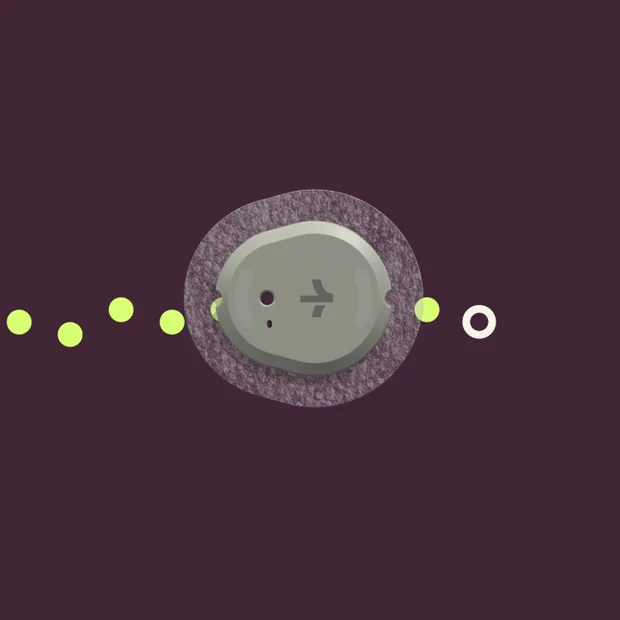
Dexcom Stelo
No prescription required
Our Verdict
The most accessible CGM available — FDA-cleared, no prescription, clinical-grade Dexcom biosensor quality at approximately $99/month. The minimal app lacks meal scoring, coaching, and advanced analytics found in Levels or Nutrisense, making it best for self-sufficient users who want raw glucose data without platform overhead.
Last updated: February 2026
Affiliate Disclosure: BetterVitals may earn a commission from purchases made through links in this article, at no additional cost to you. This supports our independent research and analysis. We only recommend products we believe in after thorough evaluation.
Pros
- G7-based clinical accuracy
- 15-day sensor wear time
Cons
- Simpler app than wellness CGMs
Best For
- First-time CGM users who want to try glucose monitoring without a subscription commitment
- Self-sufficient health trackers comfortable interpreting raw glucose data independently
- Budget-conscious users seeking the lowest-cost path to clinical-grade CGM data
- People who want a no-prescription, no-hassle OTC glucose monitoring experience
Not Ideal For
- Users who want guided insights, meal scoring, or coaching (Levels or Nutrisense are better)
- Those seeking weight-loss-specific CGM programming (Signos is more targeted)
- People who want ketone tracking alongside glucose (Abbott Lingo offers this)
- Users who need data sharing with third-party health platforms (limited export options)
In-Depth Review
What Is the Dexcom Stelo?
The Dexcom Stelo is the first FDA-cleared over-the-counter continuous glucose monitor, allowing anyone to purchase and use a medical-grade CGM without a prescription. Made by Dexcom — the company that has led the diabetes CGM market for over two decades with its G-series sensors trusted by endocrinologists and patients worldwide — the Stelo brings clinical-grade glucose sensing technology to the general wellness consumer.
Launched in 2024, the Stelo represents a significant shift in the CGM landscape. Previously, non-diabetic consumers who wanted CGM data had to go through subscription platforms like Levels or Nutrisense, which handled the prescription process on their behalf. The Stelo eliminates that intermediary entirely: order online or pick it up at a pharmacy, apply the sensor, and start tracking glucose within 30 minutes. This direct-to-consumer accessibility has opened continuous glucose monitoring to a far broader audience than the subscription model ever reached.
How It Works
Each Dexcom Stelo sensor lasts 15 days and costs approximately $49, putting the monthly cost at roughly $99 for continuous monitoring (two sensors per month). The sensor is applied to the back of the upper arm with a spring-loaded applicator — a thin filament sits just under the skin to measure interstitial glucose levels. Readings are transmitted every five minutes via Bluetooth to the Stelo companion app on your smartphone.
The Stelo uses the same glucose oxidase biosensor technology that powers Dexcom's medical-grade G7 sensor, adapted for the OTC market. The G7 biosensor has a published Mean Absolute Relative Difference (MARD) of approximately 8.2%, placing it among the most accurate CGMs available worldwide. The key regulatory difference is that the Stelo is cleared for non-insulin-using individuals and is not intended to make treatment decisions for diabetes management. The app displays real-time glucose values, trend arrows indicating direction and velocity of glucose change, and basic daily summaries. However, it is intentionally simpler than the subscription platforms — there is no meal scoring, no dietitian access, no AI-powered coaching, and no food logging integration.
Key Features
- No prescription required: The first FDA-cleared OTC CGM, available for direct consumer purchase without physician involvement, health questionnaire, or pharmacy coordination
- Dexcom biosensor quality: Uses the same core glucose oxidase technology as the medical-grade Dexcom G7 (MARD ~8.2%), trusted by endocrinologists worldwide for clinical accuracy
- 15-day sensor wear: Each sensor lasts two full weeks, with a simple one-button application process and a 30-minute warm-up period — shorter than Abbott Libre's 60-minute wait
- Real-time glucose with trend arrows: Five-minute readings with directional indicators showing whether glucose is rising, falling, or stable, along with velocity information showing how fast levels are changing
- Low barrier to entry: At approximately $99/month with no subscription commitment, no long-term contract, and no prescription, the lowest-friction path to continuous glucose monitoring
Interested in Dexcom Stelo?
Check the latest pricing and availability from the official store.
View Best PriceOur Testing Experience
The purchase experience was refreshingly simple — order from the Dexcom website or a participating pharmacy, no health questionnaire or prescription process required. The packaging is clean and consumer-friendly, a clear departure from the medical-device aesthetic of traditional CGMs. Sensor application took under a minute, and the app paired via Bluetooth within 30 seconds. The 30-minute warm-up period is shorter than the Abbott Libre 3's 60-minute wait. Glucose readings appeared accurate when spot-checked against a fingerstick glucometer, consistently within 8–12 mg/dL of capillary blood glucose — which is expected given Dexcom's clinical pedigree.
The limitation becomes apparent quickly: the Stelo app is bare-bones compared to Levels or Nutrisense. You see your glucose graph and trend arrows, but there is no food logging integration, no meal scoring, no metabolic reports, and no coaching of any kind. The daily summary shows your time in range and average glucose, but does not help you understand why certain periods were elevated or what to change. If you are comfortable interpreting raw glucose data and drawing your own conclusions — perhaps you have prior experience with CGMs or a strong nutrition science background — the Stelo delivers clinical-quality data at the lowest price point available.
If you want the data to tell you what to do — which meals to change, when to exercise, how your sleep affects glucose — you will need to pair the Stelo with a third-party platform or do the analysis yourself. The Stelo also cannot share data natively with platforms like Levels (though third-party workarounds exist), which limits its utility as a sensor-only component of a broader tracking stack.
The Bottom Line
The Dexcom Stelo is the best entry point into continuous glucose monitoring for anyone who wants clinical-grade data without the commitment or cost of a subscription platform. Its OTC availability, Dexcom's proven sensor quality, and the lowest ongoing cost in the category make it the most accessible CGM on the market. The tradeoff is a deliberately minimal software experience — you get the data, but interpreting and acting on it is entirely up to you. Ideal as a low-cost first CGM experience, a periodic check-in tool for users who have already learned their patterns, or a raw data source for those who prefer to analyze glucose trends on their own terms.
Frequently Asked Questions
Common questions about this topic
Ready to try Dexcom Stelo?
See the latest pricing and availability.
View Best PriceAffiliate link - we may earn a commission
Compare Dexcom Stelo
See how Dexcom Stelo stacks up against the competition
Related Products
Links may be affiliate links