How to Improve VO2 Max: Training, Testing & Why It Matters for Longevity
Key Takeaway
If someone told you there was a single number that predicted your risk of dying from any cause — better than blood pressure, better than cholesterol, better even than whether you smoke — you'd probably want to know what it is.
Affiliate Disclosure: BetterVitals may earn a commission from purchases made through links in this article, at no additional cost to you. This supports our independent research and analysis. We only recommend products we believe in after thorough evaluation.
Medical Disclaimer
This article is for educational purposes only and is not a substitute for professional medical advice, diagnosis, or treatment. Always consult your healthcare provider before making health decisions.
How to Improve VO2 Max: Training, Testing & Why It Matters for Longevity
If someone told you there was a single number that predicted your risk of dying from any cause — better than blood pressure, better than cholesterol, better even than whether you smoke — you'd probably want to know what it is.
That number is your VO2 max.
In 2018, a landmark study published in JAMA Network Open by Mandsager et al. followed over 122,000 patients through cardiorespiratory fitness testing and tracked their outcomes for more than a decade. The findings were striking: extremely low cardiorespiratory fitness carried a higher risk of death than smoking, diabetes, or coronary artery disease. People in the top tier of fitness had an 80% lower risk of mortality compared to those in the bottom tier. Not 20%. Not 40%. Eighty percent.
Peter Attia, the physician who has arguably done more than anyone to popularize longevity medicine, calls VO2 max "the single most powerful marker for longevity." He's built an entire training philosophy around improving it.
And yet, the vast majority of people have never tested theirs. Most don't even know what it means. This guide will change that. We'll cover what VO2 max actually measures, where yours likely stands, how to test it, and — most importantly — the proven training methods that can improve it regardless of your current fitness level.
What Is VO2 Max?
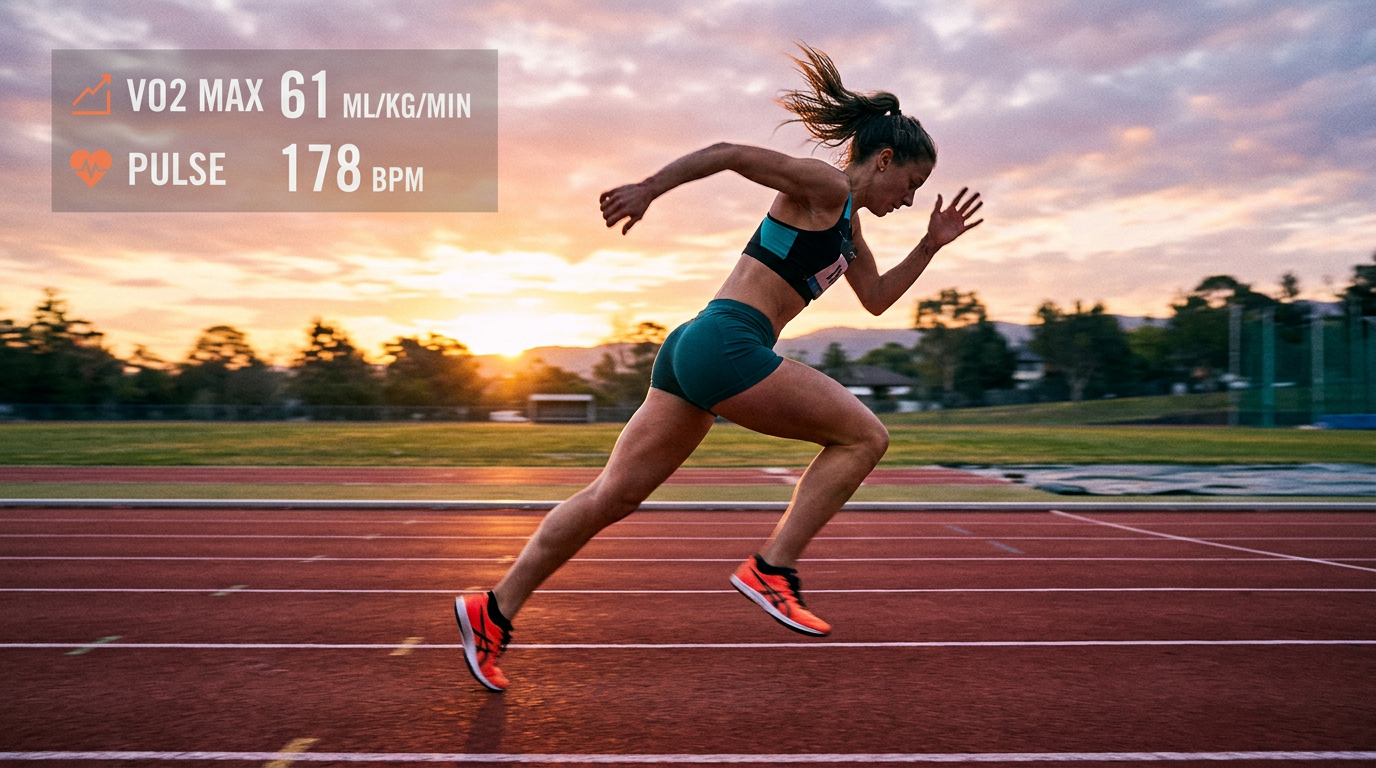
VO2 max — short for maximal oxygen consumption — is the maximum rate at which your body can take in, transport, and use oxygen during exercise. It's measured in milliliters of oxygen consumed per kilogram of body weight per minute (mL/kg/min).
Think of it as a measure of your body's aerobic engine. When you exercise, your muscles need oxygen to produce energy. Your lungs take in oxygen, your heart pumps it through your bloodstream, and your muscles extract it to fuel contractions. VO2 max represents the ceiling of that entire system — the point where adding more effort no longer increases oxygen consumption because some component of the chain has maxed out.
The "V" stands for volume, the "O2" for oxygen, and the "max" for maximum. When you hit your VO2 max during a test, you've reached the upper limit of your aerobic metabolism. Any additional work has to be fueled anaerobically, which can only be sustained for short periods.
Several factors determine your VO2 max:
- Cardiac output: How much blood your heart can pump per minute (stroke volume x heart rate)
- Oxygen-carrying capacity: Hemoglobin levels and blood volume
- Peripheral oxygen extraction: How effectively your muscles pull oxygen from the blood
- Mitochondrial density: How efficiently your cells convert oxygen into ATP (energy)
Genetics play a significant role — some estimates suggest 40-50% of VO2 max is genetically determined. But that still leaves a massive window for training-driven improvement. Even highly trained athletes can meaningfully increase their VO2 max with the right protocols.
Why VO2 Max Is the Most Important Fitness Metric
There are dozens of biomarkers you could track. Resting heart rate. Heart rate variability. Blood glucose. Lipid panels. So why does VO2 max deserve special status?
Because the data on its relationship to mortality is staggering.
The Mandsager et al. 2018 study is the most cited, but it's far from the only one. A 2022 meta-analysis published in the British Journal of Sports Medicine pooled data from 199 studies and over 20 million participant-years of follow-up. The conclusion: every 1 MET increase in cardiorespiratory fitness (roughly 3.5 mL/kg/min of VO2 max) was associated with a 11-17% reduction in all-cause mortality. The dose-response relationship was nearly linear — fitter people lived longer, with no clear upper ceiling where benefits stopped.
What makes the Mandsager data particularly striking is the comparison to other risk factors. The hazard ratio for extremely low fitness versus elite fitness (5.04) was higher than the hazard ratios for:
- Smoking (HR ~2.0-3.0)
- Diabetes (HR ~1.5-2.5)
- Coronary artery disease (HR ~1.5-2.0)
- Hypertension (HR ~1.5-2.0)
In other words, being unfit is more dangerous than any of those conditions — at least in terms of statistical risk. And unlike some of those conditions, fitness is directly trainable.
Peter Attia has framed this in a way that's useful for goal-setting: think about what physical capabilities you want to have at age 80 or 90 — carrying groceries, playing with grandchildren, climbing stairs without stopping — and then work backward. Most of those activities require a VO2 max of at least 18-20 mL/kg/min. Given the natural decline of roughly 10% per decade after age 30, you can calculate where you need to be now to stay above that functional threshold as you age. For most people, the answer is: considerably higher than where they currently are.
If you're interested in how exercise and longevity connect more broadly, the evidence is clear that cardiorespiratory fitness is the single strongest modifiable predictor of how long you'll live.
What's a Good VO2 Max?
VO2 max values vary significantly by age and sex. The following tables provide general benchmarks based on population-level data. Values are in mL/kg/min.
Men
| Age Group | Poor | Fair | Good | Excellent | Elite |
|---|---|---|---|---|---|
| 20-29 | <38 | 38-42 | 42-48 | 48-54 | 54+ |
| 30-39 | <35 | 35-39 | 39-44 | 44-50 | 50+ |
| 40-49 | <32 | 32-36 | 36-41 | 41-46 | 46+ |
| 50-59 | <28 | 28-33 | 33-38 | 38-44 | 44+ |
| 60+ | <24 | 24-29 | 29-34 | 34-40 | 40+ |
Women
| Age Group | Poor | Fair | Good | Excellent | Elite |
|---|---|---|---|---|---|
| 20-29 | <30 | 30-35 | 35-41 | 41-47 | 47+ |
| 30-39 | <27 | 27-32 | 32-37 | 37-43 | 43+ |
| 40-49 | <24 | 24-29 | 29-34 | 34-40 | 40+ |
| 50-59 | <21 | 21-26 | 26-32 | 32-37 | 37+ |
| 60+ | <18 | 18-23 | 23-28 | 28-34 | 34+ |
Women's values are typically 10-15% lower than men's at the same age, largely due to differences in hemoglobin concentration, body composition, and heart size. This gap narrows somewhat in highly trained individuals.
Where should you aim? Attia has suggested that being in the "Excellent" or "Elite" category for your age and sex is one of the most protective things you can achieve for longevity. According to the Mandsager data, moving from the bottom 25th percentile to above the 75th percentile is associated with roughly a 70% reduction in mortality risk. That's a bigger effect size than most pharmaceutical interventions combined.
How to Test Your VO2 Max
There are several ways to estimate or directly measure VO2 max, ranging from gold-standard lab tests to wrist-based wearable estimates.
Gold Standard: Lab Test with Metabolic Cart
A clinical VO2 max test involves exercising on a treadmill or cycle ergometer while wearing a mask that measures the concentration of oxygen and carbon dioxide in your breath. The test uses a graded protocol — intensity increases every few minutes until you reach exhaustion. A technician monitors your gas exchange in real-time and identifies the point where oxygen consumption plateaus despite increasing effort.
This is the most accurate method, typically within 2-3% of true VO2 max. Costs range from $150 to $300 at sports performance labs and some health clinics. If you're serious about optimizing this metric, getting a baseline lab test is worth it.
Wearable Estimates: Apple Watch, Garmin, WHOOP
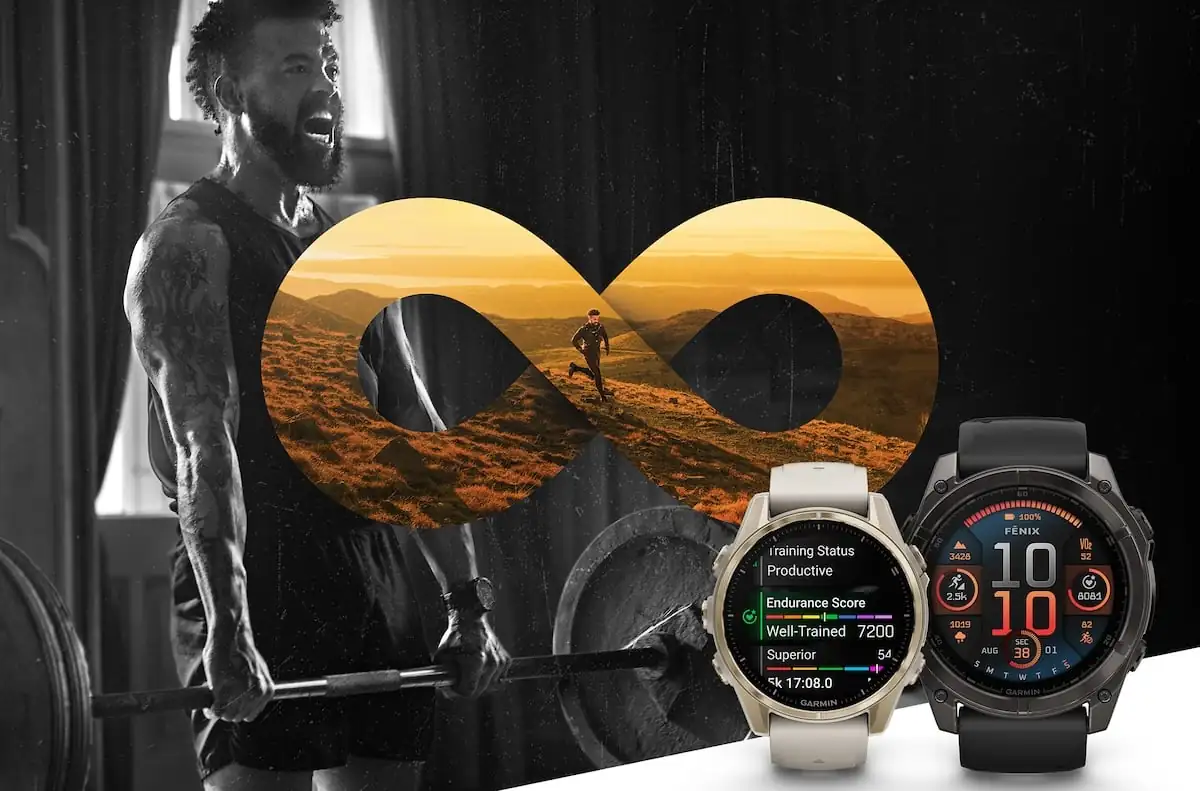
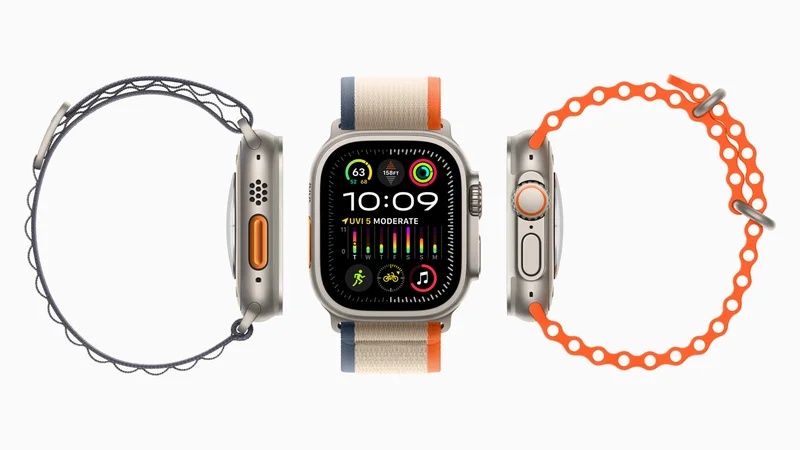
Modern wearables estimate VO2 max (or "cardio fitness" in Apple's terminology) using algorithms that analyze heart rate response during outdoor activities — usually running or walking. Garmin devices calculate VO2 max from running dynamics and heart rate data. Apple Watch uses walking and running heart rate patterns.
These estimates are decent proxies for tracking trends over time, though they're typically off by 5-10% compared to lab testing. They tend to underestimate in highly fit individuals and overestimate in less fit ones. The value isn't in the absolute number — it's in watching the trend. If your estimated VO2 max has been climbing over three months, your training is working. If you're curious about which devices do this best, our best wearables for HRV guide covers the top trackers.
Cooper Test (12-Minute Run)
The Cooper test is one of the oldest and simplest field tests for estimating VO2 max. Run as far as you can in 12 minutes, then use this formula:
VO2 max = (distance in meters - 504.9) / 44.73
For example, if you cover 2,400 meters in 12 minutes, your estimated VO2 max is approximately 42.3 mL/kg/min. The Cooper test is reasonably accurate for healthy, motivated individuals and requires nothing more than a track and a stopwatch.
Rockport Walk Test
For people who can't run — due to injury, age, or fitness level — the Rockport walk test is a solid alternative. Walk one mile as fast as possible, then record your time and heart rate at the finish. The formula accounts for age, weight, sex, walk time, and finishing heart rate to estimate VO2 max. It's less accurate than the Cooper test but far more accessible.
Browse All Products
Explore our evidence-based product reviews across every health category.
How to Improve VO2 Max
Improving VO2 max comes down to three training pillars, each targeting different components of the oxygen delivery and utilization chain. The most effective programs incorporate all three.
Zone 2 Training (Foundation)
If you read our zone 2 training guide, you already know that Zone 2 — the intensity where you can hold a conversation but it takes some effort — is the aerobic foundation everything else gets built on. Zone 2 should comprise roughly 80% of your total training volume.
Why is easy training so important for VO2 max? Because Zone 2 drives the peripheral adaptations that determine how efficiently your muscles use oxygen:
- Increased mitochondrial density. More mitochondria per muscle cell means more capacity to extract and use oxygen from the blood.
- Greater capillary density. More capillaries surrounding muscle fibers means more surface area for oxygen exchange.
- Improved fat oxidation. Better fat-burning capacity spares glycogen, allowing you to sustain higher intensities longer.
- Cardiac efficiency. Consistent Zone 2 work increases stroke volume, so your heart pumps more blood per beat.
The practical prescription: 3-4 sessions per week of 45-60 minutes at 60-70% of max heart rate. This can be cycling, jogging, rowing, swimming, or any sustained activity that keeps you in Zone 2. The mistake most people make is going too hard — if you can't hold a conversation, you're above Zone 2.
High-Intensity Intervals (The 4x4 Norwegian Method)
While Zone 2 builds the base, high-intensity interval training (HIIT) pushes the ceiling. The most well-studied protocol for improving VO2 max is the "4x4" method, developed and validated by researchers at the Norwegian University of Science and Technology.
The landmark study by Helgerud et al. (2007), published in Medicine & Science in Sports & Exercise, compared four different training protocols and found that the 4x4 method produced the largest improvements in VO2 max — approximately 7.2% over 8 weeks.
The protocol:
- Warm up for 10 minutes at an easy pace
- 4 minutes at 90-95% of max heart rate — this should feel hard. You can speak in only a few words at a time
- 3 minutes of active recovery at 60-70% max heart rate — easy jogging or walking
- Repeat for 4 rounds (total of 28 minutes of intervals)
- Cool down for 5-10 minutes
The key is hitting and sustaining that 90-95% heart rate zone during the work intervals. If you're finishing the fourth interval feeling like you could easily do a fifth, you're not going hard enough. Conversely, if you can't complete the fourth interval, dial it back slightly.
Why this works: at 90-95% of max heart rate, you're exercising at or near your VO2 max. This creates the maximum stimulus for central adaptations — increasing the heart's stroke volume and cardiac output, which are the primary limiters of VO2 max in most people.
Frequency: 2 sessions per week is sufficient. More isn't necessarily better — HIIT creates significant systemic stress, and your body needs recovery time to adapt.
Strength Training
You might wonder what lifting weights has to do with VO2 max. More than you'd think.
Skeletal muscle is where oxygen is ultimately consumed. The more muscle mass you have — and the better that muscle functions — the greater your capacity for oxygen extraction. Strength training improves several factors relevant to VO2 max:
- Muscle mass preservation. After 30, you lose 3-8% of muscle mass per decade. Less muscle means less tissue consuming oxygen, which can lower VO2 max independent of cardiovascular fitness.
- Improved oxygen extraction. Resistance training increases the density of type I (oxidative) muscle fibers and enhances the activity of oxidative enzymes.
- Running economy. Stronger muscles — particularly in the legs and core — mean more efficient movement patterns, which allows you to sustain higher exercise intensities.
Aim for 2-3 strength training sessions per week, focusing on compound movements: squats, deadlifts, lunges, rows, presses, and carries. You don't need to train like a bodybuilder — the goal is maintaining and building functional muscle mass that supports your aerobic training. Our longevity blueprint outlines how to integrate strength work into a broader longevity-focused training plan.
For supplemental muscle activation without the joint stress of heavy loading, EMS (electrical muscle stimulation) training is an emerging option worth considering. EMS suits deliver electrical impulses that recruit Type II muscle fibers — the same fast-twitch fibers important for power and muscle mass preservation — during low-impact bodyweight movements. It's not a replacement for progressive overload, but it can add training stimulus on recovery days without additional joint or CNS fatigue.
Sample 4-Week VO2 Max Training Plan
This plan assumes you're already moderately active and can exercise 5-6 days per week. Adjust intensity and volume to your current fitness level.
Week 1-2 (Building the Base)
| Day | Session | Details |
|---|---|---|
| Monday | Zone 2 | 45 min cycling or jogging at 60-70% max HR |
| Tuesday | Strength | Full body — squats, rows, presses, carries (45 min) |
| Wednesday | Zone 2 | 45 min rowing or swimming at 60-70% max HR |
| Thursday | HIIT (4x4) | 10 min warm-up, 4x(4 min at 90-95% HR / 3 min recovery), 5 min cool-down |
| Friday | Strength | Full body — deadlifts, lunges, pull-ups, planks (45 min) |
| Saturday | Zone 2 (long) | 60-75 min easy cycling, jogging, or hiking |
| Sunday | Rest or light walk | Active recovery |
Week 3-4 (Increasing Stimulus)
| Day | Session | Details |
|---|---|---|
| Monday | Zone 2 | 50 min at 60-70% max HR |
| Tuesday | Strength | Full body (increase weight or reps from weeks 1-2) |
| Wednesday | Zone 2 | 50 min at 60-70% max HR |
| Thursday | HIIT (4x4) | Same protocol — aim to cover more distance in each 4-min interval |
| Friday | Strength | Full body (increase weight or reps) |
| Saturday | Zone 2 (long) + HIIT | 60 min Zone 2, then 3x(4 min at 90-95% / 3 min recovery) |
| Sunday | Rest or light walk | Active recovery |
Key principles: Never do two HIIT sessions on consecutive days. Keep Zone 2 truly easy — use a heart rate monitor to stay honest. Prioritize sleep and recovery, especially on rest days.
How Long Until You See Improvement?
This is the most common question, and the honest answer is: it depends on where you're starting.
For sedentary or low-fitness individuals: You'll likely see the fastest gains. Improvements of 15-20% in VO2 max over 12 weeks are not uncommon when starting from a low baseline. Even 6-8 weeks of consistent training can produce measurable changes on a lab test or wearable estimate.
For moderately fit individuals: Expect 5-15% improvement over 12 weeks with a structured program that includes both Zone 2 and HIIT. Gains come more slowly as you move from "fair" to "good" and from "good" to "excellent."
For already-fit individuals: Improvements of 3-5% are realistic over a training block. At higher fitness levels, every additional mL/kg/min requires more work. This is where precision in programming — nailing the right balance of Zone 2, HIIT, and recovery — matters most.
A few things that accelerate progress:
- Consistency beats intensity. Missing workouts is more damaging to VO2 max progress than having any single session be suboptimal. Aim for at least 4 sessions per week, every week.
- Sleep is non-negotiable. Growth hormone, testosterone, and the repair processes that drive adaptation all peak during sleep. Chronic sleep deprivation blunts training adaptations.
- Don't neglect nutrition. Adequate protein (1.6-2.2 g/kg/day) supports muscle recovery. Iron and B12 are critical for oxygen transport. Fueling your workouts properly — not training fasted for HIIT sessions — improves performance and adaptation.
Get smarter about health tech
Deal alerts, new reviews, and health tips — delivered weekly. No spam.
Unsubscribe anytime. We respect your inbox.
Tracking Progress with Wearables
You don't need a lab test every month to know if your training is working. Modern wearables provide useful proxies for VO2 max and related fitness metrics.
Garmin watches provide a direct VO2 max estimate updated after qualifying outdoor runs. The algorithm uses pace, heart rate, and heart rate variability data. Garmin also shows your "fitness age" based on VO2 max relative to population norms — watching that number drop is satisfying.
Apple Watch reports "Cardio Fitness" in the Health app, measured in mL/kg/min. It updates based on outdoor walking and running data. Apple also sends notifications if your cardio fitness drops into the "low" range, which is a genuinely useful public health feature.
WHOOP doesn't estimate VO2 max directly, but its cardiovascular strain score and recovery metrics give you a window into how your training is stressing your aerobic system and whether you're recovering adequately.
What to watch for: Track your estimated VO2 max on a monthly basis rather than daily — there's too much noise in individual readings. Also monitor resting heart rate (should trend downward as fitness improves) and heart rate recovery after exercise (should improve — faster return to baseline means better cardiovascular fitness). Our guide on best wearables for HRV covers which devices give you the most reliable data for tracking these trends.
Frequently Asked Questions
What is a normal VO2 max for my age?
VO2 max varies widely by age and sex. For a 40-year-old man, "good" is roughly 36-41 mL/kg/min, while "excellent" is 41-46 mL/kg/min. For a 40-year-old woman, "good" is approximately 29-34 mL/kg/min, and "excellent" is 34-40 mL/kg/min. See the full tables above for all age groups. The goal isn't to be "normal" — it's to be in the top quartile for your age, which is where the strongest longevity benefits appear.
Can I improve VO2 max after 50?
Absolutely. While the rate of natural decline accelerates with age (roughly 10% per decade after 30), VO2 max is highly trainable at any age. Studies have shown that previously sedentary adults in their 60s and 70s can improve VO2 max by 15-25% with structured aerobic training. The 4x4 interval protocol has been safely used in cardiac rehabilitation patients over 70. You won't reach the same absolute numbers as a 25-year-old, but you can dramatically improve your position relative to your age group — and that's what matters for functional capacity and longevity.
How often should I do HIIT to improve VO2 max?
Two HIIT sessions per week is the sweet spot for most people. Research consistently shows that 2 sessions produce nearly the same VO2 max improvement as 3, with less injury risk and less accumulated fatigue. The remaining training days should focus on Zone 2 work, which builds the aerobic base that supports your high-intensity efforts. More HIIT is not better — it increases cortisol, suppresses immune function, and raises overtraining risk without proportional fitness gains.
Is running the best exercise for VO2 max?
Running is highly effective because it uses large muscle groups and your body weight, creating a high oxygen demand. But it's not the only option. Cycling, rowing, swimming, and cross-country skiing are all effective at driving VO2 max improvements when performed at the right intensity. The best exercise is the one you'll do consistently. If running causes joint pain, cycling or rowing can be equally effective for VO2 max improvement — the key is hitting the right heart rate zones, not the specific modality.
Does VO2 max decrease with age?
Yes, VO2 max declines at a rate of approximately 10% per decade after age 30, even in trained individuals. However, the rate of decline is significantly slower in people who maintain regular aerobic training — some studies show only 5% per decade in consistently active adults. A 60-year-old who has trained consistently might have a higher VO2 max than a sedentary 30-year-old. The goal of training isn't to stop the decline entirely — it's to start from a higher peak and slow the descent so you stay above the functional threshold for independent living well into old age.
Featured Products
Products mentioned in this article

Related Guides
More articles you might find helpful
Best Bed Cooling Systems 2026: Eight Sleep vs Cheaper Alternatives
**Disclosure:** Product CTAs on this page currently go to manufacturer sites (no affiliate tracking yet). Better Vitals may earn a commission once partner links are live — rankings and "skip if" calls won't change when we swap URLs. We only recommend gear we'd put on a shortlist for a specific type
Is the Oura Membership Worth It in 2026? (And How to Skip It)
*Updated July 2026*
Oura Ring Price in 2026: Every Model, Subscription & Real Total Cost
*Updated July 2026*

Written by
Steve Luu
Health tech researcher