Zone 2 Training: The Complete Guide to Building Your Aerobic Base
Key Takeaway
Five years ago, if you mentioned "Zone 2 training" at a dinner party, you'd get blank stares — unless you happened to be sitting next to an endurance coach or a cycling nerd. Today, Zone 2 is everywhere. Podcasts, Instagram reels, longevity clinics, even your neighbor's Apple Watch notifications. An

Affiliate Disclosure: BetterVitals may earn a commission from purchases made through links in this article, at no additional cost to you. This supports our independent research and analysis. We only recommend products we believe in after thorough evaluation.
Medical Disclaimer
This article is for educational purposes only and is not a substitute for professional medical advice, diagnosis, or treatment. Always consult your healthcare provider before making health decisions.
Zone 2 Training: The Complete Guide to Building Your Aerobic Base
Five years ago, if you mentioned "Zone 2 training" at a dinner party, you'd get blank stares — unless you happened to be sitting next to an endurance coach or a cycling nerd. Today, Zone 2 is everywhere. Podcasts, Instagram reels, longevity clinics, even your neighbor's Apple Watch notifications. And we have Peter Attia to thank for most of that.
Attia, along with exercise physiologist Iñigo San Millán, took what was once a niche concept in endurance sports and reframed it as perhaps the single most important type of exercise for metabolic health and longevity. Not HIIT. Not CrossFit. Not lifting heavy. Low-intensity steady-state cardio that feels — if we're honest — kind of boring.
But here's the thing: the science backs them up. Zone 2 training does things at the cellular level that no other exercise intensity can replicate. And most people who think they're doing it are actually going too hard.
This guide covers what Zone 2 actually is, why it matters so much for long-term health, how to find your personal Zone 2, and how to build a training program around it. Whether you're a competitive athlete or someone who just wants to be functional and healthy at 80, this is the aerobic foundation everything else gets built on.
What Is Zone 2 Training?
To understand Zone 2, you need a quick primer on heart rate zones. Most training frameworks divide exercise intensity into five zones based on percentage of maximum heart rate:
- Zone 1 (50-60% max HR): Very light effort. Easy walking, gentle movement. Recovery work.
- Zone 2 (60-70% max HR): Light to moderate effort. You can hold a conversation, but it requires some focus. This is the zone we're talking about.
- Zone 3 (70-80% max HR): Moderate effort. Conversation becomes choppy. The "gray zone" that most recreational exercisers accidentally default to.
- Zone 4 (80-90% max HR): Hard effort. You can speak in short bursts only. Tempo and threshold work.
- Zone 5 (90-100% max HR): Maximum effort. Sprinting. You can sustain this for seconds to a couple of minutes.
Zone 2 sits in that sweet spot where you're clearly working — this isn't a leisurely stroll — but you could sustain the effort for a long time. An hour, two hours, maybe more. The classic test is the "talk test": if you can speak in full sentences but wouldn't choose to give a speech, you're probably in Zone 2.
But the heart rate definition only tells part of the story. The metabolic definition is more precise and more interesting.
The metabolic definition: Zone 2 is the highest exercise intensity at which your body can still primarily oxidize fat for fuel while keeping blood lactate levels below approximately 2 mmol/L. This is the threshold where your mitochondria are working at near-maximum capacity for aerobic metabolism without tipping over into significant anaerobic contribution.
This is the definition that San Millán uses in his research, and it's why Zone 2 is so much more than "easy cardio." At this specific intensity, you're training the metabolic machinery — the mitochondria — that powers everything your body does.
Why Zone 2 Matters More Than You Think
If you follow exercise and longevity research at all, you've probably noticed that Zone 2 keeps showing up. There are four interconnected reasons why.
Mitochondrial Health
This is the big one. Your mitochondria are the power plants inside your cells, converting nutrients into ATP — the energy currency your body runs on. You have trillions of them, and their health directly impacts nearly every chronic disease process we know of.
Mitochondrial dysfunction is now recognized as one of the primary hallmarks of aging. As mitochondria deteriorate, cells produce less energy, generate more reactive oxygen species (oxidative stress), and gradually lose the ability to function properly. This contributes to insulin resistance, neurodegeneration, cardiovascular disease, and cancer.
Zone 2 training is the most effective stimulus we know of for improving mitochondrial density and function. It increases the number of mitochondria per cell (mitochondrial biogenesis), improves the efficiency of existing mitochondria, and enhances the pathways that clear damaged mitochondria (mitophagy).
San Millán and Brooks published research in 2018 demonstrating that lactate — once thought to be a metabolic waste product — actually serves as a critical signaling molecule and energy substrate. Their work showed that the ability to produce and clear lactate efficiently is a marker of metabolic health, and that this ability is trainable through sustained low-intensity exercise. Zone 2 sits right at the sweet spot where lactate production and clearance are balanced, providing the optimal training stimulus for these pathways.
In practical terms: Zone 2 training makes your cells better at producing energy. That has downstream effects on virtually every system in your body.
Fat Oxidation
At Zone 2 intensity, your body primarily burns fat for fuel. Go harder — into Zone 3 and above — and the fuel mix shifts increasingly toward glucose. This matters for a reason that goes beyond weight management.
Metabolic flexibility — the ability to seamlessly switch between burning fat and burning glucose — is a hallmark of metabolic health. People with insulin resistance, type 2 diabetes, and metabolic syndrome consistently show impaired fat oxidation. Their mitochondria have lost the ability to efficiently use fat as fuel, which creates a vicious cycle of glucose dependence, elevated blood sugar, and further metabolic dysfunction.
Zone 2 training specifically improves fat oxidation capacity. Over weeks and months of consistent Zone 2 work, your muscles develop more capillaries (improving oxygen delivery), more mitochondria (improving fat processing), and higher concentrations of the enzymes needed for fatty acid oxidation. You literally rebuild the metabolic machinery for burning fat.
This is why San Millán has argued that Zone 2 training may be one of the most important interventions for metabolic disease — not because of the calories burned during the session, but because of the structural and enzymatic adaptations it drives.
Cardiovascular Base
Zone 2 builds the aerobic engine that supports everything else. Consistent low-intensity training improves cardiac output — your heart pumps more blood per beat (stroke volume increases), so it doesn't need to beat as fast to deliver the same amount of oxygen. This is why resting heart rate drops as aerobic fitness improves: your heart is simply more efficient.
Over time, Zone 2 training also improves capillary density in working muscles, enhances oxygen extraction at the tissue level, and strengthens the left ventricle. These adaptations are the foundation for all other exercise performance — whether you're doing HIIT, playing a sport, or just walking up stairs without getting winded.
For most people, building a larger aerobic base through Zone 2 training will do more for their overall fitness than adding another interval session.
Longevity Connection
Peter Attia has made the case — convincingly, in our view — that cardiorespiratory fitness (measured by VO2 max) is the single strongest predictor of all-cause mortality. Stronger than smoking status, stronger than blood pressure, stronger than any blood biomarker.
The data supporting this comes from a 2018 study by Mandsager et al., published in JAMA Network Open, which analyzed over 122,000 patients who underwent exercise treadmill testing. The findings were striking: compared to those in the bottom 25% of cardiorespiratory fitness, those in the top 2.3% (elite fitness) had an 80% lower risk of all-cause mortality. Even moving from "below average" to "above average" fitness reduced mortality risk by approximately 50%.
And here's where Zone 2 connects: VO2 max has both a ceiling (determined partly by genetics and high-intensity training) and a base (determined primarily by aerobic capacity). Zone 2 training builds that base. It's the volume work that supports your ability to improve VO2 max through higher-intensity efforts. Without a strong aerobic foundation, your VO2 max will plateau well below its potential.
As part of any comprehensive longevity blueprint, Zone 2 training isn't optional — it's foundational.
How to Find Your Zone 2
This is where most people get it wrong, and it's worth getting right. There are several approaches, ranging from highly accurate to rough-but-useful.
Lactate Testing (Gold Standard)
The most accurate way to identify your Zone 2 is through a graded exercise test with blood lactate measurements. You'll exercise at progressively higher intensities while a technician pricks your finger to measure blood lactate at each stage. Your Zone 2 is the highest intensity at which your lactate stays at or below approximately 2 mmol/L.
This typically costs $150-300 at a sports performance lab and is worth doing if you're serious about dialing in your training. The results are specific to you — which matters, because generic formulas can be off by 15-20 beats per minute.
Heart Rate Formulas (Decent Starting Point)
The most common formula is 220 minus your age for maximum heart rate, then taking 60-70% of that number. So a 40-year-old would calculate: 220 - 40 = 180 max HR, and Zone 2 would be roughly 108-126 bpm.
The problem: the 220-age formula has a standard deviation of about 10-12 bpm. That means for a significant percentage of people, their actual max HR is 10+ beats higher or lower than the formula predicts — which makes the Zone 2 range meaningfully wrong.
The MAF Method (180 - age): Developed by Phil Maffetone, this approach sets your aerobic training ceiling at 180 minus your age, with adjustments for fitness level and health status. For a 40-year-old, that's a ceiling of 140 bpm. It's more conservative than most Zone 2 calculations and tends to keep people honest — which is actually helpful, because most people train too hard.
Rate of Perceived Exertion (RPE)
On a scale of 1-10, Zone 2 should feel like a 3-4. You're working, you're aware that you're exercising, but you feel like you could maintain this effort for a very long time. If it feels "easy," you might be in Zone 1. If it feels "moderate to hard," you've probably drifted into Zone 3.
The Talk Test
Still one of the most practical tools. In Zone 2, you should be able to speak in complete sentences — even hold a somewhat coherent conversation — but it should take a bit of effort. If you're completely comfortable chatting away, push a little harder. If you're gasping between phrases, slow down. You've gone too far.
Wearable Devices
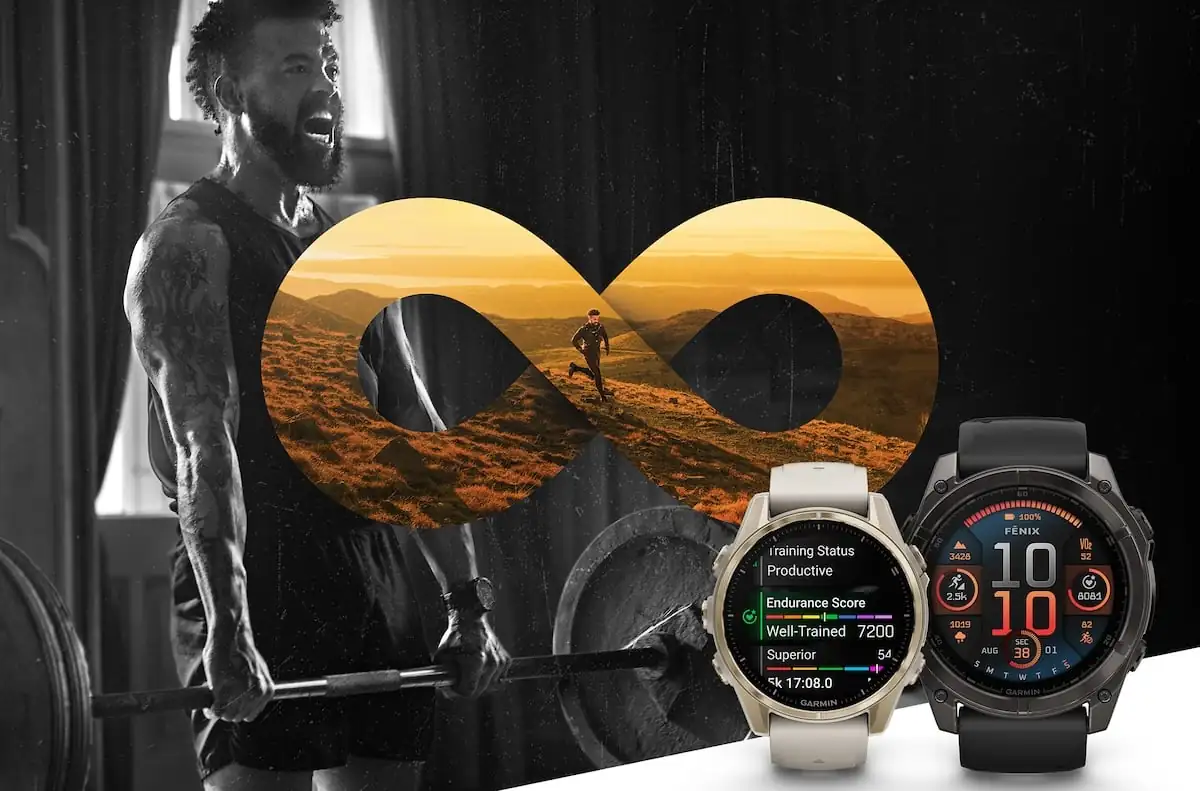
Modern wearables for HRV and heart rate monitoring make staying in Zone 2 much easier than it used to be. A chest strap heart rate monitor provides the most accurate real-time data, and most running watches and cycling computers can display your current heart rate zone. Optical wrist-based sensors have improved significantly but can still lag during transitions and may be less accurate for some skin types.
A reliable heart rate monitor that alerts you when you drift above your Zone 2 ceiling is genuinely one of the best investments you can make in your training. Without real-time feedback, it's remarkably easy to creep up into Zone 3 without realizing it.
Our recommendation: Start with a heart rate formula and the talk test combined. If you find you're serious about this, invest in a lactate test to get precise numbers.
Browse All Products
Explore our evidence-based product reviews across every health category.
Zone 2 Training Protocols
How Much Zone 2 Do You Need?
The general consensus among longevity-focused practitioners is:
- Minimum: 3 sessions per week, approximately 150 minutes total
- Optimal: 3-4 sessions per week, approximately 180-240 minutes total
- Each session: 30-60 minutes minimum. Longer sessions (60-90 minutes) provide additional mitochondrial adaptations
This aligns with the 80/20 principle used by elite endurance athletes: roughly 80% of training volume should be at low intensity (Zone 1-2), with only 20% at higher intensities (Zone 4-5). Recreational exercisers almost universally invert this ratio — doing most of their training in Zone 3 (too hard for aerobic development, too easy for meaningful anaerobic gains).
The irony is that by slowing down, you'll eventually get faster. A stronger aerobic base means your easy pace gets quicker over time, and your recovery between hard efforts improves dramatically.
Best Activities for Zone 2
Zone 2 training works with any sustained aerobic activity. The best options are:
- Cycling (stationary or outdoor): Perhaps the ideal Zone 2 activity. It's easy to control intensity precisely, it's low-impact, and you can do it for long durations without joint stress. This is what San Millán prescribes to most of his clients.
- Jogging: Works well for most people, but heavier or less experienced runners may find it hard to keep heart rate in Zone 2 while jogging. You might need to mix in walking intervals.
- Brisk walking (incline): For many beginners and older adults, walking at a brisk pace — especially uphill or on a treadmill at incline — is the right intensity. There's no shame in this. If walking gets you to Zone 2, that's your Zone 2 activity.
- Rowing: Excellent full-body option. Easy to modulate intensity. Watch your form to avoid back strain on longer sessions.
- Swimming: Great if you have the technique. Poor swimmers may find their heart rate spikes from inefficiency rather than true aerobic work.
- Elliptical: Lower impact than running, easy to control pace.
The best Zone 2 activity is the one you'll actually do consistently. That's not a cop-out — compliance is genuinely the most important variable here.
Sample Weekly Schedule
Here's what a balanced week might look like for someone prioritizing Zone 2 while including strength training and one higher-intensity session:
| Day | Session | Duration |
|---|---|---|
| Monday | Zone 2 (cycling or jogging) | 45-60 min |
| Tuesday | Strength training (full body or upper) | 45-60 min |
| Wednesday | Zone 2 (cycling or walking at incline) | 45-60 min |
| Thursday | Strength training (full body or lower) | 45-60 min |
| Friday | Zone 2 (any modality) | 45-60 min |
| Saturday | Higher-intensity session (intervals, tempo, sport) | 30-45 min |
| Sunday | Rest or light movement (walk, yoga, mobility) | — |
That schedule delivers roughly 135-180 minutes of Zone 2 per week, two strength sessions, and one harder effort. Adjust up or down based on your recovery, goals, and available time. If you can only fit two Zone 2 sessions per week, that's still far better than zero.
Common Mistakes
Going Too Hard
This is by far the most common mistake, and it's worth emphasizing: most people's "Zone 2" is actually Zone 3 or even Zone 4. It's psychologically difficult to exercise slowly. It feels unproductive. Your ego wants to push harder. The person next to you on the trail is going faster.
But Zone 3 — that moderate-intensity gray zone — provides a different metabolic stimulus than Zone 2. It recruits more fast-twitch muscle fibers, shifts fuel use toward glucose, and doesn't optimally train the mitochondrial and fat oxidation pathways that make Zone 2 so valuable. You get some aerobic benefit, but you also accumulate more fatigue per unit of benefit.
The fix is simple but requires discipline: use a heart rate monitor, set an alert at the top of your Zone 2 range, and slow down every time it beeps. Yes, even if that means walking on the hills.
Not Enough Volume
Doing 20 minutes of Zone 2 once a week isn't going to drive meaningful adaptation. The research and practical experience point to a minimum of three sessions per week, totaling at least 150 minutes. Mitochondrial biogenesis is a cumulative adaptation — it responds to sustained, repeated stimulus over time. Think months, not days.
Expecting Fast Results
Zone 2 adaptations are slow. You won't feel dramatically different after two weeks. The changes — increased mitochondrial density, improved capillarization, enhanced fat oxidation — happen at the cellular level over months. Most people start noticing performance improvements (faster pace at the same heart rate, lower resting heart rate) after 6-12 weeks of consistent training. The metabolic health benefits continue compounding for months and years.
This is a long game. Treat it like one.
Ignoring Strength Training
Zone 2 is foundational, but it's not sufficient by itself. Muscle mass, bone density, and functional strength all decline with age, and aerobic training alone won't prevent that. A complete program includes both Zone 2 cardio and resistance training. The two are complementary — strength training improves metabolic health through different pathways (glucose disposal, hormone signaling, bone loading), and the aerobic base from Zone 2 improves recovery between strength sessions.
Get smarter about health tech
Deal alerts, new reviews, and health tips — delivered weekly. No spam.
Unsubscribe anytime. We respect your inbox.
Tracking Zone 2 Progress
One of the rewarding things about Zone 2 training is that progress is measurable — if you know what to look for. Here are the key metrics to track:
Pace or power at the same heart rate. This is the most direct indicator. If you're running at 135 bpm and your pace improves from 11:00/mile to 10:15/mile over three months, your aerobic fitness has improved. Same heart rate, more output. On a bike, track watts at the same heart rate. This is called "cardiac drift" or "aerobic decoupling" in reverse — your efficiency is improving.
Resting heart rate. As your aerobic fitness improves, your resting heart rate should gradually decline. A drop of 5-10 bpm over several months of consistent Zone 2 training is common. Most wearables track this automatically and can show you the trend.
Heart rate variability (HRV). HRV is a proxy for autonomic nervous system health and recovery capacity. Consistent Zone 2 training typically improves HRV over time, reflecting better parasympathetic tone. Wearables like Whoop, Oura Ring, and Garmin devices all track HRV — check our guide on best wearables for HRV for detailed comparisons.
Recovery between sessions. As your aerobic base grows, you'll notice that you recover faster — both from Zone 2 sessions and from harder efforts. You'll feel less fatigued the day after a workout, and your HRV will bounce back more quickly.
Rate of perceived exertion at the same output. The pace that felt like a solid Zone 2 effort three months ago now feels easier. You might even need to speed up to stay in your heart rate range. This is a sign that the training is working.
Track these metrics monthly rather than daily. Day-to-day variation is noise — the signal emerges over weeks and months.
FAQ
Is Zone 2 training just slow jogging?
It can be, but it depends on your fitness level. For a fit runner, Zone 2 might be a comfortable jog at 9:00-10:00/mile pace. For someone less conditioned, Zone 2 might require walking at a brisk pace or on an incline. For a cyclist, it might be spinning at moderate resistance. The defining characteristic isn't the activity or the speed — it's the metabolic intensity. If your heart rate is in the right range and you can sustain the effort comfortably, you're in Zone 2.
Can I do Zone 2 training every day?
You can, though most experts recommend 3-5 sessions per week to allow room for strength training and at least one rest day. Because Zone 2 is low-intensity, the recovery demand is minimal — your muscles and joints aren't taking a beating. But more isn't always better. If you're training 6-7 days per week in Zone 2 and not doing any strength work or higher-intensity efforts, your program is imbalanced. Aim for 3-4 Zone 2 sessions and fill the remaining days with strength training, one hard session, and rest.
How long does it take to see results from Zone 2 training?
Most people notice the first improvements within 6-8 weeks: slightly lower resting heart rate, faster pace at the same heart rate, and better perceived energy levels. More significant adaptations — meaningful increases in mitochondrial density, improved fat oxidation, noticeable endurance gains — develop over 3-6 months. The benefits continue to accumulate for years with consistent training. This is not a quick fix, but the long-term payoff is substantial.
Should I do Zone 2 before or after strength training?
If you're doing both on the same day, it depends on your priorities. Most longevity-focused practitioners recommend separating them into different sessions when possible — strength in the morning, Zone 2 in the evening, or on alternating days. If you must combine them, do strength training first when your muscles are fresh, then follow with Zone 2. Doing prolonged cardio before lifting can impair strength performance and may blunt the muscle-building signal from resistance training (the "interference effect").
Do I need a heart rate monitor for Zone 2 training?
Strictly speaking, no — the talk test and RPE can get you in the ballpark. But practically, a heart rate monitor makes Zone 2 training dramatically more effective. Without objective data, most people drift above Zone 2 without realizing it. A chest strap is the most accurate option, but modern wrist-based monitors on quality wearables are good enough for steady-state exercise. If you're investing multiple hours per week in Zone 2, a $50-100 heart rate monitor is one of the best returns on investment in fitness.
Featured Products
Products mentioned in this article


Related Guides
More articles you might find helpful
Best Bed Cooling Systems 2026: Eight Sleep vs Cheaper Alternatives
**Disclosure:** Product CTAs on this page currently go to manufacturer sites (no affiliate tracking yet). Better Vitals may earn a commission once partner links are live — rankings and "skip if" calls won't change when we swap URLs. We only recommend gear we'd put on a shortlist for a specific type
Is the Oura Membership Worth It in 2026? (And How to Skip It)
*Updated July 2026*
Oura Ring Price in 2026: Every Model, Subscription & Real Total Cost
*Updated July 2026*

Written by
Steve Luu
Health tech researcher