Dexcom Stelo Review 2026: 30 Days With the OTC CGM
Key Takeaway
Updated July 2026
Affiliate Disclosure: BetterVitals may earn a commission from purchases made through links in this article, at no additional cost to you. This supports our independent research and analysis. We only recommend products we believe in after thorough evaluation.
Medical Disclaimer
This article is for educational purposes only and is not a substitute for professional medical advice, diagnosis, or treatment. Always consult your healthcare provider before making health decisions.
Dexcom Stelo Review 2026: 30 Days With the OTC CGM
Meta description: Dexcom Stelo review after 30 days of continuous wear: real accuracy vs fingerstick, the 15-day sensor life in practice, Oura and Apple Health integrations, and who should buy it at $99/month.
Updated July 2026
Verdict up front: Dexcom Stelo is the best over-the-counter CGM you can buy in 2026 — $99/month, no prescription, no subscription, 15-day sensor wear, and the only OTC sensor with real Oura and Google Fit integration. Its app is deliberately minimal, which is either its biggest weakness or exactly what you want, depending on how much hand-holding you need.
We wore Stelo for two full 15-day sensor cycles — 30 days of continuous data — cross-checking readings against a calibrated fingerstick meter and running it alongside our Oura Ring. This review covers what the marketing doesn't.
What Is Dexcom Stelo?
Stelo is Dexcom's first over-the-counter continuous glucose monitor, cleared by the FDA for adults who don't use insulin — including people with type 2 diabetes managed without insulin and anyone curious about their metabolic health. Dexcom's prescription sensors (G6, G7) are the clinical gold standard; Stelo is essentially G7 hardware with the medical alarm features removed and the price cut.
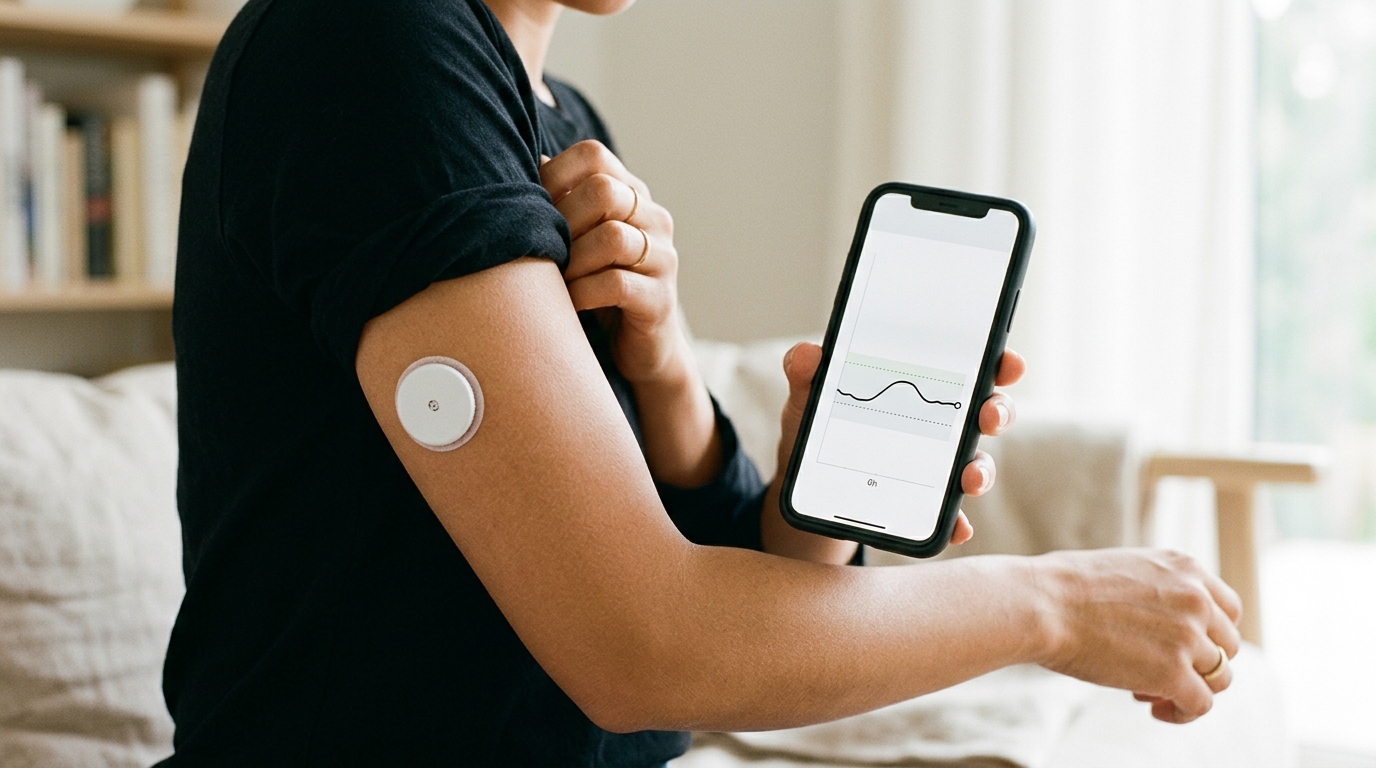
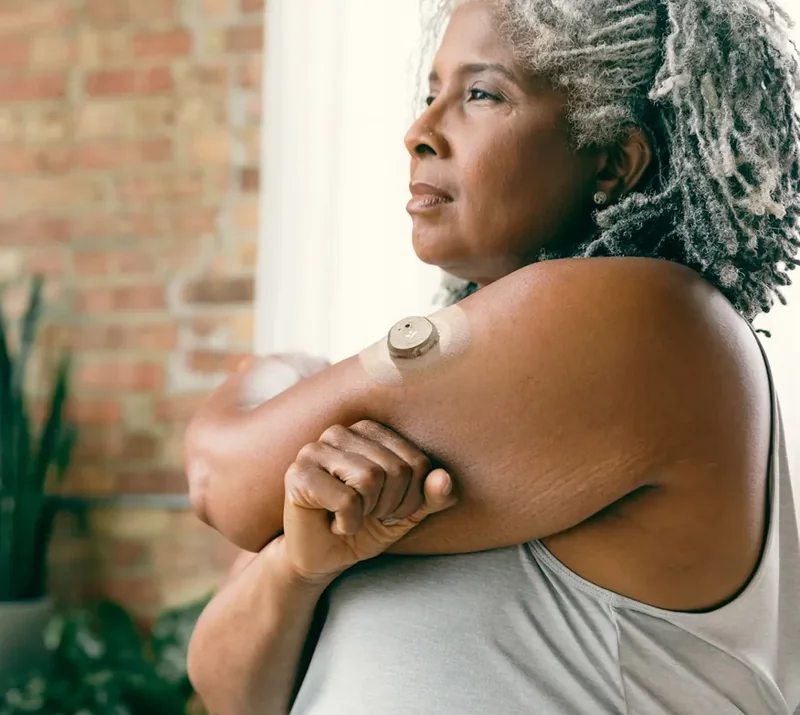
Each sensor is a quarter-sized disc that sits on the back of your upper arm and reads interstitial glucose every 5 minutes for up to 15 days — the longest wear time of any OTC sensor in 2026.
Setup and First Impressions
Application is a non-event: press the applicator against your arm, click, done. It's painless beyond a brief flick sensation. The 30-minute warm-up is roughly half what older sensors required — you're seeing data before your coffee cools.
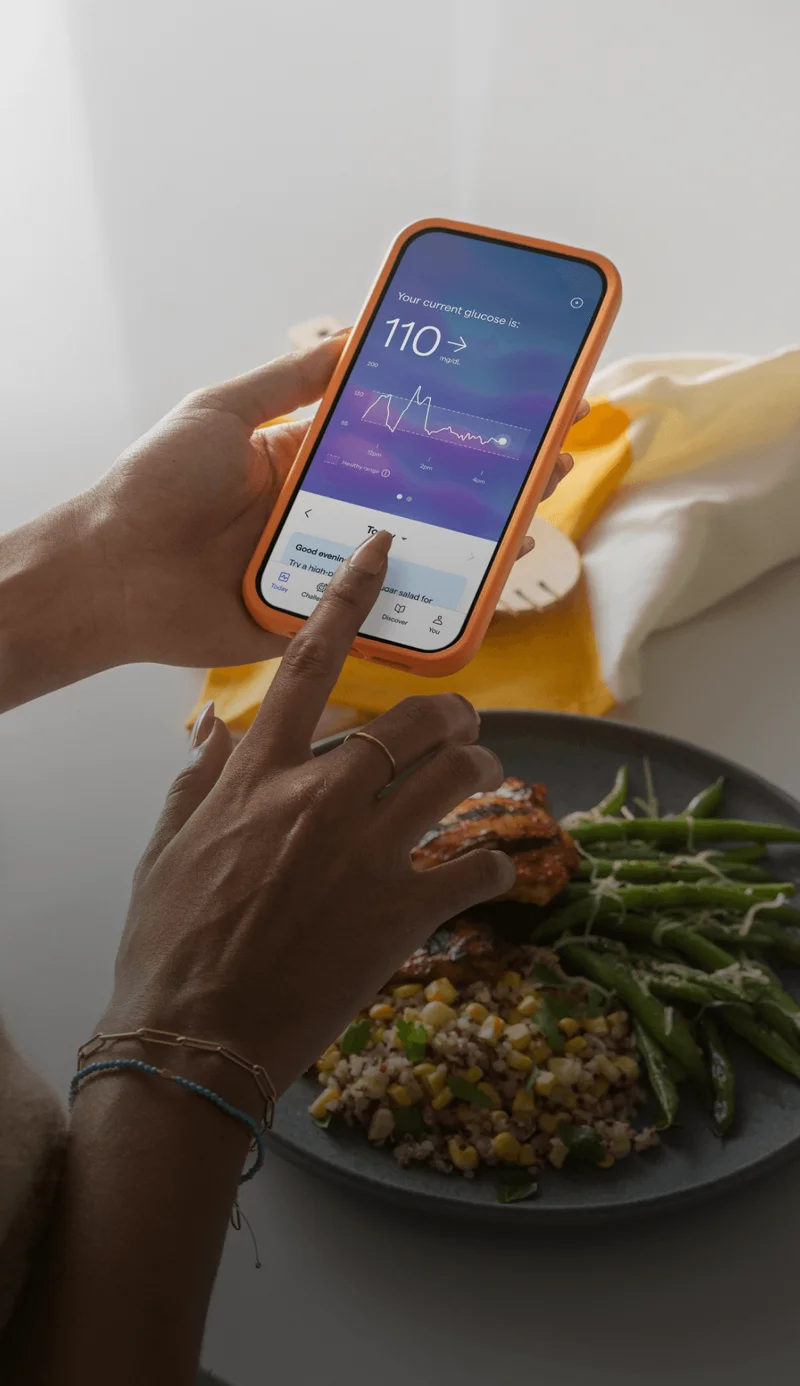
The app pairs over Bluetooth and starts charting immediately. And here's where Stelo declares its philosophy: you get a glucose curve, time-in-range stats, a "steady" indicator, and event logging. No meal photos, no AI scores, no coaching prompts. Dexcom assumes you can read a graph.
Accuracy: What We Measured
Dexcom publishes a MARD (mean absolute relative difference) of roughly 10% for Stelo. Against our fingerstick meter across 40+ paired readings, we saw differences that almost always fell within 10–15 mg/dL, tightening when glucose was stable and widening briefly during rapid rises after meals.
Two practical caveats every CGM shares:
- Compression lows. Sleep on the sensor arm and you may see a false dip into the 60s that vanishes when you roll over. Ignore single dramatic overnight readings.
- Lag. Interstitial glucose trails blood glucose by 5–15 minutes, so the peak you see is slightly delayed and smoothed.
For non-diabetic use — spotting spikes, comparing meals, watching trends — this accuracy is more than sufficient. It's the same sensor platform many "premium" CGM programs quietly resell.
The 15-Day Sensor Life in Practice
Both of our sensors made it the full 15 days with adhesive intact through daily showers and five workouts a week, though we added an overpatch (included in the box) around day 10 the second time. Fifteen days matters more than it sounds: it's the difference between 24 sensor changes a year and 26+ with 14-day rivals, and it drops the cost per day of data below any competitor except Abbott Lingo's trial pricing.
Browse All Products
Explore our evidence-based product reviews across every health category.
Integrations: Stelo's Quiet Superpower
This is the feature that separates Stelo from every other OTC sensor. Glucose flows into Apple Health, Google Fit, and Oura — and seeing your glucose curve overlaid on sleep and HRV data is where the actual insights live. Two patterns we confirmed in 30 days:
- Poor sleep (Oura score under 70) reliably preceded higher fasting glucose the next morning
- A 10-minute post-dinner walk visibly blunted the evening spike, every single time
Abbott Lingo syncs only with Apple Health/Health Connect. If you own an Oura Ring, Stelo is the only OTC CGM that closes the loop.
What We Don't Like
- The app is spartan. No food logging beyond basic events, no meal scoring, no education layer. Beginners who want to be taught will do better with Abbott Lingo's coaching-style app or Nutrisense's dietitian.
- No alarms. By design (it's not a medical alert device), but worth stating: if you need low-glucose alerts, you need a prescription CGM.
- US-only availability as of mid-2026.
Price and Value
Stelo costs $99 for a two-pack of 15-day sensors — effectively $99/month — with no subscription; you can buy one box, learn for a month, and stop. A single-sensor option runs $49.99. It's HSA/FSA eligible. Compare that to $199/month at Levels or $179/month at Nutrisense and Signos, all of which use comparable or identical sensor hardware. Full market context in our best CGMs for non-diabetics 2026 ranking.
Get smarter about health tech
Deal alerts, new reviews, and health tips — delivered weekly. No spam.
Unsubscribe anytime. We respect your inbox.
Who Should Buy Dexcom Stelo?
- Wearable owners (Oura, Apple Watch) who want glucose in their existing data stack
- Self-directed optimizers comfortable interpreting their own trends
- People with type 2 diabetes not on insulin whose insurance won't cover a prescription CGM
- Anyone leaving a CGM subscription program who realized they just want the data
Skip it if you want coaching (Nutrisense), the absolute lowest entry price (Abbott Lingo at $49), or insulin-dosing support (prescription G7).
Frequently Asked Questions
Is Dexcom Stelo accurate?
Yes — Stelo has a published MARD of about 10%, and in our 30-day test readings tracked within 10–15 mg/dL of fingerstick values in most conditions. That's accurate enough for spotting spikes, comparing meals, and tracking trends, which is what non-insulin users need. Brief false lows can occur if you sleep on the sensor arm.
Do you need a prescription for Dexcom Stelo?
No. Stelo is FDA-cleared as an over-the-counter CGM for adults 18+ who don't use insulin. You order it directly from Dexcom's website — no doctor visit, no pharmacy, no insurance paperwork.
How much does Dexcom Stelo cost?
Stelo costs $99 for a two-pack of 15-day sensors (about a month of continuous wear), or $49.99 for a single sensor. There's no required subscription — buy sensors only when you want them. It's HSA/FSA eligible.
How long does a Stelo sensor last?
Each Stelo sensor lasts up to 15 days — the longest wear time of any over-the-counter CGM in 2026. Both sensors in our test reached the full 15 days, though we recommend the included overpatch for heavy training weeks.
Does Dexcom Stelo work with Oura Ring?
Yes — Stelo is the only OTC CGM with native Oura integration, alongside Apple Health and Google Fit. Your glucose data appears alongside sleep and HRV metrics in the Oura app, which makes patterns like poor-sleep-driven glucose elevation easy to spot.
Is Dexcom Stelo good for type 2 diabetes?
Stelo is specifically cleared for adults with type 2 diabetes who don't use insulin, and it's one of the most practical options for them because insurance rarely covers prescription CGMs without insulin use. If you take insulin or need low-glucose alarms, you need a prescription CGM like the Dexcom G7 instead.
Disclaimer: This article contains affiliate links. We may earn a commission if you purchase through our links, at no additional cost to you. All opinions are our own and based on thorough research and testing. This content is not medical advice — consult your clinician before making decisions about glucose monitoring or diabetes care.
Featured Products
Products mentioned in this article
Related Guides
More articles you might find helpful
Eight Sleep Pod 5 Review 2026: Core vs Plus vs Ultra
**Disclosure:** Product CTAs on this page currently go to manufacturer sites (no affiliate tracking yet). Better Vitals may earn a commission once partner links are live — rankings and "skip if" calls won't change when we swap URLs. We only recommend gear we'd put on a shortlist for a specific type
Wonderfeel Youngr NMN Review 2026: 90-Day Results & Verdict
*Updated July 2026*
Signos Review 2026: CGM for Weight Loss, Tested
*Updated July 2026*

Written by
Steve Luu
Health tech researcher