Cold Plunge Benefits: What the Science Actually Says
Key Takeaway
Cold plunging is having a moment. Every biohacker's Instagram shows ice baths, cold plunge pools are popping up in gyms, and Andrew Huberman's podcast made it mainstream.
Affiliate Disclosure: BetterVitals may earn a commission from purchases made through links in this article, at no additional cost to you. This supports our independent research and analysis. We only recommend products we believe in after thorough evaluation.
Medical Disclaimer
This article is for educational purposes only and is not a substitute for professional medical advice, diagnosis, or treatment. Always consult your healthcare provider before making health decisions.
Cold Plunge Benefits: What the Science Actually Says
Cold plunging is having a moment. Every biohacker's Instagram shows ice baths, cold plunge pools are popping up in gyms, and Andrew Huberman's podcast made it mainstream.
But does it actually work? And more importantly—is it worth the discomfort?
After four months of daily cold showers and weekly cold plunges, here's what the evidence actually shows.
Quick Verdict
What works: Reducing muscle soreness (DOMS), mental alertness, possibly immune function.
What probably doesn't work: Long-term fat loss, major longevity benefits (in humans).
What might work: Metabolic health, mood, brown fat activation—but the evidence is mixed.
Who shouldn't do it: People with cardiovascular issues, Raynaud's, or cold-triggered conditions.
What Is Cold Plunge Therapy?
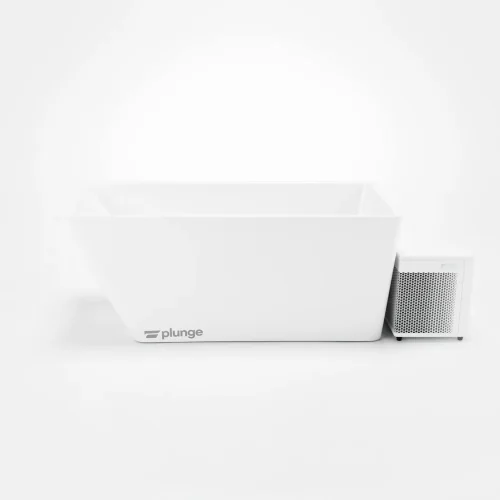
Cold plunge therapy means submerging your body in cold water—typically 50-60°F (10-15°C) for 1-10 minutes. Options range from purpose-built tubs like the Plunge Cold Tub to DIY setups:
- Ice baths: 35-50°F, typically 5-15 minutes
- Cold plunge pools: 50-60°F, 5-10 minutes (e.g., the Plunge)
- Cold showers: 50-60°F, 30 seconds to 5 minutes
- Cryotherapy chambers: -200°F to -300°F, 2-3 minutes
The temperature and duration matter. A cold shower isn't the same as an ice bath.
Benefits That Have Evidence
1. Reduced Muscle Soreness (DOMS)
This is the most well-supported benefit. Multiple studies show cold water immersion reduces delayed onset muscle soreness by about 20%.
The evidence:
- Bleakley et al., Journal of Athletic Training (2012): 20% reduction in DOMS after exercise
- Cochrane review (2012): "Evidence supports cold water immersion for reducing muscle soreness"
What this means: If you're training hard, a cold plunge after your workout might mean less soreness tomorrow. If you're also using a percussion massage gun, combining the two can be a powerful recovery stack — percussion for targeted muscle work, cold immersion for systemic inflammation reduction.
My experience: This is the benefit I notice most. After heavy leg days, 5 minutes in 55°F water noticeably reduces next-day soreness.
2. Mental Alertness and Mood
Cold exposure triggers a massive dopamine surge—2-3x baseline levels according to some studies. You're literally flooding your brain with feel-good chemicals.
The evidence:
- Shevchuk, Medical Hypotheses (2008): Proposed that cold showers could serve as a potential treatment for depression, based on the activation of the sympathetic nervous system and increased norepinephrine signaling to the brain
- Huberman Lab: Cold exposure increases epinephrine and dopamine acutely
What this means: A cold shower first thing = natural alertness boost. Better than caffeine for the first hour.
My experience: My cold shower at 6 AM wakes me up more effectively than coffee. The first 30 seconds are unpleasant, but by minute 2, I feel wired.
3. Possible Immune Function Boost
This one is promising but not definitive. Some studies show increased white blood cell count after cold exposure.
The evidence:
- Brenner et al., Journal of Applied Physiology (1999): Cold water exposure increased white blood cells in elite swimmers
- But: Other studies show mixed results
What this means: Might help. Probably won't hurt. Not a reason to cold plunge alone.
The Physiology: What Happens When You Get In
Understanding the mechanism helps explain both the benefits and the risks.
Immediate Response (0-30 seconds)
When you first hit cold water, your body activates the cold shock response:
- Sympathetic nervous system fires — adrenaline and norepinephrine spike
- Vasoconstriction — blood vessels in your extremities constrict, shunting blood toward your core to protect vital organs
- Gasping reflex — involuntary inhalation, elevated heart rate, blood pressure spike
This is the dangerous window. The gasping reflex is why you should never dive into cold water unexpectedly — if you're submerged, that involuntary gasp can cause drowning.
Adaptation Phase (30 seconds - 3 minutes)
As your body acclimates:
- Breathing normalizes — the initial shock fades
- Norepinephrine peaks — this is responsible for the alertness and mood benefits
- Dopamine release begins — building to that 2-3x baseline surge
- Parasympathetic activation — your body begins to counterbalance the initial stress response, lowering heart rate and promoting a calm-but-alert state
This parasympathetic rebound is what makes cold exposure a form of stress inoculation. You're training your nervous system to recover from acute stress more efficiently — a skill that transfers to other stressful situations.
Post-Immersion (the afterdrop and rewarming)
When you get out:
- Vasodilation — blood vessels reopen, flooding your extremities with warm blood. This rush of blood flow delivers oxygen and nutrients to muscles, which may contribute to the recovery benefits
- Core temperature continues to drop briefly (the "afterdrop") before rewarming kicks in
- Elevated mood and alertness persist for 1-3 hours as dopamine and norepinephrine remain elevated
Browse All Products
Explore our evidence-based product reviews across every health category.
Benefits With Mixed Evidence
Metabolic Health / Brown Fat
Cold exposure activates brown adipose tissue (BAT), which burns calories to generate heat. In theory, this could help with metabolic health.
The evidence:
- Animal studies: Clear brown fat activation and improved glucose metabolism
- Human studies: Brown fat activates in the cold, but the calorie burn is minimal (maybe 50-100 calories in an hour)
What this means: Not a significant weight loss tool. But might improve metabolic flexibility.
Longevity
This is where the hype exceeds the evidence. Cold shock proteins (like RBM3) are upregulated during cold exposure and have been associated with neuroprotective effects in animal models — RBM3 in particular helps preserve synaptic connections during hypothermia and may play a role in neuronal repair.
The evidence:
- Animal studies: Cold-exposed worms and fish live longer. RBM3 has shown neuroprotective effects in mouse models of neurodegeneration
- Human studies: Zero direct evidence linking cold exposure to increased lifespan
What this means: Don't cold plunge for longevity. The animal data is interesting but doesn't translate to humans yet. That said, the indirect benefits — better sleep, reduced inflammation, improved stress resilience — may contribute to a longer healthspan even if the cold shock proteins themselves aren't the mechanism.
Risks and Who Should Avoid It
Real Risks
- Cold shock response: Sudden immersion can cause involuntary gasping, tachycardia, or hyperventilation. Never plunge alone.
- Cardiovascular stress: Cold causes vasoconstriction and increases blood pressure. If you have heart issues, talk to your doctor.
- Hypothermia: Extended exposure in cold water can lead to dangerous core temperature drops.
Who Should Avoid Cold Plunging
- People with uncontrolled heart conditions
- Raynaud's phenomenon
- Cold-induced urticaria (hives)
- Anyone with poor thermoregulation
- Pregnant women (consult your doctor)
Mental Health Note
If you have anxiety or panic disorder, cold exposure can trigger panic responses in some people. Start slow.
How to Start Cold Plunging
Week 1-2: Cold Showers
- End your regular shower with 30 seconds of cold water
- Aim for the coldest setting
- Start with 30 seconds, build to 60
Week 3-4: Extended Cold Showers
- 2-3 minutes of cold water
- Focus on back, chest, legs
Month 2+: Cold Plunge
- If you have access: 3-5 minutes in 50-60°F water
- If not: Cold showers at 4°C (39°F) for 3-5 minutes
The 10-Minute Rule
Don't exceed 10 minutes in cold water. After that, the benefits plateau and risks increase.
Get smarter about health tech
Deal alerts, new reviews, and health tips — delivered weekly. No spam.
Unsubscribe anytime. We respect your inbox.
The Bottom Line
Cold plunging has real benefits—mainly for recovery and mental alertness. The longevity claims are overblown. The fat loss claims are fake.
If you want to try it: Start with cold showers. Build up. Don't spend $5,000 on a plunge tub until you know you stick with it.
If you hate cold: That's fine. There are other recovery tools that work. And getting better sleep will do more for your recovery than any single modality.
FAQ
How long should I cold plunge?
For most people, 3-5 minutes in 50-60°F water is optimal. Don't exceed 10 minutes—after that, benefits plateau and risks increase.
Can I do cold plunging every day?
Yes, if your body tolerates it well. Some people do daily cold showers. Just listen to your body and don't overdo it.
Do I need to buy an expensive cold plunge tub?
No. Start with cold showers. Only invest in a dedicated plunge tub if you know you'll use it consistently. A $50 cold shower attachment works almost as well.
Does cold plunging help with weight loss?
Not significantly. While cold exposure activates brown fat, the calorie burn is minimal. It's not a weight loss tool.
Is cold plunging safe for everyone?
No. If you have heart conditions, Raynaud's, or cardiovascular issues, consult a doctor first. Cold exposure puts stress on your cardiovascular system.
What's better: cold shower or ice bath?
Cold showers are safer and more accessible. Ice baths have stronger acute effects but require more setup and carry more risk. Start with cold showers.
When is the best time to cold plunge?
Morning for mental alertness, post-workout for recovery. Don't cold plunge late at night if it keeps you awake.
Featured Products
Products mentioned in this article


Related Guides
More articles you might find helpful
How to Regulate Blood Sugar Naturally: Evidence-Based Strategies
Your body regulates blood sugar constantly. It's one of the most fundamental things your metabolism does. But modern life — processed foods, sedentary habits, chronic stress — can throw that system out of whack.
CGM for Non-Diabetics: Is It Worth the Hype?
You've seen them on Twitter. Influencers wearing little sensors on their arms, posting screenshots of their blood sugar curves. "Look at my glucose spike after eating pizza!" They call it "metabolic optimization." They call it "biohacking."
How Does Sleep Affect Longevity? What the Science Actually Says
The connection between sleep and lifespan isn't subtle. It's not some hippy-dippy wellness claim. The data is stark: people who consistently sleep less than 6 hours per night have a 12-15% higher risk of dying from any cause compared to those sleeping 7-8 hours. As an illustrative comparison, some r

Written by
Steve Luu
Health tech researcher