What Is a Good HRV Score? Ranges by Age, Gender & Fitness Level
Key Takeaway
Heart rate variability might be the most misunderstood metric in consumer health tech. Millions of people check their HRV every morning on their Oura, WHOOP, or Apple Watch, see a number, and immediately ask the wrong question: Is my HRV good or bad?
Affiliate Disclosure: BetterVitals may earn a commission from purchases made through links in this article, at no additional cost to you. This supports our independent research and analysis. We only recommend products we believe in after thorough evaluation.
Medical Disclaimer
This article is for educational purposes only and is not a substitute for professional medical advice, diagnosis, or treatment. Always consult your healthcare provider before making health decisions.
What Is a Good HRV Score? Ranges by Age, Gender & Fitness Level
Heart rate variability might be the most misunderstood metric in consumer health tech. Millions of people check their HRV every morning on their Oura, WHOOP, or Apple Watch, see a number, and immediately ask the wrong question: Is my HRV good or bad?
Here's the problem. An HRV of 45ms might be excellent for a 55-year-old sedentary office worker and deeply concerning for a 25-year-old competitive runner. The number itself means almost nothing without context — your age, your fitness level, your baseline, your recent sleep, whether you had two glasses of wine last night. All of it matters.
This guide will give you that context. We'll cover what the research says about average HRV ranges by age and gender, why your personal trend matters more than any single reading, and what you can actually do to improve your HRV over time. No hype, no magic numbers — just the data.
What Is HRV? Quick Refresher
If you're already familiar with HRV, skip ahead to the age tables. For everyone else, here's the 60-second version.
Heart rate variability measures the time variation between consecutive heartbeats. Despite what the name suggests, you actually want high variability. A heart that beats like a rigid metronome — exactly 1.000 seconds between every beat — is a heart under stress. A healthy heart constantly adjusts its rhythm in response to breathing, posture changes, thoughts, and environmental signals.
This variation is controlled by your autonomic nervous system (ANS), which has two branches:
- Parasympathetic nervous system (rest and digest) — increases HRV. When this branch is dominant, your body is in recovery mode. Heart rate slows, digestion activates, and the time between beats becomes more variable.
- Sympathetic nervous system (fight or flight) — decreases HRV. When this branch is dominant, your body is mobilized for action or stress. Heart rate increases and the spacing between beats becomes more rigid and uniform.
HRV is essentially a window into the balance between these two systems. Higher HRV generally reflects better autonomic flexibility — your body's ability to shift gears between stress and recovery.
The most common metric is RMSSD (root mean square of successive differences), which measures beat-to-beat variation in milliseconds. This is what most consumer wearables report. When someone says their "HRV is 55," they usually mean their RMSSD is 55ms. Other metrics exist (SDNN, HF power, LF/HF ratio), but RMSSD is the standard for consumer devices because it can be calculated from short recording windows and is relatively resistant to measurement artifacts.
For a deeper dive, check out our complete guide to HRV.
Average HRV by Age
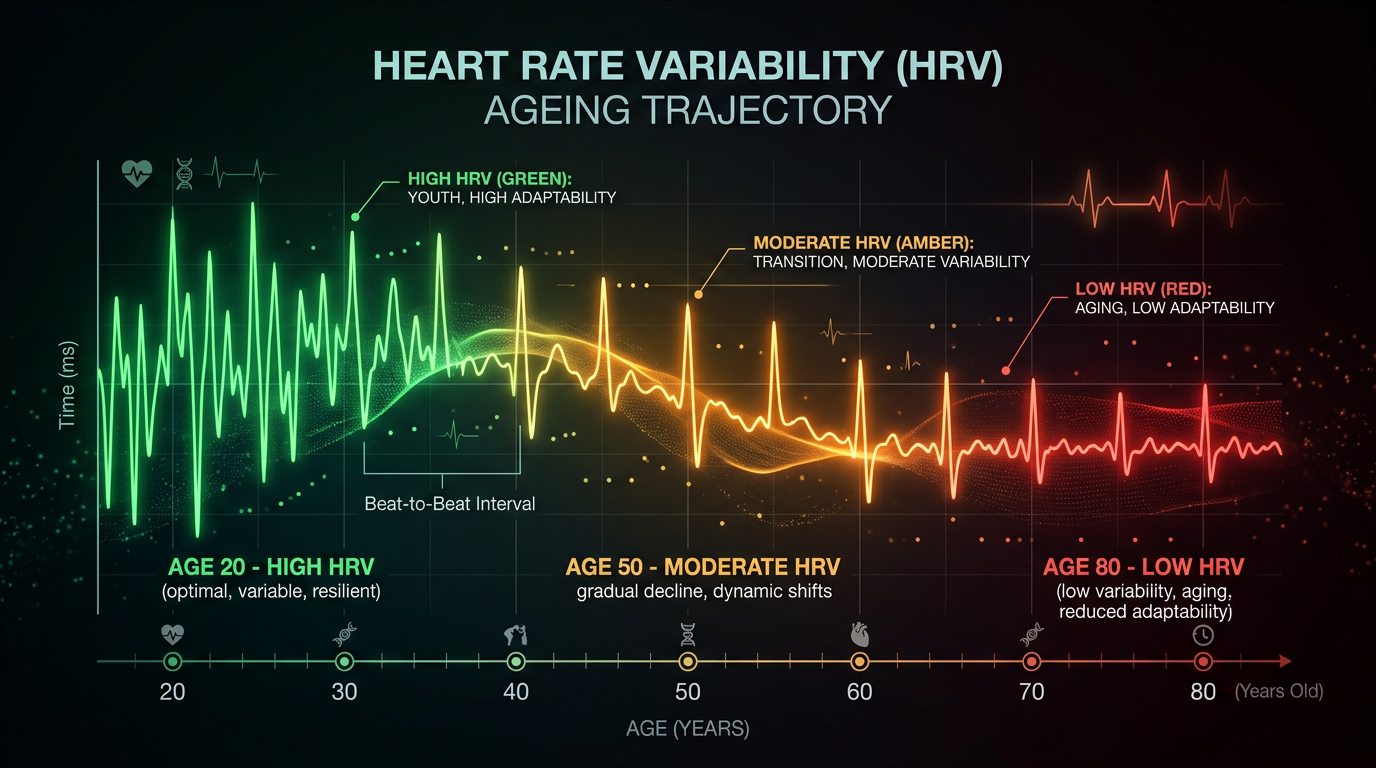
This is the table everyone's looking for. But before you scroll down and panic (or celebrate), understand what these numbers represent: population-level averages based on overnight RMSSD measurements. They come primarily from Shaffer & Ginsberg's 2017 meta-analysis published in Frontiers in Public Health, one of the most comprehensive reviews of normative HRV data available.
| Age Range | Average HRV (RMSSD) | Typical Range |
|---|---|---|
| 20–25 | ~75ms | 50–100ms |
| 25–30 | ~68ms | 45–90ms |
| 30–35 | ~60ms | 40–80ms |
| 35–40 | ~55ms | 35–75ms |
| 40–45 | ~50ms | 30–70ms |
| 45–50 | ~45ms | 25–65ms |
| 50–55 | ~40ms | 20–60ms |
| 55–60 | ~36ms | 18–55ms |
| 60+ | ~32ms | 15–50ms |
A few important caveats:
These are approximations, not precise cutoffs. HRV data varies significantly across studies depending on measurement conditions (time of day, body position, recording duration, device used). The ranges above synthesize multiple sources, but they shouldn't be treated as diagnostic thresholds.
The decline with age is real, but not uniform. HRV decreases roughly 1-2% per year after age 25 on average, but this varies enormously between individuals. A fit, well-sleeping 50-year-old can absolutely have higher HRV than a stressed, sedentary 30-year-old. Age is a strong predictor at the population level, but your lifestyle choices matter more for your personal trajectory.
Device differences matter. An RMSSD of 50ms on an Oura Ring might not correspond to 50ms on a WHOOP band, because each device uses different measurement windows, filtering algorithms, and sensor placements. Compare your numbers within a single device over time — not across devices or against someone else's numbers from a different device.
If you're looking for the most accurate wearable for HRV measurement, we've tested the major options in our best wearables for HRV comparison.
HRV Differences by Gender
Research consistently shows that women tend to have slightly lower HRV than men during young adulthood and middle age. This isn't a small effect — studies report differences of 5-15ms in RMSSD between men and women of the same age during the 20-40 age range.
Several factors contribute to this gap:
- Hormonal influences. Estrogen and progesterone affect autonomic nervous system activity. HRV fluctuates across the menstrual cycle, with lower readings typically occurring during the luteal phase (the two weeks before menstruation) when progesterone is elevated. This means pre-menopausal women may see more cyclical variation in their HRV compared to men.
- Body size and cardiac anatomy. Heart size correlates with HRV, and men tend to have larger hearts relative to body size. This is a physiological baseline difference, not a health disadvantage.
- Sympathovagal balance. Some research suggests women have relatively higher sympathetic nervous system tone at baseline, which would manifest as lower resting HRV.
The gap narrows with age. After menopause, the hormonal influence decreases and gender differences in HRV become much smaller. By age 60+, men and women show similar HRV ranges.
The practical takeaway: If you're a woman comparing your HRV to a male partner or friend of the same age, expect your number to be somewhat lower. This doesn't mean your autonomic health is worse — it means you need a different reference frame. Compare against female-specific baselines (most modern wearables now adjust for this) and, more importantly, track your own trend over time.
HRV by Fitness Level
Aerobic fitness is one of the strongest modifiable predictors of HRV. The relationship is straightforward: regular cardiovascular exercise increases parasympathetic tone, which raises resting HRV.
Here's what the data looks like across fitness levels for adults aged 30-40:
| Fitness Level | Typical RMSSD Range |
|---|---|
| Sedentary | 25–50ms |
| Moderately active | 40–70ms |
| Regularly active | 50–85ms |
| Competitive athlete | 70–105ms |
| Elite endurance athlete | 90–140ms+ |
Elite endurance athletes — marathon runners, professional cyclists, triathletes — routinely record HRV values above 100ms and sometimes above 150ms. This reflects profound cardiac adaptations: a larger, more efficient heart with strong vagal tone that produces dramatic beat-to-beat variation at rest.
But there's a nuance here that catches people off guard: very high HRV in athletes isn't always a good sign. Extremely elevated HRV (significantly above personal baseline) can sometimes indicate parasympathetic overload, which is paradoxically associated with overtraining syndrome. This is another reason why your personal trend matters more than the absolute number.
For the average person starting a fitness program, expect to see meaningful HRV improvements within 8-12 weeks of consistent aerobic training. The biggest gains come from Zone 2 training — that moderate, conversational-pace cardio that builds your aerobic base without hammering your recovery systems.
Browse All Products
Explore our evidence-based product reviews across every health category.
Why Your HRV Number Doesn't Matter (Your Trend Does)
This is the single most important section in this article, and it's the concept most people get wrong.
Stop comparing your HRV to other people. A single HRV reading is influenced by so many variables — genetics, age, measurement timing, device, body position, recent meals, ambient temperature — that cross-person comparisons are nearly meaningless. Knowing that your friend's HRV is 80 while yours is 50 tells you almost nothing about your relative health.
What actually matters is your personal baseline and how it changes over time.
Here's the framework that works:
Establish your baseline. Track your HRV consistently for at least 2-3 weeks. Same device, same conditions (ideally overnight during sleep). Your baseline is your 7-day rolling average during a period of normal life — not during vacation, not during finals week, not during a training camp.
Watch the 7-day rolling average, not daily readings. Day-to-day HRV fluctuates by 20-30% or more, and this is completely normal. A single bad night's sleep can tank your HRV by 15-20ms. A great day of recovery can spike it. These daily swings are noise. The signal is in the weekly trend.
Track the direction, not the destination. Is your 7-day average trending up over months? That's a sign of improving fitness, better recovery, reduced chronic stress. Is it trending down? That's a signal to investigate — are you overtraining, sleeping poorly, or under unusual stress?
Use deviations from baseline as signals. A single reading that's 15-20% below your baseline might mean you had a rough night. Three consecutive days below baseline is a pattern worth paying attention to. A full week below baseline should change your behavior — reduce training load, prioritize sleep, check for early illness signs.
The best HRV apps are built around this trend-based approach, showing you rolling averages and baseline deviations rather than emphasizing single-day scores.
What Affects HRV
HRV is sensitive to nearly everything in your life, which is both its strength (comprehensive health signal) and its weakness (lots of confounding variables). Here are the major factors, roughly ordered by impact:
Sleep quality and duration. This is the single biggest controllable factor. Poor sleep — whether from short duration, fragmentation, or timing misalignment — suppresses HRV reliably and dramatically. Most people see their largest HRV gains from fixing sleep.
Alcohol. Even moderate drinking (2+ drinks) suppresses HRV for 24-48 hours. This is one of the most consistently documented effects in the HRV literature, and it's why your wearable's "recovery score" craters after a night out. One drink typically has a minimal effect; three or more can cut your HRV by 20-40% the following night.
Exercise. Acute intense exercise temporarily lowers HRV (your body is recovering). Chronic consistent exercise raises baseline HRV over time. This is the "exercise paradox" — today's workout hurts tomorrow's HRV, but months of workouts raise your floor.
Psychological stress. Chronic stress — work pressure, relationship problems, financial anxiety — activates the sympathetic nervous system and suppresses HRV. Acute stress events (a hard conversation, a near-miss in traffic) cause temporary dips.
Illness. Your HRV often drops 1-3 days before you feel symptoms of a cold or infection. This is one of the most practically useful applications of HRV tracking. If your HRV is trending down for no obvious reason, your immune system might already be fighting something.
Age. As the table above shows, HRV declines with age. This is the one factor you can't change, but you can significantly slow the rate of decline through fitness and lifestyle choices.
Hydration. Dehydration reduces blood volume, which affects cardiac output and heart rate variability. This is especially relevant for athletes and anyone tracking HRV around workouts.
Medications. Beta-blockers, anticholinergics, and some antidepressants can significantly affect HRV. If you're on medication and tracking HRV, consult your healthcare provider about expected effects.
How to Improve Your HRV
Now for the actionable part. These interventions are listed in rough order of evidence quality and expected impact:
1. Fix Your Sleep First
This isn't exciting advice, but it's the highest-leverage move. Aim for 7-9 hours, maintain consistent bed/wake times (even on weekends), keep your room cool (65-68°F), and eliminate light and noise. Most people who "can't improve their HRV" are sleeping 6 hours in a warm, bright room. Fix the sleep environment and the HRV follows.
2. Build an Aerobic Base with Zone 2 Training
Zone 2 training — sustained moderate-intensity cardio where you can hold a conversation but wouldn't want to — is the most effective exercise modality for improving HRV. Aim for 150-180 minutes per week across 3-5 sessions. Walking, cycling, swimming, jogging — the modality matters less than the consistency and the intensity zone.
You'll see HRV improvements within 8-12 weeks if you're consistent.
3. Manage Chronic Stress
Easier said than done, but the physiological impact is clear. Chronic stress keeps the sympathetic nervous system elevated and suppresses parasympathetic activity. Evidence-backed approaches include: regular meditation (even 10 minutes daily), cognitive behavioral therapy, adequate social connection, and reducing unnecessary commitments.
If stress is a major factor for you, our guide on how to lower cortisol covers the practical interventions in more depth.
4. Limit Alcohol
If you're serious about optimizing HRV, alcohol is the most straightforward thing to reduce. You don't have to go fully sober — but cutting from 10 drinks per week to 2-3 will likely produce a noticeable baseline HRV increase within a month. The data on this is unambiguous.
5. Practice Breathwork
Slow, controlled breathing at approximately 6 breaths per minute (5 seconds in, 5 seconds out) activates the vagus nerve and acutely raises HRV. This is called resonance frequency breathing, and it's one of the most studied non-pharmacological interventions for autonomic regulation. A daily 10-15 minute practice can raise baseline HRV over weeks.
6. Cold Exposure
Cold showers, cold plunges, and cold water immersion activate the vagus nerve and appear to improve parasympathetic tone over time. The evidence here is growing but less robust than for exercise and sleep. Start with 30-60 seconds of cold water at the end of your shower and build from there.
7. Stay Hydrated
Simple but often overlooked. Dehydration directly impairs HRV. Aim for adequate water intake throughout the day — there's no magic number, but if your urine is consistently dark yellow, you're likely under-hydrating.
Get smarter about health tech
Deal alerts, new reviews, and health tips — delivered weekly. No spam.
Unsubscribe anytime. We respect your inbox.
Best Devices for Tracking HRV
Not all HRV tracking is created equal. Here's a brief accuracy comparison of the major consumer options:
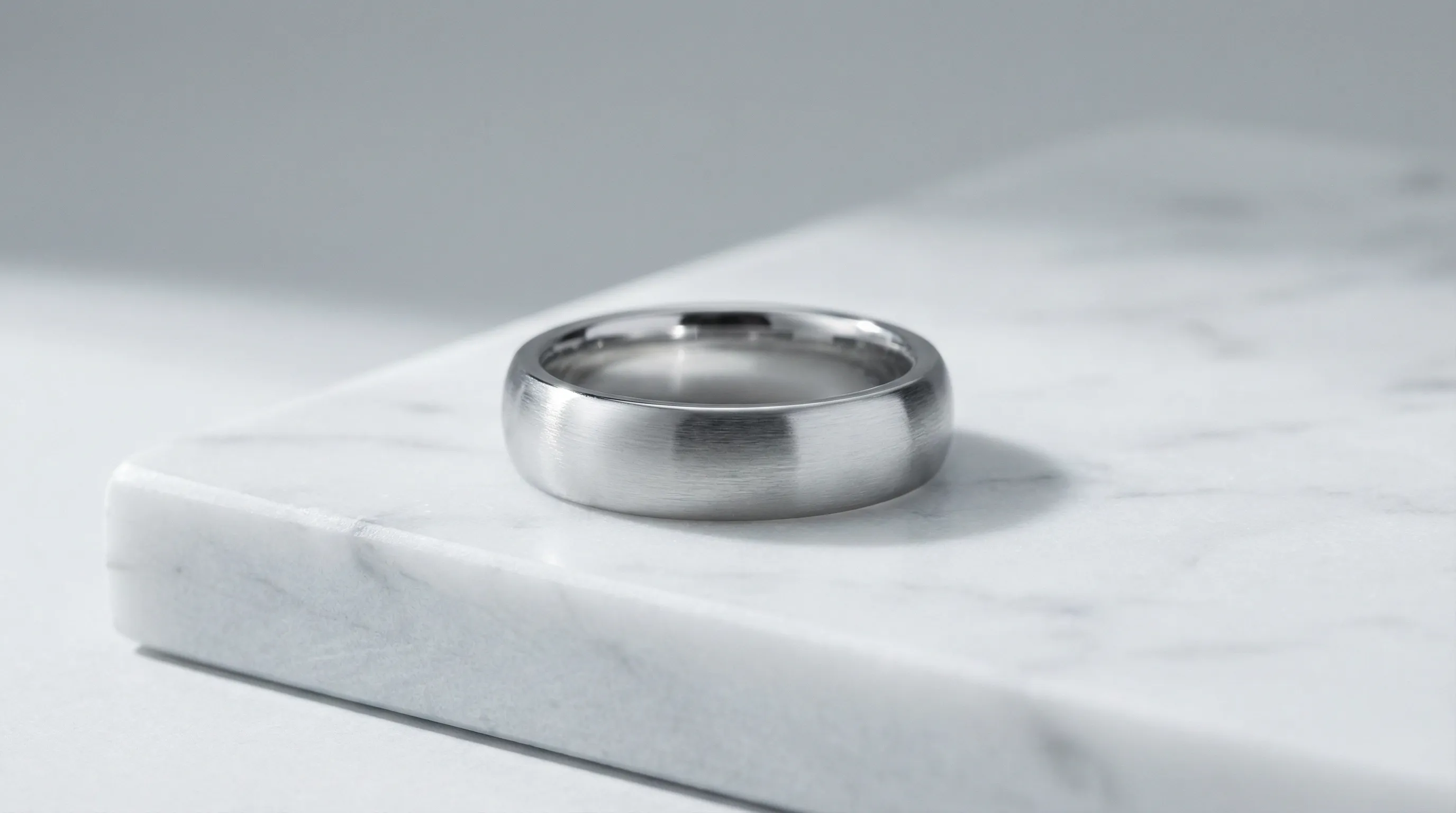
Oura Ring 4 — The finger is a superior PPG measurement site compared to the wrist, which gives Oura an inherent accuracy advantage. Measures continuously overnight and reports your lowest resting HRV during deep sleep. Best for passive, effortless tracking. Read our full Oura Ring 4 review.
WHOOP 5.0 — Wrist-based but with a sophisticated algorithm that compensates well for sensor placement limitations. WHOOP's strength is its recovery scoring system that contextualizes HRV within strain, sleep, and behavioral data. Best for athletes who need training guidance. See our WHOOP 5 review.
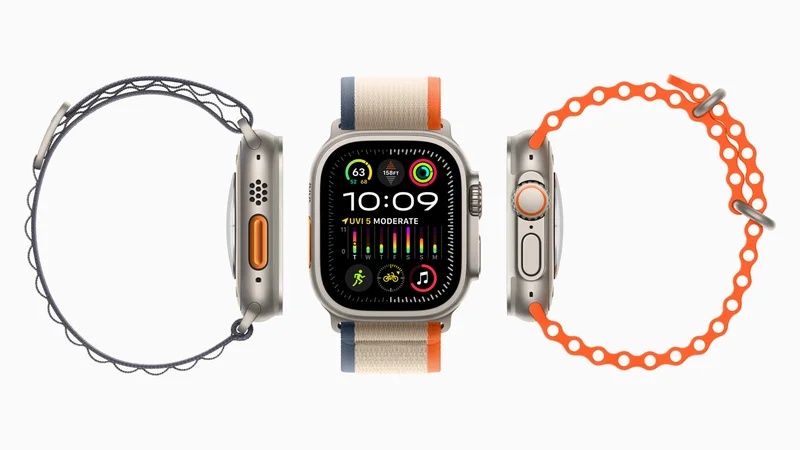
Apple Watch (Series 9 / Ultra 2) — Measures HRV overnight via the Health app and can do spot-checks via the Breathe app. Accuracy is reasonable but less consistent than dedicated trackers. The advantage is that you probably already own one.
Garmin (Fenix 8, Venu 3) — Garmin's "HRV Status" feature tracks your 7-day HRV baseline and flags when you're outside your normal range. The trend analysis is excellent, though raw accuracy is slightly below Oura and WHOOP in validation studies.
For a detailed head-to-head comparison, see our full breakdown of the best wearables for HRV.
When to Worry About Low HRV
Most HRV variation is normal and benign. But there are patterns worth paying attention to:
A consistently declining trend over 2+ weeks — especially if you can't attribute it to obvious factors (new training program, travel, illness) — warrants investigation. This could indicate accumulated overtraining, chronic stress overload, or emerging health issues.
Post-illness suppression that doesn't recover. It's normal for HRV to drop during and immediately after illness. But if your baseline hasn't returned to pre-illness levels after 2-3 weeks of recovery, consider talking to your healthcare provider. Prolonged autonomic disruption can occur after viral infections.
Overtraining syndrome. If you're an athlete with progressively declining HRV despite adequate sleep and nutrition, you may be overreaching. Other signs include persistent fatigue, elevated resting heart rate, mood disturbances, and declining performance. The correct response is a significant reduction in training load, not pushing through.
Very low HRV for your age. If your HRV is consistently in the bottom 10th percentile for your age group (for example, below 20ms for a healthy 30-year-old), and you've confirmed it's not a measurement artifact, it's worth discussing with a physician. Chronically low HRV is associated with increased cardiovascular risk, though it's a correlation, not a diagnosis.
What you should NOT worry about: A single bad reading after a stressful day, poor sleep, or alcohol consumption. Day-to-day drops are the system working as expected. HRV is supposed to respond to those inputs. It's the sustained patterns that carry clinical significance.
FAQ
What is a good HRV for my age?
A good HRV depends heavily on individual factors, but as a general guide: if you're in your 20s, an RMSSD of 50-100ms is typical. In your 30s, 40-80ms. In your 40s, 30-70ms. In your 50s, 20-60ms. Above 60, 15-50ms. However, your personal baseline and trend matter far more than where you fall in these ranges. An HRV that's steadily improving is a better sign than a high number that's declining.
Is an HRV of 20 bad?
Not necessarily. For someone over 60, an HRV of 20ms is within the normal range. For a healthy 25-year-old, it would be unusually low and worth investigating. Context matters: your age, fitness level, recent sleep, and whether this is a single reading or a consistent pattern all affect interpretation. If your HRV is consistently well below average for your age and you can't explain it through lifestyle factors, consult a healthcare provider.
Why is my HRV so low in the morning?
Morning HRV can be low for several reasons: poor sleep quality, alcohol consumed the evening before, late-night eating, dehydration, illness (sometimes before symptoms appear), or high stress levels. If it's a single occurrence, it's almost certainly nothing to worry about. If your morning HRV is consistently low (below your personal baseline for a week or more), assess your sleep habits, stress levels, and recovery practices.
Can you increase HRV quickly?
Acutely, yes — a single session of slow breathing at 6 breaths per minute can raise HRV within minutes. But for sustained baseline improvement, expect 8-12 weeks of consistent effort. The most effective interventions are improving sleep quality, regular aerobic exercise (especially Zone 2 training), reducing alcohol, and managing chronic stress. There are no shortcuts for long-term autonomic health.
Should I compare my HRV to my partner's or friends'?
No. Cross-person HRV comparisons are essentially meaningless because of differences in age, genetics, fitness, measurement devices, and measurement conditions. Two people can be equally healthy with very different HRV numbers. The only comparison that matters is you versus your own baseline over time. Track your 7-day rolling average and focus on the direction of the trend, not the absolute number.
Featured Products
Products mentioned in this article

Related Guides
More articles you might find helpful
Best Bed Cooling Systems 2026: Eight Sleep vs Cheaper Alternatives
**Disclosure:** Product CTAs on this page currently go to manufacturer sites (no affiliate tracking yet). Better Vitals may earn a commission once partner links are live — rankings and "skip if" calls won't change when we swap URLs. We only recommend gear we'd put on a shortlist for a specific type
Is the Oura Membership Worth It in 2026? (And How to Skip It)
*Updated July 2026*
Oura Ring Price in 2026: Every Model, Subscription & Real Total Cost
*Updated July 2026*

Written by
Steve Luu
Health tech researcher