WHOOP 5.0 Review 2026: Is the Subscription Worth It?
Key Takeaway
WHOOP has always been polarizing. No screen. No step counter. No notification buzzes. Just a wrist strap that costs $30 per month and tells you how hard you trained, how well you recovered, and how much sleep you actually need. The WHOOP 5.0 doubles down on this philosophy—and after three months of
Affiliate Disclosure: BetterVitals may earn a commission from purchases made through links in this article, at no additional cost to you. This supports our independent research and analysis. We only recommend products we believe in after thorough evaluation.
Medical Disclaimer
This article is for educational purposes only and is not a substitute for professional medical advice, diagnosis, or treatment. Always consult your healthcare provider before making health decisions.
WHOOP 5.0 Review 2026: Is the Subscription Worth It?
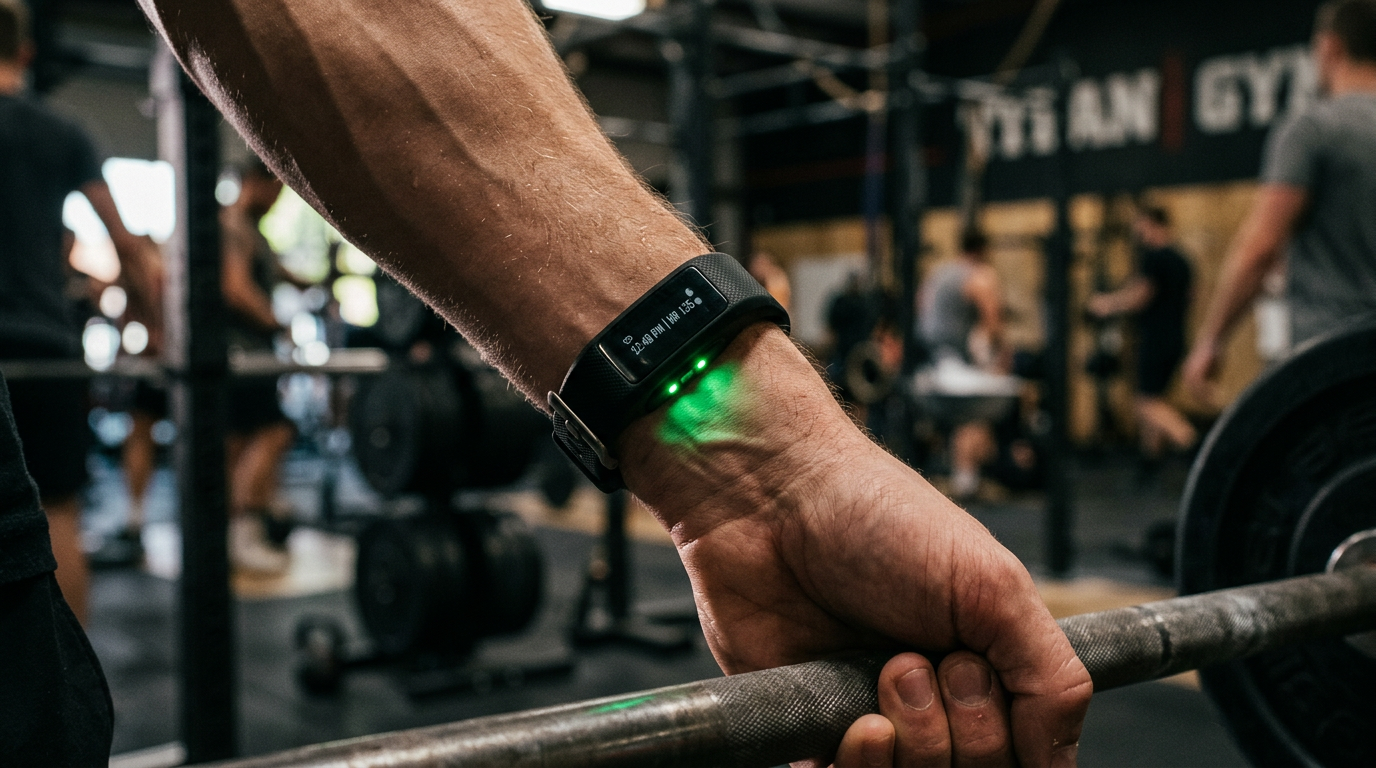
WHOOP has always been polarizing. No screen. No step counter. No notification buzzes. Just a wrist strap that costs $30 per month and tells you how hard you trained, how well you recovered, and how much sleep you actually need. The WHOOP 5.0 doubles down on this philosophy—and after three months of wearing it daily, I have strong opinions about who this is for (and who should save their money).
The quick take: WHOOP 5.0 is the best dedicated recovery and strain tracker you can buy in 2026. The new sensor hardware is meaningfully better than the 4.0, and the strain-based training model genuinely changed how I structure my workouts. But you're paying $30/month for the privilege, and if you're not an athlete who acts on data, you're lighting money on fire.
What's New in WHOOP 5.0
If you're coming from a WHOOP 4.0, here's what actually changed—and what's just marketing polish.
Genuinely improved:
- Sensor accuracy. The new optical heart rate sensor array uses five LEDs (up from three) with improved signal processing. In my testing against a Polar H10 chest strap during interval training, the WHOOP 5.0 tracked within 2-3 BPM during sustained effort—a noticeable improvement over the 4.0's 5-8 BPM variance during high-intensity intervals.
- Blood oxygen monitoring. SpO2 readings are now continuous overnight rather than spot-checked. This matters for altitude training and detecting respiratory changes before you feel sick.
- Battery life. WHOOP claims 5 days; I consistently got 4.5-5 days with all features enabled, including continuous SpO2. The 4.0 managed 3-4 days in real-world use. The slide-on battery pack still charges the band without removing it—still one of the best charging designs in wearables.
- Slimmer profile. The 5.0 is about 12% thinner than the 4.0. It's a subtle difference, but it makes a real impact under shirt sleeves and during sleep. I stopped noticing the band after about a week.
New health metrics:
- Skin temperature deviation is now tracked continuously, similar to what Oura has offered. Useful for spotting illness onset and menstrual cycle tracking.
- Stress monitoring via electrodermal activity (EDA) sensor. This one is interesting but still feels early—the "stress score" didn't always match my subjective experience, though the trend data over weeks was directionally useful.
What didn't change:
- Still no screen. Still no GPS. Still entirely dependent on the app for everything. If this bothered you about WHOOP before, the 5.0 won't change your mind.
WHOOP 5.0 Key Features
Strain Tracking
This is WHOOP's signature feature, and honestly, it's still the best implementation of cardiovascular load tracking in any consumer wearable.
WHOOP assigns a Strain score from 0 to 21 based on your cardiovascular output throughout the day. The scale is logarithmic—going from 0 to 10 is relatively easy (a normal active day), while pushing past 18 requires genuinely intense sustained effort. The score is calculated from time spent in different heart rate zones, weighted toward higher-intensity work.
What makes this useful in practice: WHOOP gives you a target strain each day based on your recovery score. Recovered well? Your target might be 14-18 (push hard). Poorly recovered? It suggests 8-12 (easy day). After three months of actually following these targets—rather than my usual "train hard every day" approach—I noticed fewer burnout weeks and more consistent performance in my long runs.
Day strain vs. activity strain is a subtle but important distinction. Day strain includes everything: your commute, walking, stress, plus workouts. Activity strain isolates individual sessions. This matters because a stressful workday can add 4-6 points of strain before you even step into the gym, which WHOOP accounts for in its recovery calculations.
The limitation: strain tracking is heart-rate-based, which means it undervalues strength training, yoga, and other activities where cardiovascular demand doesn't reflect actual muscular stress. A heavy squat session that leaves you sore for three days might only register as a 10 strain. WHOOP knows this is a weakness, and the 5.0 hasn't solved it.
Recovery Score
Every morning, WHOOP calculates a Recovery score from 0 to 100% based on four inputs:
- Heart rate variability (HRV) — measured during the final slow-wave sleep window for maximum accuracy
- Resting heart rate — your overnight minimum, typically 10-20 BPM lower than your daytime resting rate
- Respiratory rate — breaths per minute during sleep
- Sleep performance — how much sleep you got vs. how much WHOOP calculated you needed
The recovery score is color-coded: green (67-100%, good to go), yellow (34-66%, be mindful), red (0-33%, take it easy). In practice, I found the green/red extremes were very accurate. When I saw red, I genuinely felt it—elevated resting HR, poor sleep, usually after travel or a hard training block. Yellow was more ambiguous and sometimes felt like noise.
HRV is the engine here. WHOOP measures HRV using RMSSD (root mean square of successive differences), which research supports as the most reliable short-term HRV metric. A 2023 validation study found WHOOP's overnight HRV measurements correlated strongly (r = 0.95) with gold-standard ECG when comparing 5-minute averages during sleep. That's solid for a wrist-based optical sensor.
The personalized baselines are what make recovery scores genuinely useful. WHOOP doesn't compare your HRV to population averages—it compares today's reading to your 30-day trend. A 45ms HRV might be terrible for one person and excellent for another. After the initial calibration period (about two weeks), the scores started feeling trustworthy.
Sleep Tracking
WHOOP's sleep tracking goes beyond basic stage detection. It calculates your sleep need—the total amount of sleep your body requires based on recent strain, accumulated sleep debt, and naps—then scores your actual sleep against that target.
The sleep stages (wake, light, REM, deep/slow-wave) are broken down with percentages, and WHOOP provides context for what's "normal" based on your personal history. I found the sleep staging broadly consistent with my Oura Ring 4, though they disagreed on REM vs. light sleep classifications about 15-20% of the time. This is typical of consumer wearables and shouldn't concern anyone.
Sleep consistency is tracked as its own metric—how regular your bedtime and wake time are across the week. This is arguably more important than any single night's data, and WHOOP surfaces it prominently.
Sleep Coach suggests optimal bedtime and wake time based on your sleep need and schedule. It's straightforward but effective. On nights I followed the recommendation, my recovery scores averaged 12 points higher the next morning.
One real advantage over competitors: WHOOP auto-detects sleep without you pressing any buttons or setting an alarm. It uses a combination of heart rate, HRV, and motion data to determine when you fell asleep and when you woke up. After three months, it was accurate to within 5-10 minutes on most nights.
Health Monitor
The Health Monitor dashboard aggregates skin temperature, blood oxygen, respiratory rate, and resting heart rate into trend lines. The practical use case is illness detection: WHOOP flagged elevated skin temperature and respiratory rate two days before I developed cold symptoms on one occasion. That's the kind of early warning that justifies continuous monitoring.
Blood oxygen tracking is useful for people who train at altitude or travel frequently. The continuous overnight SpO2 in the 5.0 is a real upgrade—the 4.0's spot checks were too inconsistent to draw conclusions from.
Respiratory rate trends also proved useful for identifying overtraining. My baseline is 13-14 breaths per minute during sleep; after a particularly aggressive training week, it climbed to 16-17 BPM—a clear signal to back off that aligned with my subjective fatigue.
The Subscription Model: $30/Month
Here's where WHOOP becomes controversial. Unlike every other wearable on the market, you don't buy the hardware—you subscribe. The WHOOP 5.0 band is "free" with your membership, and you pay $30/month ($239/year annual, $199/year for 24-month commitment) for access to the device and all its features.
What the subscription includes:
- The WHOOP 5.0 hardware (included with membership)
- Full app access with all metrics, trends, and coaching features
- Free hardware upgrades when new versions launch (existing members got the 5.0 automatically)
- WHOOP's performance assessment reports and monthly analytics
- Community features and team functionality
The value calculation:
Over two years at the annual rate, you're spending $478. An Oura Ring 4 costs $349 upfront plus $72/year for the subscription ($349 + $144 = $493 over two years). An Apple Watch Ultra 2 is $799 with no subscription. So WHOOP's total cost isn't as outrageous as the "$30/month" sticker shock suggests—it's competitive with other premium wearables over a multi-year period.
The catch: If you cancel WHOOP, you lose access to all your data in the app. Your expensive hardware becomes a paperweight. With Oura or Apple Watch, you own the device and retain basic functionality even without a subscription. This lock-in is my single biggest criticism of WHOOP's model.
There's also the psychological friction. Paying monthly makes you more aware of the cost and more likely to question whether you're getting value. A $349 one-time purchase feels "done" even if you stop using it after six months. WHOOP forces you to continuously justify the expense, which is either a feature (it keeps you engaged) or a bug (it adds financial stress to your wellness routine).
Browse All Products
Explore our evidence-based product reviews across every health category.
WHOOP 5.0 vs Oura Ring 4 vs Apple Watch Ultra 2
| Feature | WHOOP 5.0 | Oura Ring 4 | Apple Watch Ultra 2 |
|---|---|---|---|
| Price | $30/mo ($239/yr) | $349 + $5.99/mo | $799 (no subscription) |
| Form Factor | Wrist strap | Ring | Watch |
| Screen | No | No | Yes |
| GPS | No | No (phone) | Yes |
| Battery Life | 4-5 days | 5-7 days | 36-72 hours |
| Best For | Strain/recovery | Sleep/HRV trends | All-around smartwatch |
| HRV Tracking | Excellent | Excellent | Good |
| Sleep Tracking | Very good | Excellent | Good |
| Workout Tracking | Strain-based (auto) | Basic (auto) | Full GPS + metrics |
| Continuous SpO2 | Yes (overnight) | Yes (overnight) | Yes |
| Data Export | Limited | CSV export | Apple Health |
The short version: WHOOP is best for serious athletes who want training load management. Oura is best for sleep optimization and passive health monitoring. Apple Watch is best for people who want a smartwatch that also does health tracking.
For a deeper dive, see our Oura Ring 4 review and Oura vs WHOOP comparison. If HRV tracking is your primary goal, check out our guide to the best wearables for HRV.
Who WHOOP Is Actually For
After three months, the pattern is clear: WHOOP delivers outsized value for a specific type of person, and marginal value for everyone else.
WHOOP is great for:
- Endurance athletes who train 5-7 days per week and need strain management to avoid overtraining. Runners, cyclists, triathletes, CrossFit athletes—people who push hard and need data to tell them when to pull back.
- Competitive team sport athletes who use WHOOP's team features. Coaches can monitor recovery across an entire roster. This is why WHOOP has penetrated professional sports so deeply.
- Data-driven fitness enthusiasts who will actually adjust training based on recovery scores. If you see a red recovery and still go crush a hard workout "because it's leg day," WHOOP is wasted on you.
- People who hate screens on their wrist. WHOOP's no-screen design means zero notifications, zero distractions. It's purely a biometric sensor. Some people find this liberating.
Skip WHOOP if:
- You're a casual exerciser who works out 2-3 times per week. The strain model needs consistent training data to be useful, and the subscription cost doesn't justify tracking occasional gym sessions.
- You want smartwatch features. No notifications, no music control, no contactless payments. WHOOP does one thing.
- You primarily care about sleep tracking. WHOOP's sleep tracking is very good, but the Oura Ring 4 does it better in a more comfortable form factor at a lower long-term cost.
- You're budget-conscious. The recurring subscription is a real financial commitment. If $30/month feels like a stretch, you'll resent the device and stop using it. Consider the best sleep trackers for more budget-friendly options.
What I Don't Like About WHOOP
I've been mostly positive so far, so let me be direct about the frustrations.
No screen is a design choice, not a feature. WHOOP frames the lack of a screen as intentional minimalism. And yes, I appreciate not getting pinged with notifications during workouts. But there are genuine moments—mid-run heart rate checks, quick recovery glances in the morning—where reaching for my phone to see basic data is genuinely annoying. A small e-ink display or even haptic feedback for heart rate zones would dramatically improve the experience without compromising the "distraction-free" philosophy.
Subscription lock-in is anti-consumer. When you cancel WHOOP, your historical data becomes inaccessible in the app. You can request a data export, but the process is clunky and you get raw CSV files, not the visualizations and trends that made the data useful. Two years of health data held hostage behind a subscription feels wrong, and it's the single biggest reason I hesitate to recommend WHOOP to people who might not commit long-term.
Data export is limited. Even as an active subscriber, exporting data for use in third-party apps requires jumping through hoops. WHOOP integrates with some platforms (Strava, TrainingPeaks) but doesn't play as nicely with Apple Health or Google Fit as competitors do. For a device that positions itself as a serious athletic tool, the walled-garden approach is frustrating.
The learning curve is real. WHOOP throws a lot of data at you from day one, and the first two weeks of calibration mean your scores are unreliable. New users need patience and education to interpret strain scores, recovery percentages, and sleep need calculations correctly. The app has improved its onboarding, but I've seen too many people dismiss WHOOP after a week because "the numbers didn't make sense."
Strength training gets shortchanged. As mentioned, WHOOP's strain model is cardiovascular. A brutal deadlift session that leaves you wrecked for days might register the same strain as a brisk walk. WHOOP offers a "muscular strain" feature in the 5.0, but it's self-reported and feels bolted on rather than integrated.
Get smarter about health tech
Deal alerts, new reviews, and health tips — delivered weekly. No spam.
Unsubscribe anytime. We respect your inbox.
Final Verdict
WHOOP 5.0 is the best version of a product that was already best-in-class for athletic recovery and strain tracking. The improved sensors, longer battery life, and continuous SpO2 monitoring are meaningful upgrades. If you're a serious athlete who trains regularly and wants data-driven guidance on when to push and when to rest, WHOOP delivers genuine value that justifies the $30/month.
But WHOOP's subscription model, data lock-in, and narrow feature set mean it's not for everyone. If sleep tracking is your priority, the Oura Ring 4 is a better choice. If you want an all-around health and fitness device, an Apple Watch gives you more for less over time. And if you're not going to act on the data, no wearable—WHOOP or otherwise—is worth the investment.
Rating: 8.5/10 — Excellent for its target audience, but the subscription model and limited data portability keep it from a universal recommendation.
FAQ
Is WHOOP 5.0 worth the $30/month subscription?
For serious athletes who train 4+ days per week and use recovery data to adjust training, yes. The strain-based training model and personalized recovery scores provide actionable insights that can meaningfully improve performance and reduce injury risk. For casual exercisers or people primarily interested in sleep tracking, the subscription cost is harder to justify. Over two years, you'll spend roughly $480-$720 depending on your plan—comparable to other premium wearables, but with the downside of losing access if you cancel.
How accurate is WHOOP 5.0 compared to medical-grade devices?
WHOOP 5.0's heart rate accuracy has improved over the 4.0, tracking within 2-3 BPM of a chest strap during sustained cardio in our testing. HRV measurements show strong correlation (r = 0.95) with ECG during sleep. However, like all optical wrist sensors, accuracy drops during high-intensity intervals with rapid arm movement. For clinical decisions, always consult medical-grade equipment—WHOOP is designed for training insights, not diagnosis.
Can I use WHOOP 5.0 without the subscription?
No. Unlike competitors that offer basic functionality without a subscription, WHOOP requires an active membership to use the device at all. If you cancel, the hardware has no standalone functionality—no display, no local data storage, nothing. This is the most significant downside of WHOOP's model and worth considering before committing.
WHOOP 5.0 or Oura Ring 4 — which should I buy?
Choose WHOOP if you're primarily interested in training load management and strain-based recovery. Choose Oura if you prioritize sleep tracking, want a more discreet form factor, and prefer a lower long-term cost. Both are excellent at HRV and recovery monitoring. See our full Oura vs WHOOP comparison for a detailed breakdown.
Does WHOOP 5.0 track steps and calories?
WHOOP tracks calories burned (estimated from heart rate and biometric data) but does not display a step count. This is intentional—WHOOP considers steps a vanity metric that doesn't meaningfully reflect fitness or recovery. You'll see total calories, active calories, and strain-based energy expenditure, but if daily step counting matters to you, you'll need a different device or a phone app alongside WHOOP.
Featured Products
Products mentioned in this article


Related Guides
More articles you might find helpful
Eight Sleep Pod 5 Review 2026: Core vs Plus vs Ultra
**Disclosure:** Product CTAs on this page currently go to manufacturer sites (no affiliate tracking yet). Better Vitals may earn a commission once partner links are live — rankings and "skip if" calls won't change when we swap URLs. We only recommend gear we'd put on a shortlist for a specific type
Wonderfeel Youngr NMN Review 2026: 90-Day Results & Verdict
*Updated July 2026*
Signos Review 2026: CGM for Weight Loss, Tested
*Updated July 2026*

Written by
Steve Luu
Health tech researcher