Abbott Lingo Review 2026: The Cheapest CGM Worth Wearing?
Key Takeaway
Updated July 2026
Affiliate Disclosure: BetterVitals may earn a commission from purchases made through links in this article, at no additional cost to you. This supports our independent research and analysis. We only recommend products we believe in after thorough evaluation.
Medical Disclaimer
This article is for educational purposes only and is not a substitute for professional medical advice, diagnosis, or treatment. Always consult your healthcare provider before making health decisions.
Abbott Lingo Review 2026: The Cheapest CGM Worth Wearing?
Meta description: Abbott Lingo review after a month of wear: what the $49 two-week biosensor shows, accuracy vs Dexcom Stelo, and whether the cheapest CGM is enough.
Updated July 2026
Verdict up front: Abbott Lingo is the cheapest legitimate way to see your own glucose — $49 for a two-week biosensor, sold over the counter at Walmart and Amazon — and its beginner-friendly app is the best teaching tool in the OTC CGM market. Its limits show up later: fewer integrations than Dexcom Stelo and a scoring system you may outgrow once you've learned your patterns.
We wore Lingo for two 14-day sensor cycles, alongside fingerstick checks and a Dexcom Stelo on the other arm for part of the test. Here's where the budget pick genuinely wins — and where it doesn't.
What Is Abbott Lingo?
Lingo is Abbott's consumer glucose biosensor, built on the FreeStyle Libre platform — the most widely worn CGM technology in the world, with billions of sensor-days behind it. Abbott stripped the medical framing and built a wellness app around one idea: glucose spikes are "metabolic strain," and fewer spikes is better.
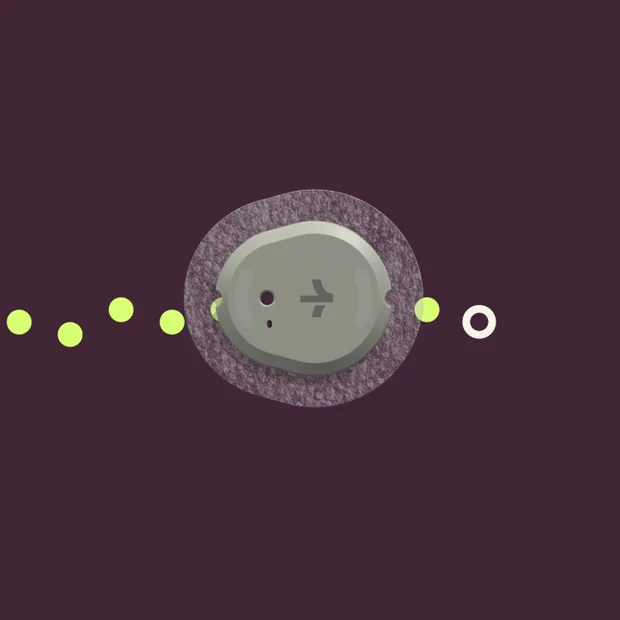
Each sensor wears for 14 days on the back of the arm, reads glucose every minute, and streams to the Lingo app. No prescription, no subscription, no membership.
One thing to be clear about before buying: Lingo is a wellness device for people without diabetes — an educational tool, not a diagnostic or medical one. It can show you which meals spike you and whether your fixes work; it cannot diagnose prediabetes or diabetes, and it has no medical alarms. If you're buying a sensor because you're worried something is wrong, see a physician for standard labs first.
Setup and the First 24 Hours
Application is genuinely easy — easier than most people expect from something with a filament that sits under the skin:
- Clean the back of your upper arm with the included alcohol wipe
- Press the spring-loaded applicator against the skin — a quick click, and it's on (we felt a brief pinch, then nothing; most wearers report the same)
- Pair with the app and wait through the roughly one-hour warm-up
Two expectations to set for day one. First, the sensor sits flush enough to forget about within an hour — sleeves, backpacks, and seatbelts don't catch on it. Second, don't trust day-one data too much. Every CGM platform reads noisiest in its first 12–24 hours while the tissue around the filament settles; if your first evening shows odd numbers, wait a day before drawing conclusions. From day two onward, readings stabilize and the real experiment begins.
Living with it is undramatic: showers, workouts, and sleep are all fine (both our sensors survived the full 14 days of daily showers and gym sessions), and the only recurring quirk is the classic CGM compression low — sleep directly on the sensor arm and you may see a brief false low overnight. It's a pressure artifact, not a health event.
The Lingo Count System
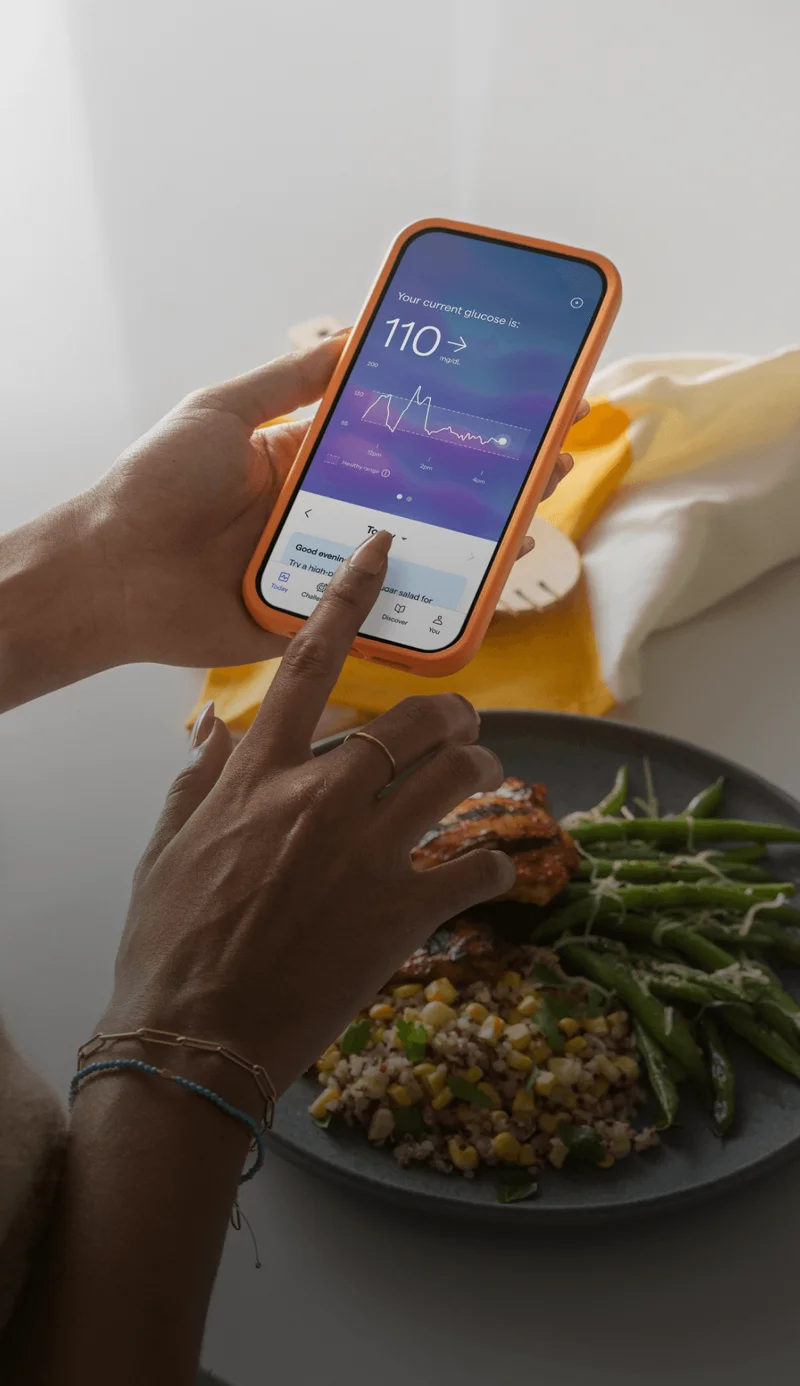
Instead of showing you raw milligrams-per-deciliter and wishing you luck, Lingo converts your glucose responses into a daily Lingo Count — a single number representing accumulated spike burden. Think step counter, inverted: lower is better, and the app sets you a daily target.
For beginners this is genuinely clever. Within our first week the feedback loop was working: the app flagged a "healthy" granola breakfast as our biggest daily spike, suggested pairing carbs with protein, and the next morning's eggs-first version measurably halved the Count. That's behavior change with training wheels, and it works.
The flip side: experienced users will eventually want the raw curves (they're available, one tap deeper) and may find the gamified layer thin after a month or two.
Accuracy: Libre Bones, Wellness Skin
Lingo's published MARD is about 9.3% — nominally better than Dexcom Stelo's ~10%. Worn on opposite arms, the two tracked each other closely; Lingo read slightly lower on fast rises, and both showed the classic CGM caveats (compression lows overnight, 5–15 minute lag behind blood glucose). For meal comparison and trend-spotting — the entire point of a wellness CGM — accuracy is a non-issue. This is proven clinical hardware.
One accuracy habit worth adopting regardless of sensor: judge trends and curve shapes, not individual readings. Glucose responses are also highly individual — your spike foods won't match anyone else's list, which is precisely why wearing a sensor teaches you things generic diet advice can't. Our CGM accuracy guide covers what MARD means and why the small differences between modern sensors rarely matter.
Browse All Products
Explore our evidence-based product reviews across every health category.
What We Like
- $49 entry price. Two full weeks of data for less than a dinner out. Nothing else in the category comes close.
- Buy it at Walmart or Amazon. No sign-up funnel, no "membership," no sales call. First CGM you can grab off a shelf.
- Best beginner app. Lingo Count plus short in-app lessons teach glucose literacy faster than any competitor's dashboard.
- HSA/FSA eligible.
What We Don't Like
- Integrations stop at Apple Health / Health Connect. No Oura, no Google Fit, no Garmin. If your health data lives in a wearable ecosystem, Dexcom Stelo is the better citizen — see our full Stelo review.
- 14-day wear versus Stelo's 15. Marginal, but it compounds over a year of continuous use.
- The coaching plateau. Once you know your five trigger foods, the Count adds little — and at ~$91/month for continuous wear, ongoing use costs nearly what Stelo does without matching its data access.
Price and Value
- $49 — single two-week sensor (the right first purchase for almost everyone)
- ~$91/month — two-sensor continuous plan
- No subscription required; sensors are purchased as needed
The strategy we'd actually recommend: buy one $49 sensor, run a two-week experiment (test your normal meals, then variations — carbs last, post-meal walks, earlier dinners), and bank the lessons. Repeat a sensor once or twice a year as a check-in. That's a complete metabolic education for under $150/year. For how Lingo stacks against all five OTC options, see our best CGMs for non-diabetics 2026 ranking.
How to Run the Two-Week Experiment Well
Since one sensor is the purchase we recommend, structure it to extract maximum value:
- Week 1 — baseline. Eat exactly how you normally eat and just observe. The goal is finding your real trigger foods, not performing for the sensor. Log meals so spikes are attributable.
- Week 2 — interventions. Re-eat your worst offenders from week one with a fix attached: a 10–15 minute walk after the meal, protein before the carbs, or a smaller portion paired with fat. Compare curves directly.
- Write down what you learned. Your five trigger foods, your best fixes, your typical overnight pattern. This list is the actual product — it outlasts the sensor by years, and it's what makes a $49 experiment worth more than an unexamined $179/month subscription.
Meanwhile, the free fundamentals — fiber-first meals, post-meal movement, consistent sleep — do most of the heavy lifting whether or not you're wearing a sensor. Our glucose regulation guide covers them; Lingo's job is showing you they're working on your body.
Who Should Buy Abbott Lingo?
- First-time CGM users who want to learn cheaply before committing to anything
- Budget-conscious experimenters running periodic two-week check-ins
- Anyone Walmart-close and curious — the lowest-friction entry in the market
Choose Stelo instead if you want Oura/Google Fit integration or plan to wear a sensor continuously; consider Nutrisense if you want a human dietitian interpreting your data.
Get smarter about health tech
Deal alerts, new reviews, and health tips — delivered weekly. No spam.
Unsubscribe anytime. We respect your inbox.
Who Should Skip It
- Insulin users, full stop. Lingo has no urgent-low alarms and isn't cleared for dosing decisions; that's prescription-CGM territory (FreeStyle Libre 3, Dexcom G7).
- Wearable-ecosystem people. If your Oura Ring or Google Fit data is where insights live, Lingo's integration ceiling will frustrate you within a week.
- Anyone with a history of disordered eating. A number scoring every meal is exactly the wrong tool for that history, however gently Abbott gamifies it.
- People expecting a diagnosis. Consistently odd readings on a wellness sensor are a reason to get physician-ordered labs — not proof of anything by themselves.
Bottom Line
Lingo answers the question most people actually have — "what does my glucose do?" — at the lowest price and lowest friction in the market, with clinically proven Abbott hardware underneath a genuinely good teaching app. Its weaknesses (integration ceiling, coaching plateau, 14-day wear) only matter for continuous long-term use, which is exactly the use case we'd steer most beginners away from anyway. Buy one $49 sensor, run a structured two-week experiment, keep the lessons, and repeat once or twice a year. If you finish those two weeks wanting continuous data and wearable integrations, graduate to Stelo; if you want a human coach, that's Nutrisense. As a first CGM, Lingo is the easiest recommendation in the category.
Frequently Asked Questions
Is Abbott Lingo worth it?
Yes — at $49 for two weeks of continuous glucose data, Lingo is the cheapest worthwhile CGM in 2026 and the best choice for first-timers. Most people identify their main trigger foods within one sensor. It's less compelling for continuous long-term wear, where Dexcom Stelo's better integrations justify its similar monthly cost.
How much does Abbott Lingo cost?
A single two-week Lingo biosensor costs $49; a two-sensor plan covering about a month costs roughly $91. There's no subscription or membership fee, and it's HSA/FSA eligible. It's sold direct, on Amazon, and at Walmart.
Is Abbott Lingo accurate?
Yes. Lingo runs on Abbott's FreeStyle Libre sensor platform with a published MARD of about 9.3% — slightly better on paper than Dexcom Stelo's ~10%. In our side-by-side wear the two tracked closely. Like all CGMs it reads interstitial fluid, so expect a 5–15 minute lag behind blood glucose and occasional compression lows when sleeping on the sensor.
Abbott Lingo vs Dexcom Stelo: which should I buy?
Buy Lingo for the cheapest start ($49 for two weeks) and the friendliest beginner app. Buy Stelo for continuous wear: 15-day sensors, no-subscription $99/month pricing, and integrations with Oura and Google Fit that Lingo lacks. Many people do both — learn on a Lingo sensor, then switch to Stelo if they want ongoing data.
Does Abbott Lingo require a prescription?
No. Lingo is an over-the-counter biosensor for adults 18+ not on insulin — you can buy it at Walmart or Amazon with no doctor involvement. If you use insulin or need glucose alarms, you need a prescription CGM like the FreeStyle Libre 3 or Dexcom G7 instead.
How long does a Lingo sensor last?
Each Lingo biosensor lasts 14 days. Both sensors in our month-long test reached the full 14 days through daily showers and regular workouts without the adhesive failing.
Does applying the Lingo sensor hurt?
Barely — the spring-loaded applicator inserts a thin flexible filament in a fraction of a second; most wearers (us included) feel a brief pinch at most, and nothing during the 14 days of wear. If a sensor is persistently painful after insertion, remove it and contact Abbott support — that's not normal.
Can you shower and exercise with Lingo?
Yes. The sensor is water-resistant and handled daily showers, sweat-heavy workouts, and sleep without adhesive failure in our month of testing. Avoid long, fully submerged sessions beyond its rated limits, and pat the adhesive dry rather than scrubbing over it.
Can Abbott Lingo diagnose diabetes or prediabetes?
No. Lingo is a wellness device for people not on insulin — it isn't cleared for diagnosis, and no consumer CGM is. Diagnosis requires physician-ordered labs like HbA1c or fasting glucose. If your Lingo readings seem consistently elevated, treat that as a prompt to see your doctor, not as an answer.
Does Lingo have glucose alarms?
No — and by design. As a wellness sensor for non-insulin users, Lingo provides spike feedback and daily scores, not medical urgent-low alarms. Anyone who needs alerting for hypoglycemia (chiefly insulin users) needs a prescription CGM built for that job.
Disclaimer: This article contains affiliate links. We may earn a commission if you purchase through our links, at no additional cost to you. All opinions are our own and based on thorough research and testing. This content is not medical advice — consult your clinician before making decisions about glucose monitoring or diabetes care.
Featured Products
Products mentioned in this article
Related Guides
More articles you might find helpful
Eight Sleep Pod 5 Review 2026: Core vs Plus vs Ultra
**Disclosure:** Product CTAs on this page currently go to manufacturer sites (no affiliate tracking yet). Better Vitals may earn a commission once partner links are live — rankings and "skip if" calls won't change when we swap URLs. We only recommend gear we'd put on a shortlist for a specific type
Wonderfeel Youngr NMN Review 2026: 90-Day Results & Verdict
*Updated July 2026*
Signos Review 2026: CGM for Weight Loss, Tested
*Updated July 2026*

Written by
Steve Luu
Health tech researcher