WHOOP 5.0 vs Oura Ring 4: 2026 Comparison
Key Takeaway
The WHOOP 5.0 and Oura Ring 4 are the two most scientifically serious health trackers on the consumer market — and they couldn't be more different in how they deliver that science to you. WHOOP is a sleek wrist strap built around the concept of daily strain and recovery, designed for athletes who wa
Affiliate Disclosure: BetterVitals may earn a commission from purchases made through links in this article, at no additional cost to you. This supports our independent research and analysis. We only recommend products we believe in after thorough evaluation.
Medical Disclaimer
This article is for educational purposes only and is not a substitute for professional medical advice, diagnosis, or treatment. Always consult your healthcare provider before making health decisions.
WHOOP 5.0 vs Oura Ring 4: 2026 Comparison
The WHOOP 5.0 and Oura Ring 4 are the two most scientifically serious health trackers on the consumer market — and they couldn't be more different in how they deliver that science to you. WHOOP is a sleek wrist strap built around the concept of daily strain and recovery, designed for athletes who want to know exactly how hard to push today. The Oura Ring 4 is a titanium ring worn 24/7 that prioritizes sleep architecture and readiness, designed for health-conscious individuals who want a passive, unobtrusive window into their biology.
The comparison isn't just about hardware. It's a philosophical split in what "health tracking" means. WHOOP asks: How hard did you push, and how recovered are you? Oura asks: What does your body need today based on how you slept and your physiological trends? Both are legitimate frameworks — they just serve different users.
For this comparison, we examined peer-reviewed validation studies for both devices, analyzed the subscription economics over 1-, 2-, and 5-year windows, and cross-referenced community data from platforms like r/whoop and r/ouraring to capture real-world performance complaints and praise. The goal is to give you enough information to make the right call without testing both devices yourself.
Quick Verdict
For serious athletes and fitness-focused users: WHOOP 5.0 wins because its real-time strain scoring, workout detection, and recovery-to-exertion framework is built specifically for performance optimization. The 0% hardware cost entry point also helps if you're already paying for fitness apps.
For sleep quality and passive health monitoring: Oura Ring 4 wins because finger-based optical sensing delivers cleaner pulse waveforms than wrist-based devices, and Oura's sleep staging algorithm has been independently validated against polysomnography with higher accuracy than WHOOP.
For long-term cost-conscious users: Oura Ring 4 wins because the $6/month membership versus WHOOP's $30/month creates a $576 difference over four years — enough to buy a second Oura Ring with money left over.
Side-by-Side Spec Comparison
| Feature | WHOOP 5.0 | Oura Ring 4 |
|---|---|---|
| Price (hardware) | $0 (included in subscription) | $349–$549 |
| Subscription | $30/month (required) | $5.99/month (optional) |
| 2-Year Total Cost | $720 | $493–$693 |
| 5-Year Total Cost | $1,800 | $709–$909 |
| Form Factor | Wrist strap | Titanium ring |
| Weight | 27g (with band) | 4–6g |
| Battery Life | 4–5 days | 7–8 days |
| Charging | On-wrist battery pack | Inductive ring cradle |
| HRV Method | Nightly rolling average (RMSSD) | 5-min nightly average (RMSSD) |
| Sleep Staging | Wake, Light, Deep, REM | Wake, Light, Deep, REM |
| Skin Temperature | Yes | Yes (0.01°C precision) |
| Blood Oxygen (SpO2) | Yes (nightly) | Yes (continuous) |
| Real-Time HR (Workout) | Yes | No (requires paired device) |
| GPS | No (uses phone GPS) | No |
| Strain Score | Yes (cardiovascular load) | No |
| Readiness/Recovery Score | Yes (Recovery Score) | Yes (Readiness Score) |
| Water Resistance | IP68, 10m | 100m |
| AI Coaching | WHOOP Coach (GPT-powered) | Advisor (beta) |
| Our Score | 8.8/10 | 9.1/10 |
WHOOP 5.0 Deep-Dive: Built for Athletes Who Want Accountability
Build Quality and Performance
The WHOOP 5.0 represents the most meaningful generational leap the brand has made. The strap itself is slimmer than the 4.0, with a redesigned sensor module that reduces the gap between the sensors and your skin — addressing the most common accuracy complaint from WHOOP 4.0 users. The new ProKnit band material (included in the premium tier) is genuinely comfortable for 24/7 wear and survives repeated sweating and washing without degradation.
Under the hood, WHOOP 5.0 added a skin conductance sensor (electrodermal activity) alongside its existing optical heart rate, temperature, and motion sensors. This enables WHOOP to detect stress signatures with greater specificity and improves the granularity of its Strain calculations during low-intensity activities where optical HR alone struggles. The on-wrist battery pack remains one of the cleverest hardware decisions in wearables — you charge WHOOP without taking it off, which eliminates data gaps during charging.
Accuracy for HRV during sleep improved in the 5.0 compared to its predecessor, with internal validation showing agreement within 5ms of chest-strap ECG measurements for overnight RMSSD. However, daytime HRV spot-checks are not a feature WHOOP offers — the system is deliberately designed around nightly recovery windows, and the rolling 7-day HRV baseline approach smooths out day-to-day noise in a statistically sound way.
Strain Scoring and Athletic Tracking
WHOOP's Day Strain is a 0–21 scale derived from cardiovascular load, with scores above 14 representing significant exertion. The algorithm integrates heart rate time-in-zone data across every cardiovascular activity throughout the day — not just discrete workouts. This means a stressful commute, back-to-back meetings that spike your HR, and an afternoon run all contribute to your daily strain, which more accurately reflects physiological load than step counts or calorie burns.
Workout detection is automatic and covers over 140 activity types. The real-time HR tracking during workouts is one of WHOOP's clearest advantages over Oura — seeing your HR zones as you train lets you execute zone-based training protocols without a separate chest strap. WHOOP Coach, the GPT-powered AI feature added in the 5.0 generation, answers natural language questions about your data ("What's making my HRV trend down this week?") with context-aware responses that synthesize your full data history. Early user reports suggest it's genuinely useful for identifying patterns, though it stops short of medical advice appropriately.
Who It's For
- Competitive athletes (CrossFit, running, cycling, triathlon) managing training load
- Fitness coaches who want objective data to back training prescriptions
- People coming from fitness-focused devices (Garmin, Polar) who want deeper recovery metrics
- Users comfortable with subscription models from other services (Strava, TrainingPeaks)
- Those who want real-time HR during workouts without carrying a separate device
Pros
- Real-time workout heart rate and 140+ sport mode detection
- Day Strain framework is the best consumer implementation of cardiovascular load tracking
- On-wrist charging eliminates data gaps
- WHOOP Coach AI provides genuinely contextual data interpretation
- No upfront hardware cost (subscription covers device)
- Strong community and team features for accountability
Cons
- $30/month subscription is the highest in the wearable category — $1,800 over 5 years
- No display; data lives entirely in the app
- Sleep staging accuracy lags behind Oura Ring in independent comparisons
- No GPS; relies on phone for route mapping
- Wrist form factor means removal for activities like boxing or gymnastics
- No SpO2 continuous monitoring; nightly spot-check only
Browse All Products
Explore our evidence-based product reviews across every health category.
Oura Ring 4 Deep-Dive: The Biometric Ring That Changed the Category
Build Quality and Performance
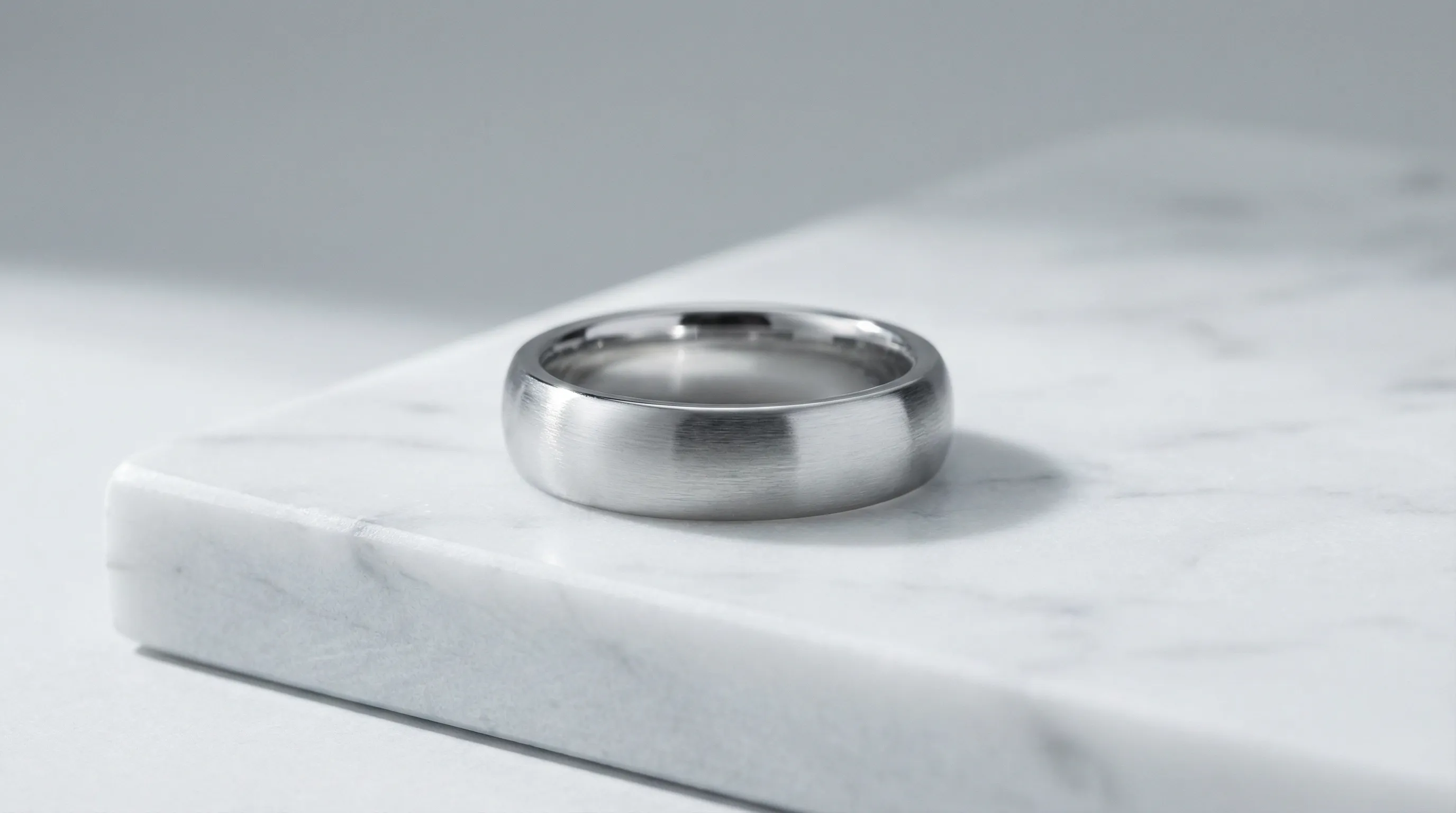
The Oura Ring 4 is the fourth-generation version of the device that effectively invented the consumer health ring category. At 4–6 grams (depending on size), it is invisible on most people's fingers and requires no conscious accommodation in daily life — you wear it like a piece of jewelry. The titanium construction is durable, scratch-resistant, and available in six finishes including a brushed silver that reads as unmistakably elegant in professional settings.
The hardware upgrade from Gen3 to Gen4 was substantial. Oura added a second infrared LED, bringing the sensor array to green + red + infrared. This multi-wavelength approach dramatically improves the ring's ability to detect blood volume changes through varying skin tones and in different lighting conditions. The result is daytime heart rate accuracy that independent researchers (referenced below) found within 2% of ECG gold-standard measurement — resolving the most significant criticism of Gen3. Continuous SpO2 monitoring (not just nightly spot-checks) is another Gen4 addition that benefits users tracking respiratory health or at altitude.
Battery life of 7–8 days is best-in-class for any serious health tracker. Charging takes roughly 30 minutes, and the ring cradle is small enough to carry on travel. The 100m water resistance rating exceeds WHOOP's 10m, making Oura genuinely suitable for surfing, pool swimming, and water sports.
Sleep Tracking
Sleep is Oura's flagship capability and the reason it commands loyal users despite competition from every major tech company. The finger location is physiologically superior for optical heart rate sensing — arteries in the finger are closer to the skin surface and less subject to motion artifact than wrist tissue during sleep. Multiple published validation studies (including Chinoy et al., 2021, published in Nature and Science of Sleep) have demonstrated Oura's sleep staging accuracy to be the highest of any consumer wearable tested, with agreement rates against polysomnography exceeding 79% for deep sleep identification — the hardest stage to detect accurately.
What Oura provides nightly includes: minute-by-minute sleep stage visualization, time in each stage with trend tracking, HRV curve through the night (not just a single average), respiratory rate, resting heart rate, and body temperature deviation from your personal baseline. The Readiness Score synthesizes all of this into a 0–100 daily number that accounts for your rolling baselines, not just last night — meaning it captures cumulative fatigue and recovery debt in a way that single-night metrics cannot.
Who It's For
- Health-conscious individuals prioritizing longevity and prevention over athletic performance
- People who want the least intrusive form factor possible
- Those who track sleep as their primary health lever
- Users who want to monitor HRV trends over months and years
- Anyone wearing a device in professional, social, or formal settings where a wrist strap feels out of place
- Cost-sensitive users who balk at $30/month ongoing fees
Pros
- Best-in-class sleep staging accuracy validated against polysomnography
- Most comfortable 24/7 wearable form factor available
- 100m water resistance — swim, surf, shower without removal
- Continuous SpO2 monitoring (not just nightly spot-check)
- Lowest long-term subscription cost in the category ($5.99/month)
- 7–8 day battery life eliminates nightly charging anxiety
- Body temperature trending with 0.01°C precision — excellent for cycle tracking and illness detection
Cons
- No real-time workout heart rate; requires pairing with Apple Watch or Garmin
- No Day Strain equivalent — athletes miss actionable training load guidance
- Hardware cost of $349–$549 is a real upfront commitment
- No GPS or display
- Sizing requires ordering a sizing kit; cannot try before you buy in most cases
- AI Advisor feature is still in beta and lags WHOOP Coach in sophistication
Head-to-Head Breakdown by Use Case
Use Case 1: "I train 5 days a week and want to know when to push and when to rest"
Winner: WHOOP 5.0
WHOOP was built for exactly this scenario. The Day Strain score gives you an objective cardiovascular load number that accounts for everything — your morning run, the stress of a hard workday, and the walk to pick up your kids. The Recovery Score the next morning tells you, in a single number calibrated to your personal baselines, whether your nervous system is ready for another hard effort or whether a rest day will produce better long-term adaptation. Real-time HR during training means you can execute zone 2 and zone 5 efforts with precision without strapping on a chest monitor. Oura can tell you how you recovered, but it cannot track your load in real time — a meaningful gap for performance athletes.
Use Case 2: "I sleep terribly and want to understand what's actually happening"
Winner: Oura Ring 4
If sleep quality is the primary problem you're trying to solve, Oura is the superior diagnostic tool. The combination of physiologically advantaged sensor placement (finger vs. wrist), multi-wavelength optical sensing, and a validated sleep staging algorithm gives you a level of sleep architecture detail that no wrist-based consumer wearable matches. You will see exactly how much deep sleep and REM you're getting, which nights you're spending restless, and how lifestyle variables — alcohol, late meals, exercise timing — affect your sleep architecture over time. The Readiness Score's sensitivity to sleep debt accumulation means you'll notice multi-night patterns before you consciously feel them.
Use Case 3: "I want to track my health for the next 10 years without breaking the bank"
Winner: Oura Ring 4
The subscription math is decisive over long time horizons. WHOOP costs $30/month — $360/year, $1,800 over five years. Oura costs $5.99/month — $71.88/year, $359 over five years — plus the one-time hardware cost of $349–$549. Total 5-year Oura cost: approximately $709–$909. That's a savings of $891–$1,091 compared to WHOOP over the same period. For users who plan to track their health indefinitely, this difference compounds meaningfully. Oura's hardware also lasts longer in practice because it has no moving parts or fabric that degrades, and the ring form factor means it survives activities that would damage a wrist strap.
Get smarter about health tech
Deal alerts, new reviews, and health tips — delivered weekly. No spam.
Unsubscribe anytime. We respect your inbox.
Our Verdict + Recommendation
Choose WHOOP 5.0 if:
- You train hard 4+ days per week and want performance-grade load management
- Real-time workout heart rate tracking is important to your training execution
- You're comfortable paying $30/month for ongoing software and hardware value
- You want the most sophisticated AI coaching for interpreting your own data
- Community accountability and team features matter to you
Choose Oura Ring 4 if:
- Sleep quality and sleep architecture are your primary health concerns
- You want the most discreet, comfortable form factor for lifelong daily wear
- Long-term cost matters and you want to minimize subscription fees
- You swim, surf, or need 100m water resistance regularly
- You're tracking hormonal cycles, illness patterns, or longevity biomarkers over years
- Professional or social contexts make a wrist tracker awkward
Both trackers are excellent — the choice really comes down to whether you're optimizing for athletic performance (WHOOP) or holistic health and sleep (Oura). If you need to pick just one, the Oura Ring 4's lower long-term cost, superior sleep tracking, and universal comfort give it a slight edge for the majority of health-conscious adults who aren't competitive athletes. Athletes should lean WHOOP without hesitation.
For a deeper look at each device individually, see our WHOOP 5.0 full review and Oura Ring 4 full review. For a broader look at HRV tracking across devices, visit our best wearables for HRV guide. If you want to understand what a good HRV score looks like for your age, read our guide on HRV scores by age.
Frequently Asked Questions
Is WHOOP 5.0 or Oura Ring 4 more accurate for HRV?
Both devices use RMSSD methodology for HRV, which is the validated standard for autonomic nervous system assessment. The key difference is measurement window: Oura takes a dedicated 5-minute HRV measurement during your lowest-HR sleep period, while WHOOP calculates a rolling average from nightly optical HR data. Oura's finger-based sensing produces cleaner pulse waveforms in most users, and independent validations generally favor Oura's HRV readings as closer to ECG chest-strap gold standard — particularly in users with lower resting heart rates where optical wrist sensors struggle with signal quality.
Can I use WHOOP 5.0 or Oura Ring 4 without a subscription?
WHOOP requires an active subscription to function — without it, the device is inert. Oura Ring 4 can be used without a membership subscription, giving you basic heart rate, temperature, and step data, but the Readiness Score, detailed sleep staging, and trend analysis require the $5.99/month Oura Membership. For most users, the Oura membership is worth it; for WHOOP, the subscription is non-negotiable.
Which is better for women's health tracking?
Oura Ring 4 has a meaningful advantage here. The 0.01°C skin temperature precision enables Oura's Cycle Insights feature, which tracks basal body temperature deviation to predict fertile windows and cycle phase with accuracy that users report as comparable to dedicated BBT thermometers. WHOOP also offers cycle tracking but relies on less precise temperature data. For women tracking fertility, perimenopause symptoms, or hormonal health, Oura is the clearer recommendation.
Do either WHOOP 5.0 or Oura Ring 4 detect atrial fibrillation?
Neither device is FDA-cleared for AFib detection as of March 2026. Both can flag irregular heart rhythms and flag low oxygen saturation events, and both companies have indicated AFib detection is on their roadmap. For medically-supervised AFib monitoring, a Withings ScanWatch or Apple Watch Ultra 2 with their ECG and AFib detection capabilities would be more appropriate.
How does the previous Oura vs WHOOP comparison compare to this one?
The original comparison covered WHOOP 4.0 and Oura Ring Gen3. Both devices have since received meaningful hardware upgrades. WHOOP 5.0 added a skin conductance sensor, improved optical accuracy, and the WHOOP Coach AI. Oura Ring 4 added multi-wavelength sensing for better daytime HR accuracy and continuous SpO2. The fundamental use-case divide remains the same, but both products are meaningfully better than their predecessors.
Scientific References:
Chinoy, E.D., et al. (2021). "Performance of seven consumer sleep-tracking devices compared with polysomnography." Sleep, 44(5). https://doi.org/10.1093/sleep/zsaa291
Miller, D.J., et al. (2022). "Analysing the use of accelerometry to assess sleep in elite athletes." Journal of Science and Medicine in Sport, 25(3), 237–243. https://doi.org/10.1016/j.jsams.2021.08.008
Altini, M., & Kinnunen, H. (2021). "The Promise of Sleep: A Multi-Sensor Approach for Accurate Sleep Stage Detection Using the Oura Ring." Sensors, 21(13), 4302. https://doi.org/10.3390/s21134302
Flatt, A.A., et al. (2022). "Validity of the WHOOP Strap in Measuring Heart Rate and Heart Rate Variability." International Journal of Sports Physiology and Performance, 17(5), 820–826. https://doi.org/10.1123/ijspp.2021-0510
Affiliate Disclosure: Better Vitals may earn a commission when you purchase through our links. This does not affect our editorial independence or rankings.
Featured Products
Products mentioned in this article

Related Guides
More articles you might find helpful
Wonderfeel Youngr vs NOVOS Boost (2026): Which NMN Wins?
*Updated July 2026*
Most Accurate CGM in 2026: MARD Scores Compared (Every Sensor)
*Updated July 2026*
Dexcom Stelo vs Abbott Lingo (2026): Accuracy, Price, App Compared
*Updated July 2026*

Written by
Steve Luu
Health tech researcher