Circadian Rhythm Optimization: The Complete Evidence-Based Guide
Key Takeaway
Your circadian clock is not metaphor — it's a molecular timekeeping mechanism present in virtually every cell in your body. The 2017 Nobel Prize in Physiology or Medicine was awarded for discovering its molecular mechanisms. Disrupting it doesn't just make you sleepy; it dysregulates metabolism, imp
Affiliate Disclosure: BetterVitals may earn a commission from purchases made through links in this article, at no additional cost to you. This supports our independent research and analysis. We only recommend products we believe in after thorough evaluation.
Medical Disclaimer
This article is for educational purposes only and is not a substitute for professional medical advice, diagnosis, or treatment. Always consult your healthcare provider before making health decisions.
Circadian Rhythm Optimization: The Complete Evidence-Based Guide
Your circadian clock is not metaphor — it's a molecular timekeeping mechanism present in virtually every cell in your body. The 2017 Nobel Prize in Physiology or Medicine was awarded for discovering its molecular mechanisms. Disrupting it doesn't just make you sleepy; it dysregulates metabolism, impairs immune function, increases cancer risk, and accelerates cognitive aging. Optimizing it may be the highest-leverage, zero-cost intervention for health and longevity.
The Circadian System: How It Works
The master clock (suprachiasmatic nucleus, SCN) in the hypothalamus synchronizes to light — specifically, to the ratio of short-wavelength blue light (~480nm) to total light. Specialized retinal cells (intrinsically photosensitive retinal ganglion cells, ipRGCs) send light information directly to the SCN via the retinohypothalamic tract.
The SCN then coordinates peripheral clocks in every organ — liver, pancreas, muscle, adipose tissue — via cortisol pulses, body temperature waves, and neural signals. These peripheral clocks regulate gene expression timing: when enzymes are made, when hormones are secreted, when DNA repair happens.
The problem: Modern humans have light environments almost exactly backwards from what the circadian system expects:
- Dim light in the morning (when brightness should be high)
- Bright artificial light at night (when darkness should dominate)
- Inconsistent wake/sleep times
- Food intake at all hours (peripheral metabolic clocks expect aligned meal timing)
The 5 Pillars of Circadian Optimization
Pillar 1: Morning Light Exposure
This is the single highest-leverage circadian intervention. Bright light in the first 30-60 minutes after waking advances the circadian clock, sets the cortisol awakening response, and anchors the evening melatonin onset to approximately 12-14 hours later.
Protocol:
- Get outside within 30 minutes of waking (before checking your phone)
- Aim for 10-30 minutes of outdoor light exposure
- Overcast sky provides 1,000-10,000 lux; direct sun 30,000-100,000 lux; indoor lighting 100-500 lux — you cannot replicate outdoor morning light indoors
- If outdoor light isn't accessible: A 10,000 lux light therapy box (e.g., Carex Day-Light Classic Plus) for 20-30 minutes at reading distance
Why it works: ipRGC activation in the morning sets the SCN's internal reference point, triggering appropriate daytime cortisol pulsing, body temperature rise, and programming melatonin onset 14 hours later. A 2019 study in Current Biology (Wright et al.) found just 1 week of outdoor camping (natural light only) shifted melatonin onset earlier by 1.4 hours and reduced social jet lag to near zero.
Pillar 2: Evening Light Management
The mirror of morning light protocol. Eliminating short-wavelength light exposure in the 2-3 hours before bed allows melatonin onset to occur on schedule.
Protocol:
- Switch overhead lighting to warm-toned lamps or bulbs (2700K or lower) after sunset
- Use blue light filtering apps (Night Shift, f.lux) on all screens after sunset
- Blue light blocking glasses (if screen use is unavoidable): amber or red lens glasses that block 480nm light are the most effective, though they distort color
- Dim household lights to <10 lux in the final hour before bed
Evidence: A 2015 study by Chang et al. in PNAS found reading on an iPad vs physical book in the 4 hours before bed delayed melatonin onset by 1.5 hours, reduced melatonin levels by 55%, delayed REM sleep, and impaired next-morning alertness.
Pillar 3: Sleep Timing Consistency
The SCN calibrates to habitual wake time. Irregular sleep timing causes "chronodisruption" — a state where peripheral clocks and the master SCN become desynchronized from each other. This manifests as metabolic dysfunction, immune dysregulation, and cognitive impairment even when total sleep time is adequate.
Protocol:
- Fix wake time first, 7 days/week, with maximum ±30-minute variation
- The fixed wake time anchors all downstream circadian processes
- Allow sleep time to vary naturally as circadian pressure builds
- After 4-6 weeks of consistent wake time, most people's sleep timing spontaneously stabilizes
Pillar 4: Meal Timing (Chrono-Nutrition)
Peripheral metabolic clocks in the liver, pancreas, and adipose tissue are entrained partly by food intake. Eating outside daylight hours disrupts these peripheral clocks, impairs glucose metabolism, and may contribute to metabolic syndrome independently of what you eat.
Evidence: A 2019 study in Cell Metabolism (Sutton et al.) found early time-restricted eating (7 AM–3 PM window) in prediabetic men improved insulin sensitivity, blood pressure, and oxidative stress markers vs. standard eating pattern — without weight loss differences. The timing effect was real and independent of caloric intake.
Practical protocol:
- Align eating window with daylight hours (sunrise to sunset, approximately)
- Avoid large meals within 2-3 hours of sleep — digestion raises core temperature, opposing the temperature drop required for deep sleep onset
- If using time-restricted eating (TRE), earlier windows (e.g., 8 AM–4 PM or 8 AM–6 PM) align better with circadian metabolism than late-shifted windows (12 PM–8 PM)
Pillar 5: Temperature Timing
Core body temperature follows a circadian rhythm independent of sleep — rising during the day and falling in the evening. This temperature drop (approximately 1-2°F) is a powerful sleep onset signal. Practices that accelerate or amplify this temperature drop can dramatically improve sleep onset speed and deep sleep quality.
Strategies:
- Keep bedroom temperature 65-68°F (18-20°C) — cooler than most people set their thermostats
- Take a hot shower or bath 1-2 hours before bed (paradoxically, heating causes subsequent cooling as the body dissipates heat via vasodilation)
- Exercise in the morning or afternoon — vigorous exercise within 3 hours of bed delays sleep onset in most people by raising core temperature and cortisol
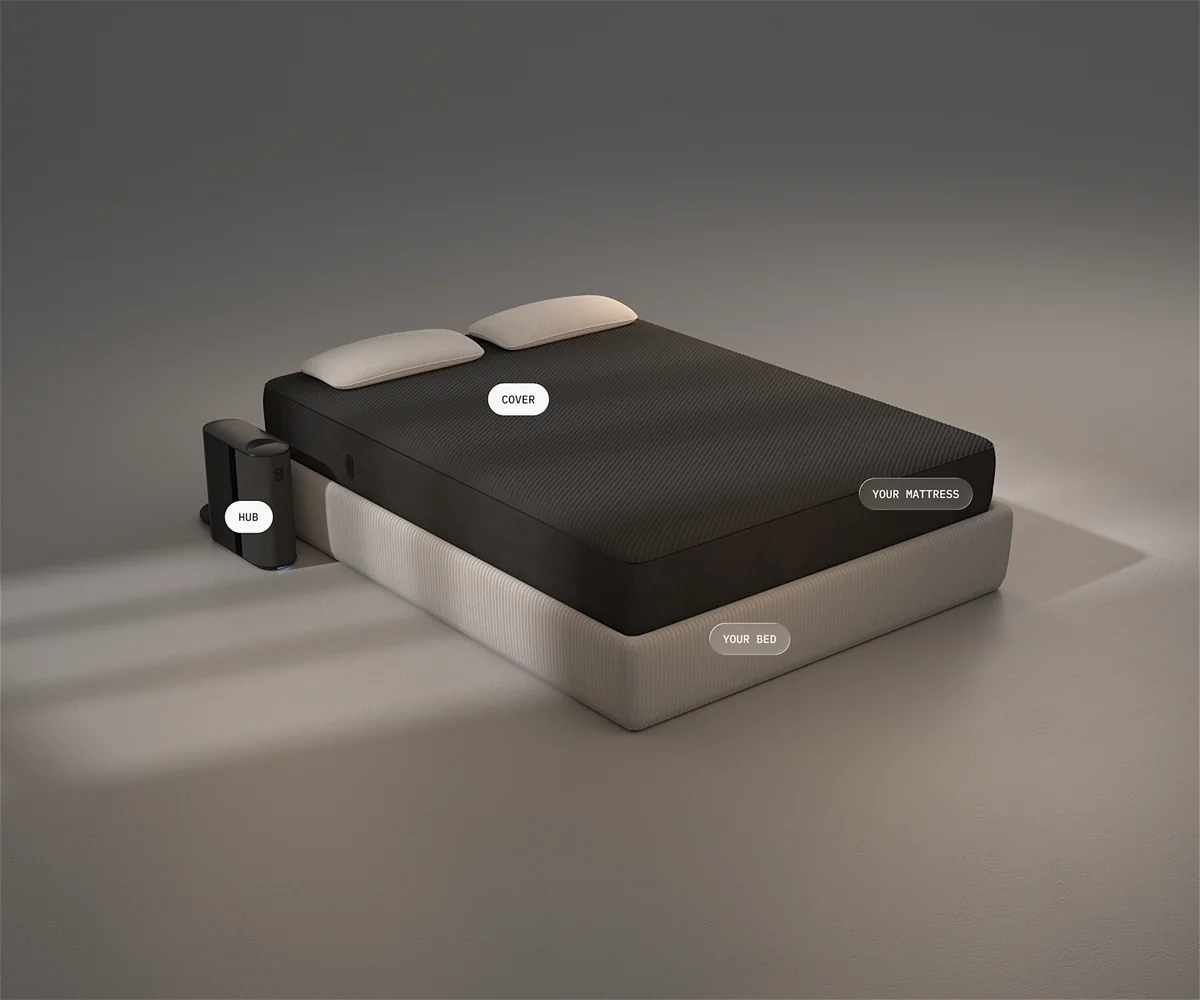
- Cooling mattress systems (Eight Sleep, ChiliSleep Dock Pro) directly address this mechanism
Browse All Products
Explore our evidence-based product reviews across every health category.
Social Jet Lag: The Invisible Circadian Disruptor
"Social jet lag" describes the mismatch between biological clock and social schedule — most commonly the shift between weekday and weekend sleep timing. Sleeping 2 hours later on weekends is equivalent to flying from New York to Los Angeles and back every week.
A 2012 study by Wittmann et al. found each hour of social jet lag was associated with a 33% increase in odds of being overweight. The mechanism: circadian misalignment disrupts leptin/ghrelin (appetite hormones) and impairs insulin sensitivity.
Fix: Narrow the gap between weekday and weekend sleep timing to ≤1 hour. This is more impactful than perfect weekday sleep hygiene alone.
Get smarter about health tech
Deal alerts, new reviews, and health tips — delivered weekly. No spam.
Unsubscribe anytime. We respect your inbox.
FAQ
How long does it take to fix a disrupted circadian rhythm?
Mild disruption (jet lag, 1-2 weeks of poor sleep): 3-7 days with consistent morning light and fixed wake time. Chronic circadian dysregulation (years of shift work, severe night-owl chronotype): 4-12 weeks of disciplined light management and consistent sleep timing. Some chronotype shifts are partially genetically determined and may not fully normalize.
Can supplements help reset circadian rhythm?
Low-dose melatonin (0.3-0.5mg) taken 30-60 minutes before target sleep time is the best-evidenced supplement for circadian shifting. It works as a circadian signal, not a sedative. Higher doses (5-10mg) don't reset the clock better and cause next-day grogginess. Melatonin is most effective combined with the light management protocols above.
Does exercising at night disrupt circadian rhythms?
For most people, vigorous exercise within 3-4 hours of bed raises core body temperature and cortisol, delaying sleep onset by 15-30 minutes. However, habitual evening exercisers often adapt with minimal sleep disruption — context matters. If you're a consistent evening exerciser with no sleep issues, there's no compelling reason to change. If you're troubleshooting sleep problems, shifting exercise to morning or afternoon is one of the easiest variables to test.
Related guides: How to Fix Your Circadian Rhythm | Sleep and Longevity | Cortisol and Sleep
Updated March 2026
Featured Products
Products mentioned in this article
Related Guides
More articles you might find helpful
Best Bed Cooling Systems 2026: Eight Sleep vs Cheaper Alternatives
**Disclosure:** Product CTAs on this page currently go to manufacturer sites (no affiliate tracking yet). Better Vitals may earn a commission once partner links are live — rankings and "skip if" calls won't change when we swap URLs. We only recommend gear we'd put on a shortlist for a specific type
Is the Oura Membership Worth It in 2026? (And How to Skip It)
*Updated July 2026*
Oura Ring Price in 2026: Every Model, Subscription & Real Total Cost
*Updated July 2026*

Written by
Steve Luu
Health tech researcher