Best Home Blood Pressure Monitor of 2026: Clinically Validated Picks for Accurate Readings | BetterVitals
Key Takeaway
Blood pressure is one of the most informative — and most commonly misread — biomarkers in preventive health. Nearly half of American adults have hypertension, but an estimated 23 million of them don't know it because in-office readings don't tell the full story. White coat hypertension — elevated re
Affiliate Disclosure: BetterVitals may earn a commission from purchases made through links in this article, at no additional cost to you. This supports our independent research and analysis. We only recommend products we believe in after thorough evaluation.
Medical Disclaimer
This article is for educational purposes only and is not a substitute for professional medical advice, diagnosis, or treatment. Always consult your healthcare provider before making health decisions.
Best Home Blood Pressure Monitor of 2026: Clinically Validated Picks for Accurate Readings | BetterVitals
Blood pressure is one of the most informative — and most commonly misread — biomarkers in preventive health. Nearly half of American adults have hypertension, but an estimated 23 million of them don't know it because in-office readings don't tell the full story. White coat hypertension — elevated readings caused by clinical anxiety — affects up to 30% of patients, according to a 2019 meta-analysis in Hypertension. Masked hypertension, where readings appear normal in the clinic but are elevated at home, affects another 10–15%. Neither condition is reliably detected without regular home monitoring.
The American Heart Association's current guidance is direct: home blood pressure monitoring is an essential component of hypertension management. A 2019 trial in the New England Journal of Medicine found that patients who used home monitors in conjunction with pharmacist support achieved significantly better blood pressure control than those receiving usual care alone. The clinical case for having a reliable home monitor is as strong as the case for any single health tracking tool.
The challenge is that not all monitors are created equal. "FDA cleared" sounds reassuring, but it applies to nearly every device on the market and says nothing about accuracy. Clinical validation — where a device is independently tested against a mercury sphygmomanometer following AAMI/ISO protocols — is the real standard. This guide covers the monitors that have earned that validation, explains the variables that affect accuracy, and helps you choose the right device for your specific situation.
What to Look for in a Home Blood Pressure Monitor
Upper Arm vs. Wrist: The Accuracy Gap
This is the most consequential decision you'll make when choosing a blood pressure monitor, and the answer is unambiguous in the clinical literature: upper arm monitors are more accurate than wrist monitors for the vast majority of users. The brachial artery in the upper arm is larger, closer to heart level when positioned correctly, and produces more consistent pressure waveforms than the radial artery at the wrist.
Wrist monitors are prone to position sensitivity errors. A 2014 study in the American Journal of Hypertension found that wrist monitor readings varied by an average of 8–10 mmHg depending on wrist position relative to heart level — far exceeding the ±5 mmHg standard for clinical accuracy. For most users, the inconvenience of a wrist monitor's positioning requirements outweighs the convenience of its smaller size. The one exception: users with very large arm circumferences (above 42 cm) or conditions like lymphedema that make upper arm cuffs uncomfortable. In those cases, a validated wrist monitor with a position indicator is a reasonable compromise.
Clinical Validation vs. FDA Clearance
This distinction matters enormously and is almost never explained in product marketing. FDA clearance (510(k)) means a device has been found substantially equivalent to a legally marketed device — it does not require independent accuracy testing. Clinical validation, by contrast, means the device has been tested against a mercury sphygmomanometer following AAMI ISO 81060-2 or British Hypertension Society (BHS) protocols, typically in a population of 85 subjects with diverse blood pressure ranges, and has met ±5 mmHg mean difference criteria.
Check the dabl Educational Trust or Validated BP databases before purchasing any monitor. These organizations maintain independent listings of validated devices. If a device you're considering isn't in one of these databases, proceed with skepticism — even if it carries a major brand name.
Cuff Fit and Size
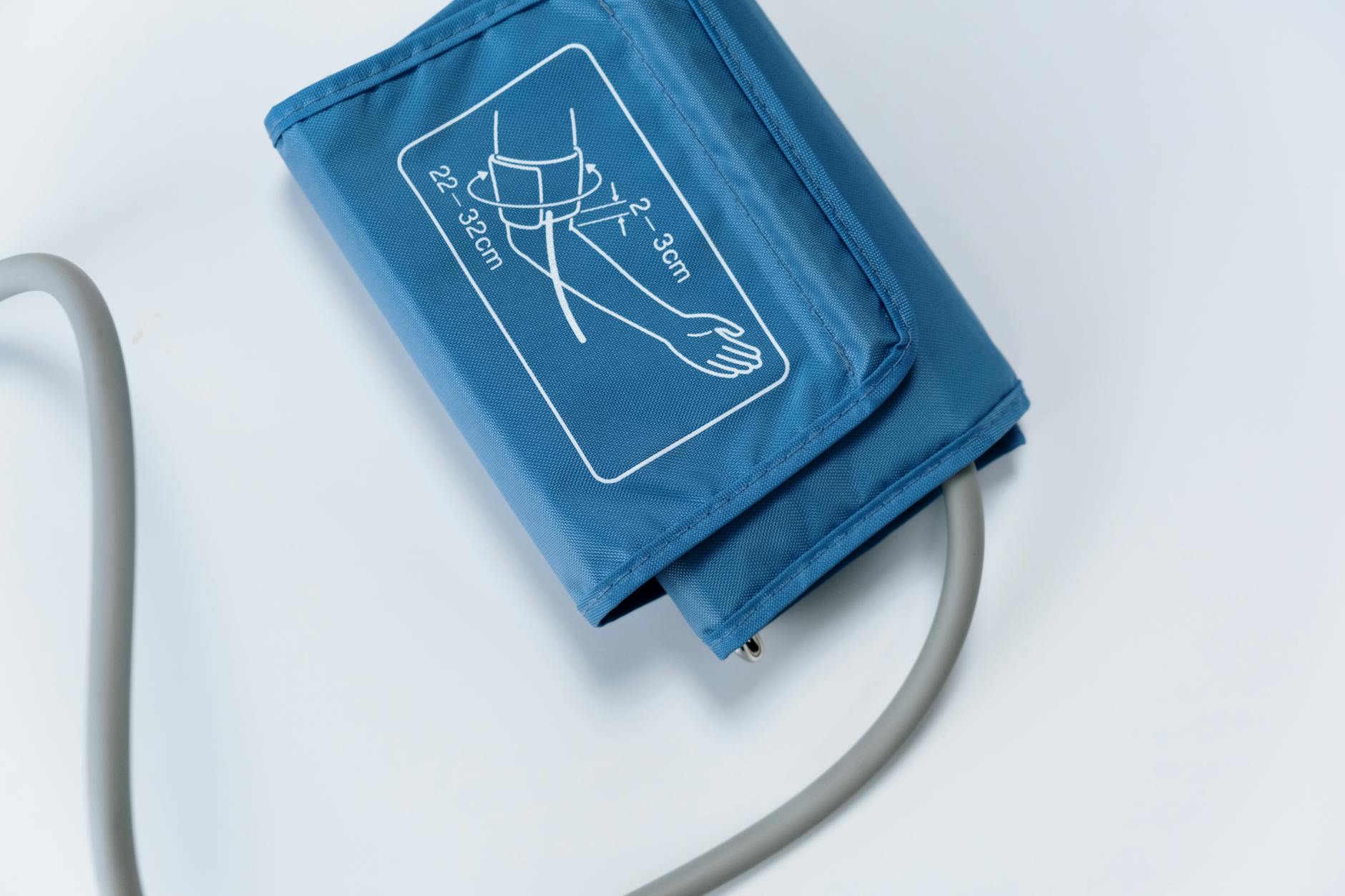
A cuff that's too small produces falsely elevated readings; a cuff that's too large produces falsely low readings. The error can be as large as 10–15 mmHg with a significantly mismatched cuff, enough to reclassify your blood pressure category entirely. Measure your arm circumference at the midpoint of the upper arm before purchasing. Most standard cuffs fit arms between 22–32 cm. Large cuffs cover 32–42 cm. If you're near the boundary of a size range, opt for the larger cuff.
Connectivity and Data Management
For longevity-oriented users who want to track blood pressure trends over time, connectivity matters. Bluetooth-enabled monitors sync readings automatically to a smartphone app, enabling trend visualization, export to EHR systems, and sharing with physicians. WiFi-enabled monitors go further — readings upload automatically without needing to open an app or pair your phone. For anyone managing medicated hypertension or tracking response to lifestyle interventions, automatic data capture reduces friction and improves compliance significantly.
Best Home Blood Pressure Monitors of 2026
1. Omron Platinum BP5450 — Best Overall for Clinical Accuracy
Why it stands out: The Omron Platinum is the gold standard for home blood pressure monitoring and the monitor most frequently recommended by cardiologists. It carries validation from both AAMI and the European Society of Hypertension — one of only a handful of devices to achieve both. The dual-user memory stores 100 readings per user (200 total), and its Bluetooth connectivity syncs seamlessly with the Omron Connect app, which supports export to Apple Health, Google Fit, and direct physician sharing. The irregular heartbeat detection algorithm is among the most sensitive available in a consumer device.
What we like:
- Clinically validated by AAMI and ESH — confirmed to meet ±5 mmHg accuracy criteria
- Stores 200 readings (100 per user) with date and time stamps
- Bluetooth sync to Omron Connect app with Apple Health and Google Fit integration
- Advanced averaging: automatically averages 3 consecutive readings taken 2 minutes apart (following AHA guidelines)
- Irregular heartbeat detection with body movement artifact indicator
- Includes both standard (22–32 cm) and large (32–42 cm) cuff sizes
- Hypertension indicator light provides immediate visual feedback
What could be better:
- Omron Connect app is functional but less polished than Withings Health Mate
- At ~$80–$100, slightly more expensive than basic validated options
- No WiFi — requires phone to be present for automatic sync
- Older users may find app navigation unintuitive
Best for: Anyone who wants clinical-grade accuracy with the most validated credentials available in a home monitor. The benchmark against which others should be judged. Available on Amazon.
2. Withings BPM Connect — Best for Smart Home and App Integration
Why it stands out: Withings has carved out a unique position by building a genuinely physician-grade WiFi blood pressure monitor with a consumer-friendly design. The BPM Connect is clinically validated (AAMI ISO 81060-2) and adds a feature that no other device in this category offers: automatic WiFi upload — readings sync to the Withings Health Mate server the moment you take them, without opening an app or having your phone nearby. For users who care about longitudinal data, the Withings ecosystem is the most seamless. The app's trend visualization, morning/evening comparison views, and physician-sharing dashboard are the best in class.
What we like:
- Clinically validated per AAMI ISO 81060-2 — meets ±5 mmHg standard
- WiFi upload means readings are automatically recorded without any manual steps
- Withings Health Mate app features the best trend visualization in this category
- Integrates with Apple Health, Google Fit, and directly shares data with physicians via Withings Health+
- Compact, minimalist design with onboard LED display for results — no phone required to see readings
- Rechargeable via USB-C (no AA batteries)
- Detects atrial fibrillation with ECG verification (select markets)
What could be better:
- WiFi connectivity requires a 2.4 GHz network (doesn't support 5 GHz) — can cause setup issues
- At ~$100–$130, it's the most expensive option in this guide
- Cuff size range (22–36 cm) doesn't accommodate the largest arm circumferences without an extension
- AFib detection feature requires a separate Withings ScanWatch or Health+ subscription in some configurations
Best for: Data-driven users who want seamless automatic logging, best-in-class app experience, and are building an integrated health tracking ecosystem. Ideal if you already use other Withings products. Available on Amazon.
3. Omron 10 Series BP7450 — Best Value Validated Monitor
Why it stands out: If the Omron Platinum is out of budget, the Omron 10 Series provides nearly identical clinical validation and core features at $60–$75. It's validated by AAMI, stores 200 readings (100 per user), includes Bluetooth connectivity with the Omron Connect app, and features the same irregular heartbeat detection. The difference from the Platinum is subtle — the Platinum adds a few additional display indicators and marginally more refined averaging logic. For most users, the 10 Series is the better value proposition.
What we like:
- AAMI-validated accuracy — the same credential as the more expensive Platinum
- 200-reading memory with Bluetooth sync to Omron Connect
- Irregular heartbeat detection included
- Lower price point (~$60–$75) without sacrificing clinically meaningful features
- Standard and large cuff options available
- Trusted brand with strong replacement parts availability
What could be better:
- App experience is identical to the Platinum (functional but not polished)
- No WiFi — Bluetooth sync requires phone proximity
- Build quality feels slightly less premium than the Platinum version
- Omron's customer support response times can be slow during peak demand periods
Best for: Users who want clinically validated accuracy and Bluetooth connectivity without the price premium of the Platinum. The correct choice for most people. Available on Amazon.
4. Qardio Arm — Best for iOS/Apple Health Integration
Why it stands out: Qardio Arm is built from the ground up as an Apple ecosystem device. It's clinically validated (ESH-IP validated), integrates deeply with Apple Health, and ships with perhaps the cleanest app interface in the category. The readings are stored automatically and organized by time of day, making it easy to see morning versus evening patterns. Its innovative collarless cuff design — the cuff inflates to grip the arm without requiring precise placement — reduces user positioning errors that affect accuracy in conventional devices.
What we like:
- ESH-IP clinically validated — meets European accuracy standards
- Collarless cuff design reduces placement error; more forgiving than traditional cuffs
- Best iOS/Apple Health integration of any monitor in this category
- Includes pregnancy and AFib detection modes
- Attractive, compact design with a small travel case
- Supports multiple user profiles within a single device
What could be better:
- Android support exists but the iOS experience is noticeably superior
- At ~$100, priced as a premium device but validation credentials lag slightly behind Omron Platinum
- Battery life can be shorter than expected under frequent use (rechargeable via Micro-USB, not USB-C)
- Cuff covers standard sizes only (22–37 cm) — no large cuff extension available
Best for: iPhone users embedded in the Apple Health ecosystem who want a thoughtfully designed, validated monitor with strong longitudinal tracking. Available on Amazon.
5. iHealth Track KN-550BT — Best Budget Option with Bluetooth
Why it stands out: iHealth is the consumer division of a medical device company, and the Track is its most popular upper arm monitor. At $35–$45, it's the most affordable validated monitor in this guide. The iHealth MyVitals app is surprisingly capable for the price — it stores unlimited readings with trend graphs, supports multiple users, and exports to Apple Health. The device itself is AAMI-validated, uses a standard Bluetooth connection, and produces readings that compare favorably to more expensive options in independent accuracy testing.
What we like:
- AAMI-validated — genuine clinical credential at an accessible price
- Bluetooth connectivity with iHealth MyVitals app included
- Unlimited reading storage with trend visualization in the app
- Apple Health integration supported
- Excellent price-to-performance ratio at $35–$45
- 2-year warranty
What could be better:
- App is functional but less refined than Withings or Qardio
- Android app has lower ratings and fewer features than iOS version
- No irregular heartbeat detection (a meaningful omission at this price vs. Omron alternatives)
- Build quality reflects the price point — feels less durable than premium options
- No large cuff size available for purchase
Best for: Budget-conscious users who want validated accuracy and Bluetooth connectivity and don't need AFib detection or premium app features. Available on Amazon.
6. Omron Evolv BP7000 — Best Wireless Upper Arm Monitor
Why it stands out: The Evolv is Omron's answer to the wrist monitor convenience problem: it's a tubeless, all-in-one upper arm monitor with Bluetooth, no cords, and a compact form factor. The cuff, inflator, and display are all integrated into a single sleeve you wrap around your arm. It's AAMI-validated and functionally equivalent to the Omron 10 Series in accuracy — but without the dangling tube that makes conventional cuffs awkward to use solo. If you travel frequently or find cord management annoying, the Evolv solves a genuine usability problem.
What we like:
- AAMI-validated accuracy in a tubeless, all-in-one form factor
- No external tube — cuff, pump, and display are integrated into a single sleeve
- Bluetooth sync to Omron Connect with Apple Health integration
- 100-reading memory
- Excellent for solo use — no partner needed to position the cuff correctly
- Compact enough for carry-on travel
What could be better:
- At ~$90–$110, expensive relative to the accuracy advantage over the wired 10 Series
- Integrated design means if any component fails, the whole unit needs replacement
- Only stores 100 readings (vs. 200 for the Platinum and 10 Series)
- Irregular heartbeat detection present but less sophisticated than the Platinum
Best for: Frequent travelers, users who monitor solo and find traditional cuffs awkward, and anyone who wants validated upper arm accuracy in a wireless form factor. Available on Amazon.
Browse All Products
Explore our evidence-based product reviews across every health category.
How to Accurately Measure Blood Pressure at Home
Owning a validated monitor is only half the equation. Measurement technique accounts for more variability in home readings than device quality — and most people measure incorrectly. Following these protocols will ensure your readings are clinically meaningful.
Preparation: The 5-Minute Rule
The most frequently violated guideline is rest time before measurement. The AHA recommends sitting quietly for at least 5 minutes before taking a reading. No phone scrolling, no conversation, no caffeine or exercise within 30 minutes. A 2018 study in the Journal of Hypertension found that readings taken immediately after mild activity were an average of 11 mmHg higher than those taken after 5 minutes of seated rest — a difference large enough to shift someone from the normal to stage 1 hypertension category.
Positioning
Sit in a chair with your back supported, feet flat on the floor, and legs uncrossed. Your upper arm should rest on a flat surface with the cuff at heart level — approximately the midpoint of your sternum. A cuff held below heart level reads high; above heart level reads low. The error is approximately 2 mmHg per inch of vertical deviation from heart level.
Morning vs. Evening Readings
Blood pressure follows a circadian rhythm. Most people exhibit a morning surge — readings peak between 6 AM and noon — then decline through the afternoon and evening. The AHA recommends measuring at the same time of day consistently: once in the morning before medication and food, and once in the evening. The morning reading is clinically most important for hypertension management, as it captures the highest-risk period for cardiovascular events.
Understanding Your Numbers
According to the 2017 AHA/ACC guidelines:
- Normal: Systolic < 120 mmHg AND Diastolic < 80 mmHg
- Elevated: Systolic 120–129 mmHg AND Diastolic < 80 mmHg
- Stage 1 Hypertension: Systolic 130–139 mmHg OR Diastolic 80–89 mmHg
- Stage 2 Hypertension: Systolic ≥ 140 mmHg OR Diastolic ≥ 90 mmHg
The 2017 guidelines lowered the threshold for stage 1 hypertension from 140/90 to 130/80 — a change that doubled the number of Americans technically classified as hypertensive. If your readings fall in the elevated or stage 1 range, don't panic. Consult your physician, who will typically request a series of home readings over 1–2 weeks before making any treatment decisions.
White Coat and Masked Hypertension
White coat hypertension — where readings are elevated in clinical settings but normal at home — affects up to 30% of those diagnosed with hypertension. If your home readings consistently run 10+ mmHg lower than your office readings, discuss ambulatory blood pressure monitoring (ABPM) with your doctor. Masked hypertension (normal in office, elevated at home) is more dangerous because it's more likely to go untreated. Home monitoring specifically captures this pattern.
Blood pressure is one of the most actionable cardiovascular biomarkers you can track at home, but it exists within a broader picture. For context on how blood pressure interacts with other cardiovascular and metabolic biomarkers, see our blood work biomarkers guide. For evidence-based protocols that lower blood pressure through lifestyle modification, exercise and longevity research covers the dose-response data in detail. If you're also interested in comprehensive blood panels that include inflammatory and metabolic markers alongside cardiac risk, our guide to at-home blood testing covers the best services available in 2026.
Get smarter about health tech
Deal alerts, new reviews, and health tips — delivered weekly. No spam.
Unsubscribe anytime. We respect your inbox.
FAQ
Is a wrist blood pressure monitor accurate enough for home use?
Wrist monitors can produce accurate readings when used correctly, but they require precise positioning — the wrist must be at heart level — and are more sensitive to movement artifacts and arterial stiffness. Clinical guidelines from the AHA, ESH, and British Hypertension Society all recommend upper arm monitors as the preferred option. Wrist monitors are a reasonable accommodation for users with very large arm circumferences, arm injuries, or specific physical limitations, provided the device is clinically validated and positioning guidelines are strictly followed.
How often should I check my blood pressure at home?
For people managing diagnosed hypertension or evaluating a new medication, the AHA recommends twice daily monitoring — once in the morning before medication and once in the evening — for 7 consecutive days, then bringing the record to your physician. For general wellness monitoring, once daily in the morning is sufficient. Avoid taking multiple readings in quick succession to "find a better number" — this creates anxiety and tends to drive blood pressure higher. If you want to take multiple readings, wait 2 minutes between measurements and use your device's averaging function.
What is the difference between a validated and an FDA-cleared blood pressure monitor?
FDA clearance (510(k)) means a device has been found substantially equivalent to a legally marketed device and is safe to sell in the United States. It does not require independent accuracy testing. Clinical validation, by contrast, means the device was independently tested against a mercury sphygmomanometer in a diverse subject population following AAMI ISO 81060-2 or BHS/ESH-IP protocols and met accuracy criteria of ±5 mmHg mean difference. Always check the dabl Educational Trust database or ValidateBP.org before purchasing — FDA clearance alone is not sufficient evidence of accuracy.
Can I share home blood pressure readings with my doctor?
Yes, and you should. All of the Bluetooth and WiFi-connected monitors in this guide support data export in formats that can be shared with physicians. Withings Health Mate allows direct report generation as PDFs. Omron Connect supports sharing via the app. Many cardiologists now request 1–2 weeks of home readings before making medication adjustments. If your doctor's practice uses an electronic health record (EHR) system like Epic, some monitors support direct integration — ask your care team what format they prefer for imported data.
Affiliate Disclosure: Better Vitals may earn a commission when you purchase through our links. Our recommendations are based on independent research and, where possible, hands-on testing.
Featured Products
Products mentioned in this article

Related Guides
More articles you might find helpful
Best Bed Cooling Systems 2026: Eight Sleep vs Cheaper Alternatives
**Disclosure:** Product CTAs on this page currently go to manufacturer sites (no affiliate tracking yet). Better Vitals may earn a commission once partner links are live — rankings and "skip if" calls won't change when we swap URLs. We only recommend gear we'd put on a shortlist for a specific type
Is the Oura Membership Worth It in 2026? (And How to Skip It)
*Updated July 2026*
Oura Ring Price in 2026: Every Model, Subscription & Real Total Cost
*Updated July 2026*

Written by
Steve Luu
Health tech researcher