Best At-Home Blood Test Kits 2026: Track Your Biomarkers from Home
Key Takeaway
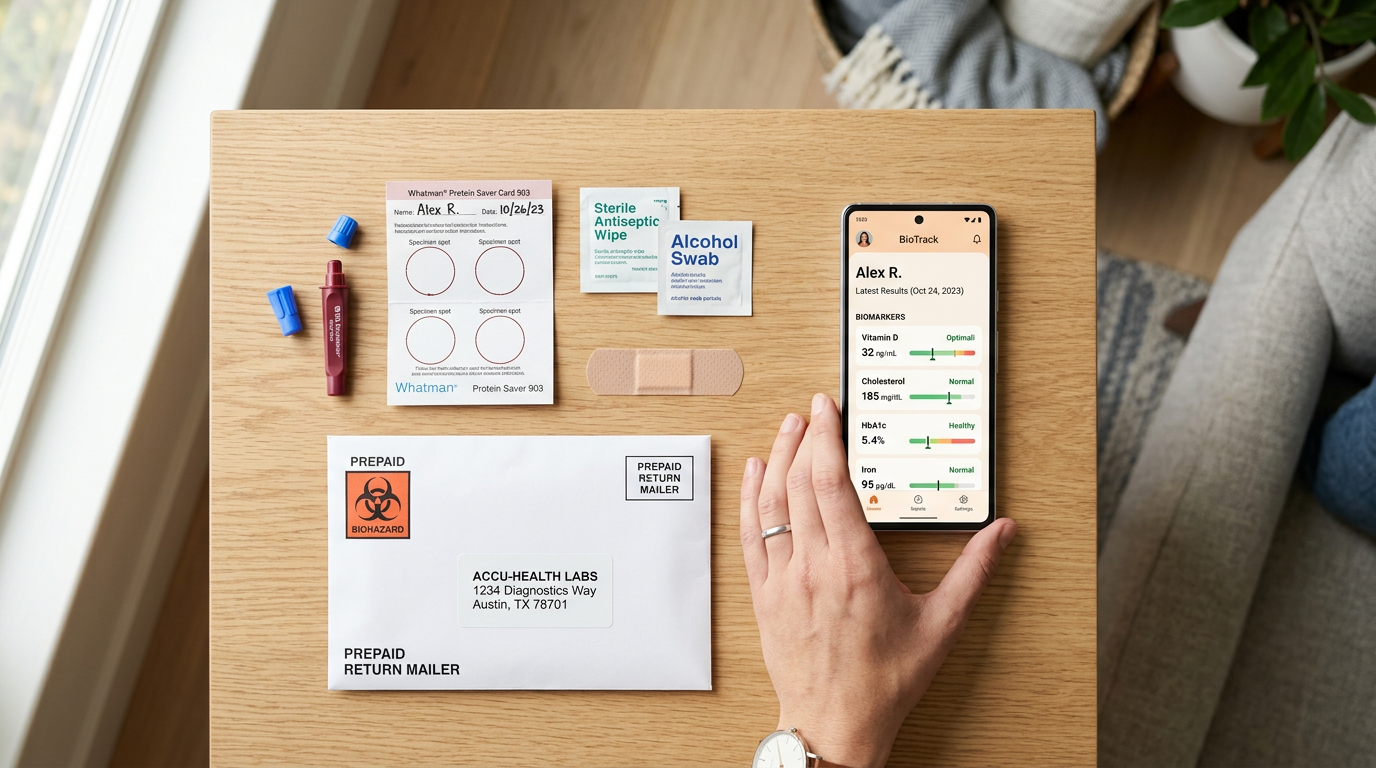
Getting blood work done used to mean scheduling a doctor's appointment, waiting weeks for results, and receiving a report that said "everything looks normal" even when you felt anything but. The at-home blood test revolution has changed all of that—and in 2026, the options are better, more comprehen
Affiliate Disclosure: BetterVitals may earn a commission from purchases made through links in this article, at no additional cost to you. This supports our independent research and analysis. We only recommend products we believe in after thorough evaluation.
Medical Disclaimer
This article is for educational purposes only and is not a substitute for professional medical advice, diagnosis, or treatment. Always consult your healthcare provider before making health decisions.
Best At-Home Blood Test Kits 2026: Track Your Biomarkers from Home
Getting blood work done used to mean scheduling a doctor's appointment, waiting weeks for results, and receiving a report that said "everything looks normal" even when you felt anything but. The at-home blood test revolution has changed all of that—and in 2026, the options are better, more comprehensive, and more accessible than ever.
Whether you're optimizing for longevity, tracking the effects of a new supplement stack, or just want to understand why you're tired all the time, regular blood work is one of the highest-leverage health investments you can make. The data doesn't lie, and it doesn't require a wearable on your wrist.
This guide compares the best at-home blood test services in 2026, breaks down which biomarkers actually matter, and helps you decide how often you should be testing. If you want to go deeper on individual markers, our blood work biomarkers for longevity guide covers optimal ranges and interpretation in detail.
Why Regular Blood Work Matters for Longevity
Here's a stat that should concern you: most adults only get blood work when they're already symptomatic or during an annual physical that tests a narrow panel. By the time standard blood work catches a problem, the underlying dysfunction has often been developing for years.
Preventive blood testing flips this model. Instead of waiting for disease to declare itself, you're tracking biomarkers that signal metabolic drift long before symptoms appear. A fasting glucose of 99 mg/dL is "normal" by conventional standards, but longevity researchers like Peter Attia argue it's already a warning sign of insulin resistance.
Regular testing also lets you measure the impact of lifestyle changes. Started intermittent fasting? Blood work can show whether it's actually improving your insulin sensitivity or just making you hangry. Added a new supplement from your longevity stack? Biomarkers confirm whether it's working or wasting your money.
The key insight is that a single blood test is a snapshot. Trends over time are the real story. And that's where at-home services shine—they make it easy to test quarterly or even monthly, building a longitudinal picture of your health that no annual physical can match.
What Biomarkers Should You Track?
Before choosing a service, you need to know what to test. The standard metabolic panel your doctor orders covers the basics, but it misses many of the markers that matter most for long-term health optimization.
Metabolic Health
- Fasting glucose — Your baseline blood sugar level. Optimal: 72-85 mg/dL (not just under 100).
- HbA1c — Your 90-day average blood sugar. Optimal: under 5.4% for longevity.
- Fasting insulin — Often not included in standard panels. Elevated insulin is an early sign of metabolic dysfunction, sometimes years before glucose rises. Optimal: 2-6 µIU/mL.
- HOMA-IR — Calculated from glucose and insulin. The best single marker for insulin resistance.
Lipids (Beyond Basic Cholesterol)
- ApoB — The most accurate predictor of cardiovascular risk. More informative than LDL-C alone.
- Lp(a) — A genetically determined risk factor. Test once to know your baseline.
- Triglycerides — Elevated levels signal metabolic dysfunction. Optimal: under 100 mg/dL.
Inflammation
- hsCRP — High-sensitivity C-reactive protein. A general marker of systemic inflammation. Optimal: under 1.0 mg/L.
- Homocysteine — Elevated levels are linked to cardiovascular disease and cognitive decline. Optimal: under 8 µmol/L.
Hormones
- Testosterone (free and total) — Declining in men at population level. Important for both sexes.
- DHEA-S — An adrenal hormone that declines with age. A marker of biological aging.
- Thyroid panel (TSH, free T3, free T4) — Thyroid dysfunction is underdiagnosed, especially in women.
Vitamins & Minerals
- Vitamin D (25-OH) — Most people are deficient. Optimal: 40-60 ng/mL.
- B12 — Essential for energy and neurological function.
- Ferritin — Iron storage. Too low causes fatigue; too high is pro-inflammatory.
- Omega-3 Index — Measures EPA+DHA in red blood cells. Optimal: above 8%.
For a deep dive on each of these, see our complete biomarker guide.
Quick Comparison: Best At-Home Blood Test Services 2026
| Feature | InsideTracker | Function Health | Everlywell | LetsGetChecked | Quest at-Home |
|---|---|---|---|---|---|
| Best For | Athletes & optimizers | Comprehensive longevity | Quick single-test needs | Hormone & sexual health | Insurance-covered panels |
| Biomarkers | Up to 48 | 100+ | 3-30 per test | 5-15 per test | Varies by panel |
| Collection Method | Lab visit (Quest/Labcorp) | Lab visit (Labcorp) | Finger prick at home | Finger prick at home | Lab visit (Quest) |
| Price Range | $199-$589/test | $499/year (2 draws) | $49-$299/test | $69-$349/test | $50-$200/test |
| AI/Recommendations | Yes — personalized action plan | Yes — longevity dashboard | Basic ranges only | Basic ranges + doctor consult | Standard lab ranges only |
| Subscription | Optional membership | Annual membership | Per-test or bundles | Per-test or subscription | Per-test |
Browse All Products
Explore our evidence-based product reviews across every health category.
Detailed Reviews
1. InsideTracker — Best for Athletes & Biohackers
What It Is: InsideTracker has been in the biomarker game since 2009, longer than most competitors. It's backed by scientists from MIT, Harvard, and Tufts, and its platform doesn't just show you results—it generates a personalized action plan based on your specific biomarkers, goals, DNA (optional), and fitness data.
How It Works: You choose a plan (InnerAge, Ultimate, or custom), visit a nearby Quest or Labcorp location for a blood draw, and receive results in 5-7 business days. The platform analyzes your markers against "optimal zones" rather than standard reference ranges—a critical distinction for anyone pursuing longevity, not just disease absence.
Key Strengths:
- Personalized recommendations: The algorithm cross-references your biomarkers with published research to suggest specific foods, supplements, and lifestyle changes. It's not generic advice—it's tailored to your data.
- InnerAge calculation: Estimates your biological age based on biomarkers, giving you a tangible metric to track over time.
- Integrations: Connects with Garmin, Apple Health, Fitbit, and other platforms to correlate biomarkers with activity data.
- DNA add-on: Upload existing genetic data (23andMe, AncestryDNA) for genetically informed recommendations.
Limitations:
- Requires a lab visit (not a true at-home finger prick).
- The Ultimate plan at $589 is expensive per test, though the membership brings it down.
- Some users find the food recommendations repetitive.
Price: InnerAge plan starts at $199; Ultimate (48 biomarkers) at $589. Annual membership reduces per-test cost significantly.
Who It's For: Health-conscious athletes, biohackers, and longevity enthusiasts who want actionable, research-backed recommendations—not just raw numbers.
2. Function Health — Best for Comprehensive Longevity Panels
What It Is: Function Health, co-founded by Dr. Mark Hyman, offers the most comprehensive blood panel available direct-to-consumer. With 100+ biomarkers tested across two draws per year, it covers ground that would cost thousands through traditional healthcare.
How It Works: You sign up for an annual membership ($499/year), schedule two Labcorp visits, and receive results through a sleek dashboard that tracks trends over time. The platform categorizes markers as optimal, borderline, or out of range, with educational content explaining each.
Key Strengths:
- Sheer breadth: 100+ biomarkers including ApoB, Lp(a), insulin, DHEA-S, full thyroid, and markers many services skip entirely.
- Longevity focus: Designed around the biomarkers that longevity physicians actually track, not just standard medical panels.
- Trend tracking: The dashboard makes it easy to see how markers change between your two annual draws.
- Physician review: Results are reviewed by licensed physicians who can flag concerning patterns.
Limitations:
- Only two tests per year—not ideal if you want quarterly tracking.
- Annual membership model means higher upfront cost.
- Waitlist periods have been reported for new members.
- Requires Labcorp visits (not available in all areas).
Price: $499/year for 2 comprehensive blood draws. Works out to roughly $250 per panel—a strong value for 100+ markers.
Who It's For: Anyone who wants the most thorough blood panel available without navigating the traditional healthcare system. Particularly valuable if you're building a longevity blueprint and want a comprehensive baseline.
3. Everlywell — Best for Quick, Targeted Testing
What It Is: Everlywell pioneered the at-home finger-prick blood test model and remains the most accessible option for people who want specific answers without a lab visit. With over 40 individual tests covering everything from food sensitivities to thyroid function, it's the à la carte option.
Key Strengths:
- True at-home collection via finger prick—no lab visit needed.
- Fast results (typically 5 days).
- HSA/FSA eligible.
- Wide test menu for specific concerns.
Limitations:
- Finger-prick collection limits the number of biomarkers per test.
- Less comprehensive than lab-draw services for longevity optimization.
- Results lack the personalized action plans that InsideTracker or Function provide.
Price: $49-$299 depending on the panel. Bundles available.
4. LetsGetChecked — Best for Hormone & Sexual Health Testing
What It Is: LetsGetChecked specializes in at-home testing with a strong focus on hormones, sexual health, and fertility. Their kits use finger-prick collection and include a free doctor consultation with every result.
Key Strengths:
- Doctor consultation included with every test.
- Strong hormone panel options (testosterone, cortisol, thyroid).
- Discreet packaging for sensitive tests.
- Nurse support line available.
Limitations:
- Not designed for comprehensive longevity panels.
- Some users report inconsistent finger-prick collection experience.
Price: $69-$349 per test. Subscription discounts available.
5. Quest at-Home — Best for Insurance-Covered Testing
What It Is: Quest Diagnostics, the largest lab network in the US, now offers direct-to-consumer ordering through QuestDirect. You order online, visit any of their 2,000+ locations, and receive results digitally—often covered partially by insurance.
Key Strengths:
- Largest lab network in the country—convenient locations everywhere.
- Medical-grade accuracy (these are the same labs your doctor uses).
- Some panels may be covered by insurance or HSA/FSA.
- Results often available within 1-2 business days.
Limitations:
- Requires a lab visit.
- No personalized recommendations or AI analysis.
- The platform feels clinical rather than consumer-friendly.
Price: $50-$200 per panel. Insurance may cover some tests.
How Often Should You Test?
The answer depends on what you're tracking and why:
- Baseline: If you've never done comprehensive blood work, start now. This is your reference point.
- Quarterly (every 3 months): Ideal if you're actively making lifestyle changes (new diet, supplement protocol, training program) and want to measure impact. This is what most longevity physicians recommend for their patients.
- Twice a year: A reasonable cadence for maintenance once you've dialed in your protocol and markers are stable.
- Annually: The minimum for anyone who cares about preventive health. Better than nothing, but you'll miss seasonal variations and the effects of short-term interventions.
Some markers warrant different frequencies. Lp(a) is genetically determined and barely changes—test it once. Vitamin D fluctuates seasonally—test in winter and summer. HbA1c reflects a 90-day average, so testing more than quarterly is redundant.
If you're also using a CGM for metabolic tracking, blood work provides the confirmatory data that real-time glucose monitoring can't capture—HbA1c trends, insulin levels, and inflammatory markers.
Tips for Accurate Results
Blood test accuracy depends heavily on preparation. Follow these guidelines for consistent, comparable results:
- Fast for 12 hours before your draw (water is fine). This is essential for glucose, insulin, and lipid accuracy.
- Test at the same time of day each time. Morning is ideal since many hormones follow circadian patterns.
- Avoid intense exercise for 24 hours before testing. Hard workouts transiently elevate CRP, liver enzymes, and cortisol.
- Stay hydrated. Dehydration concentrates blood and can skew results.
- Note your cycle. For women, hormone levels vary dramatically across the menstrual cycle. Test consistently in the same phase (early follicular is standard for most panels).
- Don't change supplements the week before testing unless you're deliberately measuring their impact.
Get smarter about health tech
Deal alerts, new reviews, and health tips — delivered weekly. No spam.
Unsubscribe anytime. We respect your inbox.
Frequently Asked Questions
Are at-home blood tests as accurate as lab tests?
It depends on the collection method. Services that use lab draws (InsideTracker, Function Health, Quest) provide the same medical-grade accuracy as doctor-ordered tests—they literally use the same labs. Finger-prick tests (Everlywell, LetsGetChecked) are generally reliable for the markers they test, but the smaller sample volume limits which biomarkers can be measured and may introduce slightly more variability.
Do I need a doctor's order for at-home blood tests?
No. All the services reviewed here allow direct-to-consumer ordering without a physician referral. Some include physician review of results (Function Health, LetsGetChecked), while others provide AI-driven analysis (InsideTracker). However, if results reveal something concerning, you should absolutely follow up with your primary care provider.
Which service is best for longevity tracking?
For sheer comprehensiveness, Function Health's 100+ biomarker panel is hard to beat at the price point. For actionable recommendations and biological age tracking, InsideTracker offers more robust analysis tools. Many serious optimizers use both—Function for the broad panel twice a year and InsideTracker for targeted quarterly checks.
How much do at-home blood tests cost?
Prices range from $49 for a single targeted test (Everlywell) to $499/year for comprehensive panels (Function Health). InsideTracker's most complete panel runs $589 per test without a membership. Most services are HSA/FSA eligible, which effectively discounts them 20-30% depending on your tax bracket.
Can blood tests detect early cancer or heart disease?
Standard biomarker panels can flag risk factors—elevated hsCRP and ApoB signal cardiovascular risk, abnormal liver enzymes warrant investigation, and certain hormone patterns may prompt further screening. However, these are not diagnostic cancer tests. For cancer-specific early detection, specialized liquid biopsy tests (like Grail's Galleri) are a separate category entirely.
What's the difference between "normal" and "optimal" ranges?
Standard reference ranges are based on the general population, which includes many unhealthy people. "Normal" means you're not in the sickest 5%. "Optimal" ranges, used by services like InsideTracker and longevity physicians, represent the levels associated with the lowest disease risk and highest performance. For example, a fasting glucose of 99 mg/dL is "normal" but far from optimal for longevity (target: 72-85 mg/dL).
Should I stop supplements before testing?
It depends on what you're measuring. If you want to know your baseline nutrient status, stop relevant supplements 5-7 days before testing. If you want to confirm your supplements are working, keep taking them as usual. Just be consistent across tests so you're comparing apples to apples.
The Bottom Line
Regular blood work is the single most data-rich thing you can do for your health outside of a hospital. The at-home testing revolution has removed every barrier—no doctor's appointment, no insurance hassles, no waiting rooms.
If you're just starting out, pick one comprehensive test to establish your baseline. InsideTracker's Ultimate or Function Health's annual panel are both excellent choices. If budget is a concern, Quest's direct-to-consumer panels offer medical-grade accuracy at the lowest cost.
The most important thing is to start testing, track trends over time, and use the data to inform your decisions—whether that's adjusting your supplement stack, modifying your diet, or having a more informed conversation with your doctor.
Your blood doesn't lie. Start listening to it.
Featured Products
Products mentioned in this article

Related Guides
More articles you might find helpful
Best Bed Cooling Systems 2026: Eight Sleep vs Cheaper Alternatives
**Disclosure:** Product CTAs on this page currently go to manufacturer sites (no affiliate tracking yet). Better Vitals may earn a commission once partner links are live — rankings and "skip if" calls won't change when we swap URLs. We only recommend gear we'd put on a shortlist for a specific type
Is the Oura Membership Worth It in 2026? (And How to Skip It)
*Updated July 2026*
Oura Ring Price in 2026: Every Model, Subscription & Real Total Cost
*Updated July 2026*

Written by
Steve Luu
Health tech researcher