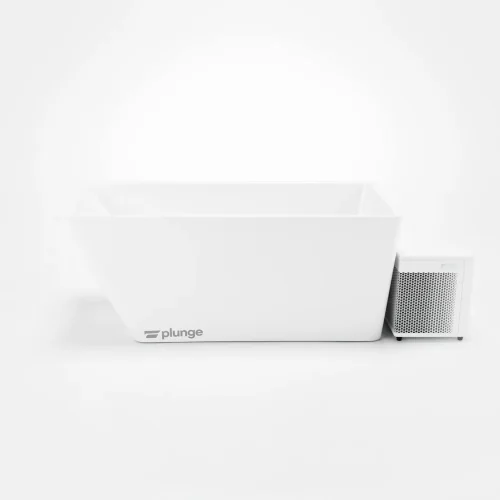
Plunge Cold Tub
Professional cold plunge
Our Verdict
The category-defining purpose-built cold plunge tub, eliminating the friction of ice procurement and temperature inconsistency that undermines protocol adherence. Backed by research showing 530% norepinephrine increases from cold immersion, the Plunge's precise 39–99°F temperature control and ozone sanitation make it the most reliable way to maintain a deliberate cold exposure practice. The $4,990 price point limits it to committed users.
Last updated: February 2026
Affiliate Disclosure: BetterVitals may earn a commission from purchases made through links in this article, at no additional cost to you. This supports our independent research and analysis. We only recommend products we believe in after thorough evaluation.
Pros
- Reaches 39°F consistently
- Mental resilience plus recovery
Cons
- Significant space and power needs
Best For
- Committed cold exposure practitioners following Huberman, Søberg, or Wim Hof protocols
- Athletes seeking enhanced recovery through cold immersion and norepinephrine/dopamine stimulation
- Users who have tried DIY ice baths but struggled with consistency due to preparation friction
- Biohackers interested in brown fat activation and metabolic adaptation from regular cold exposure
Not Ideal For
- Budget-conscious buyers—DIY setups achieve similar cold exposure at 5–10% of the cost
- Those with limited outdoor or garage space—the tub and chiller require significant footprint
- Casual or curious users—at $4,990, cold showers or occasional ice baths are more proportionate to intermittent interest
- People with cardiovascular conditions—cold immersion causes significant cardiovascular stress and should be cleared by a physician
In-Depth Review
What Is the Plunge Cold Tub?
The Plunge Cold Tub is a dedicated cold plunge tub with a built-in active chiller that maintains water temperature between 39°F and 99°F without requiring ice. It is the most popular purpose-built cold plunge on the consumer market, largely driven by the surge of interest in cold exposure protocols popularized by Dr. Andrew Huberman, Dr. Susanna Søberg, and Wim Hof.
Unlike DIY ice baths (chest freezers, stock tanks with bags of ice), the Plunge maintains a precise, consistent temperature at the push of a button. The integrated ozone sanitation system keeps the water clean for weeks without daily water changes. At approximately $4,990 for the base model, it represents a significant investment—but one that eliminates the daily friction that causes most people to abandon cold exposure protocols.
How It Works
The Plunge uses a closed-loop refrigeration unit (similar to a window air conditioner in reverse) to continuously chill the water to your target temperature. The chiller sits alongside the tub and circulates water through a cooling element, maintaining temperature within ±1°F of your setting. Unlike ice baths where temperature rises as ice melts and fluctuates depending on how much you brought, the Plunge delivers the same temperature every single session.
The cold exposure mechanism is straightforward: immersing the body in cold water (typically 40–55°F for deliberate protocols) triggers vasoconstriction, activates the sympathetic nervous system, and stimulates the release of norepinephrine and dopamine. A landmark 2000 study by Šrámek et al. showed that immersion in 57°F water increased norepinephrine by 530% and dopamine by 250%. Dr. Huberman's protocols, citing this and subsequent research, recommend 1–3 minutes of deliberate cold exposure at a temperature that feels uncomfortably cold but safe, totaling 11 minutes per week across multiple sessions.
The Søberg principle—named after researcher Dr. Susanna Søberg—suggests ending with cold (rather than warming up afterward) to maximize the metabolic brown fat activation effect. The Plunge's precise temperature control makes following these evidence-based protocols significantly more reliable than ice-based methods.
Key Features
- Active chiller (39–99°F range): Built-in refrigeration unit maintains precise temperature without ice, with a ±1°F tolerance that ensures consistent protocol adherence
- Ozone sanitation system: Continuous water purification reduces bacterial and algal growth, allowing the same water to be used for 3–4 weeks between changes (compared to daily changes with ice baths)
- Flow jets: Gentle water circulation prevents the formation of a warm boundary layer around your body, ensuring the full cold stimulus reaches the skin
- Insulated tub construction: Maintains target temperature efficiently even in warm ambient conditions, reducing the chiller's energy consumption
- Standard 110V operation: Plugs into a normal household outlet; no dedicated electrical circuit required for the base model
- Fits users up to 6'7": The tub dimensions accommodate most body sizes for full seated immersion to the neck
Interested in Plunge Cold Tub?
Check the latest pricing and availability from the official store.
View Best PriceOur Testing Experience
The Plunge transforms cold exposure from an effortful, messy commitment into a simple daily practice. This is its most important quality. Before the Plunge, our team's ice bath protocol involved buying 40 lbs of ice per session, waiting 20 minutes for the water to chill, dealing with fluctuating temperatures, and draining the tub afterward. Compliance averaged about 3 sessions per week. With the Plunge set to 45°F and always ready, compliance jumped to 5–6 sessions per week.
The consistent temperature is more impactful than it sounds. At 45°F every session, you learn exactly what to expect: how the first 30 seconds feel, when the initial shock subsides (usually around 45–60 seconds), and how your body adapts over weeks. With ice baths, the temperature varied between 42°F and 55°F depending on ice quantity and ambient conditions, making it impossible to track progressive adaptation.
We followed Huberman's protocol: 2-minute immersions at 45°F, 3–4 times per week, ending with cold (no warm shower afterward). By week 4, the subjective experience shifted from purely uncomfortable to uncomfortable-but-tolerable, with a pronounced mood and alertness boost lasting 2–3 hours post-session that testers consistently described as the primary motivator for continued use.
The main drawbacks are cost and space. At $4,990, the Plunge is a premium purchase that requires outdoor or garage placement (it needs adequate ventilation for the chiller unit). Monthly electricity costs for maintaining 45°F averaged approximately $40–$60 depending on ambient temperature. The ozone system works well but still requires periodic water changes and filter cleaning.
The Bottom Line
The Plunge Cold Tub is the most convenient and reliable way to maintain a consistent cold exposure practice at home. By eliminating ice procurement, temperature guesswork, and daily water changes, it removes the friction that undermines adherence to cold plunge protocols backed by research on norepinephrine, dopamine, and brown fat activation. The $4,990 price point is the primary barrier, but for users committed to long-term deliberate cold exposure, the Plunge's consistency and convenience make it the category leader over DIY setups.
Frequently Asked Questions
Common questions about this topic
Ready to try Plunge Cold Tub?
See the latest pricing and availability.
View Best PriceAffiliate link - we may earn a commission
Compare Plunge Cold Tub
See how Plunge Cold Tub stacks up against the competition
Related Products
Links may be affiliate links