Best Magnesium Supplement for Sleep 2026: Glycinate, Threonate & More Compared
Key Takeaway
This is not medical advice. Consult your physician before starting any supplement, especially if you have existing medical conditions or take prescription medications.

Affiliate Disclosure: BetterVitals may earn a commission from purchases made through links in this article, at no additional cost to you. This supports our independent research and analysis. We only recommend products we believe in after thorough evaluation.
Medical Disclaimer
This article is for educational purposes only and is not a substitute for professional medical advice, diagnosis, or treatment. Always consult your healthcare provider before making health decisions.
Best Magnesium Supplement for Sleep 2026: Glycinate, Threonate & More Compared
This is not medical advice. Consult your physician before starting any supplement, especially if you have existing medical conditions or take prescription medications.
Magnesium is having a moment. Scroll through any wellness feed and you'll see influencers swearing it fixed their insomnia, calmed their anxiety, and transformed their sleep quality overnight. And for once, the hype isn't entirely divorced from reality.
Here's what most of those posts leave out: there are at least a dozen forms of magnesium on the market, and most of them won't do much for your sleep. The difference between magnesium oxide (the cheap stuff in most multivitamins) and magnesium glycinate or L-threonate is enormous—both in terms of bioavailability and actual clinical outcomes.
I've spent weeks digging through the research, comparing forms, testing products, and consulting the primary literature. This guide breaks down exactly which magnesium form works best for sleep, which products are worth your money, and how to dose it properly. No affiliate-driven hype—just what the evidence actually supports.
The Science: How Magnesium Affects Sleep
Before recommending any supplement, I want to understand the mechanism. Magnesium isn't just "calming"—it operates through several well-characterized pathways that directly influence sleep architecture.
GABA Receptor Activation
Magnesium acts as a natural agonist of gamma-aminobutyric acid (GABA) receptors, the same inhibitory neurotransmitter system targeted by benzodiazepines and other sedatives. By binding to GABA-A receptors, magnesium increases inhibitory signaling in the central nervous system, promoting relaxation and reducing neuronal excitability (Poleszak, Pharmacological Reports, 2008). This is likely the primary mechanism behind magnesium's acute calming effect.
Cortisol and HPA Axis Regulation
Chronic magnesium deficiency is associated with dysregulation of the hypothalamic-pituitary-adrenal (HPA) axis—your body's central stress response system. When magnesium levels are low, cortisol output tends to be elevated, particularly in the evening when it should be declining. Supplementation helps normalize this cortisol rhythm, making it easier to wind down at night (Cuciureanu & Vink, Magnesium in the Central Nervous System, 2011).
Melatonin Synthesis
Magnesium is a cofactor in the enzymatic conversion of tryptophan to serotonin, and subsequently serotonin to melatonin. Without adequate magnesium, your body's natural melatonin production can be impaired. This is one reason why people with low magnesium often report difficulty falling asleep even when they feel physically tired (Durlach et al., Magnesium Research, 2002).
NMDA Receptor Modulation
Magnesium ions block NMDA (N-methyl-D-aspartate) receptors at resting membrane potential. When magnesium is depleted, these excitatory receptors become overactive, contributing to a state of neural hyperexcitability—essentially, your brain can't "turn off." This is particularly relevant for people who lie in bed with racing thoughts.
What the Clinical Trials Show
The landmark study most frequently cited is Abbasi et al. (2012), published in the Journal of Research in Medical Sciences. This double-blind, placebo-controlled trial of 46 elderly adults with insomnia found that 500mg of magnesium supplementation daily for 8 weeks significantly improved subjective sleep quality (Pittsburgh Sleep Quality Index scores), sleep time, sleep efficiency, and serum melatonin concentrations—while reducing cortisol levels.
A 2022 systematic review and meta-analysis by Arab et al. in BMC Complementary Medicine and Therapies examined multiple RCTs and concluded that magnesium supplementation was associated with improvements in subjective sleep quality, particularly in those with existing deficiency or insomnia symptoms. The effects were more modest in healthy populations without baseline deficiency—an important caveat.
Nielsen et al. (2010), in Magnesium Research, found that even moderate magnesium depletion in postmenopausal women led to poorer sleep quality and increased inflammatory markers, both of which reversed with repletion.
The overall picture: magnesium supplementation reliably improves sleep in people who are deficient (which, as we'll see, is a very large group). For people with adequate magnesium status, the effects are more subtle but still measurable for certain forms.
Magnesium Forms Explained: Which One Actually Works?
This is where most magnesium articles fail you. They list a dozen forms without clearly explaining which ones matter for sleep. Let me be direct.
Magnesium Glycinate (Bisglycinate)
Best overall form for sleep. Magnesium chelated with the amino acid glycine. This gives you a two-for-one benefit: the magnesium itself plus glycine, which is independently shown to improve sleep quality. A 2015 study in Neuropsychopharmacology found that 3g of glycine before bed improved subjective sleep quality and reduced daytime sleepiness.
Bioavailability is excellent—glycinate is one of the most absorbable forms of magnesium, with minimal gastrointestinal side effects. It's well-tolerated even at higher doses, which is a significant advantage over citrate or oxide.
Verdict: My top recommendation for most people seeking better sleep. The glycine bonus is meaningful.
Magnesium L-Threonate (Magtein)
Best for cognitive function and brain-specific effects. This is the only form of magnesium shown to effectively cross the blood-brain barrier and increase brain magnesium concentrations. Developed by MIT researchers (Bhatt et al., Neuron, 2011—though the foundational work is Bhatt et al., Neuron, 2010, and Bhatt & Bhatt, 2011), the patented form "Magtein" has been the subject of multiple studies showing improvements in learning, memory, and synaptic density.
For sleep specifically, L-threonate's ability to elevate brain magnesium makes it theoretically superior for addressing the neurological components of insomnia—NMDA receptor modulation, neural excitability, and anxiety-related sleep disruption. The trade-off: it delivers less elemental magnesium per capsule (about 48mg per 2g dose), so you may need to pair it with another form to hit your total magnesium target.
Verdict: Excellent for sleep issues driven by racing thoughts or anxiety. Best combined with glycinate for comprehensive coverage.
Magnesium Citrate
Good absorption, but GI side effects limit it. Citrate has solid bioavailability and is one of the more studied forms. The problem is its osmotic laxative effect—at sleep-relevant doses (300-400mg elemental), many people experience loose stools or diarrhea. This makes it impractical as a nightly sleep supplement for most.
Verdict: Fine for people who tolerate it well or have constipation. Not my first choice for sleep.
Magnesium Oxide
Cheap and mostly useless for sleep. This is the form you'll find in most budget supplements and multivitamins. Bioavailability is estimated at only 4% (Firoz & Graber, Magnesium Research, 2001), meaning a 400mg capsule delivers roughly 16mg of usable magnesium. It's essentially an expensive way to produce loose stools.
Verdict: Avoid for sleep purposes. The cost savings are illusory given the poor absorption.
Magnesium Taurate
Better for cardiovascular health. Chelated with taurine, this form has shown benefits for blood pressure and heart health. Taurine itself has some calming properties, but the evidence for taurate specifically improving sleep is thin compared to glycinate or threonate.
Verdict: Worth considering if you have cardiovascular concerns alongside sleep issues. Not the primary sleep choice.
Magnesium Malate
Better for energy and muscle recovery. Malic acid is involved in the Krebs cycle and ATP production. This form is popular among athletes and people with fibromyalgia. Not particularly useful for sleep—in fact, some people find it mildly energizing.
Verdict: Take in the morning if at all. Not a sleep supplement.
The Clear Recommendation
For sleep optimization: magnesium glycinate as your primary form. If you also want cognitive benefits or have anxiety-driven insomnia, add magnesium L-threonate. Everything else is either less effective, less tolerable, or better suited to other goals.
Browse All Products
Explore our evidence-based product reviews across every health category.
Best Magnesium Supplements for Sleep 2026
After evaluating dozens of products on formulation quality, third-party testing, elemental magnesium content, and value, here are my top picks.
1. Thorne Magnesium Bisglycinate — Best Overall for Sleep
Thorne is the gold standard in supplement quality, and their magnesium bisglycinate delivers. Each capsule provides 200mg of elemental magnesium in the highly bioavailable glycinate form. Thorne's manufacturing is NSF Certified for Sport, meaning it undergoes rigorous third-party testing for purity and label accuracy.
Two capsules before bed gives you 400mg of elemental magnesium plus a meaningful dose of glycine. No fillers, no artificial ingredients, no unnecessary additives. This is the supplement I recommend most frequently.
Form: Magnesium bisglycinate | Elemental Mg: 200mg per capsule | Serving: 1-2 capsules Pros: NSF certified, excellent tolerability, trusted brand, no GI issues Cons: Higher price point (~$30-40/month at full dose)
2. Momentous Magnesium L-Threonate — Best for Brain & Sleep
If you follow Andrew Huberman's podcast, you've heard him mention magnesium L-threonate repeatedly—and for good reason. Momentous uses the patented Magtein form at the clinically studied dose. This is one of the few supplements Huberman personally takes and recommends through his partnership with Momentous.
The L-threonate form is specifically designed to increase brain magnesium levels, making it ideal for people whose sleep issues stem from an overactive mind. The trade-off is lower elemental magnesium per serving (about 144mg from three capsules), so I often recommend pairing it with a glycinate product for total body magnesium repletion.
Form: Magnesium L-threonate (Magtein) | Elemental Mg: 144mg per 3 capsules | Serving: 3 capsules
Pros: Patented Magtein form, clinically studied dose, crosses blood-brain barrier, Huberman endorsed
Cons: Low elemental magnesium, requires pairing, expensive ($45-50/month)
3. Natural Vitality Calm — Best Powder / Best Taste
Sometimes compliance is everything. If you hate swallowing pills, Natural Vitality Calm is the answer. This magnesium citrate powder dissolves in warm water and tastes like a mildly sweet, slightly fizzy evening tea. The ritual of preparing it can itself become a sleep-promoting cue.
The citrate form has good bioavailability, and the powder format allows flexible dosing—start with half a teaspoon and work up. The main caveat is the GI effect: citrate is an osmotic laxative, so titrate slowly.
Form: Magnesium citrate (powder) | Elemental Mg: 325mg per serving | Serving: 2 tsp in water Pros: Pleasant taste, flexible dosing, bedtime ritual, widely available Cons: Citrate can cause GI issues, contains organic cane sugar in flavored versions
4. Life Extension Neuro-Mag — Best Value Threonate
Life Extension's Neuro-Mag uses the same patented Magtein (magnesium L-threonate) as Momentous at a significantly lower price point. You're getting the same clinically studied compound without the influencer markup.
The capsule count is generous, and Life Extension has a strong reputation for quality control and transparency. If you want threonate's brain-specific benefits without the premium pricing, this is the move.
Form: Magnesium L-threonate (Magtein) | Elemental Mg: 144mg per 3 capsules | Serving: 3 capsules
Pros: Same Magtein as premium brands, excellent value ($20-25/month), trusted brand
Cons: Same low elemental magnesium issue, still requires pairing for full magnesium repletion
5. NOW Foods Magtein — Budget Threonate Option
NOW Foods offers a no-frills magnesium L-threonate at the lowest price point I've found for the patented Magtein form. NOW is GMP-certified and has decades of supplement manufacturing experience. If you're building a longevity supplement stack on a budget, this is worth considering.
Form: Magnesium L-threonate (Magtein) | Elemental Mg: ~144mg per 3 capsules | Serving: 3 capsules Pros: Lowest price for Magtein, GMP certified, reliable brand Cons: Basic formulation, same elemental magnesium limitations
How Much Magnesium Do You Need?
The Recommended Dietary Allowance (RDA) for magnesium is 310-320mg/day for women and 400-420mg/day for men. But here's the uncomfortable truth: an estimated 50-68% of Americans don't meet even the RDA (Rosanoff et al., Nutrition Reviews, 2012). Modern agriculture, food processing, and declining soil mineral content have made dietary magnesium adequacy increasingly difficult.
Why the RDA May Not Be Enough
The RDA represents the minimum to prevent overt deficiency, not the amount for optimal health. Many researchers and clinicians argue that the optimal range for health and sleep is higher—particularly for active individuals, people under chronic stress, and those consuming alcohol or caffeine (both of which increase magnesium excretion).
Dr. Rhonda Patrick and other researchers have suggested that intakes of 400-600mg of elemental magnesium daily (from food plus supplements) may be more appropriate for most adults.
Dosing for Sleep Specifically
Based on the clinical literature and my own analysis:
- Starting dose: 200mg elemental magnesium (glycinate or threonate) 30-60 minutes before bed
- Effective dose: 300-400mg elemental magnesium for most people
- Upper limit: The Tolerable Upper Intake Level (UL) from supplements is 350mg/day (this is on top of dietary intake). Going above this isn't dangerous for most people but increases GI side effect risk
- Timing: Take 30-60 minutes before your target bedtime. Magnesium takes time to absorb and begin modulating GABA activity
A Note on Testing
Standard serum magnesium blood tests are nearly useless for assessing magnesium status—only about 1% of your body's magnesium is in the blood, and your body tightly regulates serum levels even when tissue stores are depleted. RBC (red blood cell) magnesium is a better marker, though still imperfect. If you're interested in tracking your levels, ask your doctor for an RBC magnesium test and aim for the upper half of the reference range.
Get smarter about health tech
Deal alerts, new reviews, and health tips — delivered weekly. No spam.
Unsubscribe anytime. We respect your inbox.
Magnesium + Sleep Stack: Combining for Better Results
Magnesium works well on its own, but it's even more effective as part of a comprehensive sleep protocol. Here's what the evidence supports for stacking.
Magnesium + Glycine
If you're taking magnesium glycinate, you're already getting some glycine. But research suggests that 3g of supplemental glycine before bed can further improve sleep quality and next-day alertness (Inagawa et al., Sleep and Biological Rhythms, 2006). You can add standalone glycine powder to your routine for an additive effect.
Magnesium + L-Theanine
L-theanine (200mg), the amino acid found in green tea, promotes relaxation without sedation by increasing alpha brain wave activity. Combined with magnesium, it creates a synergistic calming effect that's particularly useful for people with anxiety-driven insomnia. No known negative interactions.
Magnesium + Apigenin
Apigenin, a flavonoid found in chamomile, has gained popularity as part of Andrew Huberman's sleep stack (he takes 50mg nightly). It acts as a mild sedative through GABA-A receptor modulation—the same pathway magnesium supports. The combination can enhance the overall inhibitory signaling without the risks of pharmaceutical sleep aids.
The Full Sleep Optimization Stack
If you want to go beyond supplementation, consider pairing your magnesium routine with objective sleep tracking. A quality sleep tracker lets you actually measure whether your interventions are working—because subjective sleep assessment is notoriously unreliable.
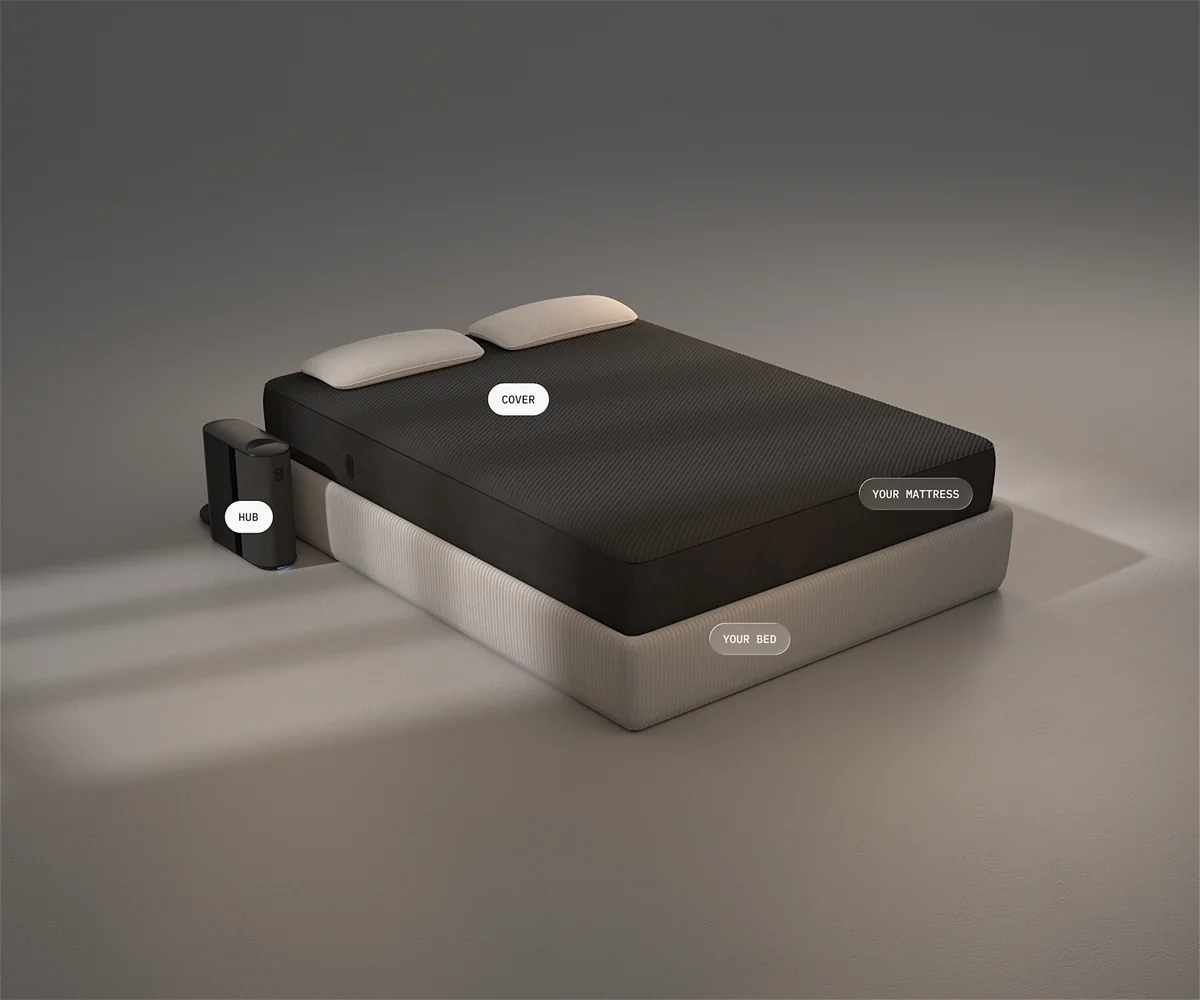
For temperature-driven sleep optimization, devices like the Eight Sleep Pod 4 Ultra can work in concert with magnesium supplementation. Magnesium helps your core body temperature drop (a prerequisite for sleep onset), and active mattress cooling amplifies that effect.
And if you're thinking about sleep in the context of healthspan, our sleep and longevity guide covers why sleep quality may be the single most important lever for long-term health outcomes.
FAQ
Does magnesium really help you sleep, or is it placebo?
The evidence is solid that magnesium improves sleep quality in people who are deficient—and given that roughly half the population falls short of the RDA, that's a large group. The Abbasi 2012 trial showed statistically significant improvements in sleep time, sleep efficiency, and melatonin levels versus placebo. For people with adequate magnesium status, effects are more modest but still documented. It's not a sleeping pill, but it's one of the most evidence-backed natural sleep aids available.
How long does it take for magnesium to improve sleep?
Most people notice a difference within the first week, particularly a calming effect at bedtime. However, the full benefits—especially if you're repleting a genuine deficiency—may take 4-8 weeks to manifest. The Abbasi trial ran for 8 weeks and showed progressive improvement. Be patient and consistent.
Can you take too much magnesium?
Yes, though serious toxicity from oral magnesium supplements is rare in people with normal kidney function. The most common side effect of excess magnesium is loose stools or diarrhea (particularly with citrate and oxide forms). The Tolerable Upper Intake Level for supplemental magnesium is 350mg/day, but many people tolerate higher doses of well-absorbed forms like glycinate without issues. If you have kidney disease, consult your doctor before supplementing—impaired kidneys cannot efficiently excrete excess magnesium.
Should I take magnesium glycinate or L-threonate for sleep?
For most people, magnesium glycinate is the better starting point. It delivers more elemental magnesium per capsule, is well-tolerated, and the glycine component independently supports sleep. If your primary sleep issue is a racing mind, anxiety, or cognitive overactivation, L-threonate may offer additional benefits due to its ability to cross the blood-brain barrier. The ideal approach for stubborn insomnia is both: glycinate for total body magnesium repletion and threonate for brain-specific effects.
Can I get enough magnesium from food alone?
Theoretically, yes. Practically, it's difficult. The richest dietary sources are pumpkin seeds (156mg per ounce), spinach (157mg per cup cooked), dark chocolate (65mg per ounce), and almonds (80mg per ounce). To hit 400mg daily, you'd need to consistently eat large quantities of these foods. Most dietary surveys show Americans averaging 250-300mg/day—well below the RDA. Supplementation bridges the gap reliably.
Last updated: March 2026. We review and update our supplement recommendations quarterly as new research and products emerge.
Featured Products
Products mentioned in this article
Related Guides
More articles you might find helpful
Best Bed Cooling Systems 2026: Eight Sleep vs Cheaper Alternatives
**Disclosure:** Product CTAs on this page currently go to manufacturer sites (no affiliate tracking yet). Better Vitals may earn a commission once partner links are live — rankings and "skip if" calls won't change when we swap URLs. We only recommend gear we'd put on a shortlist for a specific type
Is the Oura Membership Worth It in 2026? (And How to Skip It)
*Updated July 2026*
Oura Ring Price in 2026: Every Model, Subscription & Real Total Cost
*Updated July 2026*

Written by
Steve Luu
Health tech researcher