Eli Health Hormometer Review 2026: Is At-Home Cortisol Testing Worth It?
Key Takeaway
Cortisol has quietly become one of the most-searched health terms of the past two years. Podcasters talk about it, wearable dashboards hint at it through HRV proxies, and social media is flooded with "cortisol-lowering" routines. But here's the thing — until now, actually measuring your cortisol m
Affiliate Disclosure: BetterVitals may earn a commission from purchases made through links in this article, at no additional cost to you. This supports our independent research and analysis. We only recommend products we believe in after thorough evaluation.
Medical Disclaimer
This article is for educational purposes only and is not a substitute for professional medical advice, diagnosis, or treatment. Always consult your healthcare provider before making health decisions.
Eli Health Hormometer Review 2026: Is At-Home Cortisol Testing Worth It?
Cortisol has quietly become one of the most-searched health terms of the past two years. Podcasters talk about it, wearable dashboards hint at it through HRV proxies, and social media is flooded with "cortisol-lowering" routines. But here's the thing — until now, actually measuring your cortisol meant either visiting a doctor for a blood draw or mailing saliva vials to a lab and waiting days for results.
The Eli Health Hormometer changes that equation entirely. It's the first consumer device that measures cortisol from a 60-second saliva sample and delivers results straight to your phone in minutes. Debuted at CES 2026, the Hormometer generated significant buzz in the health tech community, but it's still new enough that almost no independent reviews exist online.
We've spent weeks researching the underlying technology, digging into Eli Health's accuracy claims, reading early user feedback, and comparing the Hormometer against traditional testing methods. What follows is an honest, research-based first look — not a hands-on review, but a thorough evaluation of everything we know so far.
Disclosure: BetterVitals may earn a commission if you purchase through our links. This does not influence our editorial ratings or recommendations. We were not paid by Eli Health, and this review is based on publicly available research and user reports.
What Is the Eli Health Hormometer?
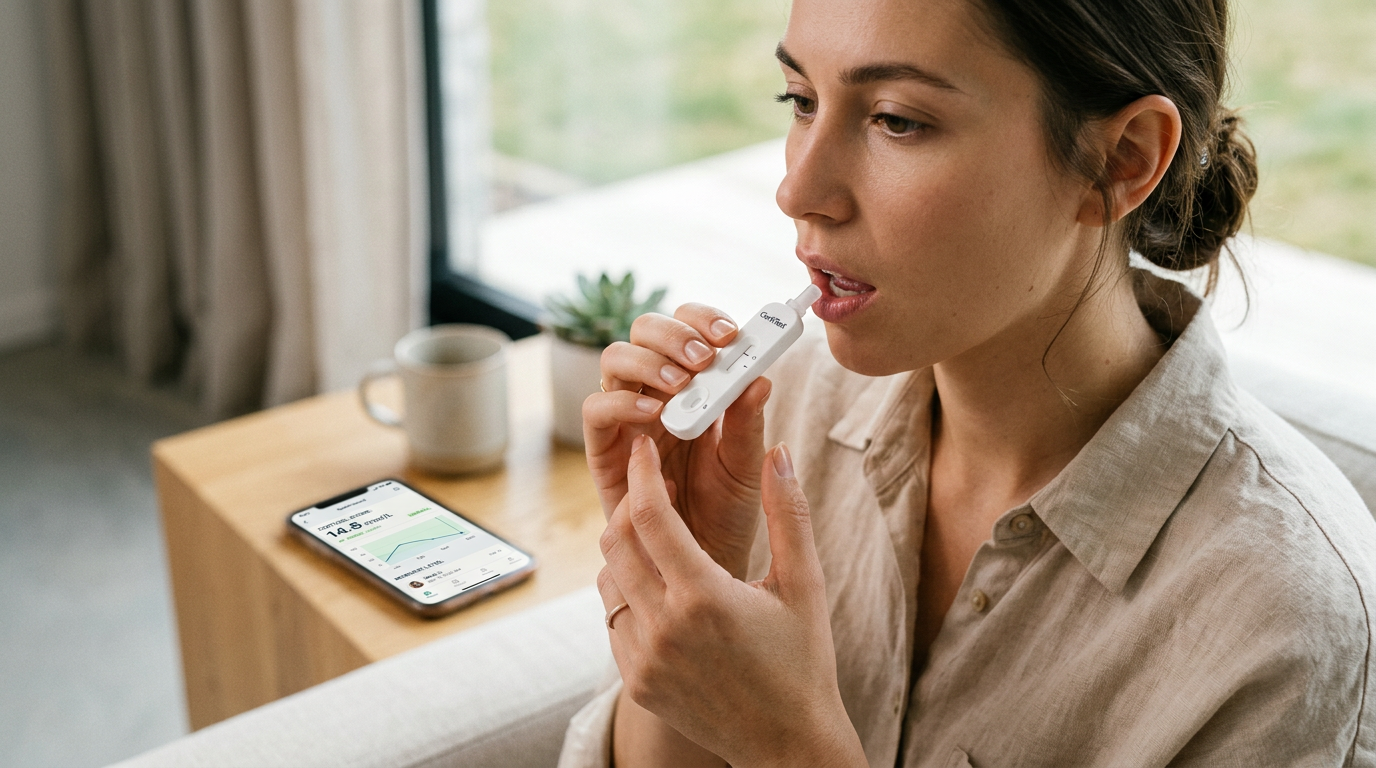
The Eli Health Hormometer is the first instant at-home cortisol monitoring system designed for regular consumer use. Rather than sending samples to a lab and waiting days, you collect a saliva sample, scan it with your phone, and get a contextualized cortisol reading in minutes.
The core technology is a saliva-based lateral flow immunoassay — the same fundamental principle behind rapid COVID tests, but calibrated specifically for cortisol detection. Each single-use cartridge contains reagents that react with cortisol in your saliva, producing a signal that the Eli Health app reads through your smartphone camera.
What makes the system genuinely interesting isn't just the instant results — it's the contextual layer on top. The app converts your raw cortisol measurement into a score from 0 to 100, adjusted for the time of day you're testing. This matters because cortisol follows a natural diurnal rhythm: it should be highest in the morning (the cortisol awakening response) and gradually taper through the afternoon and evening. A cortisol level of 15 nmol/L means something very different at 7 AM than it does at 10 PM, and the Hormometer accounts for that.
The companion app integrates with Apple HealthKit, pulling data from Apple Watch, Oura Ring, and other connected wearables. This lets you correlate your cortisol readings with HRV, sleep duration, resting heart rate, and activity data — building a more complete picture of your stress physiology than any single metric provides alone.
Eli Health has also announced plans to expand beyond cortisol in 2026, with testosterone and progesterone test cartridges on the roadmap. If they deliver, the Hormometer could evolve from a cortisol monitor into a broader at-home hormone tracking platform.
How It Works (Step by Step)
The testing process is straightforward and takes under five minutes from start to finish:
Open a sealed saliva collection cartridge. Each cartridge is individually packaged and single-use. You'll want to check the expiration date, though shelf life is reasonable.
Place the collection pad in your mouth for 60 seconds. The pad absorbs enough saliva for the assay to work. No spitting into a tube required — it's more comfortable than most saliva collection methods.
Insert the saturated cartridge into the reader slot. The cartridge has a clear orientation, so it's hard to get wrong.
Open the Eli Health app and scan the cartridge with your phone camera. The app uses your smartphone's camera to read the lateral flow strip, similar to how some COVID test apps worked. Proper lighting helps — the app guides you through positioning.
Results appear in minutes with contextual scoring. You'll see your cortisol score (0-100), how it compares to the expected range for your time of day, and trend data if you've tested before.
Best practices the app recommends: Avoid eating, drinking anything other than water, or brushing your teeth for at least 30 minutes before testing. These activities can temporarily alter salivary cortisol readings and introduce noise into your data.
The real power of the system emerges when you test multiple times per day to map your diurnal cortisol curve. A typical protocol might be: immediately upon waking, mid-morning, mid-afternoon, and before bed. Four data points in a single day can reveal whether your cortisol rhythm is healthy (high morning, gradual decline) or disrupted (flat, inverted, or erratic) — information that used to require a $150+ lab panel and a week of waiting.
Accuracy: Can You Trust It?
This is the question that matters most for any new health measurement device, and the answer is more nuanced than a simple yes or no.
Eli Health reports a 97% correlation with the FDA-approved ELISA (enzyme-linked immunosorbent assay) method, which is considered the gold standard for salivary cortisol measurement. This figure comes from third-party validation studies, not just internal testing, which adds credibility. They also cite over 80% agreement with lab-grade tools in broader comparisons.
To put that in context: a 97% correlation with the gold standard salivary method is genuinely impressive. Salivary cortisol is inherently noisier than serum (blood) cortisol — your mouth's hydration level, recent food intake, even time since last brushing can introduce variability. Achieving 97% correlation despite that biological noise suggests the assay chemistry and the app's optical reading system are well-engineered.
Early user reports we've found in health optimization communities broadly support these claims. Several users who ran the Hormometer alongside ZRT Laboratory's 4-point salivary cortisol panel (a well-regarded mail-in test) reported that results "match pretty well" — not identical readings, but consistent patterns showing the same highs, lows, and overall curve shape.
The honest caveat: The Hormometer is classified as a wellness device, not a medical diagnostic tool. It has not received FDA clearance for diagnosing medical conditions. You should not use it to diagnose or rule out cortisol-related disorders like Cushing's syndrome or Addison's disease. If you suspect a clinical cortisol disorder, see an endocrinologist and get proper lab testing.
Where the Hormometer excels — and where we think it's genuinely valuable — is in tracking trends over time. Individual readings will always carry some measurement noise. But when you test regularly and look at your data over days and weeks, the trends become meaningful. Is your morning cortisol awakening response getting stronger after you started cold plunging? Is your evening cortisol dropping since you cut late-night screen time? Those trend-level questions are where this device shines, and where obsessing over any single reading would be counterproductive.
The App Experience
The Eli Health app is the brains of the operation — without it, the cartridge is just a piece of plastic. So the app experience matters as much as the hardware.
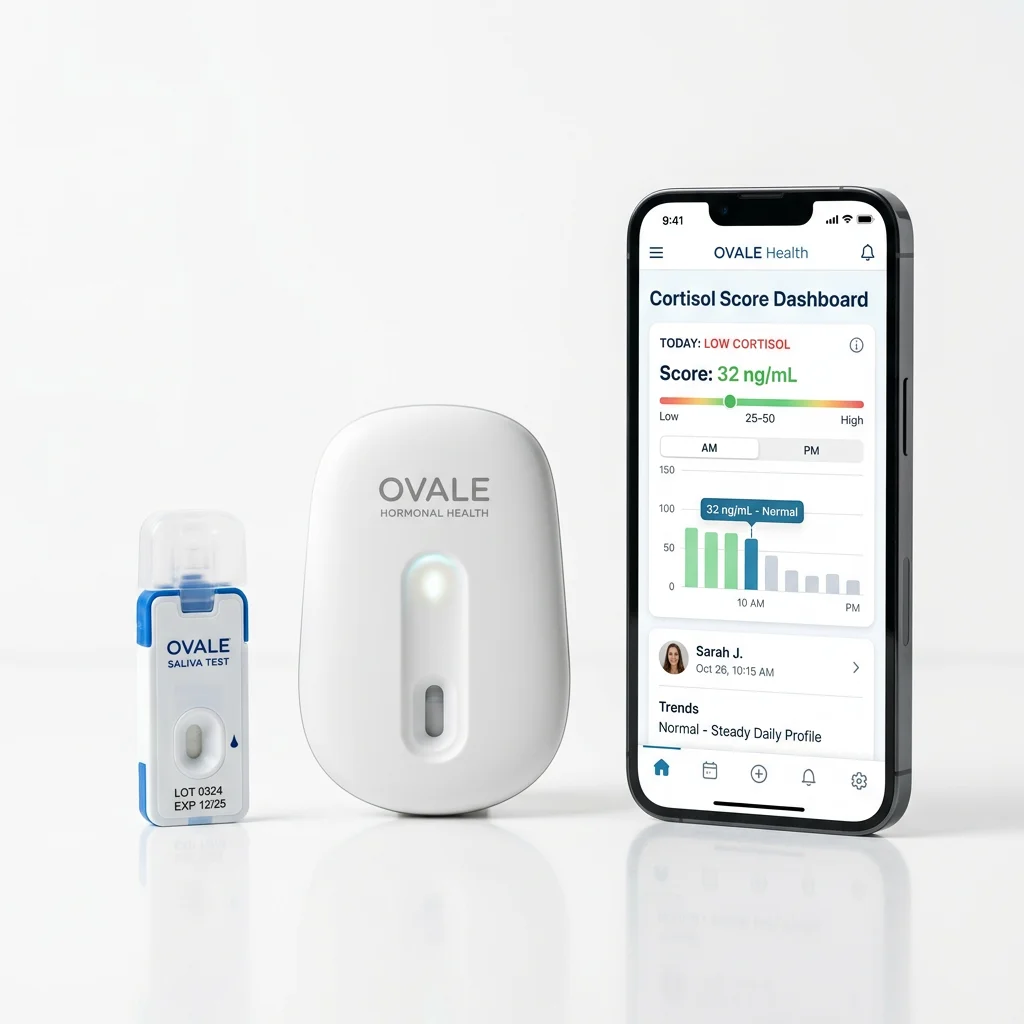
The centerpiece is the cortisol score from 0 to 100, contextualized by the time of day you test. The app knows that a score of 70 at 7 AM is perfectly normal while the same score at 9 PM would be concerning, and it adjusts its feedback accordingly. Color-coded ranges (green for optimal, yellow for elevated, red for significantly high or low) make interpretation intuitive even without deep cortisol knowledge.
Trend tracking over days and weeks is where the app starts earning its keep. You can visualize your diurnal curve evolving over time, spot patterns, and see whether lifestyle interventions are making a measurable difference. The graphs are clean and legible, though power users may wish for more data export options.
The HealthKit integration is a standout feature. By pulling HRV, sleep, activity, and heart rate data from connected wearables, the app can surface correlations you might miss on your own. Did your cortisol spike on days with poor sleep? Does your HRV track inversely with your evening cortisol? These cross-metric insights are the kind of thing that historically required a health coach or a spreadsheet — having them automated is a meaningful step forward.
Current limitations to know about:
- The app is iOS-only as of March 2026. Android support is reportedly in development, but there's no confirmed release date. If you're an Android user, this is a dealbreaker for now.
- The interface is clean but clearly early-stage. Expect feature additions, UI refinements, and occasional rough edges. Eli Health has been responsive to user feedback in app updates, which is a positive signal.
- Data sharing and export options are limited. If you want to share your cortisol data with a healthcare provider or import it into a personal health dashboard, you'll need to screenshot or manually transcribe for now.
Browse All Products
Explore our evidence-based product reviews across every health category.
Pricing and Subscription Model
Let's talk money, because the Hormometer's pricing model is one of the most important factors in deciding whether it makes sense for you.
Current pricing tiers:
| Plan | Tests Included | Price | Cost Per Test |
|---|---|---|---|
| Starter/Baseline Pack | 8 tests | ~$66 | ~$8.25 |
| Monthly Subscription | 4 tests/month | $32/month | $8.00 |
| 3-Month Subscription | 8 tests/month | ~$198/quarter | ~$8.25 |
How does that compare to traditional testing?
- A single lab cortisol blood test typically runs $30-80 out of pocket (more without insurance)
- A 4-point diurnal salivary cortisol panel from companies like ZRT or DUTCH costs $100-200 per panel
- Each panel gives you one day's snapshot; repeat testing means repeat costs
At roughly $8 per test with instant results, the Hormometer is significantly cheaper per data point than lab panels — and dramatically more convenient. Four tests in a single day to map your full diurnal curve costs about $32, compared to $100-200 for a mail-in panel that takes a week to return results.
The trade-off is the subscription model. The Hormometer hardware is essentially a reader; the real cost is in the consumable cartridges, and you can't use the system without them. This is the razor-and-blades model applied to health testing. If you stop subscribing, the device becomes inert.
Our recommended approach for most people: Start with the 3-month subscription to build a robust baseline dataset. Test multiple times per day for the first few weeks to map your diurnal curve, then shift to strategic testing — mornings and evenings on days when you're experimenting with a new supplement, breathing protocol, or lifestyle change. After the initial mapping phase, the monthly 4-test plan may be sufficient for ongoing spot-checks.
Some early users have noted frustration with the quarterly cartridge shipment cadence on the 3-month plan, particularly around timing and inventory management. If you test intensively early on, you may burn through cartridges faster than expected and face a gap before the next shipment.
Eli Health vs Traditional Cortisol Testing
| Factor | Eli Health Hormometer | Lab Saliva Panel (ZRT/DUTCH) | Blood Draw | Wearable Proxies (HRV) |
|---|---|---|---|---|
| Cost per test | ~$8 | $25-50 per data point | $30-80 | Free (device cost only) |
| Wait time for results | Minutes | 5-10 business days | 1-3 days | Instant |
| Accuracy | 97% correlation with ELISA | Gold standard | Gold standard (serum) | Indirect proxy only |
| Testing frequency | Multiple times/day | Typically 1-4x per panel | Per doctor visit | Continuous |
| Convenience | At home, anytime | At home, mail-in | Requires lab visit | Passive/automatic |
| What it measures | Salivary free cortisol | Salivary free cortisol | Total serum cortisol | Autonomic stress response |
| Best for | Trend tracking, experiments | Baseline diagnostics | Clinical evaluation | Daily stress awareness |
The key takeaway: the Hormometer doesn't replace lab testing for clinical purposes, but it fills a gap that nothing else occupies — frequent, affordable, instant cortisol measurement for personal optimization. Think of it as complementary to clinical testing, not a substitute.
If you're specifically weighing the Hormometer against the lab gold standard, we break down accuracy, cost-per-data-point, and depth head-to-head in our Eli Health Hormometer vs DUTCH test comparison.
Who Should Buy the Eli Health Hormometer?
The Hormometer isn't for everyone, but for certain profiles, it fills a genuine need:
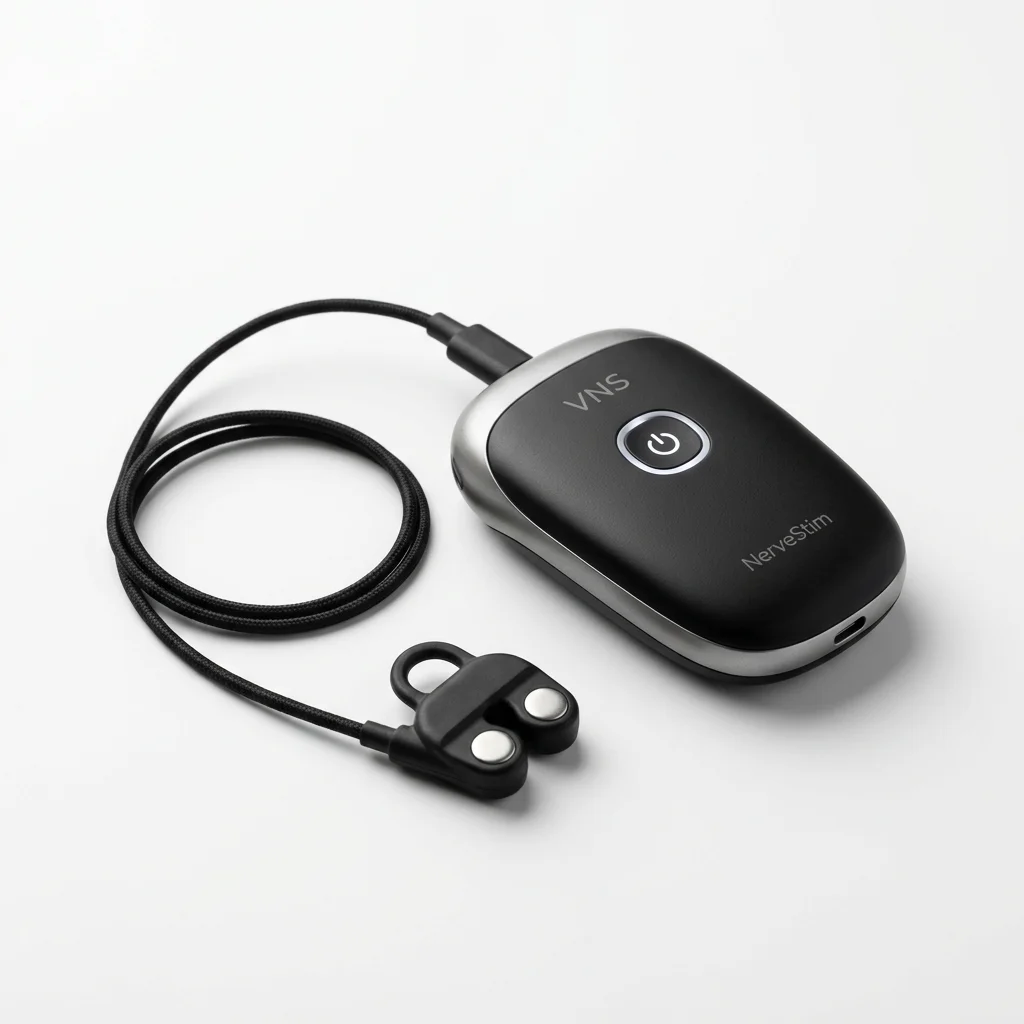
Biohackers validating interventions. If you're spending money on adaptogens, breathwork apps, red light therapy, or vagus nerve stimulation devices, the Hormometer lets you answer a question that HRV alone can't: did my cortisol actually drop? Pairing cortisol measurement with a vagus nerve stimulator gives you both the measurement and the management tool for a complete stress optimization stack.
People mapping their diurnal curve. Flat cortisol curves (low morning, no taper) are associated with chronic stress, burnout, and fatigue. If you suspect your curve is disrupted but don't want to spend $200 on a DUTCH panel every time you change something, the Hormometer makes regular mapping financially viable.
Wearable enthusiasts who want ground truth. HRV is a useful proxy for autonomic stress, but it's influenced by hydration, alcohol, training load, and dozens of other factors. Correlating your HRV data with actual cortisol measurements adds a layer of validation that makes your entire wearable dataset more meaningful.
Women tracking hormonal cycles. With testosterone and progesterone tests on the roadmap for later in 2026, the Hormometer could become a comprehensive cycle-tracking tool. Even cortisol alone is relevant — cortisol interacts significantly with reproductive hormones, and tracking it across your cycle can surface patterns invisible to period-tracking apps.
Anyone with chronic stress who wants data. There's something powerful about converting a vague feeling of "I'm so stressed" into a number you can track and influence. For people working on lowering their cortisol through lifestyle changes, having objective feedback accelerates the process and builds confidence that changes are working.
Get smarter about health tech
Deal alerts, new reviews, and health tips — delivered weekly. No spam.
Unsubscribe anytime. We respect your inbox.
Who Should Skip It
We believe in honest recommendations, and the Hormometer isn't the right purchase for everyone:
People who find frequent self-testing anxiety-inducing. If tracking your HRV already makes you stressed about being stressed, adding cortisol numbers to the mix could backfire. Self-monitoring tools work best for people who find data empowering, not anxiety-provoking.
Those who dislike subscription consumable models. If the razor-and-blades pricing structure frustrates you on principle, the Hormometer will be a recurring source of annoyance. The device is useless without cartridges, and cartridges require an ongoing financial commitment.
Anyone needing medical-grade diagnostics. If your doctor suspects Cushing's syndrome, Addison's disease, or another clinical cortisol disorder, you need proper lab testing — not a wellness device. The Hormometer is for optimization, not diagnosis.
Android users. As of March 2026, the app is iOS-only. There's no workaround, and no confirmed timeline for Android support. If you don't have an iPhone, wait.
The Verdict: 8.0/10
The Eli Health Hormometer is a genuine first-of-its-kind product, and we think it earns a strong score despite its early-stage limitations.
What earns the score:
- First-mover innovation. No other consumer device offers instant at-home cortisol measurement. The technology works, and the accuracy data is credible.
- Genuinely useful data. Cortisol is one of the most important health biomarkers that consumers previously had almost no access to. Making it measurable at home, multiple times per day, is a meaningful advance.
- Smart contextualization. The time-of-day adjusted scoring and HealthKit integration elevate this beyond a raw number into actionable insight.
- Reasonable per-test cost. At $8 per test with instant results, it's more cost-effective than lab panels for regular monitoring.
What holds it back:
- Subscription model. Ongoing cartridge costs with no way to use the device without them.
- iOS-only. Excludes a significant portion of potential users.
- Early-stage app. Functional but clearly still evolving. Data export and sharing features are lacking.
- Wellness classification. Not FDA-cleared for diagnostics, which limits clinical utility.
For biohackers, stress optimization enthusiasts, and anyone serious about understanding their cortisol patterns, the Hormometer is the most exciting new health tech product of early 2026. It's not perfect, but it's the first product to make cortisol data accessible — and for the right user, that's worth a lot.
View Eli Health Hormometer details →
Frequently Asked Questions
How accurate is the Eli Health Hormometer?
Eli Health reports a 97% correlation with the FDA-approved ELISA method, which is the gold standard for salivary cortisol measurement. Third-party validation supports this claim, and early user comparisons with established lab panels like ZRT show consistent pattern agreement. That said, individual readings carry inherent variability — the device is most reliable when used for trend tracking over time rather than interpreting any single measurement in isolation.
How much does the Eli Health Hormometer cost per month?
The monthly subscription is $32 for 4 tests (about $8 per test). A 3-month plan offers 8 tests per month at roughly $8.25 per test. There's also a starter pack of 8 tests for around $66 if you want to try before committing to a subscription. Compared to lab saliva panels that cost $100-200 per panel, the per-test cost is significantly lower — especially for regular monitoring.
Can the Hormometer replace a doctor's cortisol test?
No. The Eli Health Hormometer is classified as a wellness device, not a medical diagnostic tool. It's excellent for tracking cortisol trends, mapping your diurnal curve, and validating lifestyle interventions, but it should not be used to diagnose or rule out medical conditions like Cushing's syndrome or Addison's disease. If you have clinical concerns about your cortisol levels, consult an endocrinologist and get proper lab testing.
What does the cortisol score mean?
The Eli Health app converts your raw cortisol reading into a score from 0 to 100, adjusted for the time of day. This contextualization is important because healthy cortisol levels change dramatically throughout the day — high in the morning and low in the evening. A green score indicates your cortisol is in the expected range for that time, yellow suggests it's somewhat elevated or suppressed, and red flags significantly abnormal levels. Over time, tracking these scores reveals your personal cortisol pattern.
Does Eli Health test other hormones?
Currently, the Hormometer tests salivary cortisol only. However, Eli Health has announced plans to release testosterone and progesterone test cartridges later in 2026. These would use the same device and app platform with hormone-specific cartridges. If delivered as planned, this would transform the Hormometer from a single-biomarker device into a broader at-home hormone monitoring system.
How often should I test my cortisol?
It depends on your goals. For initial baseline mapping, we recommend testing 4 times per day (waking, mid-morning, mid-afternoon, and before bed) for at least 3-5 days to establish your diurnal curve. After that, targeted testing works well — for example, testing before and after a breathwork session, on mornings after poor sleep, or during stressful work periods. Most users settle into a rhythm of 2-4 strategic tests per week once they've established their baseline pattern.
Featured Products
Products mentioned in this article
Related Guides
More articles you might find helpful
Eight Sleep Pod 5 Review 2026: Core vs Plus vs Ultra
**Disclosure:** Product CTAs on this page currently go to manufacturer sites (no affiliate tracking yet). Better Vitals may earn a commission once partner links are live — rankings and "skip if" calls won't change when we swap URLs. We only recommend gear we'd put on a shortlist for a specific type
Wonderfeel Youngr NMN Review 2026: 90-Day Results & Verdict
*Updated July 2026*
Signos Review 2026: CGM for Weight Loss, Tested
*Updated July 2026*

Written by
Steve Luu
Health tech researcher