Best Vagus Nerve Stimulation Device 2026: Nuropod vs Pulsetto vs Apollo Neuro
Key Takeaway
Vagus nerve stimulation used to be a niche biohacker curiosity. Then Bryan Johnson wore a Nuropod on Netflix's Don't Die documentary, and suddenly everyone from stressed-out executives to anxious college students wanted one. Google searches for "vagus nerve stimulation device" tripled between mid-
Affiliate Disclosure: BetterVitals may earn a commission from purchases made through links in this article, at no additional cost to you. This supports our independent research and analysis. We only recommend products we believe in after thorough evaluation.
Medical Disclaimer
This article is for educational purposes only and is not a substitute for professional medical advice, diagnosis, or treatment. Always consult your healthcare provider before making health decisions.
Best Vagus Nerve Stimulation Device 2026: Nuropod vs Pulsetto vs Apollo Neuro
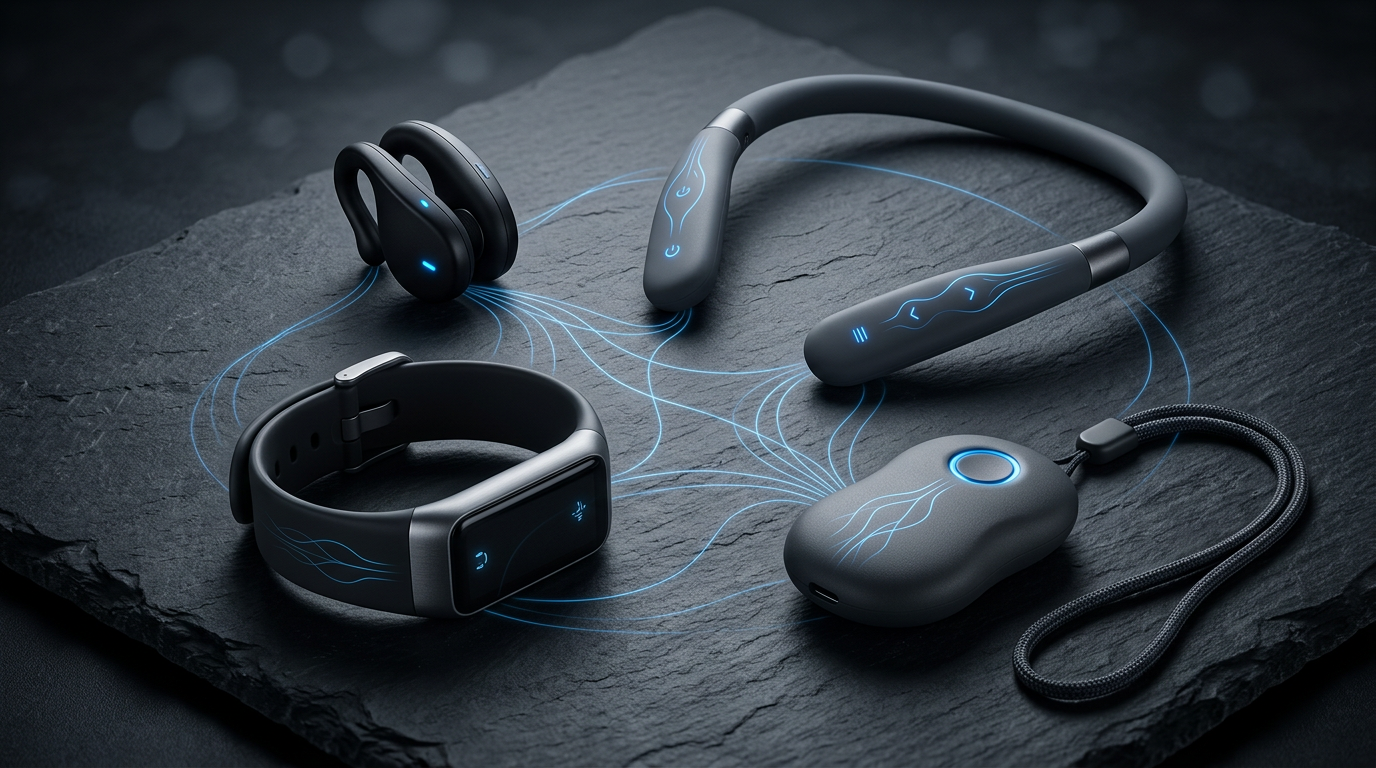
Vagus nerve stimulation used to be a niche biohacker curiosity. Then Bryan Johnson wore a Nuropod on Netflix's Don't Die documentary, and suddenly everyone from stressed-out executives to anxious college students wanted one. Google searches for "vagus nerve stimulation device" tripled between mid-2025 and early 2026, and the consumer market responded — there are now dozens of devices claiming to "activate your vagus nerve" and melt away stress.
The problem? Some of these devices have 50+ peer-reviewed studies behind them. Others have slick marketing and not much else. The stimulation methods range from electrical pulses to your ear, vibrations on your wrist, and infrasound on your chest — and they are not all equally supported by science.
We spent three months researching the clinical evidence, comparing specifications, and reading thousands of user reviews to narrow the field to the four consumer VNS devices actually worth considering in 2026: Nuropod, Pulsetto, Apollo Neuro, and Sensate 2. Here is what we found.
This article contains affiliate links. If you purchase through our links, we may earn a commission at no extra cost to you. See our full affiliate disclosure for details.
This content is for informational purposes only and is not medical advice. Vagus nerve stimulation devices are wellness products, not FDA-cleared treatments. Consult your physician before use, especially if you have a cardiac condition, epilepsy, or are pregnant.
How Vagus Nerve Stimulation Works (and Why It Lowers Cortisol)
The vagus nerve is the longest cranial nerve in your body. It runs from your brainstem down through your neck, chest, and abdomen, touching nearly every major organ along the way — heart, lungs, gut, liver, spleen. It is the primary highway of the parasympathetic nervous system, the branch responsible for "rest and digest" functions that counterbalance the sympathetic "fight or flight" stress response.
When you stimulate the vagus nerve, you are essentially sending a signal to the brainstem that says: we are safe, stand down. This triggers a cascade of downstream effects. Heart rate slows. Heart rate variability (HRV) increases — a sign of better autonomic balance. The inflammatory reflex activates, dampening systemic inflammation. And critically for anyone dealing with chronic stress, cortisol output decreases.
A 2025 study published in Physiological Reports provided some of the clearest evidence yet: researchers found that transcutaneous auricular vagus nerve stimulation (taVNS) acutely inhibited the cortisol response to mental stress in healthy adults. Participants who received real stimulation showed significantly blunted cortisol spikes compared to the sham group when exposed to a standardized stress task. This is not a vague "relaxation" claim — it is a measurable hormonal change.
Three Approaches to Consumer VNS
Not all vagus nerve devices work the same way, and understanding the differences matters:
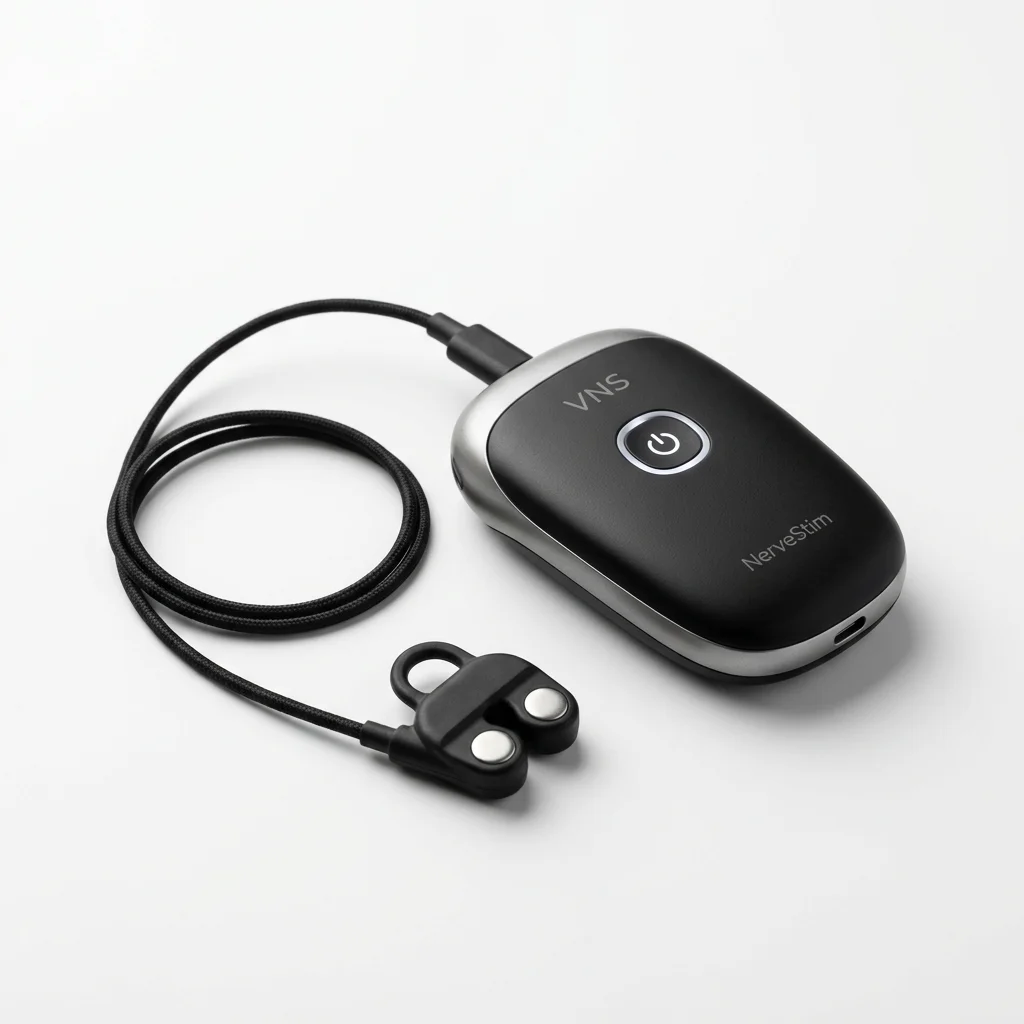
Transcutaneous auricular VNS (taVNS) delivers mild electrical pulses to the ear, specifically the cymba conchae and tragus regions where the auricular branch of the vagus nerve surfaces. This is the closest approach to clinical-grade VNS and has the deepest research base. Nuropod uses this method.
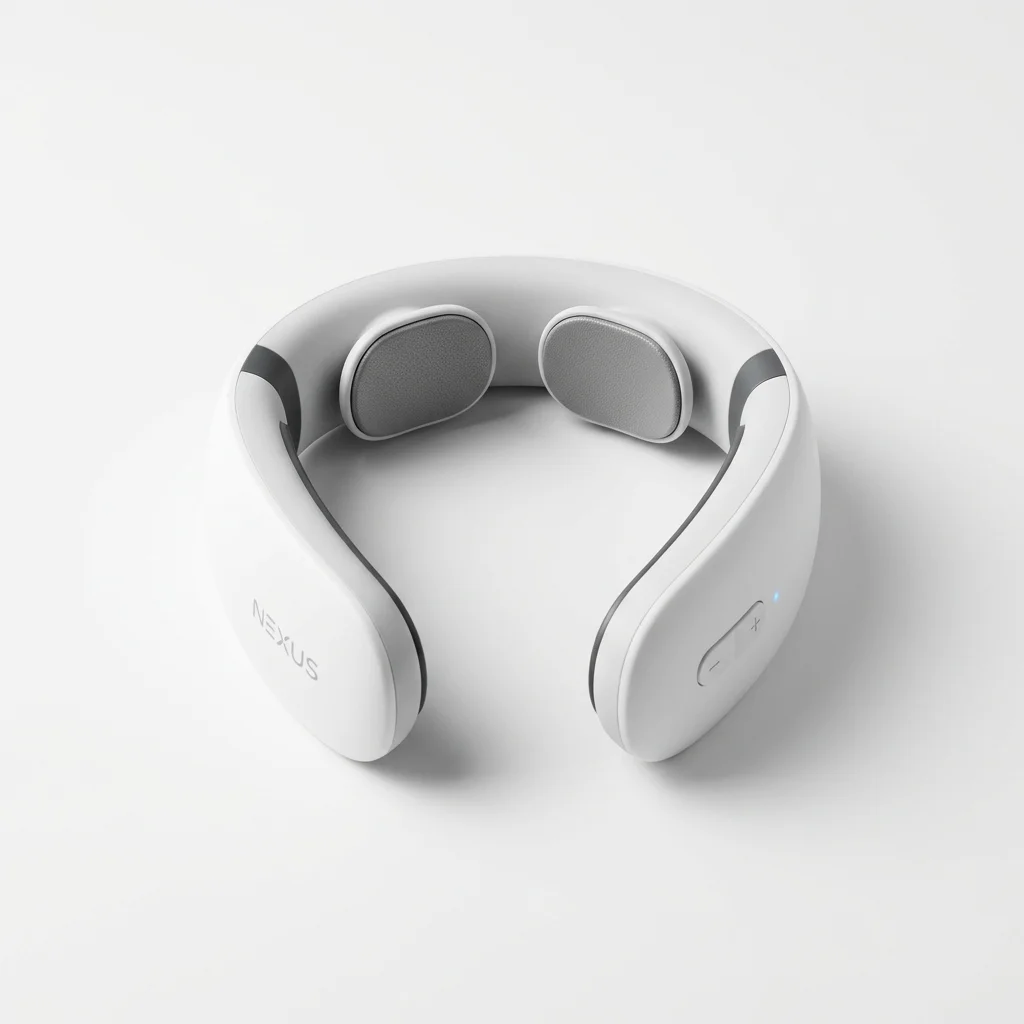
Transcutaneous cervical VNS (tcVNS) sends electrical stimulation through the neck, targeting the vagus nerve trunk directly. Pulsetto uses bilateral neck stimulation with this approach. The evidence base is growing but smaller than taVNS for consumer devices.
Somatosensory vibration uses gentle vibrations or infrasound to indirectly activate vagal pathways through sensory receptors in the skin. Apollo Neuro (wrist/ankle vibration) and Sensate 2 (chest infrasound) both use this approach. The mechanism is less direct — you are not stimulating the nerve itself but triggering afferent sensory signals that influence autonomic tone.
For a deeper dive into the science, see our complete guide to vagus nerve stimulation.
One practical note: if you are investing in a VNS device to lower cortisol, you probably want to know whether it is actually working for you. The Eli Health Hormometer lets you measure cortisol at home with a 60-second saliva test — useful for establishing your baseline before starting VNS and tracking changes over weeks. (Choosing between an at-home monitor and a full lab panel? See our Eli Health Hormometer vs DUTCH test comparison.)
What to Look For in a VNS Device
Before diving into individual reviews, here are the factors that matter most when choosing a vagus nerve stimulator:
Stimulation type. Electrical devices (taVNS, tcVNS) have a more direct mechanism of action and generally stronger acute effects. Vibration-based devices are gentler, have zero contraindications, and can be worn longer — but the vagal activation pathway is indirect. Neither approach is universally "better"; it depends on your priorities and health profile.
Clinical evidence. This is where devices diverge dramatically. Some have 50+ peer-reviewed studies; others have a single pilot study or none at all. We weight published, peer-reviewed research heavily. Marketing-funded "white papers" and testimonials do not count.
Form factor. Where you wear the device affects how likely you are to actually use it. An ear clip is discreet but requires you to sit still. A wrist band can be worn all day under clothing. A neck band is visible. A chest device requires lying down. Think about your daily routine and when you would realistically use the device.
Gel requirement. This sounds minor but it is the number one compliance killer for electrical devices. If you need to apply conductive gel before every session, that is friction that adds up. Gel-free designs dramatically improve adherence.
Session duration and frequency. Some devices require 15-30 minute dedicated sessions. Others are designed for background wear over several hours. Match this to your lifestyle — a busy parent might prefer passive all-day wear over a 30-minute sit-down session.
Price and ongoing costs. Upfront costs range from $278 to $900. But also consider replacement parts (ear tips, gel pads), subscription fees for premium app features, and battery replacement. The cheapest device up front is not always the cheapest over two years.
Contraindications. Electrical VNS devices are contraindicated for people with pacemakers, implanted defibrillators, or certain forms of epilepsy. Vibration-based devices have no known contraindications. If you have any cardiac implant, this factor alone may determine your choice.
Head-to-Head Comparison Table
| Feature | Nuropod | Pulsetto | Apollo Neuro | Sensate 2 |
|---|---|---|---|---|
| Price | $900 | $278 | $290 | $299 |
| Type | taVNS (ear) | tcVNS (neck) | Somatosensory | Infrasound |
| Stimulation | Electrical | Electrical | Vibration | Vibration |
| Form Factor | Ear clip | Neck band | Wrist/ankle band | Chest pad |
| Gel Required | No | Yes (gel pads) | No | No |
| Session Length | 15–30 min | 4–15 min | 3+ hrs/day | 10–30 min |
| Battery Life | N/A (wired) | 10–12 days | 8–10 hrs | ~10 sessions |
| App Platform | iOS/Android | iOS/Android | iOS/Android | iOS/Android |
| Peer-Reviewed Studies | 50+ | Limited | 17 | 1 pilot |
| Contraindications | Pacemaker, epilepsy | Pacemaker, epilepsy | None | None |
| Our Score | 8.2/10 | 7.5/10 | 7.8/10 | 7.2/10 |
Nuropod — Editor's Pick (8.2/10)
Price: $900 | By: Parasym Scientific | Method: Transcutaneous auricular vagus nerve stimulation
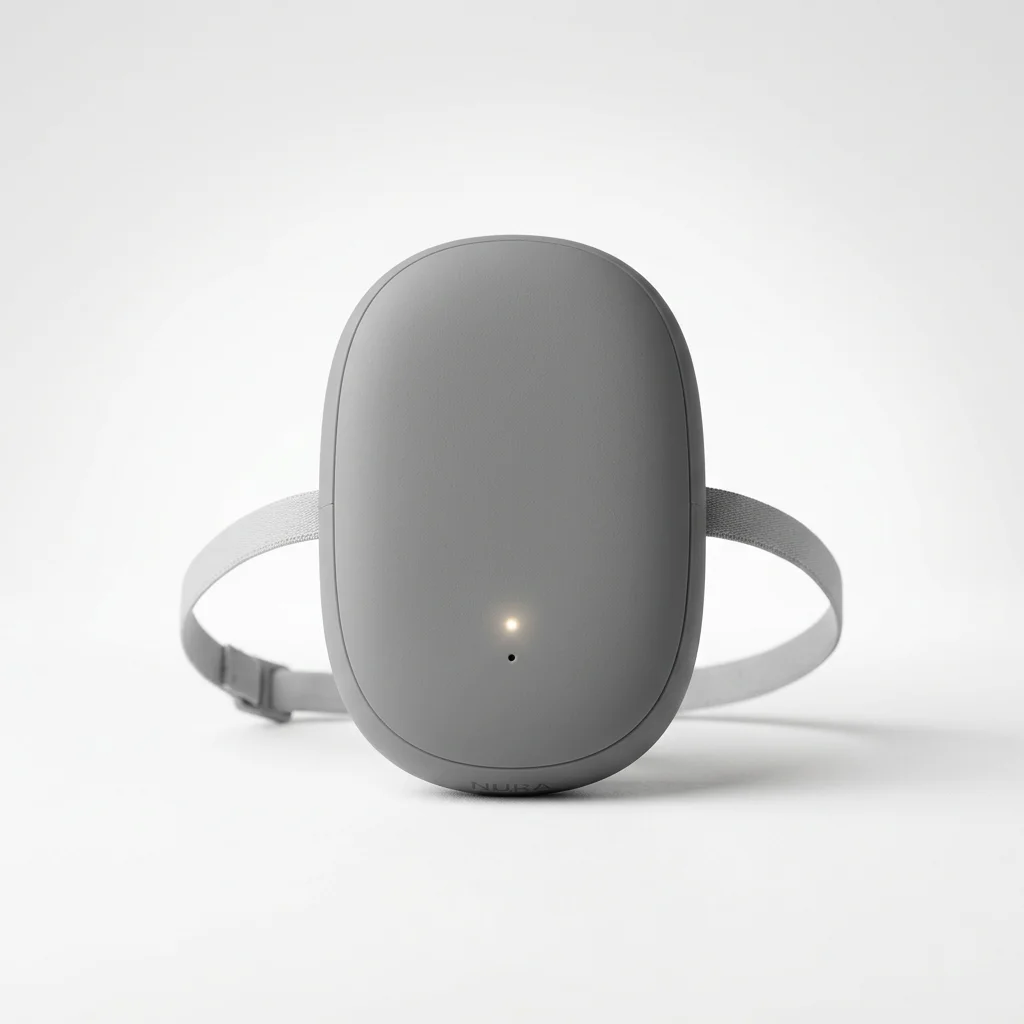
The Nuropod is the most expensive consumer VNS device on the market, and — in our assessment — the one with the strongest scientific foundation. Developed by Parasym Scientific, it uses their proprietary AVNT (Auricular Vagus Nerve Technology) to deliver precise electrical stimulation to the ear via a comfortable clip-on electrode. No conductive gel required.
The Evidence
This is where Nuropod genuinely separates itself from the pack. Parasym's taVNS technology is backed by over 50 peer-reviewed studies conducted at institutions including Harvard, UCLA, and the University of Chicago. These are not small pilot studies — the research spans heart failure, inflammatory conditions, autonomic dysfunction, and mental health.
Most relevant for the wellness use case: the 2025 Physiological Reports study demonstrated that taVNS acutely suppresses cortisol response to mental stress. A 2024 study in Brain Stimulation showed improved cardiac autonomic function in heart failure patients. And multiple studies have documented increased HRV — the gold-standard biomarker of parasympathetic activation — during and after taVNS sessions.
The Bryan Johnson connection also matters here. Johnson, whose "Don't Die" Netflix documentary brought longevity science to mainstream audiences, featured the Nuropod prominently in his daily protocol. While celebrity endorsement is not evidence, it did push Parasym's research into public view — and the research holds up to scrutiny.
The Experience
Sessions run 15 to 30 minutes. The ear clip is lightweight and the stimulation feels like a mild tingling or pulsing — most users describe it as unusual but not uncomfortable after the first few sessions. The device is wired (no internal battery), which means you need to be near a power source, but it also means no charging hassle.
The companion app provides guided sessions and lets you adjust stimulation parameters. Build quality is excellent — this feels like a medical device, not a consumer gadget.
Honest Assessment
The elephant in the room is the $900 price tag. That is three times the cost of any competitor on this list. Parasym positions the Nuropod as a premium medical-grade device, and the build quality and research base support that positioning. But for someone who just wants to try VNS for general stress relief, that is a steep entry point.
The other consideration: benefits are not immediate for most people. While some users report acute relaxation during sessions, the research suggests that meaningful autonomic changes — the kind that shift your baseline HRV and cortisol patterns — take 2 to 4 weeks of consistent use. You need patience.
Ear clip electrodes also need replacement approximately every 6 months, adding ongoing cost.
Pros: Strongest evidence base of any consumer VNS device. Gel-free design. Direct cortisol reduction demonstrated in clinical research. Medical-grade build quality.
Cons: $900 price point. Benefits take 2-4 weeks to materialize. Wired design limits portability. Earpiece replacement every 6 months.
Best for: Evidence-driven buyers who want the closest thing to clinical-grade VNS and are willing to pay for it.
Browse All Products
Explore our evidence-based product reviews across every health category.
Pulsetto — Best Value (7.5/10)
Price: $278 | Method: Transcutaneous cervical vagus nerve stimulation
Pulsetto takes a different anatomical approach, delivering bilateral electrical stimulation to the neck where the vagus nerve trunk runs close to the surface. At $278, it is the most affordable electrical VNS device in this comparison and has built a large user community — over 100,000 users as of early 2026, with an 86% self-reported satisfaction rate.
The Evidence
Here we need to be more cautious. Pulsetto references clinical studies on its website, but the independent, peer-reviewed evidence base specifically for Pulsetto's device and tcVNS approach in healthy populations is more limited than what Nuropod or Apollo Neuro can point to. There is solid research supporting cervical VNS in general — gammaCore, an FDA-cleared tcVNS device for migraines and cluster headaches, has extensive clinical data. But gammaCore is a prescription device with different parameters.
Pulsetto's own published data focuses on user surveys and internal studies rather than large-scale randomized controlled trials. That does not mean the device does not work — thousands of users report benefits, and the underlying mechanism (cervical vagal stimulation) is well-established. It means we have less rigorous evidence to evaluate compared to taVNS.
The Experience
Sessions are impressively short: 4 to 15 minutes depending on the program selected. The device sits on your neck like a thick collar and delivers stimulation through gel electrode pads. There are five preset programs targeting stress, sleep, burnout, pain, and mood.
Battery life is a standout — 10 to 12 days on a single charge, the best in this comparison. The app is clean and intuitive, and there is no subscription required for any features.
The main friction point is the gel pads. You need to apply conductive gel before each session, and the pads need periodic replacement. Multiple users in reviews cite this as their biggest annoyance. It adds 2-3 minutes of setup and cleanup to every session, and if you forget to restock gel, you cannot use the device.
Honest Assessment
Pulsetto hits a sweet spot for people who want electrical VNS without the $900 Nuropod price tag. The short session times and long battery life make it genuinely convenient despite the gel requirement. The large and active user community is a plus — there is plenty of real-world experience to draw from.
Our hesitation is the evidence gap. We would like to see more independent, peer-reviewed research on Pulsetto's specific device and parameters. The company appears to be investing in research, so this may improve over time.
Pros: Most affordable electrical VNS device. Excellent battery life. Short session times. No subscription. Large user community.
Cons: Gel pads required for every session. Limited independent peer-reviewed research. Neck placement is visible. Effects may be milder than taVNS for some users.
Best for: Budget-conscious buyers who want electrical stimulation and do not mind the gel pad routine.
Apollo Neuro — Most Researched Vibration Device (7.8/10)
Price: $290 | Method: Somatosensory vibration
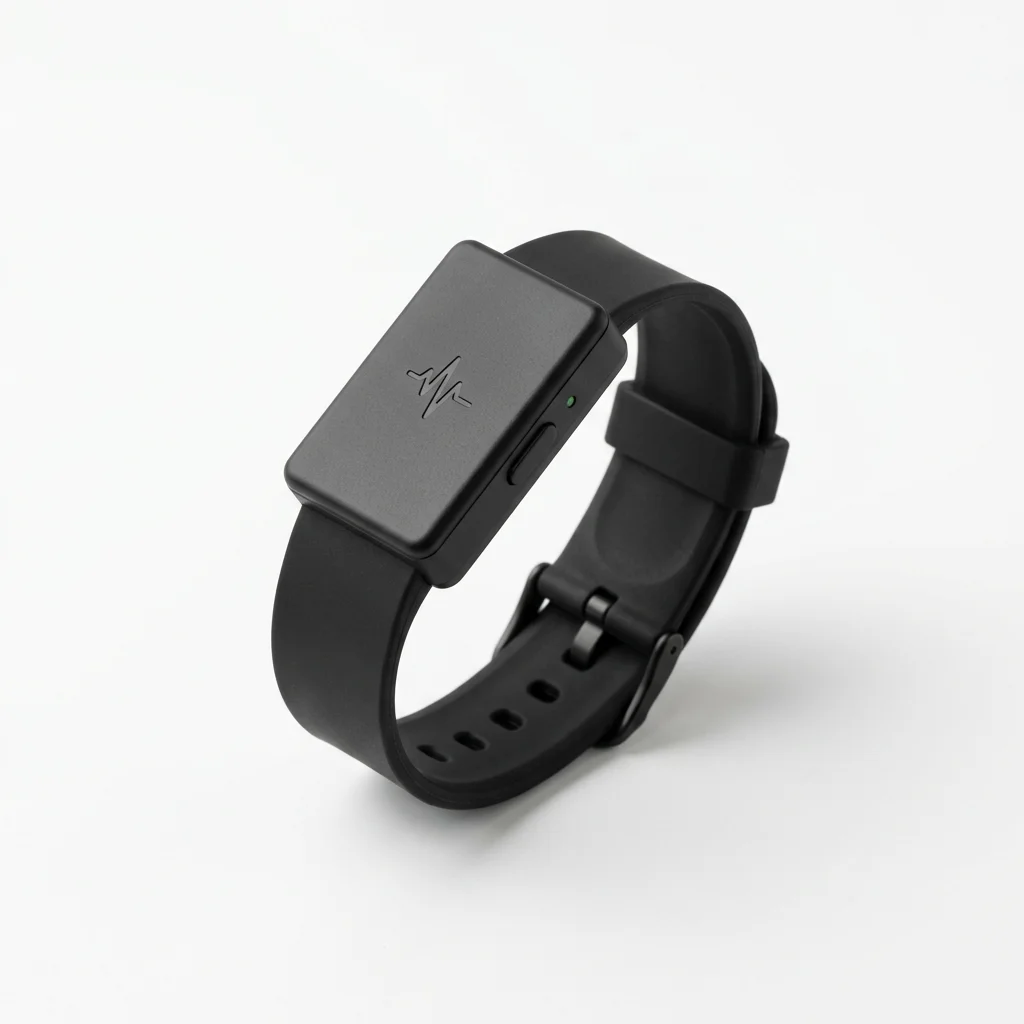
Apollo Neuro takes a fundamentally different approach. Instead of electrical stimulation, it uses low-frequency vibrations delivered through a wrist or ankle band to activate the body's somatosensory system. The theory: specific vibration patterns trigger afferent nerve signals that shift the autonomic nervous system toward parasympathetic dominance — similar to how a hug or gentle rocking calms the body.
The Evidence
Apollo has invested heavily in clinical research, and it shows. With 17 published clinical studies encompassing over 1,700 subjects, it has the largest body of research of any vibration-based VNS device. Key findings from their published research include:
- Approximately 10% improvement in HRV during use
- 25% improvement in cognitive focus in controlled settings
- 19% increase in deep sleep when worn overnight
- 40% reduction in stress and anxiety as measured by validated psychological scales
- 11% improvement in athletic recovery metrics
These studies have been published in journals including Frontiers in Neuroscience, Journal of Affective Disorders, and Complementary Therapies in Medicine. The research team is led by Dr. David Rabin, a neuroscientist and psychiatrist at the University of Pittsburgh, who co-founded the company. It is worth noting that most studies are company-affiliated, though several include independent co-investigators and use rigorous double-blind, sham-controlled designs.
The Experience
Apollo Neuro is designed for extended passive wear, which makes it fundamentally different from the other devices on this list. Instead of a 15-minute session, you wear it for 3 or more hours per day. The vibrations are gentle — so gentle that many users say they forget they are wearing it. Seven vibration modes target different states: Energy, Social, Focus, Recover, Calm, Unwind, and Sleep.
The device integrates with Oura Ring and Apple Watch, allowing it to automatically adjust vibration patterns based on your real-time biometrics. This is a genuinely useful feature — the device can detect when your HRV drops (indicating stress) and proactively deliver calming vibrations.
Battery life is 8-10 hours, roughly enough for a full day of wear. It charges via USB-C and looks like a fitness band, making it discreet enough for office wear.
Honest Assessment
Apollo Neuro's biggest advantage is also its biggest limitation: it is very, very subtle. Many users — particularly those coming from electrical VNS devices — report that they cannot tell if it is doing anything at all. The clinical data says it is working on an autonomic level, but the subjective experience is far less dramatic than the tingling of a Nuropod or Pulsetto.
The zero contraindications are a meaningful differentiator. Because there is no electrical stimulation, Apollo is safe for people with pacemakers, implanted defibrillators, epilepsy, or any condition that rules out electrical devices. If you have a cardiac implant, Apollo may be your only option on this list.
The 3+ hours daily wear requirement is also a consideration. If you are someone who hates wearing things on your wrist, this is not the device for you.
Pros: Most clinical studies of any vibration device. Zero contraindications. All-day passive wear design. Integrates with Oura and Apple Watch. Discreet wrist-band form factor.
Cons: Very subtle sensation — some users question if it is working. Requires 3+ hours daily wear for full benefit. Indirect vagal activation mechanism. Company-affiliated research (though well-designed).
Best for: People with cardiac implants or contraindications to electrical VNS. Anyone who wants passive, all-day autonomic support rather than dedicated sessions.
Sensate 2 — Best for Meditation (7.2/10)
Price: $299 | Method: Infrasound vibration
Sensate 2 takes yet another approach: it rests on your chest (over the sternum) and delivers infrasound vibrations paired with immersive soundscapes through headphones. The experience is less "medical device" and more "guided meditation with physical feedback." And honestly? It is the most enjoyable device on this list by a wide margin.
The Evidence
Here is where we need to be straightforward: Sensate has the thinnest evidence base of the four devices in this comparison. There is one pilot study showing improvements in relaxation and perceived stress, and the company has additional research underway. The underlying mechanism — that infrasound vibration on the chest activates vagal pathways through interoceptive signaling — is plausible and supported by broader neuroscience literature on vibrotactile stimulation. But we do not yet have large-scale, peer-reviewed, sham-controlled trials specifically on the Sensate device.
That does not mean it does not work. Thousands of users report significant relaxation benefits, and the physiological rationale is sound. It means we are relying more on mechanism plausibility and user reports than on direct clinical evidence.
The Experience
This is where Sensate genuinely shines. You lie down, place the device on your chest, put on headphones, and start a session. The infrasound vibration resonates through your chest cavity while synchronized soundscapes — nature sounds, ambient music, guided breathwork — play through your headphones. Sessions range from 10 to 30 minutes.
The sensation is deeply calming. Multiple team members described it as "the most relaxing 20 minutes of my day." The combination of chest vibration and immersive audio creates a meditative experience that is far more engaging than sitting still with an ear clip or wearing a vibrating wristband.
The app includes a large library of soundscapes and regularly adds new content. No subscription is required for the core library.
Honest Assessment
Sensate 2 is best understood as a meditation enhancement tool rather than a standalone VNS device. If you already have a meditation or relaxation practice, Sensate can make it dramatically more effective and enjoyable. If you are looking for the strongest evidence-backed vagal stimulation, this is not it.
The main practical limitation is that you need to lie down for every session. You cannot wear this at your desk, on a walk, or while commuting. That makes it less versatile than Apollo Neuro (all-day wear) or even Pulsetto (sitting upright). Sensate requires you to carve out dedicated relaxation time — which, depending on your perspective, is either a limitation or the whole point.
The 90-day money-back guarantee is the most generous return policy on this list and lowers the risk of trying it.
Pros: Most enjoyable and relaxing experience of any device. Beautiful app with extensive soundscape library. No contraindications. No gel. 90-day money-back guarantee. No subscription.
Cons: Requires lying down for every session. Smallest clinical evidence base. Not portable or discreet. Requires headphones for full experience.
Best for: People who want VNS integrated into a meditation or relaxation practice. Anyone who values the experiential quality of their wellness routine.
Get smarter about health tech
Deal alerts, new reviews, and health tips — delivered weekly. No spam.
Unsubscribe anytime. We respect your inbox.
Our Recommendations
After comparing the science, specifications, and real-world user experience of all four devices, here is how we would guide your decision:
Best overall: Nuropod. If you can afford the $900 price tag and want the device with the strongest clinical evidence, Nuropod is the clear choice. Over 50 peer-reviewed studies, gel-free design, and demonstrated cortisol reduction give it the most compelling case of any consumer VNS device. The investment pays off if you use it consistently.
Best value: Pulsetto. At $278, Pulsetto is the most accessible entry point into electrical VNS. The short session times and multi-day battery life make it practical for daily use, and the large user community provides plenty of real-world validation. Just budget for ongoing gel pad replacements.
Safest choice: Apollo Neuro. If you have a pacemaker, implanted defibrillator, or any condition that contraindicates electrical stimulation, Apollo is your best option — and it is an excellent one. Seventeen clinical studies and zero contraindications make it the safest recommendation we can give. The all-day passive wear design also suits people who do not want to carve out dedicated session time.
Best for relaxation: Sensate 2. If your primary goal is a deeply calming daily experience and you are willing to lie down for 20 minutes, Sensate delivers something the other devices simply do not. The evidence base is the weakest on this list, but the user experience is the strongest.
Pro tip: Whichever device you choose, consider pairing it with the Eli Health Hormometer to objectively track whether the device is actually lowering your cortisol. Subjective feelings of relaxation are one thing; measurable hormonal changes are another. Test your cortisol for a week before starting VNS, then retest after 4 weeks of consistent use. That gives you real data instead of guesswork.
For broader strategies beyond devices — including breathing techniques, cold exposure, and lifestyle changes — see our guide to lowering cortisol naturally.
Frequently Asked Questions
Does vagus nerve stimulation actually lower cortisol?
Yes, there is direct clinical evidence. A 2025 study published in Physiological Reports demonstrated that transcutaneous auricular vagus nerve stimulation (taVNS) acutely inhibited the cortisol response to mental stress in healthy adults. The effect was statistically significant compared to sham stimulation. Additional studies have shown that VNS increases HRV and shifts autonomic balance toward parasympathetic dominance, which is associated with lower cortisol output over time. However, the magnitude of cortisol reduction varies between individuals and stimulation methods.
Which VNS device has the most research?
For electrical stimulation, Nuropod (via Parasym Scientific's taVNS technology) has the largest evidence base with over 50 peer-reviewed studies across multiple institutions. For vibration-based devices, Apollo Neuro leads with 17 clinical studies and over 1,700 research subjects. Pulsetto and Sensate have more limited published research, though both companies have ongoing clinical programs.
Is vagus nerve stimulation safe?
For vibration-based devices (Apollo Neuro, Sensate 2), there are no known contraindications — they are considered safe for virtually all users. For electrical VNS devices (Nuropod, Pulsetto), the primary contraindications are implanted cardiac devices (pacemakers, defibrillators) and certain forms of epilepsy. Pregnant women should consult their physician before using any electrical stimulation device. Side effects from consumer electrical VNS devices are generally mild and may include tingling, slight skin irritation at electrode sites, or mild headache during initial use.
How long until VNS devices start working?
This varies by device and individual. Some users report acute relaxation during their very first session, particularly with Sensate 2 and Nuropod. However, the research suggests that meaningful shifts in baseline autonomic function — measurable improvements in resting HRV and cortisol patterns — typically require 2 to 4 weeks of consistent daily use. Apollo Neuro's research shows cumulative benefits increasing over the first 30 days. We recommend committing to at least one month of daily use before evaluating whether a device is working for you.
Can I use a VNS device with a pacemaker?
Not if it uses electrical stimulation. Both Nuropod (taVNS) and Pulsetto (tcVNS) are contraindicated for individuals with pacemakers, implanted cardioverter-defibrillators (ICDs), or other active implanted cardiac devices. The electrical stimulation could theoretically interfere with device function. If you have a cardiac implant, Apollo Neuro and Sensate 2 are safe alternatives — both use vibration rather than electrical stimulation and have no cardiac contraindications. Always consult your cardiologist before starting any new device.
Do I need a subscription for VNS devices?
None of the four devices in this comparison require a subscription for core functionality. Nuropod, Pulsetto, Sensate 2, and Apollo Neuro all include their full app experiences with purchase. Apollo Neuro offers an optional premium membership with additional features and guided programs, but the device works fully without it. This is a meaningful advantage of the current VNS market compared to many other health tech categories where subscriptions are increasingly mandatory.
How do VNS devices compare to meditation for stress relief?
They are complementary rather than competitive. Meditation activates the parasympathetic nervous system through voluntary breath control and attentional focus, which are "top-down" approaches. VNS devices activate vagal pathways through direct nerve stimulation or sensory input — a "bottom-up" approach. Research suggests combining both may be more effective than either alone. Sensate 2 explicitly bridges this gap by pairing VNS with guided meditation. Apollo Neuro can be worn during meditation practice. And the HRV improvements from consistent VNS use may actually make meditation easier by improving your baseline autonomic regulation, giving you a calmer starting point for mindfulness practice.
Featured Products
Products mentioned in this article
Related Guides
More articles you might find helpful
Wonderfeel Youngr vs NOVOS Boost (2026): Which NMN Wins?
*Updated July 2026*
Most Accurate CGM in 2026: MARD Scores Compared (Every Sensor)
*Updated July 2026*
Dexcom Stelo vs Abbott Lingo (2026): Accuracy, Price, App Compared
*Updated July 2026*

Written by
Steve Luu
Health tech researcher