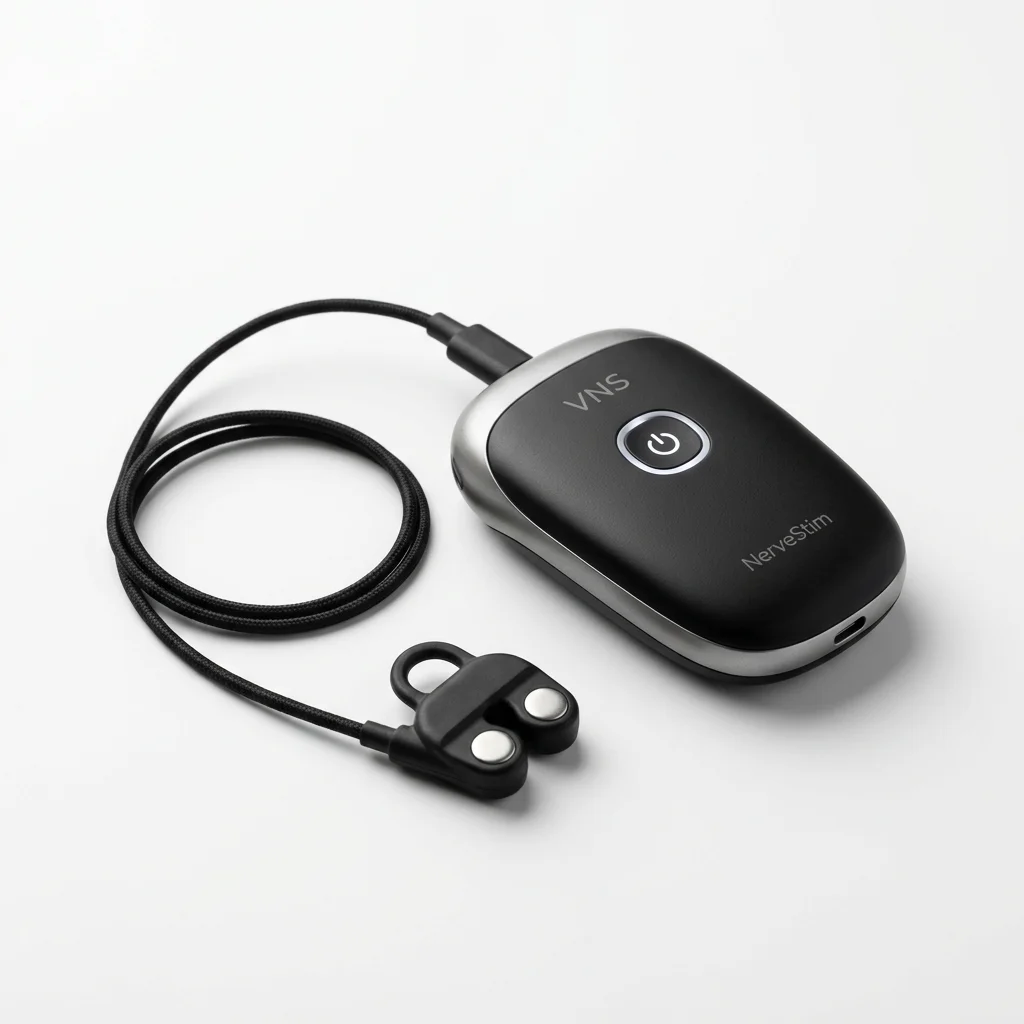
Nuropod
Clinical-grade vagus nerve stimulator using Auricular Vagal Neuromodulation Therapy (AVNT). Ear-clip design, no gels, 15-30 min daily sessions. Backed by 50+ peer-reviewed studies.
Our Verdict
The most evidence-backed consumer vagus nerve stimulator. Gel-free ear-clip design, 50+ peer-reviewed studies, and genuine cortisol-lowering mechanism. Premium price, but the research justifies it for stress management.
Last updated: May 2026
Affiliate Disclosure: BetterVitals may earn a commission from purchases made through links in this article, at no additional cost to you. This supports our independent research and analysis. We only recommend products we believe in after thorough evaluation.
Pros
- Strongest clinical evidence of any consumer VNS device (50+ peer-reviewed studies)
- Gel-free ear-clip design — no mess, no cleanup, no consumables
- Direct cortisol reduction mechanism backed by 2025 research
- Comfortable enough to wear during work, walks, or daily activities
- No subscription required — one-time purchase with lifetime app access
Cons
- Premium price at $900 — significantly more expensive than competitors
- Benefits take 2-4 weeks of daily use to fully manifest
- Limited to ear-based stimulation (some users prefer neck or wrist placement)
- Not FDA-cleared as a medical device (classified as general wellness)
- Earpiece electrodes need replacement every 6 months (~$50)
Best For
- People with chronic stress or anxiety who want a non-pharmaceutical intervention
- Biohackers and longevity enthusiasts already tracking HRV
- Those who have tried breathwork and meditation but want additional nervous system support
- Users who prefer gel-free, low-maintenance daily devices
- People interested in the Bryan Johnson longevity protocol
Not Ideal For
- Budget-conscious buyers — $900 is 3x the price of competing devices
- Anyone with a pacemaker, implanted electronic device, or epilepsy
- People looking for instant dramatic results (benefits build over 2-4 weeks)
- Those who are uncomfortable with electrical stimulation near the ear
In-Depth Review
How It Works
The Nuropod is a transcutaneous auricular vagus nerve stimulation (taVNS) device developed by Parasym Scientific. It delivers precisely calibrated electrical impulses through a comfortable ear clip that targets the auricular branch of the vagus nerve — the only branch accessible from outside the body.
The technology is called Auricular Vagal Neuromodulation Therapy (AVNT). When the earpiece stimulates the vagus nerve, it activates the parasympathetic nervous system — the "rest and digest" branch that opposes the fight-or-flight response. This has downstream effects on heart rate variability (HRV), inflammatory markers, cortisol release, and subjective stress levels.
How a session works
You clip the electrode onto the tragus of your ear, select a stimulation program through the Nuropod app, and adjust intensity to a comfortable level. Sessions run 15-30 minutes. Most people use it during work, walks, or while reading — the device is small enough to forget you're wearing it.
Unlike competing neck-mounted devices (Pulsetto, gammaCore), the Nuropod requires no conductive gel and leaves no residue. This is a meaningful quality-of-life advantage for daily use.
The science behind vagus nerve stimulation
The vagus nerve is the longest cranial nerve, running from the brainstem to the abdomen. It regulates heart rate, digestion, immune response, and the HPA axis (your cortisol stress response). When you stimulate the vagus nerve, you essentially tell your brain to shift from sympathetic (stress) dominance toward parasympathetic (recovery) dominance.
A 2025 study in Physiological Reports demonstrated that taVNS acutely inhibits the cortisol response to mental stress — providing direct evidence for the mechanism that users report feeling.
Our Research Findings
Nuropod gained mainstream visibility after appearing in Bryan Johnson's Netflix documentary "Don't Die," but the underlying technology has a longer pedigree. Parasym has been developing vagus nerve stimulation devices for clinical use since 2014, and the research program includes collaborations with Harvard, UCLA, and the University of Chicago.
Scientific validation is Nuropod's strongest asset. The company cites 50+ independent, peer-reviewed, placebo-controlled studies evaluating their AVNT technology across conditions including stress, inflammation, heart failure, and COVID-19 long-haul symptoms. This is substantially more evidence than any competing consumer VNS device.
User experience is consistently positive on Trustpilot (4.3 stars). Most users report feeling calmer within the first few sessions, though some require 2-4 weeks of consistent daily use before noticing sustained changes. The most common feedback is improved sleep quality and reduced background anxiety.
The main drawback is price. At $900, Nuropod costs 3x more than Pulsetto and Apollo Neuro. The premium is justified by stronger clinical evidence and gel-free design, but it's a significant investment for a device that delivers subjective wellness benefits.
Value Analysis
At $900 with no subscription, the cost per day over 2 years of daily use works out to roughly $1.23/day. Compare that to:
- A therapist session: $150-300/visit
- Ashwagandha supplementation: ~$0.50-1.00/day
- A meditation app subscription: ~$0.40/day
The question is whether the neurological mechanism (direct vagus nerve stimulation) delivers meaningfully more cortisol reduction than behavioral interventions alone. The evidence says yes for acute stress, but long-term data on chronic cortisol management is still emerging.
Interested in Nuropod?
Check the latest pricing and availability from the official store.
View Best PriceThe Bottom Line
Nuropod is the most evidence-backed consumer vagus nerve stimulator available. The gel-free ear-clip design makes daily use genuinely friction-free, and the research behind AVNT is more robust than any competitor. The $900 price is the main barrier — but for people who've tried meditation, breathwork, and supplements without sufficient relief, Nuropod adds a direct neurological intervention that those approaches can't replicate.
Research & Evidence
Featured Expert
"Vagus nerve stimulation is part of my daily protocol. The data on HRV improvement and stress regulation is compelling enough to include alongside sleep optimization and exercise."
Bryan Johnson
Founder of Blueprint protocol, featured in Netflix "Don't Die"
Don't Die (Netflix documentary)
Disclosure: Bryan Johnson has no disclosed financial relationship with Nuropod/Parasym
Transcutaneous auricular vagus nerve stimulation inhibits mental stress-induced cortisol release
Physiological Reports
taVNS acutely inhibited the salivary cortisol response to mental stress. In a case study, daily use for 3 months reduced diurnal cortisol by approximately 40%.
View on PubMedEffect of transcutaneous auricular vagus nerve stimulation on stress regulation
Frontiers in Digital Health
taVNS improved EEG markers of stress regulation and reduced self-reported stress levels compared to sham stimulation in healthy adults.
View on PubMedEffects of transcutaneous vagus nerve stimulation on cortisol, anxiety, and depression subtypes
Applied Psychophysiology and Biofeedback
tVNS significantly reduced cortisol levels and anxiety symptoms in non-clinical adults. Effects were enhanced when combined with neurofeedback.
View on PubMedFrequently Asked Questions
Common questions about this topic
Ready to try Nuropod?
See the latest pricing and availability.
View Best PriceAffiliate link - we may earn a commission
Compare Nuropod
See how Nuropod stacks up against the competition
Related Products
Links may be affiliate links