Eli Health Hormometer vs DUTCH Test: Which Cortisol Test Should You Choose in 2026?
Key Takeaway
If you've been looking into cortisol testing, you've probably bumped into the same two names over and over. The DUTCH test is the depth-and-detail option that practitioners have been ordering for years — a comprehensive dried-urine panel that maps not just your cortisol levels but how your body
Affiliate Disclosure: BetterVitals may earn a commission from purchases made through links in this article, at no additional cost to you. This supports our independent research and analysis. We only recommend products we believe in after thorough evaluation.
Medical Disclaimer
This article is for educational purposes only and is not a substitute for professional medical advice, diagnosis, or treatment. Always consult your healthcare provider before making health decisions.
Eli Health Hormometer vs DUTCH Test: Which Cortisol Test Should You Choose in 2026?
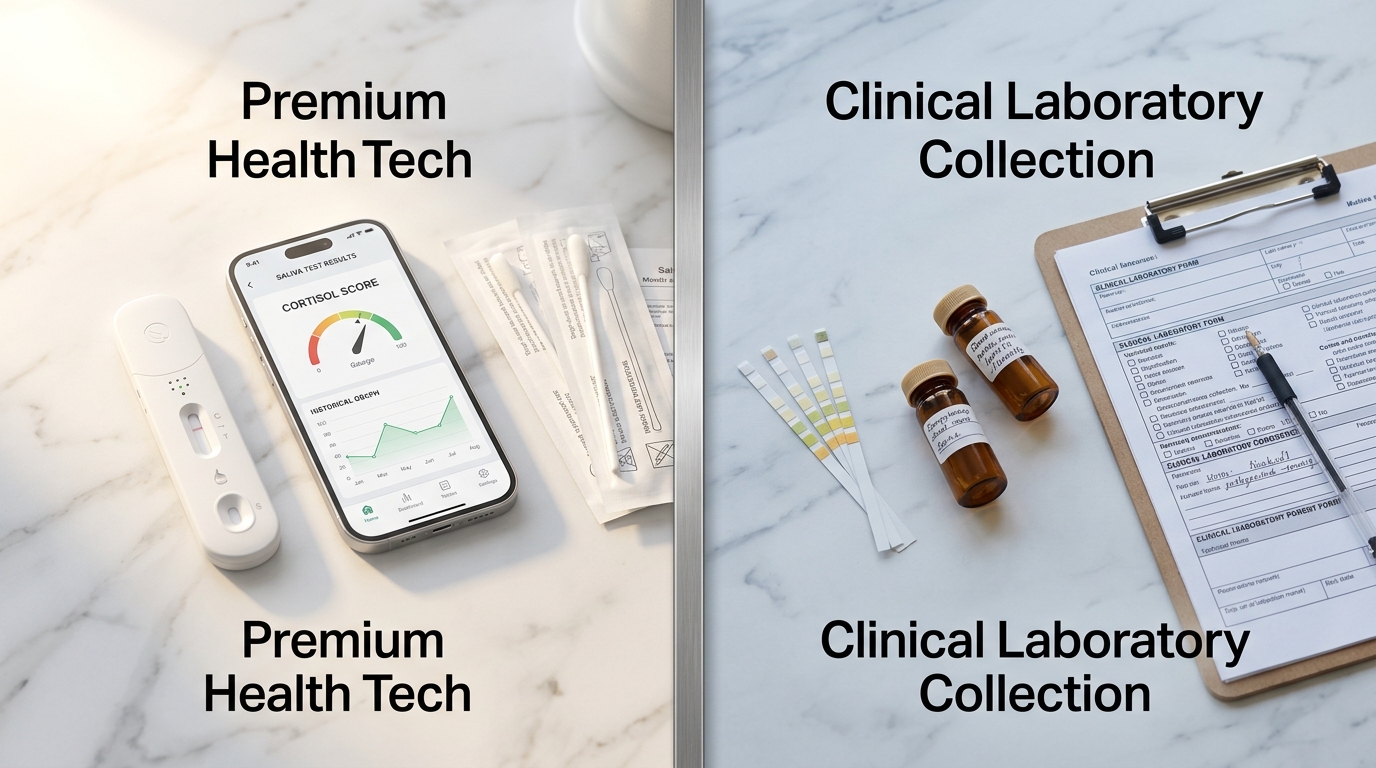
If you've been looking into cortisol testing, you've probably bumped into the same two names over and over. The DUTCH test is the depth-and-detail option that practitioners have been ordering for years — a comprehensive dried-urine panel that maps not just your cortisol levels but how your body metabolizes them. The Eli Health Hormometer is the new arrival: a 60-second saliva test you read with your phone, designed for ongoing tracking rather than a one-time deep-dive.
The honest truth is that they answer different questions, and the right choice depends on whether you want a hormonal X-ray or a daily heart rate monitor. We'll get into the specifics, but here's the short version up front.
Quick answer: Choose the DUTCH test if you need a one-time comprehensive picture of your hormones, including cortisol metabolism and full sex hormone panels — it's the gold standard for diagnostic context and clinical workups. Choose the Eli Health Hormometer if you want frequent, affordable cortisol readings to track how your body responds to stress, sleep, breathwork, or supplements over time. They're complementary, not competitive. Most serious users end up using both: DUTCH once to understand their baseline, the Hormometer continuously to track what's actually changing.
Disclosure: BetterVitals may earn a commission if you purchase through our links. This does not influence our editorial ratings or recommendations. We are not affiliated with Precision Analytical (DUTCH), and our Hormometer assessment is based on publicly available research and early user reports.
At a Glance: Eli Health Hormometer vs DUTCH Test
| Factor | Eli Health Hormometer | DUTCH Test (Complete / Plus) |
|---|---|---|
| Sample type | Saliva (single sample per reading) | Dried urine (4–5 samples over 24 hrs); DUTCH Plus adds saliva for CAR |
| Where it happens | At home, anytime | At home collection, mailed to lab |
| Turnaround | Minutes (on your phone) | 2–3 weeks after lab receives samples |
| What it measures | Salivary cortisol (testosterone + progesterone on roadmap) | Free cortisol pattern, cortisol metabolites, cortisone, DHEA, full sex hormone panel, melatonin, organic acids (DUTCH Plus) |
| Hormone metabolism data | No | Yes — shows whether you're a fast or slow cortisol metabolizer |
| Cost per data point | ~$8 per test | ~$80–$100 per data point (4–5 collections in one panel) |
| Total panel cost | $32/mo subscription | ~$300–$500 one-time (Complete or Plus) |
| Practitioner needed? | No | Usually yes — most DUTCH tests are practitioner-ordered, though some direct-to-consumer providers exist |
| Regulatory status | Wellness device (not FDA-cleared for diagnosis) | Clinical lab test (CLIA-certified lab) |
| Best for | Ongoing trend tracking, intervention validation | One-time diagnostic context, full hormone workup |
| Worst for | Comprehensive hormone diagnosis, metabolism analysis | Continuous monitoring, A/B-testing interventions |
That table covers the headline differences, but the practical implications are what actually matter. Let's get into how each test works and where each one earns its place.
What Is the DUTCH Test?
DUTCH stands for Dried Urine Test for Comprehensive Hormones. It's run by Precision Analytical, a CLIA-certified lab in Oregon, and has become the default panel that functional medicine doctors, naturopaths, and integrative practitioners order when they want a complete picture of a patient's hormone status.
The collection process involves saturating filter paper strips with urine four to five times over a 24-hour period — typically waking, mid-morning, evening, and bedtime. The dried strips get mailed to the lab. Two to three weeks later, you receive a detailed report covering far more than just cortisol.
A standard DUTCH Complete panel measures:
- Free cortisol pattern across the day (so you see your diurnal curve)
- Cortisone (the inactive form, important for understanding cortisol clearance)
- Cortisol metabolites (5α-tetrahydrocortisol, 5β-tetrahydrocortisol) which reveal whether your body is breaking down cortisol quickly or slowly
- Full sex hormone panel: estrogen metabolites (including 2-OH, 4-OH, 16-OH estrogens that matter for cancer risk research), progesterone, testosterone, androgens
- DHEA and DHEA-S (adrenal reserve markers)
- Melatonin (sleep regulation)
The upgraded DUTCH Plus adds saliva collection for the cortisol awakening response (CAR) and organic acids — markers for neurotransmitter precursors, gut dysbiosis, and B-vitamin status. CAR is the spike in cortisol that happens within 30–45 minutes of waking, and it's clinically meaningful: a blunted CAR is associated with burnout and chronic fatigue, while an exaggerated one shows up in anxiety states.
The strength of DUTCH isn't just the volume of biomarkers. It's that you can see your cortisol metabolism rate. Two people with identical total cortisol can have very different stories — one is producing a lot and clearing it fast, the other is producing less but clearing it slowly. Standard salivary cortisol tests can't tell you which one you are. DUTCH can.
The catch: it's expensive (typically $300–$500 depending on provider and panel), it requires a practitioner to interpret (the report is dense and clinical), and it gives you one snapshot. If you change something — start meditating, drop caffeine, try ashwagandha — you'd need to pay for another $400 panel to see what happened.
What Is the Eli Health Hormometer?
The Eli Health Hormometer debuted at CES 2026 as the first instant at-home cortisol monitor for consumer use. We've covered it in depth in our full Hormometer review, but here's the relevant summary for this comparison.
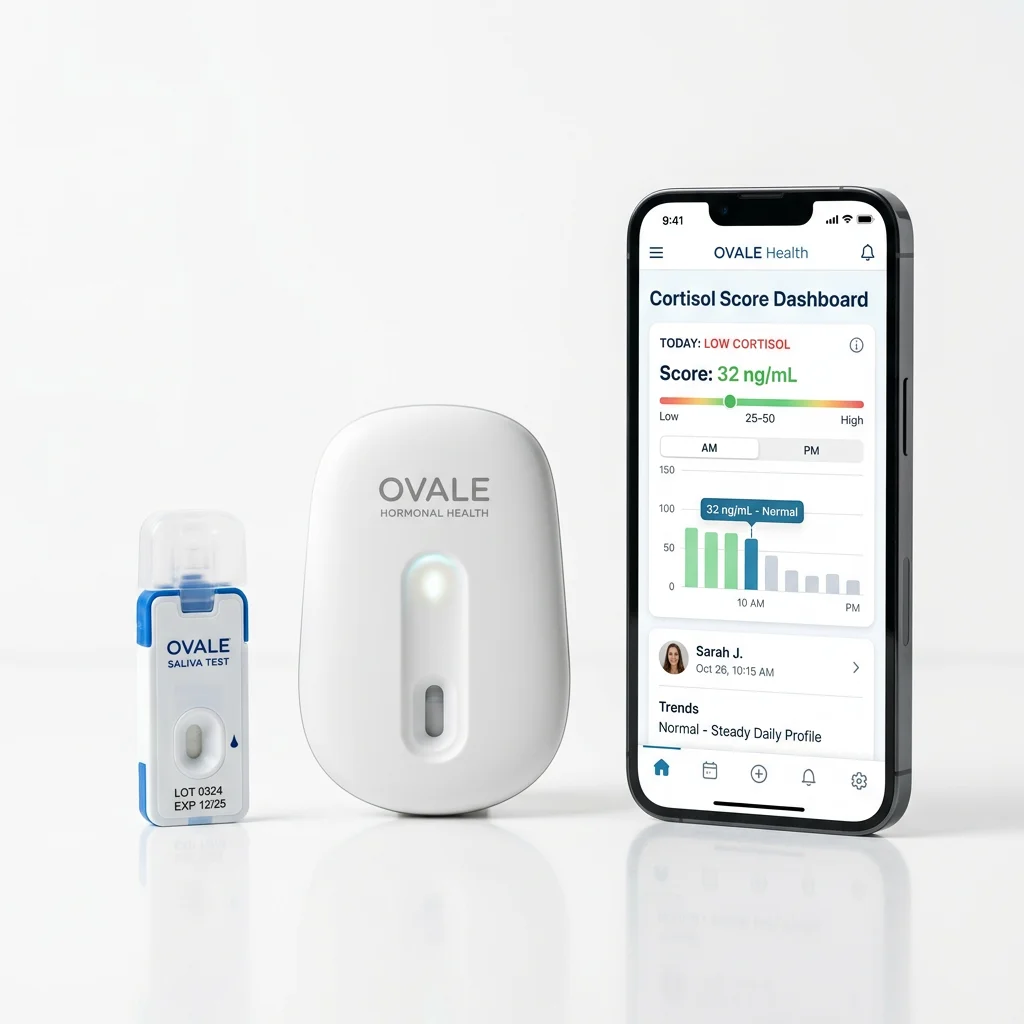
You place a saliva sample on a single-use cartridge, scan the cartridge with your phone, and the Eli Health app converts the result into a cortisol reading and a 0-to-100 score adjusted for the time of day. The technology is a saliva-based lateral flow immunoassay — the same fundamental method behind rapid COVID tests, calibrated for cortisol detection. Total time from spit to result: roughly 60 seconds.
What you don't get: cortisol metabolites, sex hormones, melatonin, DHEA, or any of the metabolism markers DUTCH provides. The Hormometer measures one thing — salivary cortisol at a single moment in time — and it does that one thing fast, frequently, and cheaply.
What you do get: the ability to test as many times as you want for about $8 per cartridge. That changes the entire game. Want to see if your morning cortisol awakening response strengthened after a month of cold plunging? Test it. Want to know if a stressful Zoom meeting actually moved your cortisol, or if you just felt anxious? Test before and after. Want to see whether ashwagandha is doing anything? Run a 30-day baseline-then-trial.
DUTCH gives you a hormone X-ray once. The Hormometer gives you a cortisol heart-rate monitor every day.
Accuracy and Methodology
Both tests are credible, but they measure different things and have different precision profiles.
DUTCH measures urinary metabolites using LC-MS/MS (liquid chromatography mass spectrometry), the same technology used in clinical reference labs. The panel has been validated in peer-reviewed research and is widely cited in functional medicine literature. Accuracy is high, and the practitioner-ordered context means results come with clinical interpretation.
Eli Health reports a 97% correlation with the FDA-approved ELISA method for salivary cortisol — that's the gold standard for measuring cortisol in saliva. The figure comes from third-party validation studies, and early user comparisons with established lab panels like ZRT have shown consistent pattern agreement at the trend level. Individual readings carry inherent variability (saliva cortisol is intrinsically noisier than urinary metabolites), so the device shines in trend tracking rather than diagnosing isolated readings.
The honest caveat: the Hormometer is classified as a wellness device, not a medical diagnostic. It's not FDA-cleared to diagnose Cushing's, Addison's, or any other clinical cortisol disorder. DUTCH, by contrast, is run by a CLIA-certified clinical lab and is appropriate to use in a diagnostic workup with a qualified practitioner.
Browse All Products
Explore our evidence-based product reviews across every health category.
Cost: The Per-Data-Point Math
This is where the two tests look most different. We'll do the math.
DUTCH Complete: ~$300–$450 for 4–5 collections. That's roughly $80–$100 per data point. If you want to repeat after an intervention, you're spending another $300–$450.
Eli Health Hormometer: $32/month for 4 tests = $8 per data point. The 3-month plan brings it to about $8.25 per test with 8 tests per month. There's also a starter pack of 8 tests for ~$66 if you want to try before subscribing.
The cost differential is roughly 10x in favor of the Hormometer per data point. But this comparison is misleading without context — those are different kinds of data points. A single DUTCH data point includes free cortisol, cortisone, three metabolites, and contextual hormones from the same sample. A single Hormometer data point is total salivary cortisol at one moment in time.
The right way to think about it: DUTCH is paying for breadth, Hormometer is paying for frequency. If you only need one comprehensive look, DUTCH is cost-effective. If you need 30 cortisol readings to map your diurnal curve before and after an intervention, the Hormometer is cost-effective. They're not interchangeable.
Who Should Buy the DUTCH Test
DUTCH earns its price for specific situations where breadth and clinical context matter more than frequency:
- You suspect a clinical hormone issue. Persistent fatigue, libido changes, irregular cycles, suspected adrenal dysfunction, peri/menopause symptoms, or unexplained weight changes warrant the full panel.
- You're working with a practitioner. Functional medicine doctors, naturopaths, and integrative MDs are trained to read DUTCH reports and translate them into treatment plans.
- You need to know your cortisol metabolism rate. Fast metabolizers and slow metabolizers respond very differently to interventions, and only DUTCH (or similar metabolite panels) can tell you which one you are.
- You want a comprehensive sex hormone picture. DUTCH's estrogen metabolite panel and progesterone/testosterone breakdown is genuinely useful for hormone optimization and cancer-risk research, especially for women in their 30s and 40s.
- You're investigating one specific question, once. A single deep panel beats months of partial data.
Who Should Buy the Eli Health Hormometer
The Hormometer is the right tool when frequency and feedback loops are what you need:
- You're A/B-testing interventions. Did the meditation app actually move your cortisol? Did the new sleep schedule strengthen your morning cortisol awakening response? You can't answer those questions with a once-a-year DUTCH panel. You can answer them with 30 Hormometer readings.
- You're tracking trends after a known diagnosis. If DUTCH already told you that you have a flat curve, you don't need to keep running $400 panels to monitor whether your interventions are working. Track it daily with Hormometer at 1/10th the cost per data point.
- You're correlating cortisol with wearable data. The Eli Health app integrates with Apple Watch and Oura Ring data, so you can map cortisol readings against HRV, sleep stages, and resting heart rate. That correlation work is impossible with a one-time DUTCH panel.
- You're cost-sensitive but cortisol-curious. If you'd never spend $400 on a DUTCH panel but you'd happily spend $32 a month to actually see what's happening, the Hormometer is the only product in this category that fits.
- You're combining cortisol tracking with vagus nerve stimulation, breathwork, or other stress interventions. Pairing measurement with management is what turns a hopeful guess into a verified result.
The Combined Stack: Use Both
For serious users, the highest-leverage approach isn't picking one — it's sequencing both.
- Run a DUTCH Complete once. Get the full picture. Understand your cortisol metabolism rate, your sex hormone status, your DHEA, your melatonin. Sit with a practitioner and interpret the report.
- Identify the lever you want to move. Maybe your morning cortisol awakening response is blunted. Maybe your evening cortisol isn't dropping. Maybe you're a slow metabolizer and chronic stress is hitting you harder than the population average.
- Use the Hormometer to track changes continuously. Now you know what to watch for, and you have a $8-per-test tool to actually watch it. Run baseline-then-intervention experiments. See what works.
- Optionally retest with DUTCH every 6–12 months. For the metabolism and sex hormone data only DUTCH can provide.
That's the stack we'd recommend for anyone serious about understanding their hormone picture. DUTCH for the diagnosis, Hormometer for the day-to-day.
Get smarter about health tech
Deal alerts, new reviews, and health tips — delivered weekly. No spam.
Unsubscribe anytime. We respect your inbox.
Our Recommendation
If you only have budget or attention for one of these tests right now, here's how we'd choose:
- Pick DUTCH if you have an unanswered clinical question. Fatigue, hormonal symptoms, or anything that warrants practitioner involvement is what DUTCH is for. It's also the right call if you've never had a comprehensive hormone panel and want the picture.
- Pick the Eli Health Hormometer if you already have a baseline understanding and want to start tracking. It's also the better entry point if you're cortisol-curious but not ready to spend $400 or coordinate with a practitioner.
Both products earn their place in the cortisol-testing landscape. They're not really competitors — they're complementary tools answering different questions. The Hormometer didn't exist a year ago, and its arrival changes what's possible for cortisol tracking. DUTCH didn't get worse because of it; it's still the depth standard. But if you want the optimization layer that DUTCH alone can't provide, the Hormometer fills that gap better than anything else on the market.
View Eli Health Hormometer details → · Read our full Hormometer review →
Frequently Asked Questions
Is the Eli Health Hormometer as accurate as DUTCH?
For salivary cortisol specifically, the Hormometer reports a 97% correlation with the FDA-approved ELISA gold standard, which is excellent for a consumer device. However, DUTCH measures urinary metabolites using LC-MS/MS mass spectrometry, which is a fundamentally different (and broader) measurement. The two tests aren't directly comparable on accuracy — they measure different things. Hormometer is highly accurate at what it does (salivary cortisol at a moment in time); DUTCH is highly accurate at what it does (a 24-hour urinary hormone panel with metabolism markers).
Can the Hormometer replace a DUTCH test?
Not for diagnostic purposes. DUTCH gives you cortisol metabolites, sex hormones, melatonin, and organic acid markers that the Hormometer doesn't measure at all. If you need a comprehensive hormone workup or have a clinical concern, you need DUTCH (or a similar lab panel). The Hormometer is better for ongoing trend tracking once you already know what to watch for.
Is the DUTCH test worth the money?
If you have unresolved hormonal symptoms (fatigue, libido changes, peri/menopause, suspected adrenal dysfunction), or you're working with a practitioner who will interpret the results, yes. A $400 panel that resolves a year of guesswork is good value. If you're symptom-free and just curious about cortisol patterns, it's overkill — the Hormometer covers that use case for a fraction of the cost.
Can I buy the DUTCH test without a doctor?
In most cases, DUTCH is practitioner-ordered, but a growing number of direct-to-consumer providers and telehealth services now offer DUTCH panels without requiring an in-person doctor visit. You'll still need someone to interpret the results — the report is clinical and dense. The Hormometer, by contrast, is consumer-direct and doesn't require any practitioner involvement.
How often should I test cortisol with the Hormometer?
For baseline mapping, we recommend testing 4 times per day (waking, mid-morning, mid-afternoon, before bed) for at least 3–5 days. After that, most users settle into 2–4 strategic tests per week — typically before and after meaningful interventions like new sleep schedules, breathwork sessions, or supplement trials. The whole point of the Hormometer is testing as often as your question requires.
What about lab saliva panels like ZRT?
ZRT Laboratory's 4-point salivary cortisol panel is another respected option that sits between DUTCH and the Hormometer in depth. ZRT costs roughly $100–$200, gives you 4 cortisol data points over a single day, and turns around in about a week. It's a reasonable middle-ground option if you want a clinical-grade snapshot of your diurnal curve without DUTCH's full hormone breadth. Early Hormometer users have reported that their results "match pretty well" with ZRT panels at the trend level.
Do I need both?
If you're serious about understanding and optimizing your cortisol patterns, yes — and we recommend sequencing them. Run DUTCH once for the comprehensive picture, then use the Hormometer continuously to track changes. The combined cost is less than two DUTCH panels in a year, and the data you get is much richer than either test alone provides.
Related Reading
Featured Products
Products mentioned in this article
Related Guides
More articles you might find helpful
Wonderfeel Youngr vs NOVOS Boost (2026): Which NMN Wins?
*Updated July 2026*
Most Accurate CGM in 2026: MARD Scores Compared (Every Sensor)
*Updated July 2026*
Dexcom Stelo vs Abbott Lingo (2026): Accuracy, Price, App Compared
*Updated July 2026*

Written by
Steve Luu
Health tech researcher