Creatine for Women: Benefits, Dosage & Best Picks in 2026
Key Takeaway
Creatine has been the "gym bro" supplement for the better part of three decades. Walk into any supplement store and you'll find it sandwiched between pre-workouts with lightning bolt logos and protein powders marketed with bicep imagery. The branding has done creatine a massive disservice — because
Affiliate Disclosure: BetterVitals may earn a commission from purchases made through links in this article, at no additional cost to you. This supports our independent research and analysis. We only recommend products we believe in after thorough evaluation.
Medical Disclaimer
This article is for educational purposes only and is not a substitute for professional medical advice, diagnosis, or treatment. Always consult your healthcare provider before making health decisions.
Creatine for Women: Benefits, Dosage & Best Picks in 2026
Creatine has been the "gym bro" supplement for the better part of three decades. Walk into any supplement store and you'll find it sandwiched between pre-workouts with lightning bolt logos and protein powders marketed with bicep imagery. The branding has done creatine a massive disservice — because the actual science tells a completely different story.
Here's what that story looks like in 2026: creatine is one of the most extensively researched supplements in existence, with over 500 peer-reviewed studies. And a growing body of that research focuses specifically on women — showing benefits that go far beyond the weight room. We're talking brain health, bone density, mood regulation, and meaningful support during perimenopause and menopause. Yet most women have never considered taking it, largely because the marketing never spoke to them.
That changes now. Let's walk through what creatine actually does, why female physiology makes it arguably more important for women than men, and how to choose the right product without overpaying for pink packaging.
Why Women Should Seriously Consider Creatine
To understand why creatine matters for women specifically, you need to understand a basic physiological asymmetry: women naturally produce and store less creatine than men.
Your body makes creatine endogenously — primarily in the liver and kidneys — and you also get it from dietary sources like red meat and fish. But women tend to have 70-80% of the creatine stores that men do, partly due to lower muscle mass and partly due to hormonal differences. If you eat a plant-based or plant-forward diet (as many women do), your baseline stores are even lower, since creatine is found almost exclusively in animal products.
This matters because creatine isn't just a muscle fuel. It's a fundamental energy currency. Creatine donates a phosphate group to regenerate ATP — the molecule your cells use for basically everything. Your muscles need it for contraction. Your brain needs it for cognition. Your bones need it for maintaining density. When your stores are low, all of those systems operate with less energy available.
There's also the hormonal cycle factor. Estrogen and progesterone fluctuations across the menstrual cycle affect energy metabolism, muscle protein synthesis, and even brain function. Research suggests that creatine supplementation may help buffer some of these fluctuations — providing a more stable energy substrate regardless of where you are in your cycle. A 2021 review in Nutrients by Smith-Ryan et al. specifically highlighted that women may be "more responsive" to creatine supplementation than previously assumed, precisely because their baseline levels are lower.
In short: if you're a woman, you likely have more to gain from creatine than the average man. The irony of its male-dominated marketing couldn't be sharper.
Research-Backed Benefits for Women
Strength and Body Composition
Let's start with what most people associate with creatine — and then reframe it. Yes, creatine helps you get stronger. But "stronger" for most women doesn't mean bulking up like a bodybuilder. It means being able to carry your groceries without strain, maintain functional independence as you age, and preserve the lean muscle mass that your metabolism depends on.
A 2023 meta-analysis by Forbes et al. in Sports Medicine found that creatine supplementation combined with resistance training significantly increased lean body mass and upper- and lower-body strength in women. Crucially, the gains were in lean tissue — not bulk. Women don't have the testosterone levels to put on the kind of mass that men do, and creatine doesn't change that equation.
Smith-Ryan et al. demonstrated in multiple studies that women supplementing with creatine during resistance training improved body composition — gaining lean mass while reducing body fat percentage — more effectively than training alone. The effect sizes were modest but consistent, and importantly, none of the studies reported significant water retention or bloating at standard doses.
If you're already strength training (and if you care about longevity, you should be), creatine makes every rep count a little more.
Brain Health and Cognitive Function
This is where the research gets genuinely exciting — and where most women have never heard the pitch.
Your brain is one of the most metabolically demanding organs in your body. It represents about 2% of your body weight but consumes roughly 20% of your daily energy. And it relies heavily on the creatine-phosphocreatine system to maintain that energy supply.
A landmark study by Rae et al., published in Proceedings of the Royal Society B in 2003, demonstrated that creatine supplementation (5g daily for six weeks) significantly improved working memory and processing speed in healthy adults. The effects were most pronounced during cognitively demanding tasks — exactly the kind of tasks that feel harder when you're sleep-deprived, stressed, or in the luteal phase of your cycle.
More recent research has explored creatine's neuroprotective properties. A 2022 review in Experimental Gerontology suggested that creatine supplementation could help mitigate age-related cognitive decline, with particular relevance for women given their higher rates of Alzheimer's disease and dementia. The mechanism isn't fully mapped, but it likely involves creatine's role in maintaining mitochondrial function and reducing oxidative stress in neural tissue.
For women dealing with brain fog — whether from hormonal shifts, stress, sleep deprivation, or perimenopause — creatine represents a low-risk, evidence-backed intervention that most doctors aren't talking about yet.
Bone Density
Osteoporosis affects roughly 1 in 3 women over 50, compared to 1 in 5 men. It's one of the most significant and least-discussed health risks women face as they age. And while calcium and vitamin D get all the attention, creatine deserves a seat at that table.
A 2015 study by Chilibeck et al. in Medicine & Science in Sports & Exercise found that postmenopausal women who supplemented with creatine during a 12-month resistance training program had significantly better bone mineral density outcomes than those who trained with a placebo. The creatine group showed reduced bone loss at the hip — a critical fracture site.
The mechanism likely involves creatine's role in osteoblast (bone-building cell) energy metabolism. Building and maintaining bone is an energy-intensive process, and creatine provides the ATP substrate those cells need to function optimally. Combined with resistance training — which provides the mechanical loading signal — creatine appears to create a more favorable environment for bone preservation.
This isn't a magic bullet. You still need adequate calcium, vitamin D, and weight-bearing exercise. But creatine may be the missing piece that many women's bone health protocols are overlooking.
Mood and Mental Health
The connection between creatine and mental health is newer territory, but the early data is compelling enough to pay attention to.
A 2012 study by Lyoo et al. in The American Journal of Psychiatry found that women with major depressive disorder who added creatine to their SSRI regimen showed significantly faster and greater improvement in depression scores compared to SSRI plus placebo. The effect was notable — the creatine group responded roughly twice as fast.
Why? The leading hypothesis involves brain bioenergetics. Depression is increasingly understood not just as a neurotransmitter imbalance but as a state of impaired brain energy metabolism. Creatine, by supporting ATP regeneration in the brain, may help restore the energetic capacity that depressive states compromise.
There's also emerging (though still preliminary) research on creatine and postpartum mood disorders. Given that pregnancy depletes creatine stores and the postpartum period involves dramatic hormonal shifts alongside extreme sleep deprivation, the theoretical case for supplementation is strong. Clinical trials are underway, but we don't have definitive results yet.
This is not a substitute for professional mental health treatment. But it's a supplement with a favorable safety profile that may meaningfully support mood — and that's worth knowing about.
Perimenopause and Menopause Support
The menopausal transition is, metabolically speaking, a perfect storm. Declining estrogen leads to accelerated muscle loss (sarcopenia), reduced bone density, increased visceral fat, impaired glucose metabolism, and cognitive changes. Women can lose up to 10% of their muscle mass in the first five years after menopause if they don't actively intervene.
Creatine addresses multiple aspects of this simultaneously. By supporting muscle protein synthesis, it helps preserve lean mass. By enhancing osteoblast function, it supports bone density. By maintaining brain ATP levels, it may help with the cognitive fog that many women experience during the transition.
A 2023 narrative review in Nutrients specifically recommended creatine as a "nutritional strategy for women across the lifespan," highlighting its potential during perimenopause and menopause as a safe, low-cost intervention with multi-system benefits.
If you're a woman in your 40s or beyond, creatine combined with resistance training isn't optional wellness — it's foundational health maintenance. Pair it with the right supplement stack and you're covering a lot of bases.
Browse All Products
Explore our evidence-based product reviews across every health category.
Debunking Women-Specific Myths
Let's kill these quickly, because they've kept too many women away from a genuinely useful supplement for too long.
"Creatine will make me bulky." It won't. Creatine supports lean muscle growth, but women lack the hormonal profile (specifically the testosterone levels) to develop large, bulky muscles from supplementation alone. The women you see who are heavily muscled have trained specifically for hypertrophy for years, often with other interventions. At 3-5g daily, creatine will help you look more toned, not bigger.
"Creatine causes water retention and bloating." This one has a kernel of truth — but it's wildly overstated. Creatine does draw water into muscle cells (intracellular water retention), which is actually beneficial for muscle function. At the standard 3-5g daily dose, most women experience no noticeable bloating. The bloating stories come from the old "loading phase" protocol (20g/day for a week), which is unnecessary. Skip the loading phase, start at 3-5g, and this is a non-issue for the vast majority of women.
"Creatine is basically a steroid." Not even close. Creatine is a naturally occurring compound found in meat, fish, and your own body. It's produced by your liver and kidneys. It's not hormonal, it's not banned by any sports organization (it's explicitly permitted by WADA and the NCAA), and it has a safety profile that most supplements would envy. Calling creatine a steroid is like calling caffeine an amphetamine — they're not in the same universe.
"Women don't need creatine if they're not lifting heavy." Even if you never touch a barbell, your brain, bones, and mood still depend on ATP. Creatine supports all of those systems. The strength benefits are a bonus, not the whole story.
How to Take Creatine as a Woman
The good news: creatine is one of the simplest supplements to take. There's very little to overthink here.
Type: Creatine monohydrate. Full stop. It's the most researched form, the most cost-effective, and the most proven. Creatine HCL, buffered creatine, creatine ethyl ester — these are marketing innovations, not scientific ones. None have been shown to be superior to plain monohydrate in peer-reviewed research.
Dose: 3-5 grams per day. If you're under 140 lbs, 3g is likely sufficient. Over 140 lbs, go with 5g. There's no need for a loading phase — just take it consistently every day and your stores will be fully saturated within 3-4 weeks.
Timing: It genuinely doesn't matter much. Some research suggests a slight advantage to taking it post-workout (when muscle uptake is elevated), but the difference is marginal. The most important factor is consistency — take it at whatever time you'll actually remember. Many women add it to their morning coffee, smoothie, or water.
How to take it: Mix it in water, juice, or a smoothie. Creatine monohydrate is tasteless (or very mildly bitter). Warm liquids help it dissolve faster if clumping bothers you. Drink plenty of water throughout the day — not because creatine is dangerous for your kidneys (it isn't, at standard doses in healthy individuals), but because adequate hydration supports its uptake and function.
How long to take it: Indefinitely, if you're getting benefits. Creatine is not something you need to cycle on and off. Long-term safety data exists for continuous use spanning years, with no adverse effects in healthy populations.
Get smarter about health tech
Deal alerts, new reviews, and health tips — delivered weekly. No spam.
Unsubscribe anytime. We respect your inbox.
Best Creatine Supplements for Women
You don't need a "women's formula" to take creatine — you need a clean, well-tested creatine monohydrate. That said, some products stand out for quality, purity, and third-party testing. Here are our top picks.
Thorne Creatine — Best Overall
Thorne uses Creapure, the gold standard for creatine monohydrate purity. Manufactured in Germany with rigorous testing for heavy metals, solvents, and contaminants. NSF Certified for Sport, meaning it's been verified by an independent third party for label accuracy and banned substance screening. If you want one creatine and zero guesswork, this is it. 5g per serving, unflavored, mixes well.
Why we like it: Creapure sourcing, NSF certification, no fillers, trusted by medical professionals. Thorne's quality control is among the best in the industry.
Momentous Creatine — Best for Athletes
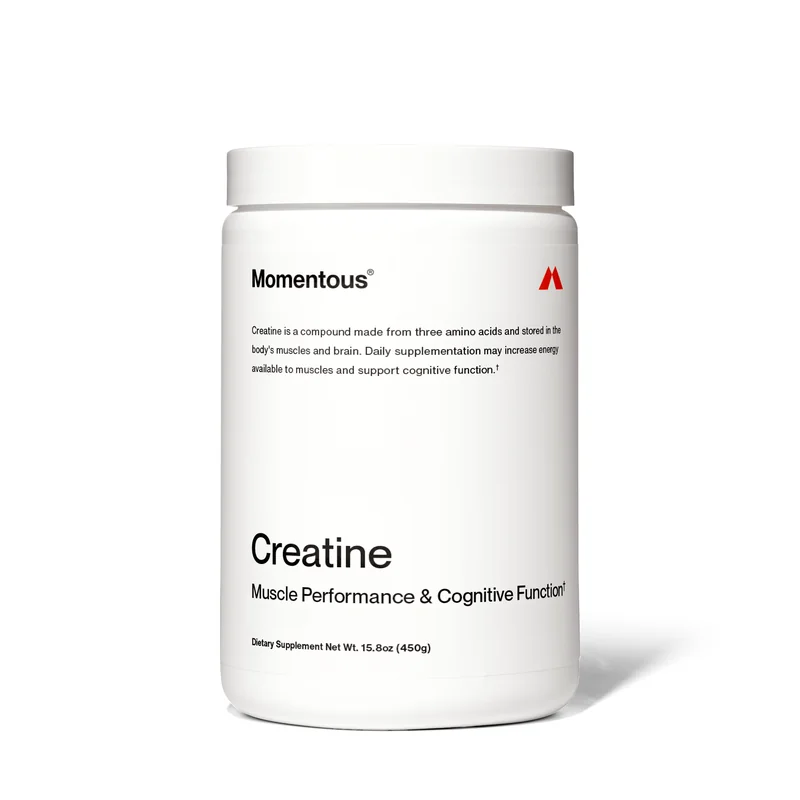
Momentous partners with researchers at Stanford and other institutions, and their creatine reflects that science-first ethos. Also uses Creapure monohydrate, NSF Certified for Sport. The brand is popular among professional athletes and Huberman Lab listeners, and for good reason — it's clean, effective, and well-dosed at 5g per serving.
Why we like it: Research partnerships, Creapure sourcing, strong reputation in the performance space. Slightly pricier than some alternatives, but the quality justifies it.
Naked Nutrition Creatine — Best Budget Pick
If you want creatine monohydrate and literally nothing else, Naked Creatine delivers. One ingredient: creatine monohydrate. No sweeteners, no flavors, no fillers, no colors. Third-party tested for heavy metals and purity. It's also one of the most cost-effective options on the market — you're paying for creatine, not branding.
Why we like it: Radical ingredient simplicity, excellent value, transparent third-party testing. The no-frills approach appeals to anyone who wants to know exactly what they're putting in their body.
Transparent Labs Creatine HMB — Best With Extras
Transparent Labs combines 5g of creatine monohydrate with HMB (beta-hydroxy beta-methylbutyrate) and vitamin D. HMB has modest evidence for supporting muscle retention, particularly during caloric deficits or periods of reduced training — making this a thoughtful formula for women focused on body composition. Available in several flavors if you prefer not to mix unflavored powder.
Why we like it: The creatine + HMB + vitamin D combination addresses multiple women's health priorities in one scoop. Third-party tested, no proprietary blends, and the flavored options actually taste good.
For a broader look at which creatine supplement is best overall, we've done a deeper comparison across more products and use cases.
FAQ
Will creatine make me gain weight?
You may see a 1-3 lb increase on the scale within the first few weeks, primarily from intracellular water retention in your muscles. This isn't fat gain — it's your muscles holding more water, which actually improves their function and appearance. After the initial saturation period, your weight should stabilize. Many women report looking leaner over time as they gain modest muscle and improve body composition, even if the scale number doesn't change dramatically.
Is creatine safe during pregnancy?
There isn't enough human clinical trial data to make a definitive recommendation for creatine supplementation during pregnancy. Some researchers, including those in a 2023 review in Nutrients, have hypothesized that creatine could support fetal brain development and placental function, and animal studies have been promising. However, no major health organization currently recommends it during pregnancy. Talk to your OB-GYN before starting or continuing creatine if you're pregnant or planning to become pregnant.
Can I take creatine on my period?
Absolutely. There's no reason to stop creatine during menstruation. In fact, the luteal and menstrual phases are when some women experience the most fatigue and brain fog — exactly when creatine's energy-supporting effects can be most helpful. Some women anecdotally report that consistent creatine use reduces the severity of cycle-related fatigue, though controlled studies specifically on this question are limited.
Does creatine damage your kidneys?
No — not at standard doses in healthy individuals. This myth comes from the fact that creatine is metabolized into creatinine, which is a marker doctors use to assess kidney function. Supplementing with creatine raises creatinine levels, which can look like kidney stress on a blood test if your doctor doesn't know you're supplementing. But elevated creatinine from creatine supplementation is not the same as elevated creatinine from kidney damage. Multiple long-term studies (including one spanning five years) have found no adverse kidney effects at 3-5g daily in people with healthy kidney function. If you have pre-existing kidney disease, consult your doctor first.
How long does it take for creatine to work?
At a consistent 3-5g daily dose (without a loading phase), your muscle creatine stores will reach full saturation in approximately 3-4 weeks. Some women notice improved workout performance within 1-2 weeks; cognitive and mood benefits may take longer to become apparent. The key is consistency — creatine works through gradual saturation, not acute effects. Taking it sporadically won't produce meaningful results.
Featured Products
Products mentioned in this article
Related Guides
More articles you might find helpful
Best Bed Cooling Systems 2026: Eight Sleep vs Cheaper Alternatives
**Disclosure:** Product CTAs on this page currently go to manufacturer sites (no affiliate tracking yet). Better Vitals may earn a commission once partner links are live — rankings and "skip if" calls won't change when we swap URLs. We only recommend gear we'd put on a shortlist for a specific type
Is the Oura Membership Worth It in 2026? (And How to Skip It)
*Updated July 2026*
Oura Ring Price in 2026: Every Model, Subscription & Real Total Cost
*Updated July 2026*

Written by
Steve Luu
Health tech researcher