Best Creatine Supplement 2026: Science-Backed Picks for Strength, Recovery & Brain Health
Key Takeaway
This is not medical advice. Consult your physician before starting any supplement.
Affiliate Disclosure: BetterVitals may earn a commission from purchases made through links in this article, at no additional cost to you. This supports our independent research and analysis. We only recommend products we believe in after thorough evaluation.
Medical Disclaimer
This article is for educational purposes only and is not a substitute for professional medical advice, diagnosis, or treatment. Always consult your healthcare provider before making health decisions.
Best Creatine Supplement 2026: Science-Backed Picks for Strength, Recovery & Brain Health
This is not medical advice. Consult your physician before starting any supplement.
Creatine is having a moment — and for once, the hype is actually justified. While social media wellness trends come and go (remember when everyone was drinking chlorophyll water?), creatine monohydrate has quietly become the single most validated sports supplement in existence. We're talking over 700 peer-reviewed studies spanning five decades. The International Society of Sports Nutrition called it "the most effective ergogenic nutritional supplement currently available" back in 2017, and nothing has changed that assessment.
What has changed in 2026 is the conversation around creatine. It's no longer just a bodybuilder's staple. Emerging research on cognitive performance, neuroprotection, and even depression has dragged creatine out of the weight room and into mainstream health discourse. Women are finally being included in studies (and discovering they may benefit even more than men in some contexts). And the supplement market has responded with dozens of new products — some excellent, some riding the trend with questionable formulations.
We spent weeks reviewing third-party test results, evaluating sourcing claims, and actually using these products to find the best creatine supplements worth your money. Here's what we found.
Why Creatine Is the Most Research-Backed Supplement
Let's start with the basics, because there's a lot of misinformation floating around.
Creatine is a naturally occurring compound found in muscle cells. Your body makes about 1-2 grams per day from the amino acids glycine, arginine, and methionine. You also get creatine from food — primarily red meat and fish (about 1-2g per pound of raw meat). When you supplement with creatine, you're increasing your body's stores of phosphocreatine, which serves as a rapid energy reserve for high-intensity activity.
The ATP-PCr System (Why Creatine Actually Works)
During short bursts of intense effort — a heavy deadlift, a sprint, a high jump — your muscles burn through ATP (adenosine triphosphate) faster than your body can regenerate it through aerobic metabolism. Phosphocreatine donates its phosphate group to regenerate ATP, buying you a few extra seconds of peak output. More stored creatine = more phosphocreatine = more capacity for high-intensity work.
This isn't theoretical. A 2003 meta-analysis by Branch in the Journal of Strength and Conditioning Research found that creatine supplementation improved strength performance by an average of 8% and power/sprint performance by 14% compared to placebo. A more recent 2022 meta-analysis by Forbes et al. in the Journal of the International Society of Sports Nutrition confirmed these effects across age groups and training levels.
Beyond Muscle: The Cognitive Connection
Here's where things get interesting for the non-gym crowd. Your brain is one of the most metabolically demanding organs in your body, consuming roughly 20% of your daily energy despite being only 2% of your body weight. And it relies on the same phosphocreatine system as your muscles.
A 2018 systematic review by Avgerinos et al. in Experimental Gerontology found that creatine supplementation improved short-term memory and reasoning in healthy individuals, with the strongest effects seen in stressed or sleep-deprived populations. A 2023 study published in Nutrients showed that 5g daily creatine supplementation for six weeks improved cognitive performance in vegetarians and vegans — populations with naturally lower creatine stores since they don't consume meat.
The neuroprotection angle is earlier-stage but compelling. Animal models suggest creatine may have protective effects in traumatic brain injury and neurodegenerative diseases, and several human trials are underway. We're not at the "take creatine to prevent Alzheimer's" stage yet, but the mechanistic rationale is sound.
For broader context on evidence-backed supplements, see our guide to the best longevity supplements.
What to Look for in a Creatine Supplement
Not all creatine products are equivalent, despite what the "it's all the same molecule" crowd will tell you. The molecule may be the same, but purity, testing, and formulation quality vary enormously.
Form: Monohydrate Wins (Again)
The supplement industry loves reinvention. Creatine HCl, buffered creatine (Kre-Alkalyn), creatine ethyl ester, creatine magnesium chelate — all have been marketed as "superior" to plain creatine monohydrate. None have proven to be in head-to-head studies.
A 2021 study by Antonio et al. compared creatine HCl to creatine monohydrate and found no significant differences in muscle creatine uptake at equivalent doses. Kre-Alkalyn was debunked as far back as 2012 when Jagim et al. published a study in the Journal of the International Society of Sports Nutrition showing it offered zero advantage over monohydrate.
Creatine monohydrate is the gold standard. It has the most research, the best safety profile, and it's the cheapest option. Every product in our list below uses monohydrate as its base.
Third-Party Testing: Non-Negotiable
Creatine is generally a low-risk supplement, but contamination is a real concern in the broader supplement industry. The FDA doesn't approve supplements before they hit shelves, which means you're trusting the manufacturer to do their own quality control.
Look for one or more of these certifications:
- NSF Certified for Sport — The highest standard. Tests for banned substances, label accuracy, and GMP compliance. Required by NFL, MLB, and many college athletic programs
- Informed Sport — Independent batch testing for WADA-banned substances. Common in the UK and increasingly adopted in the US
- Creapure — Not a certification per se, but a specific brand of creatine monohydrate manufactured by AlzChem in Germany. Produced via chemical synthesis (not from animal byproducts), tested for impurities like dicyandiamide and dihydrotriazine. Many premium brands use Creapure as their raw material
Dosing
The effective dose is well-established: 3-5 grams per day. That's it. More on loading protocols and timing below, but if a product is giving you less than 3g per serving or burying creatine inside a proprietary blend where you can't verify the dose, walk away.
Best Creatine Supplements of 2026
After evaluating dozens of products on formulation, third-party testing, price per serving, and real-world usability, these are our top picks.
1. Thorne Creatine — Best Overall
Why it stands out: Thorne is one of the few supplement companies that operates under pharmaceutical-grade manufacturing standards. Their creatine uses Creapure monohydrate and carries NSF Certified for Sport certification — the gold standard for purity and label accuracy. Each batch is tested for over 200 banned substances.
What we like:
- Creapure sourced creatine monohydrate (99.9%+ purity)
- NSF Certified for Sport
- Unflavored, mixes cleanly with no grittiness
- 5g per scoop — no guessing on dosing
- Trusted by professional sports teams and Olympic athletes
What could be better:
- Premium price (~$0.80-1.00/serving) — you're paying for the testing and quality assurance
- Only available unflavored (some people prefer flavored options)
Best for: Anyone who wants the highest-confidence purity guarantee. Athletes subject to drug testing. People who don't want to overthink their creatine choice. Available on Amazon.
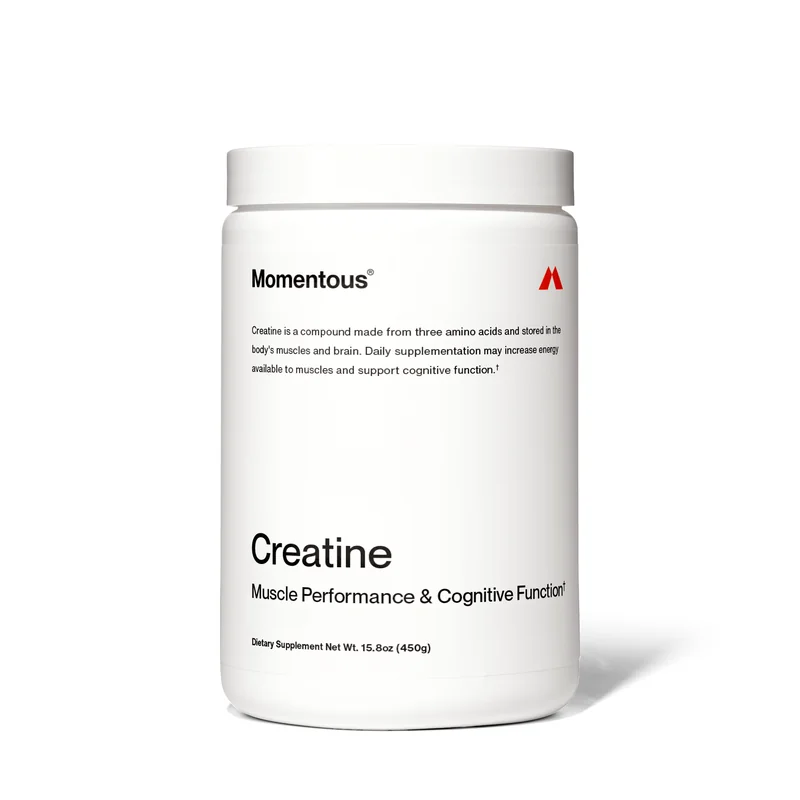
2. Momentous Creatine — Best for Athletes
Why it stands out: Momentous has become the unofficial supplement brand of elite performance, partnering with Dr. Andrew Huberman, the NFL, and multiple professional sports leagues. Their creatine uses Creapure monohydrate with NSF Certified for Sport and Informed Sport dual certification.
What we like:
- Creapure monohydrate with dual third-party certification
- 5g per serving
- Clean label — no fillers, no artificial sweeteners
- Strong athlete endorsement ecosystem (not just influencer marketing — actual league partnerships)
- Subscription pricing brings cost down meaningfully
What could be better:
- Slightly more expensive than Thorne at full retail price
- Limited availability in brick-and-mortar retail
Best for: Competitive athletes, anyone following Huberman-style protocols, and people who want dual certification confidence. Available on Amazon and direct from Momentous.
3. Transparent Labs Creatine HMB — Best for Muscle Building
Why it stands out: This is the only product on our list that combines creatine with additional evidence-backed ingredients. Each serving includes 5g creatine monohydrate, 1.5g HMB (beta-hydroxy beta-methylbutyrate), and 5mg BioPerine (black pepper extract for absorption). HMB has its own body of evidence for reducing muscle protein breakdown, particularly useful during caloric deficits or high-volume training.
What we like:
- 5g creatine monohydrate + 1.5g HMB per serving
- Informed Sport certified
- Comes in multiple flavors (Blue Raspberry, Tropical Punch, Black Cherry) that actually taste good
- Transparent labeling — every ingredient and dose listed, no proprietary blends
- BioPerine inclusion for enhanced absorption
What could be better:
- More expensive than plain creatine (~$1.30/serving) due to added HMB
- If you just want creatine, you're paying for extras you may not need
- HMB evidence, while positive, is not as robust as creatine alone
Best for: Lifters focused on muscle growth and recovery who want a combo product. People in a caloric deficit trying to preserve muscle. Available on Amazon.
4. Naked Nutrition Creatine — Best Budget Pick
Why it stands out: One ingredient. Creatine monohydrate. Nothing else. Naked Creatine is exactly what it claims to be — pure creatine monohydrate with no sweeteners, no flavors, no fillers, and no dyes. At roughly $0.30-0.40 per serving, it's the best value option that still maintains quality standards.
What we like:
- Single ingredient: creatine monohydrate
- Vegan, non-GMO, soy-free, gluten-free
- Third-party tested for heavy metals and purity
- Extremely affordable — one of the lowest cost-per-serving options available
- 5g per serving
What could be better:
- Not NSF Certified for Sport or Informed Sport (third-party tested, but not to the same rigor)
- Does not use Creapure — sources from a different manufacturer
- Can be slightly gritty compared to micronized options
Best for: Budget-conscious buyers who want pure creatine without frills. Casual gym-goers and general health users who don't need sport-specific certifications. Available on Amazon.
5. Optimum Nutrition Micronized Creatine — Most Popular
Why it stands out: ON Micronized Creatine has been a bestseller for over two decades, and there's a reason for that kind of staying power. The micronized processing means smaller particle size, which translates to better mixability and less stomach discomfort for some users. Informed Sport certified and manufactured under GMP standards.
What we like:
- Micronized for superior mixability — dissolves almost completely in water
- Informed Sport certified
- Extremely well-established brand with consistent quality history
- Available in a huge range of sizes (150g to 2kg)
- 5g per serving, unflavored
- Very competitive pricing, especially in larger tub sizes
What could be better:
- Not NSF Certified for Sport (Informed Sport only)
- Does not specify Creapure sourcing
- Some users report the unflavored version has a slight chalky taste
Best for: People who want a trusted, widely available product without premium pricing. Anyone who has had stomach issues with non-micronized creatine. Available on Amazon and virtually every supplement retailer.
Honorable Mention: Klean Athlete Creatine
Worth noting for the drug-tested athlete crowd: Klean Athlete's creatine is NSF Certified for Sport and uses Creapure, similar to Thorne. It's a solid choice if Thorne is out of stock or if you prefer the Klean Athlete brand ecosystem. Slightly harder to find and priced comparably to Thorne.
Browse All Products
Explore our evidence-based product reviews across every health category.
Creatine for Women: Why It's Not Just for Bodybuilders
One of the most persistent myths in fitness is that creatine is "a guy thing." This is wrong, and the research increasingly shows that women may have unique reasons to supplement.
Women naturally carry about 70-80% less creatine in their muscle tissue compared to men, partly because they tend to eat less red meat. This means there's potentially more room for improvement with supplementation. A 2021 review by Smith-Ryan et al. in Nutrients found that creatine supplementation in women improved high-intensity exercise capacity and lean body mass without the "bulking" effect many women fear (creatine doesn't cause fat gain — any initial weight increase is intracellular water, not bloating).
There's also emerging evidence around creatine and hormonal health. Some researchers are investigating creatine's potential role in supporting mood and cognitive function across the menstrual cycle, as well as during perimenopause and menopause when energy metabolism shifts significantly.
Creatine will not make you bulky. It supports the muscle you're actively building through training, and it may protect bone density — a critical concern for women over 40. The dose is the same: 3-5g daily.
We're working on a comprehensive deep-dive: Creatine for Women: The Complete Guide. In the meantime, everything in this article applies equally to women.
How to Take Creatine: Dosing, Timing & Loading
Daily Dose: 3-5 Grams
The consensus dose across virtually all research is 3-5 grams of creatine monohydrate per day. If you weigh under 150 lbs, 3g is likely sufficient. Over 200 lbs, go with 5g. This dose is safe for long-term daily use — studies lasting up to five years have shown no adverse effects in healthy individuals (Kreider et al., Journal of the International Society of Sports Nutrition, 2017).
The Loading Phase Debate
You'll often see recommendations for a "loading phase" — taking 20g per day (split into four 5g doses) for 5-7 days to rapidly saturate muscle creatine stores, then dropping to 3-5g daily for maintenance.
Does loading work? Yes, it saturates your muscles faster — about one week vs. 3-4 weeks with a standard daily dose. Is it necessary? No. You reach the same saturation point either way; loading just gets you there sooner. The tradeoff is that 20g/day causes gastrointestinal discomfort (bloating, cramping, loose stools) in a meaningful percentage of people.
Our recommendation: Skip the loading phase. Just take 3-5g daily and let your stores build over 3-4 weeks. You'll barely notice the difference in outcomes, and you'll avoid the GI issues entirely.
Timing: It Doesn't Matter Much
Studies on creatine timing are mixed and mostly show negligible differences. A 2013 study by Antonio and Ciccone in the Journal of the International Society of Sports Nutrition found a slight advantage to post-workout supplementation over pre-workout, but the effect was small and the study had only 19 participants.
Practical advice: Take it whenever you'll consistently remember. Mix it into your morning coffee, your post-workout shake, or a glass of water before bed. Consistency matters far more than timing. Creatine works through accumulation in muscle tissue, not acute effects — so missing the "perfect window" by a few hours makes zero difference.
Cycling: Unnecessary
There's no evidence that you need to cycle creatine. Your body doesn't build tolerance to it, and there are no diminishing returns from continuous use. Take it daily, indefinitely. The ISSN position stand confirms long-term daily supplementation is both safe and effective.
For how creatine fits into a broader fitness and health routine, check out our guide on exercise and longevity.
Get smarter about health tech
Deal alerts, new reviews, and health tips — delivered weekly. No spam.
Unsubscribe anytime. We respect your inbox.
Common Myths Debunked
"Creatine Causes Kidney Damage"
This is the most persistent myth and it's simply not supported by evidence. A 2019 review by de Souza e Silva et al. in the Journal of Renal Nutrition examined the totality of evidence and concluded that creatine supplementation does not impair kidney function in healthy individuals. Creatine does increase creatinine levels (a kidney function marker), which can cause a false flag on blood tests — but this is a measurement artifact, not kidney damage. If you're getting bloodwork done, tell your doctor you supplement with creatine so they can interpret your creatinine levels correctly.
Caveat: If you have pre-existing kidney disease, talk to your nephrologist before supplementing. The "safe for healthy kidneys" evidence doesn't automatically extend to compromised kidneys.
"Creatine Is Just Water Weight"
Partially true, but misleading. Creatine does increase intracellular water retention — your muscle cells pull in more water, which is actually a good thing (it's associated with increased muscle protein synthesis). This initial water weight gain is typically 1-3 lbs in the first week or two and stabilizes. Over time, creatine users also gain more actual lean muscle mass compared to placebo groups, as demonstrated in numerous long-term studies. The water retention is intracellular (inside the muscle), not subcutaneous (under the skin), so it doesn't create a puffy or bloated appearance.
"Creatine Causes Hair Loss"
This myth traces back to a single 2009 study by van der Merwe et al. in the Clinical Journal of Sport Medicine, which found that rugby players who took creatine had increased levels of DHT (dihydrotestosterone) — a hormone associated with male pattern baldness. However, the study was small (20 participants), has never been replicated, and the DHT increase, while statistically significant, remained within normal physiological ranges. No study has ever directly demonstrated that creatine causes hair loss. If you're genetically predisposed to male pattern baldness, creatine is very unlikely to be the determining factor.
"You Need to Take Creatine with Sugar for Absorption"
Old advice based on early studies showing that insulin spikes enhance creatine uptake. While technically true, the effect is marginal and irrelevant for daily supplementation. Taking creatine with a normal meal provides sufficient insulin response. You do not need to chug grape juice with your creatine.
FAQ
Is creatine safe for teenagers?
The American Academy of Pediatrics has historically been cautious about recommending creatine for adolescents, not because of demonstrated harm, but due to limited long-term studies in this age group. The ISSN position stand notes that creatine appears safe for adolescents who are involved in serious, supervised training. However, for athletes under 18, prioritize whole-food nutrition, adequate protein, and proper training before considering any supplementation. Consult a sports medicine physician or registered dietitian.
Can I take creatine if I don't work out?
Yes. While creatine's performance benefits are most pronounced during resistance training and high-intensity exercise, the cognitive and general health benefits apply regardless of exercise status. The brain uses the same ATP-PCr energy system as muscles. That said, creatine supplementation will be most noticeably beneficial when paired with regular exercise.
Does creatine expire?
Creatine monohydrate is extremely stable. Properly stored (cool, dry place, sealed container), it maintains potency well past its printed expiration date — often several years. If it clumps, it's likely absorbed moisture but is still safe to consume. If it smells off or changes color significantly, discard it.
Is creatine vegan?
Creatine monohydrate can be produced synthetically (as Creapure is), making it suitable for vegans and vegetarians. In fact, vegans and vegetarians often see the most dramatic benefits from supplementation because their baseline muscle creatine stores tend to be lower due to the absence of dietary meat sources. Check the label for vegan certification if this matters to you — all five products in our main list are vegan-compatible.
How long does it take to see results from creatine?
With a loading phase (20g/day for 5-7 days), muscle saturation occurs within about a week. Without loading (3-5g/day), expect 3-4 weeks to reach full saturation. Performance improvements in the gym — more reps, heavier sets, faster recovery between sets — typically become noticeable once saturation is achieved. Cognitive benefits may take a similar timeframe. Creatine is not a stimulant; you won't "feel" it working acutely. The effects are cumulative and measured in performance improvements over weeks and months.
Featured Products
Products mentioned in this article
Related Guides
More articles you might find helpful
Best Bed Cooling Systems 2026: Eight Sleep vs Cheaper Alternatives
**Disclosure:** Product CTAs on this page currently go to manufacturer sites (no affiliate tracking yet). Better Vitals may earn a commission once partner links are live — rankings and "skip if" calls won't change when we swap URLs. We only recommend gear we'd put on a shortlist for a specific type
Is the Oura Membership Worth It in 2026? (And How to Skip It)
*Updated July 2026*
Oura Ring Price in 2026: Every Model, Subscription & Real Total Cost
*Updated July 2026*

Written by
Steve Luu
Health tech researcher