Best EMS Suit 2026: Katalyst vs VisionBody vs SQAI Compared
Key Takeaway
I've spent the last four weeks training in a Katalyst EMS suit three times a week — doing 20-minute guided sessions in my garage while my neighbors probably wonder why I'm squatting in what looks like a wetsuit connected to wires. The short version: whole-body EMS is legitimately impressive technolo
Affiliate Disclosure: BetterVitals may earn a commission from purchases made through links in this article, at no additional cost to you. This supports our independent research and analysis. We only recommend products we believe in after thorough evaluation.
Medical Disclaimer
This article is for educational purposes only and is not a substitute for professional medical advice, diagnosis, or treatment. Always consult your healthcare provider before making health decisions.
Best EMS Suit 2026: Katalyst vs VisionBody vs SQAI Compared
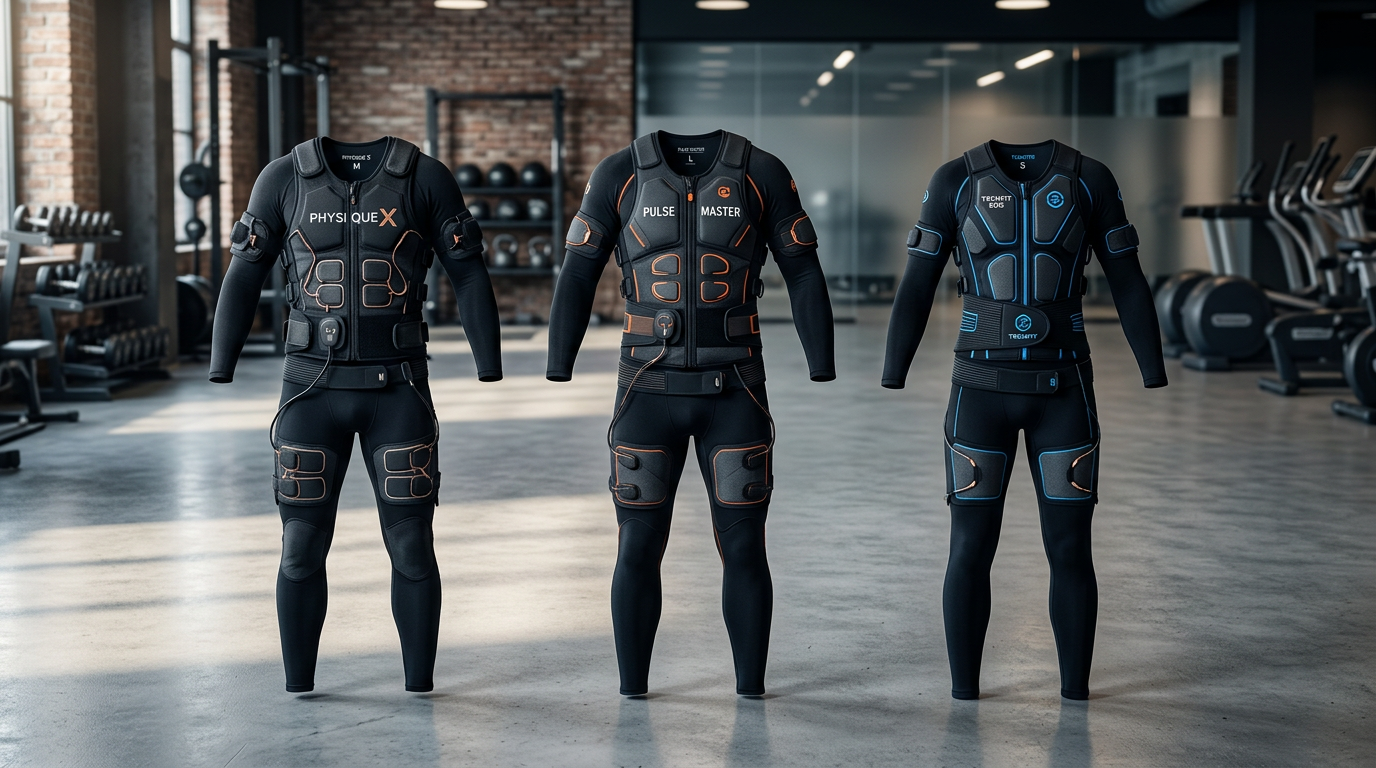
I've spent the last four weeks training in a Katalyst EMS suit three times a week — doing 20-minute guided sessions in my garage while my neighbors probably wonder why I'm squatting in what looks like a wetsuit connected to wires. The short version: whole-body EMS is legitimately impressive technology, and I understand why it's been a staple of European fitness studios for over a decade. But at $2,500–$3,000+, choosing the right suit matters.
This guide is our head-to-head comparison of the three consumer EMS suits available in 2026: Katalyst, VisionBody PowerSuit, and SQAI. I own and train in the Katalyst. For VisionBody and SQAI, we've reviewed hands-on reports from trusted fitness journalists, manufacturer specs, and user feedback to give you an honest picture of each. We'll update this article as we get more time with additional units.
A note on transparency: BetterVitals may earn a commission if you purchase through links on our product pages. This never influences our ratings or recommendations — we've called out real drawbacks for every product here, including our top pick. See our full affiliate disclosure for details.
This article is for informational purposes only and does not constitute medical advice. EMS training is contraindicated for individuals with pacemakers, epilepsy, or certain cardiac conditions. Consult your physician before starting any EMS program.
What Is an EMS Suit and How Does It Work?
EMS stands for electrical muscle stimulation — the use of controlled electrical impulses to trigger muscle contractions. If you've ever used a TENS unit for pain relief, EMS is a related but distinct concept. Where TENS targets sensory nerves to block pain signals, EMS targets motor neurons to actually contract muscle fibers.
A whole-body EMS suit takes this principle and scales it up. Instead of a single electrode pad on your lower back, the suit places electrodes across your chest, back, glutes, quads, hamstrings, biceps, triceps, and abs — typically 16 to 30 individual electrode zones. When activated, the suit sends impulses at frequencies between 20 and 85 Hz, which recruit both slow-twitch (Type I) and fast-twitch (Type II) muscle fibers. That last part is important: voluntary movement alone tends to recruit muscle fibers in a predictable order, starting with smaller slow-twitch fibers. EMS can bypass this orderly recruitment and activate larger Type II fibers — the ones responsible for strength and power — more directly.
The technology isn't new. EMS has been used in physical therapy and rehabilitation since the 1960s, helping patients maintain muscle mass during immobilization and retraining movement patterns after injury. By the 2000s, EMS studios started popping up across Germany, Austria, and Spain — staffed facilities where trainers would strap you into a tethered suit and guide you through a 20-minute session. Over 2,000 such studios operate in Europe today.
What is new is the consumer home suit. Starting around 2020, companies began packaging this studio-grade technology into wireless, app-guided suits you could use at home. A typical session lasts 20 minutes: you put on the suit, connect to a companion app, and follow guided low-impact movements — think bodyweight squats, lunges, lateral raises — while the suit pulses electrical stimulation in sync with the exercises. The combination of voluntary movement plus external stimulation creates a training effect that's significantly more demanding than the movements alone would suggest.
What the Science Says About EMS Training
We take an evidence-first approach at BetterVitals, so let's look at what the research actually supports — and where the gaps are.
The most comprehensive overview is a 2020 systematic review published in BMC Complementary Medicine and Therapies, which analyzed 26 studies on whole-body EMS. The review found consistent evidence that EMS training improves maximal strength and body composition (reduced body fat percentage, increased lean mass) compared to no-exercise controls. The effect sizes were moderate but meaningful, particularly for strength outcomes.
A 2018 randomized controlled trial in Frontiers in Physiology focused on elderly men (ages 65–75) and found that 12 weeks of whole-body EMS training produced statistically significant increases in lean body mass and reductions in abdominal fat, even without dietary changes. This study is notable because it demonstrates EMS benefits in a population that struggles with conventional high-intensity training.
Perhaps the most cited claim in EMS marketing is the "20 minutes equals 60 minutes" comparison. A 2021 study in the European Journal of Sport Science lends some support to this, finding that a 20-minute whole-body EMS session produced comparable muscle activation and metabolic response to a 60-minute conventional resistance training session in recreational athletes. However, the researchers emphasized that this referred to a single acute training session and that long-term equivalence is less established.
Honest caveats we think you should know:
- Most positive studies used supervised studio protocols with trained technicians adjusting stimulation levels. Home use introduces variables (electrode placement, self-selected intensity) that may reduce effectiveness.
- Long-term data is limited. Most studies run 8–16 weeks. We don't have strong evidence on what happens over 1–2 years of consistent EMS training.
- EMS is not a replacement for progressive heavy loading. If your goal is maximal strength or hypertrophy, a barbell program will still outperform EMS. Where EMS shines is as a supplement, a time-efficient option, or a tool for people who can't tolerate high joint loads.
- There's a real risk of rhabdomyolysis (muscle breakdown) if stimulation intensity is cranked too high, too fast — particularly in beginners. Reputable suits have safeguards, but this isn't a toy.
What to Look For in an EMS Suit
Before we compare specific products, here are the factors that actually matter when choosing a suit.
Wet vs. Dry Electrodes
This is the single biggest practical difference between suits. Wet electrode systems (like Katalyst) require you to spray the electrode pads with water before each session. The moisture improves conductivity, which means stronger and more consistent stimulation — but it also means setup time and a slightly damp feeling during workouts. Dry electrode systems (like VisionBody) skip the spray and use conductive fabric. They're more convenient but typically deliver slightly less intense stimulation. Hybrid systems (like SQAI) try to split the difference.
Subscription Model vs. One-Time Purchase
Some suits require a monthly subscription to access guided workouts. Others include everything at purchase. A $30/month subscription adds $360/year — over 3 years, that's an extra $1,080 on top of the hardware cost. Factor this into your total cost of ownership.
FDA Clearance and Safety Certifications
FDA 510(k) clearance means the device has been reviewed for safety and equivalence to existing cleared devices. It doesn't mean the FDA endorses effectiveness claims, but it does mean the electrical output has been evaluated. Look for this, especially at these price points.
App Quality and Guided Programming
You'll use the companion app for every single session. A well-designed app with structured programs, real-time intensity control, and progress tracking makes a meaningful difference in adherence. A clunky app will make a $3,000 suit collect dust.
Electrode Count and Muscle Group Coverage
More electrodes generally means more targeted stimulation across more muscle groups. Entry-level suits might cover 8–10 zones; premium suits cover 20+. Pay attention to whether the suit stimulates smaller muscle groups like calves, forearms, and shoulders, or just the major groups.
Smartphone vs. Tablet Compatibility
This matters more than you'd think. If the app only runs on iPad, you need an iPad. If it works on any smartphone, your barrier to a session drops significantly.
Head-to-Head Comparison
| Feature | Katalyst | VisionBody | SQAI |
|---|---|---|---|
| Price | $2,999 | $2,495 | $2,895 |
| Subscription | $29–49/month (required) | None | $0/19/39/month (optional tiers) |
| Electrode Type | Wet (spray) | Dry (conductive fabric) | Hybrid (wet/dry) |
| Electrode Zones | 26 pads | 20 pads | 22 pads |
| App Platform | iPad only | iOS + Android | iOS + Android |
| FDA 510(k) Cleared | Yes | No (CE marked) | Yes |
| HSA/FSA Eligible | No | No | Yes |
| Guided Workouts | 100+ (strength, cardio, recovery) | 50+ (strength, HIIT) | 80+ (strength, cardio, mobility) |
| Manual Mode | No | Yes | Limited |
| BetterVitals Score | 8.5/10 | 7.8/10 | 7.5/10 |
Browse All Products
Explore our evidence-based product reviews across every health category.
Katalyst EMS Suit — Editor's Pick
Score: 8.5/10 | Price: $2,999 + $29–49/month | View Katalyst details →
I'm going to be straightforward about my experience: after four weeks with the Katalyst, I'm genuinely impressed by the training stimulus but still adjusting to the workflow. This is early impressions, not a final verdict — I'll update this section at the 3-month and 6-month marks.
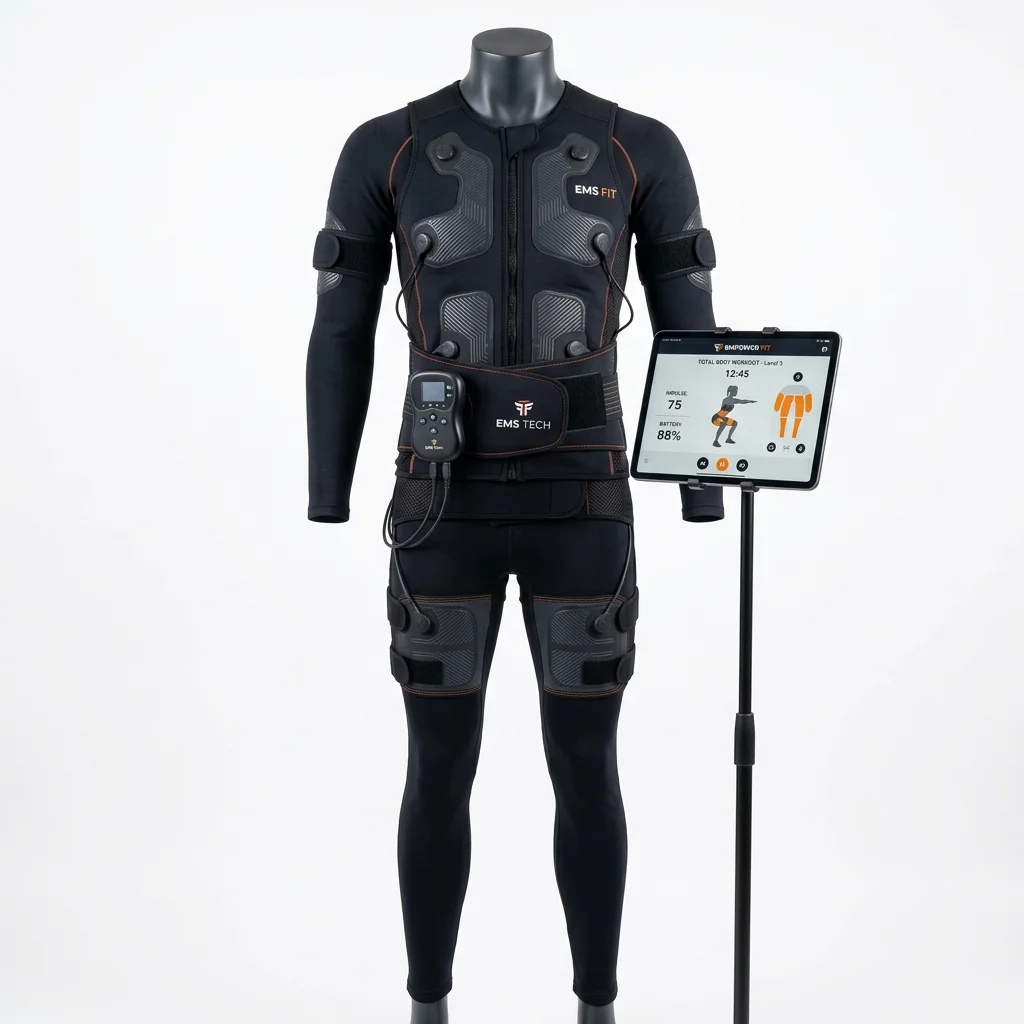
The Katalyst suit uses 26 wet electrode pads that cover every major and most minor muscle groups. Before each session, you spray the inner pads with water from the included bottle — this takes about 2–3 minutes and is, honestly, the least fun part of the experience. But the wet electrode system delivers noticeably strong stimulation. During week three, I bumped my quad intensity to 70% during a strength session and the involuntary contraction was powerful enough that I had to actively brace against it. That's the feeling that tells you the technology is doing real work.
The app experience is excellent — arguably the best part of the product. Workouts are structured into categories (strength, cardio, recovery, combination), each with a coach guiding you through movements while the suit pulses in programmed patterns. The intensity controls are intuitive: you can adjust each muscle group independently mid-workout. The programming feels thoughtful, not like an afterthought bolted onto hardware.
The drawback that will be a dealbreaker for some: the app is iPad-only. No iPhone. No Android. If you don't already own an iPad, you're adding $329+ to your total cost. Katalyst's reasoning is that the larger screen provides a better coaching experience, which is fair — but it limits where and how you can train.
For a deeper look at my ongoing experience, see our full Katalyst review, which we'll continue updating as I log more sessions.
Pros:
- Strongest stimulation quality of any consumer suit we've evaluated
- Best-in-class app with structured programming and real-time coaching
- FDA 510(k) cleared
- 26 electrode zones for comprehensive coverage
- Noticeable training effect even at moderate intensity settings
Cons:
- Wet electrode prep adds 2–3 minutes of setup each session
- iPad-only app — no smartphone support
- Mandatory subscription ($29/month annual, $49/month monthly) on top of $2,999 hardware
- No manual mode — you must follow guided workouts
- Suit requires hand-washing after every few sessions
VisionBody PowerSuit — Best Without Subscription
Score: 7.8/10 | Price: $2,495 (no subscription) | View VisionBody details →
VisionBody comes from the European studio EMS world — the company has supplied professional studios for years before launching their consumer PowerSuit. That heritage shows in the build quality but also in a product philosophy that assumes more user autonomy.
The most distinctive feature is the dry electrode system. No spraying, no moisture, no damp feeling. You put the suit on and go. For people who plan to train frequently (4–5 times per week), this convenience factor is significant. The trade-off is that dry electrodes typically deliver slightly less intense stimulation than wet systems. Users who've tried both commonly describe VisionBody's stimulation as "smoother" and Katalyst's as "sharper." Neither is inherently better — it's partly preference — but if raw stimulation intensity is your priority, wet systems have an edge.
VisionBody includes a manual mode that lets you set your own stimulation parameters — frequency, pulse width, intensity per muscle group — without following a guided workout. This appeals to experienced EMS users and personal trainers who want full control. The guided workout library is smaller (around 50 programs) and the app interface is functional but lacks the polish of Katalyst's.
The biggest selling point is economics: no subscription, ever. You pay $2,495 and you're done. All workouts, all updates, all features included. Over three years, VisionBody's total cost of ownership is roughly $1,000 less than Katalyst's.
Pros:
- No subscription — all features included at purchase
- Dry electrodes mean zero prep time
- Works on iOS and Android smartphones
- Manual mode for advanced users
- Lowest upfront cost of the three
- Studio-grade build quality
Cons:
- Stimulation intensity slightly lower than wet electrode competitors
- App is functional but less polished than Katalyst
- Smaller guided workout library
- Not FDA cleared (carries CE marking for European markets)
- Less structured programming for beginners who want hand-holding
SQAI EMS Training Suit — Best Value with HSA/FSA
Score: 7.5/10 | Price: $2,895 | View SQAI details →
SQAI is the newest entrant in the consumer EMS space, and their strategy is clear: flexibility. Where Katalyst goes all-in on wet electrodes and VisionBody commits to dry, SQAI offers a hybrid system that can work in both modes. Where Katalyst requires a subscription and VisionBody charges nothing, SQAI offers tiered subscriptions — a free tier with basic workouts, a $19/month tier with full programming, and a $39/month tier with advanced analytics and personalized plans.
The standout feature for many buyers will be HSA/FSA eligibility. SQAI's FDA clearance and product classification allow it to qualify as a covered health expense under most Health Savings Account and Flexible Spending Account plans. Depending on your tax bracket, this can effectively reduce the cost by 25–35%. On a $2,895 device, that's a savings of $720–$1,013 — meaningful money.
The hybrid electrode approach is clever in theory: use dry electrodes for quick convenience sessions, switch to wet mode when you want maximum intensity. In practice, reviews suggest the wet mode doesn't quite match Katalyst's intensity, and the dry mode doesn't quite match VisionBody's convenience (the hybrid pads are slightly thicker). It's a "jack of all trades" scenario — competent at everything, best-in-class at nothing.
The app is solid, with around 80 guided workouts covering strength, cardio, and mobility. It runs on both iOS and Android. The free tier is genuinely usable — not a crippled demo — which lets you evaluate the platform before committing to a subscription.
Pros:
- HSA/FSA eligible — significant tax savings
- Flexible subscription tiers (including a free option)
- Hybrid electrode system offers versatility
- FDA 510(k) cleared
- Works on iOS and Android
- Good workout variety across strength, cardio, and mobility
Cons:
- Hybrid electrodes don't excel in either wet or dry mode
- Newer brand with less long-term track record
- Full feature set requires $39/month subscription
- Slightly bulkier suit due to hybrid electrode design
- Smaller user community and fewer third-party reviews
Get smarter about health tech
Deal alerts, new reviews, and health tips — delivered weekly. No spam.
Unsubscribe anytime. We respect your inbox.
Our Pick
For most people, Katalyst is the best EMS suit in 2026. The stimulation quality is the strongest of any consumer suit we've evaluated, the app is genuinely excellent, and the structured programming makes it easy to stay consistent. Yes, the wet prep and iPad requirement are real friction points, and the mandatory subscription adds to the total cost. But if you're investing $2,500+ in an EMS suit, the training stimulus is the thing that matters most — and Katalyst delivers.
Choose VisionBody if you're subscription-averse and want the simplest possible experience. The dry electrodes and no-subscription model mean you put on the suit and train with zero friction and zero recurring costs. The stimulation is slightly less intense, but the convenience may mean you actually use it more often — and consistency beats intensity every time.
Choose SQAI if you have an HSA/FSA and want to use pre-tax dollars. The effective savings of 25–35% on a ~$3,000 device is compelling, and the free subscription tier lets you evaluate the platform without additional commitment. It's a solid product, just not the standout in any single category.
One final note we think is important: an EMS suit supplements a fitness routine — it doesn't replace one. The research supports EMS as an effective training tool, especially for time efficiency, joint-friendly loading, and muscle activation. But if your goals include cardiovascular endurance, heavy strength, sport-specific skill, or the mental health benefits of being active outdoors, EMS can't cover all of that. Think of it as one tool in the toolbox — a genuinely impressive one — not the entire toolbox.
Who Should (and Shouldn't) Buy an EMS Suit
An EMS suit makes the most sense if you are:
- Time-constrained — 20 minutes, 2–3 times per week is a realistic commitment that produces measurable results. If you struggle to find 60 minutes for the gym, EMS is a legitimate alternative for maintaining muscle.
- Dealing with joint limitations — EMS allows significant muscle activation with minimal joint loading. For people with knee, hip, or shoulder issues who can't tolerate heavy resistance training, this is a real advantage.
- Looking for supplemental training — Athletes and regular gym-goers who want additional muscle activation without additional joint stress or recovery debt. One or two EMS sessions per week on top of normal training can be a smart addition.
- In rehabilitation — EMS has the strongest evidence base in rehab settings. If you're recovering from surgery or injury, discuss EMS with your physical therapist.
You should probably skip an EMS suit if you:
- Have a tight budget — At $2,500–$3,000+, these are premium devices. If that amount would be a financial stretch, invest in a quality barbell set or gym membership first. The cost-per-benefit ratio of basic strength equipment is much higher.
- Prefer simple, low-tech training — If you enjoy the simplicity of running, lifting, or bodyweight work and don't feel limited by time, EMS adds complexity you may not need.
- Have medical contraindications — Pacemakers, implanted defibrillators, epilepsy, pregnancy, and certain cardiac conditions are absolute contraindications for EMS. This is non-negotiable.
- Expect a magic bullet — EMS won't overcome a poor diet, chronic sleep deprivation, or the need for progressive overload. It's effective, not miraculous.
For a deeper dive into how EMS technology works, the different types of stimulation, and the full body of research, see our complete guide to EMS training.
Frequently Asked Questions
Is EMS training actually effective? What does the science say?
Yes, with caveats. Multiple systematic reviews and randomized controlled trials support EMS for improving muscular strength, increasing lean body mass, and reducing body fat. A 2020 systematic review in BMC Complementary Medicine analyzed 26 studies and found consistent benefits for strength and body composition. However, most research has been conducted in supervised studio settings over 8–16 week periods. Long-term data on home-based EMS training is still limited. EMS is best understood as an effective supplement to — not a replacement for — a well-rounded fitness routine.
How often should you use an EMS suit?
Most manufacturers recommend 2–3 sessions per week with at least 48 hours between sessions. This aligns with the study protocols that have demonstrated benefits. EMS creates significant muscle stress despite the low-impact movements, so your muscles need recovery time just as they would after conventional strength training. Beginners should start with 2 sessions per week at lower intensities and gradually increase over the first 2–4 weeks.
Can an EMS suit replace going to the gym?
It depends on your goals. For maintaining muscle mass, body composition, and general fitness — especially if you're time-constrained — EMS can be a primary training method supported by research. For building maximal strength, significant hypertrophy, cardiovascular endurance, or sport-specific skills, EMS alone is insufficient. The most common recommendation among sports scientists is to use EMS as a supplement to conventional training, not a complete replacement.
Is EMS training safe? Are there side effects?
EMS is generally safe when used as directed with a reputable, certified device. The most common side effects are temporary muscle soreness (similar to delayed onset muscle soreness from conventional exercise) and mild skin irritation from electrodes. The most serious risk is rhabdomyolysis — excessive muscle breakdown that can damage kidneys — which can occur if stimulation intensity is set too high, too quickly. All three suits reviewed here include intensity safeguards, but beginners should still start conservatively. EMS is contraindicated for individuals with pacemakers, implanted defibrillators, epilepsy, pregnancy, or certain cardiac conditions.
How much does an EMS suit cost in 2026?
Consumer EMS suits currently range from $2,495 to $2,999 for the hardware. Some require additional monthly subscriptions: Katalyst charges $29–49/month, SQAI offers optional tiers from $0–39/month, and VisionBody includes all features at purchase. Over three years, total cost of ownership ranges from approximately $2,495 (VisionBody) to $4,763 (Katalyst at the monthly subscription rate). SQAI's HSA/FSA eligibility can reduce effective costs by 25–35% depending on your tax bracket.
Do you need a subscription to use an EMS suit?
It depends on the suit. Katalyst requires a subscription — without it, the suit is a paperweight. VisionBody includes everything at purchase with no subscription required. SQAI offers a free tier with basic workouts and optional paid tiers ($19/month and $39/month) for expanded programming and analytics. If recurring costs bother you on principle, VisionBody or SQAI's free tier are your best options.
How long until you see results from EMS training?
Based on the research literature, measurable improvements in strength and body composition typically appear after 6–8 weeks of consistent training (2–3 sessions per week). Some users report "feeling" the effects sooner — increased muscle awareness, improved posture, reduced soreness from other activities — within 2–3 weeks. Visible changes to muscle tone and body composition are more realistic on an 8–12 week timeline. As with any training modality, results depend heavily on consistency, intensity progression, nutrition, and sleep.
Featured Products
Products mentioned in this article
Related Guides
More articles you might find helpful
Wonderfeel Youngr vs NOVOS Boost (2026): Which NMN Wins?
*Updated July 2026*
Most Accurate CGM in 2026: MARD Scores Compared (Every Sensor)
*Updated July 2026*
Dexcom Stelo vs Abbott Lingo (2026): Accuracy, Price, App Compared
*Updated July 2026*

Written by
Steve Luu
Health tech researcher