Levels Health Alternatives 2026: Pricing, Complaints & What to Use Instead
Key Takeaway
Updated July 2026
Affiliate Disclosure: BetterVitals may earn a commission from purchases made through links in this article, at no additional cost to you. This supports our independent research and analysis. We only recommend products we believe in after thorough evaluation.
Medical Disclaimer
This article is for educational purposes only and is not a substitute for professional medical advice, diagnosis, or treatment. Always consult your healthcare provider before making health decisions.
Levels Health Alternatives 2026: Pricing, Complaints & What to Use Instead
Updated July 2026
Short version: the best Levels Health alternative for most people is Dexcom Stelo — the same underlying sensor data for $99/month with no subscription, versus $199/month at Levels. If you want the cheapest possible entry, Abbott Lingo's $49 two-week biosensor undercuts everything. If what you actually wanted from Levels was guidance, Nutrisense includes a registered dietitian for $179/month — something Levels has never offered.
Levels deserves credit for creating the consumer CGM category. But in 2026 it no longer makes its own sensor, its price is the highest in the market, and the sensor manufacturers now sell directly to consumers. Here's the honest breakdown of when each alternative wins.
First, What a CGM Actually Does for a Non-Diabetic
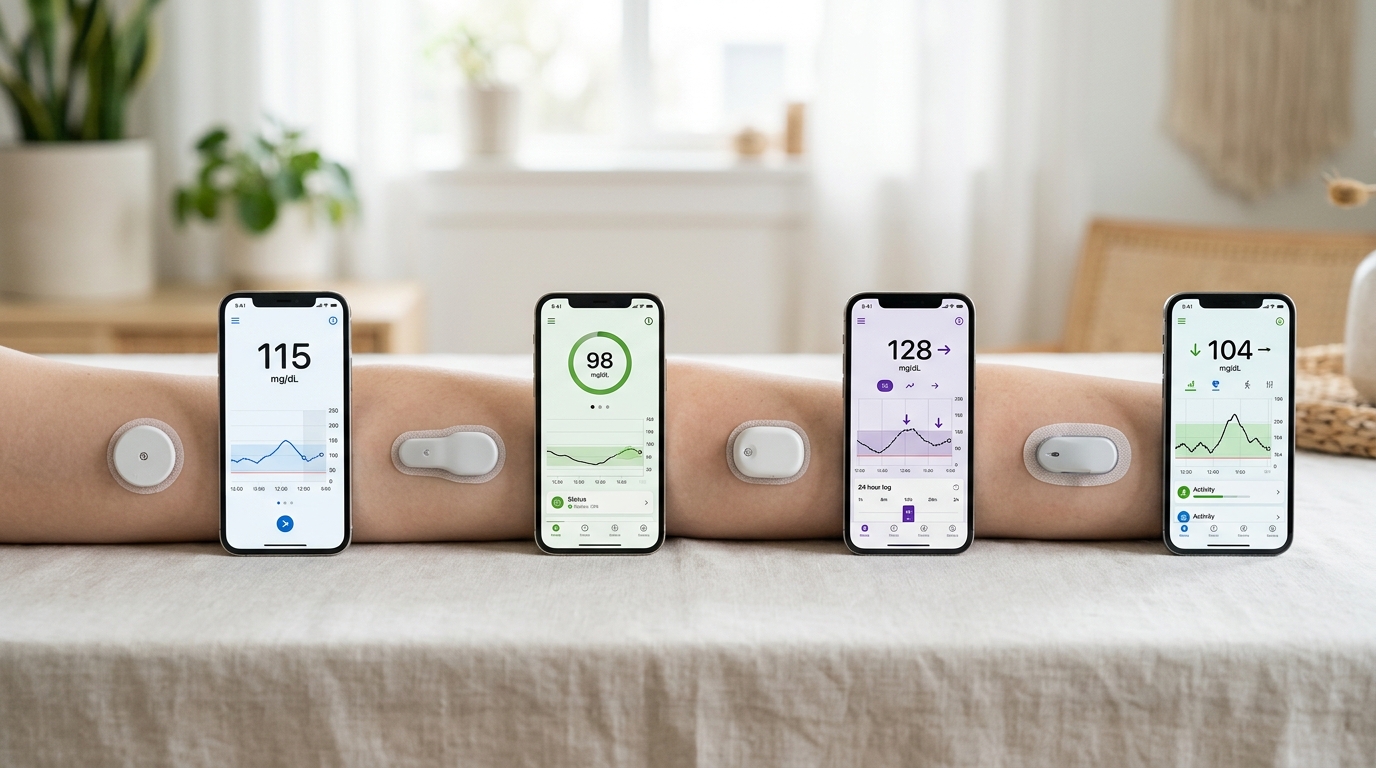
A continuous glucose monitor is a coin-sized sensor worn on the back of the upper arm with a tiny filament under the skin. It samples the glucose in your interstitial fluid every few minutes and streams it to your phone, so instead of a single fasting number once a year you see the shape of your glucose across meals, workouts, stress, and sleep. For someone without diabetes, the value is education rather than diagnosis: you learn which of your meals spike you, how a walk after eating blunts the rise, and how poor sleep flattens your tolerance the next day. That's genuinely useful — but it's also finite. Once you've mapped your own responses, the marginal insight from month six looks a lot like month two, which is the single biggest reason people go looking for a cheaper option or an exit.
Why People Look for a Levels Alternative
The complaints that bring readers to this page are consistent, and they match what we found in our own three-month test (full details in our Levels Health review):
- Price. $199/month monthly, or $109/month on an annual commitment ($1,308/year). Every alternative below costs less.
- No human coaching. Levels is software-only. When your chart shows a 180 mg/dL spike, there's no dietitian to ask about it.
- Diminishing returns. Most healthy users learn their personal glucose patterns within 6–8 weeks — then keep paying platform prices for data they can now predict.
- It's a middleman. Levels buys sensors from Dexcom and Abbott. In 2026 both companies sell over-the-counter CGMs directly, cheaper.
None of this makes Levels a bad product — the app is still the most polished in the category. It makes Levels a premium product whose premium is getting harder to justify.
Levels Health Pricing vs the Alternatives (2026)
| Monthly cost | Sensor | Coaching | Subscription lock-in | |
|---|---|---|---|---|
| Levels Health | $199 ($109 annual) | Dexcom/Libre | None | Yes, annual tiers |
| Dexcom Stelo | $99 | Stelo (15-day) | None | No — buy as you go |
| Abbott Lingo | ~$91 ($49 trial) | Lingo (14-day) | App coaching | No |
| Nutrisense | $179 | Libre-based | Registered dietitian | Yes, 1–12 mo plans |
| Signos | ~$179 | Stelo/G7-based | AI weight-loss coach | Yes |
Prices move, and promotional trial pricing in particular changes often — treat these as directional and confirm current rates at each vendor before you buy.
Browse All Products
Explore our evidence-based product reviews across every health category.
The 4 Best Levels Health Alternatives
1. Dexcom Stelo — Best Overall Alternative
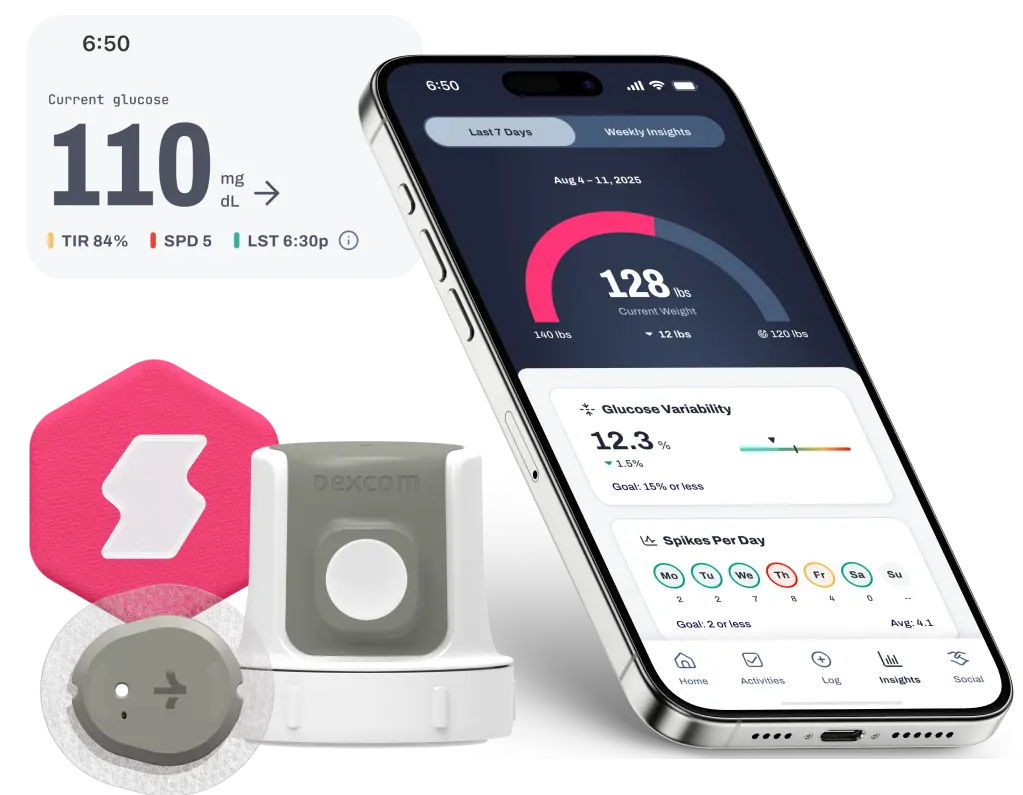
Stelo is the sensor Levels often ships, sold directly by its manufacturer at half the price. You lose Levels' Metabolic Scores and meal grading; you keep the actual glucose data, 15-day sensor wear, and integrations with Oura, Apple Health, and Google Fit. For anyone who has already learned the basics of glucose interpretation — or is willing to spend a week learning — this is the obvious switch. The tradeoff to be honest about: Stelo's own app is more of a data display than a coach, so if you relied on Levels to tell you what your numbers meant, you'll be doing more of that interpretation yourself. $99/month, no subscription.
2. Abbott Lingo — Best Budget Alternative
Lingo is the cheapest way to answer "which foods spike me?" — $49 buys a two-week biosensor at Walmart or Amazon, no account gymnastics required. The Lingo Count score is genuinely beginner-friendly, arguably friendlier than Levels' zone system. Wear one sensor, find your trigger foods, and you've captured most of what a first CGM month teaches at a quarter of Levels' price. The limitation is duration: two weeks is enough to spot your obvious spikers but not enough to see how travel, illness, a hard training block, or a bad-sleep week move your baseline. Treat Lingo as the low-risk experiment before you commit to anything ongoing. $49 for two weeks; ~$91/month ongoing.
3. Nutrisense — Best If You Wanted Coaching
The most common serious complaint about Levels is that data without interpretation stalls. Nutrisense's answer: every plan includes one-on-one access to a registered dietitian who reviews your actual curves and builds food strategy with you. It costs $179/month — real money, but less than Levels monthly, and the coaching is the piece behavioral research links most strongly to lasting change. The honest caveat is that coaching quality depends on how much you actually use it; if you're the type to ignore the messages, you're paying dietitian prices for a Libre sensor. Our Levels vs Nutrisense vs Signos comparison goes deeper. From $179/month with dietitian included.
4. Signos — Best for Weight Loss
If you came to Levels hoping to lose weight, Signos is purpose-built for that job: its AI learns your glucose responses and prompts you in real time — walk now, eat now, skip that. It runs on Dexcom sensor hardware, so accuracy is identical. It's narrower than Levels, but sharper at its one job. Bear in mind that a CGM is a behavior-change tool, not a weight-loss mechanism in itself — the glucose data only helps if the nudges actually change what you eat and when you move. From ~$179/month.
Which Alternative Should You Pick?
- You mostly want the data, cheaper → Dexcom Stelo
- You want the cheapest possible experiment → Abbott Lingo
- You want an expert in the loop → Nutrisense
- Your goal is weight loss → Signos
- You want the prettiest app and money isn't the issue → stay with Levels
All five options require no prescription. For the full head-to-head including accuracy (MARD) figures and our testing method, see our ranking of the best CGMs for non-diabetics in 2026.
A Smarter Way to Use Any of Them
The most cost-effective approach to consumer glucose monitoring isn't to subscribe forever — it's to run a focused experiment and then graduate. A sensible pattern: buy one or two sensors (Lingo for the cheapest start, Stelo for the longer 15-day window), and during that stretch deliberately test the variables you care about. Eat your usual breakfast one day and a lower-carb version the next. Take a 15-minute walk after dinner one evening and sit on the couch the next. Note what a poor night's sleep does to the following day's curve. Within two to six weeks most non-diabetics have a personal playbook — which foods to pair, which to portion, when movement helps most — and can stop paying entirely, re-checking with a single sensor a couple of times a year. Ongoing subscriptions like Nutrisense or Signos make sense mainly when you want continued human or AI accountability, not just more data.
One important boundary: none of these consumer tools are for diagnosing or managing diabetes. If you're diabetic or suspect you might be, that's a medical CGM prescription and a clinician's care plan, not a wellness subscription.
Get smarter about health tech
Deal alerts, new reviews, and health tips — delivered weekly. No spam.
Unsubscribe anytime. We respect your inbox.
Bottom Line
Levels built the category and still has the best-looking app, but in 2026 it's the most expensive door into a room the manufacturers now open directly. For most people, Dexcom Stelo delivers the same underlying data for half the price with no lock-in. Choose Lingo to test the waters cheaply, Nutrisense if you specifically want a dietitian, and Signos if weight loss is the explicit goal. And whichever you pick, remember that the real return on a CGM comes from acting on what it shows you — then knowing when you've learned enough to stop paying.
Frequently Asked Questions
What is the best alternative to Levels Health?
Dexcom Stelo is the best Levels Health alternative for most people in 2026. It uses the same sensor technology Levels ships, costs $99/month versus Levels' $199/month, requires no subscription, and integrates with Oura, Apple Health, and Google Fit. Abbott Lingo is the best budget alternative at $49 for a two-week sensor.
How much does Levels Health cost in 2026?
Levels Health costs $199/month on the monthly plan or $109/month billed annually ($1,308/year), including sensors. That makes it the most expensive consumer CGM program in 2026 — roughly double Dexcom Stelo's $99/month and more than Nutrisense's $179/month, which includes dietitian coaching.
What are the most common complaints about Levels Health?
The most common Levels Health complaints in 2026 are the $199/month price, the lack of any human coaching (the platform is software-only), sensor adhesive issues during workouts, and diminishing returns after the first two months once you've learned your personal glucose patterns. App quality complaints are rare — the software itself is widely considered the best in the category.
Is Levels Health worth it compared to buying a CGM directly?
For most new users, no. Levels adds meal-scoring software on top of sensors made by Dexcom and Abbott — companies that now sell over-the-counter CGMs directly for $49–$99. Levels is worth the premium only if you specifically value its Metabolic Score system, its polished app, and its optional lab-panel integration enough to pay roughly double.
Can I use a CGM without any subscription at all?
Yes. Dexcom Stelo ($99 for a two-sensor month) and Abbott Lingo ($49 for a two-week biosensor) are both sold outright with no recurring subscription — buy sensors when you want them and stop anytime. Levels, Nutrisense, and Signos all require ongoing plans.
How long should I wear a CGM before I stop?
For most non-diabetics, two to six weeks of active experimentation is enough to map your personal glucose responses to your regular meals, exercise, and sleep. After that the insights repeat, which is why buy-as-you-go options like Stelo and Lingo often make more sense than an annual plan. Re-checking with a single sensor once or twice a year is a reasonable maintenance rhythm.
Are these consumer CGMs accurate enough to trust?
The over-the-counter sensors use the same core technology as prescription CGMs and are accurate enough to reveal meaningful patterns and relative differences between meals. They're intended for general wellness, not medical diagnosis — if you have or suspect diabetes, you need a prescription CGM and clinical supervision, not a consumer wellness device.
Disclaimer: This article contains affiliate links. We may earn a commission if you purchase through our links, at no additional cost to you. All opinions are our own and based on thorough research and testing. This content is not medical advice — consult your clinician before making decisions about glucose monitoring or diabetes care.
Featured Products
Products mentioned in this article


Related Guides
More articles you might find helpful
Wonderfeel Youngr vs NOVOS Boost (2026): Which NMN Wins?
*Updated July 2026*
Most Accurate CGM in 2026: MARD Scores Compared (Every Sensor)
*Updated July 2026*
Dexcom Stelo vs Abbott Lingo (2026): Accuracy, Price, App Compared
*Updated July 2026*

Written by
Steve Luu
Health tech researcher