What Is VO2 Max? The Complete Guide to the Longevity Metric That Matters Most
Key Takeaway
VO2 max is one of the strongest predictors of longevity available to clinicians today — often a better signal than blood pressure, cholesterol, or BMI. A 2018 study in JAMA Network Open following more than 122,000 patients over 23 years found that individuals in the top quartile for cardiorespirat

Affiliate Disclosure: BetterVitals may earn a commission from purchases made through links in this article, at no additional cost to you. This supports our independent research and analysis. We only recommend products we believe in after thorough evaluation.
Medical Disclaimer
This article is for educational purposes only and is not a substitute for professional medical advice, diagnosis, or treatment. Always consult your healthcare provider before making health decisions.
What Is VO2 Max? The Complete Guide to the Longevity Metric That Matters Most
VO2 max is one of the strongest predictors of longevity available to clinicians today — often a better signal than blood pressure, cholesterol, or BMI. A 2018 study in JAMA Network Open following more than 122,000 patients over 23 years found that individuals in the top quartile for cardiorespiratory fitness had a substantially lower mortality risk than the least fit group — an effect size that rivals or exceeds most medical interventions. Notably, the association held even at very high fitness levels, with no clear point of diminishing returns identified.
If you are optimizing for a long, functional life, VO2 max deserves your attention more than almost any other single health metric. This guide explains what it measures, how to test it, where you should aim, and exactly how to train to move the number.
What VO2 Max Actually Measures
VO2 max (maximal oxygen uptake) is the maximum rate at which your body can consume oxygen during maximal exercise. It is expressed in milliliters of oxygen per kilogram of body weight per minute (mL/kg/min).
During hard exercise, your muscles demand ATP rapidly. Aerobic metabolism — producing energy using oxygen — is far more efficient and sustainable than anaerobic metabolism. VO2 max represents the ceiling of your aerobic energy system: the highest rate at which your cardiovascular and muscular systems can jointly deliver and use oxygen.
Three factors determine VO2 max:
- Cardiac output — how much blood your heart pumps per minute (heart rate × stroke volume)
- Oxygen delivery — hemoglobin concentration and pulmonary efficiency
- Oxygen extraction — how efficiently muscles pull oxygen from blood (mitochondrial density and capillary density)
Training improves all three, but for most people cardiac output — specifically the heart's stroke volume — is the primary limiter. This is why VO2 max is fundamentally a measure of cardiovascular capacity, not just leg strength or willpower. It reflects how well the entire oxygen-transport chain works under maximal load.
It is worth understanding why this metric maps so cleanly onto longevity. A high VO2 max means a heart that pumps efficiently, blood vessels that dilate well, dense muscle capillary networks, and abundant, healthy mitochondria. Those same qualities protect against heart disease, support metabolic health, and preserve the physical independence that determines quality of life in your later decades. VO2 max is, in effect, a summary statistic for the health of multiple organ systems at once.
VO2 Max by Age and Sex: What's Normal?
The ranges below are approximate and drawn from commonly cited fitness classifications. Treat them as general reference points, not precise clinical cutoffs — norms vary by testing protocol and population.
| Category | Men (mL/kg/min) | Women (mL/kg/min) |
|---|---|---|
| Superior | >55 | >52 |
| Excellent | 51-55 | 47-52 |
| Good | 45-50 | 42-46 |
| Average | 40-44 | 37-41 |
| Below Average | 35-39 | 32-36 |
| Poor | <35 | <32 |
Approximate norms for adults roughly 30-39; expect values to run somewhat higher per decade younger and lower per decade older.
Elite endurance athletes sit far above these ranges — roughly 70-90+ for men and 60-78 for women. Top professional cyclists have recorded values in the mid-80s to high-90s. The highest individual value ever reliably reported is around 96-97 mL/kg/min. These are genetic and training outliers, not realistic targets for most people.
The practical longevity target: rather than chasing elite numbers, aim to reach and hold the "excellent" or "superior" band for your age and sex — roughly the top 20-25th percentile for your decade. Longevity physician Peter Attia has popularized this framing, arguing that being fit for a decade younger than your chronological age provides a large functional buffer as fitness naturally declines with time.
How VO2 Max Is Measured
Gold Standard: Lab Test
A maximal exercise test using a metabolic cart is the reference method. You exercise on a treadmill or cycle ergometer at progressively increasing intensity while a breath-by-breath analyzer measures oxygen consumption and carbon dioxide output. A true VO2 max is confirmed when oxygen consumption plateaus despite rising effort — you have hit the ceiling.
Cost is typically $150-400 at university exercise physiology labs, sports medicine clinics, and performance centers, and such testing is increasingly offered at longevity clinics. Expect the test itself to be brief but genuinely maximal — it is deliberately taken to exhaustion, which is why medical screening beforehand is sensible for older or higher-risk individuals.
Field Tests
Rockport Walk Test: Walk one mile as fast as you can, then record your heart rate at the finish. A validated equation estimates VO2 max. Best for beginners or those who cannot run.
Cooper Test: Run as far as possible in 12 minutes. VO2 max ≈ (distance in meters − 504.9) / 44.73. Simple, but requires a hard maximal effort and a measured track.
Beep Test / Shuttle Run: A multi-stage progressive shuttle run widely used in research and team-sport settings; the level reached maps to an estimated VO2 max.
Field tests are typically accurate to within a few mL/kg/min — good enough to track your own progress even if they lack lab precision.
Wearable Estimates
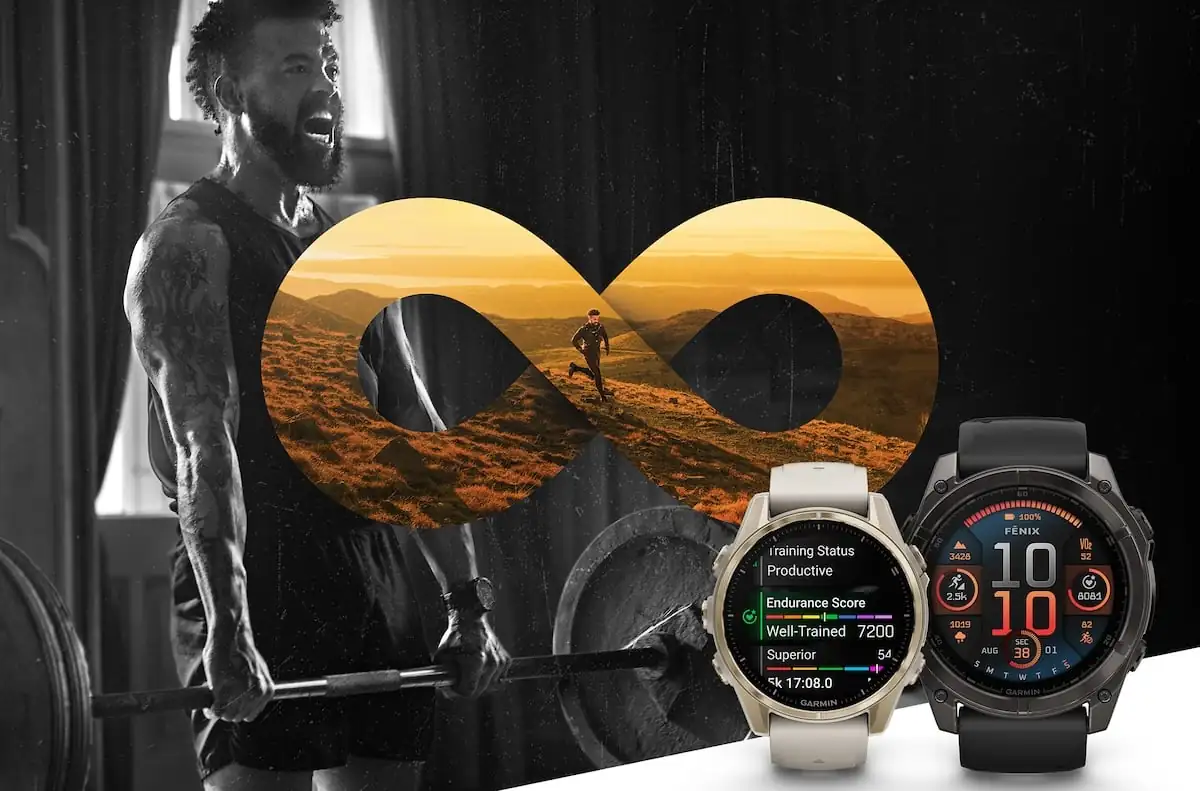
Garmin, Apple Watch, Polar, and Fitbit all estimate VO2 max from heart rate relative to pace or power during running or cycling. These estimates carry mean errors of roughly 3-8 mL/kg/min versus lab testing — adequate for tracking trends over weeks and months, but not precise enough for clinical decisions. Garmin's estimates, built on large GPS-plus-heart-rate datasets, are generally regarded as among the most consistent consumer options. To get reliable wearable numbers, feed the device clean data: run outdoors with GPS, wear a chest strap if possible, and let it collect several efforts before trusting the trend.
Browse All Products
Explore our evidence-based product reviews across every health category.
What Drives VO2 Max: Training Protocols
Before starting any high-intensity program, and especially if you are over 40, sedentary, or have any cardiovascular or metabolic condition, check with your doctor. Maximal-effort exercise is safe for most people but genuinely stresses the heart, and screening is worthwhile.
Zone 2 Training (The Foundation)
The majority of endurance training — roughly 80% of volume — should be Zone 2: a conversational pace where you can still speak in full sentences. Zone 2 builds mitochondrial density, capillary networks, and fat-oxidation capacity at the cellular level. These adaptations raise VO2 max largely by improving the oxygen-extraction side of the equation and by expanding the aerobic base you can later push against.
Practical protocol: 3-5 hours per week at Zone 2 intensity, sustained consistently for several months. Progress is slow but durable.
VO2 Max Intervals (Zone 5)
To directly lift the VO2 max ceiling, you need high-intensity intervals at roughly 90% or more of your maximum. The Norwegian 4x4 protocol is the best-studied:
- 4 repetitions × 4 minutes at 90-95% of maximum heart rate
- 3 minutes of active recovery between intervals
- No more than 2 sessions per week
- Preceded by a thorough warm-up and followed by an easy cool-down
Research on this protocol has repeatedly shown meaningful VO2 max gains — often in the range of 5-10% over 8-12 weeks in previously sedentary adults, with smaller gains in already-trained individuals.
The 80/20 Distribution
Elite endurance athletes across sports tend to train roughly 80% of their volume at low intensity and 20% at high intensity. This "polarized" distribution reliably produces larger VO2 max gains than spending most of your time at moderate intensity — the so-called "gray zone" that feels productive but under-stimulates both the aerobic base and the top end.
Common Mistakes and Realistic Timelines
The most common error is living in the gray zone: training too hard on easy days and not hard enough on hard days, so neither the aerobic base nor the ceiling gets a clear stimulus. The second most common mistake is doing high-intensity intervals too frequently, which accumulates fatigue and blunts the very adaptations you are chasing. Two quality Zone 5 sessions a week, supported by easy volume, beats four mediocre hard sessions.
On timelines: sedentary beginners often see 5-10% improvements within 8-12 weeks of consistent training. Trained individuals improve more slowly — a few percent over a similar period — and eventually need progressive overload to keep moving. Expect the number to plateau at times; that is normal, and consistency over months and years matters more than any single training block.
Get smarter about health tech
Deal alerts, new reviews, and health tips — delivered weekly. No spam.
Unsubscribe anytime. We respect your inbox.
FAQ
Can you improve VO2 max at any age?
Yes. VO2 max declines roughly 1% per year after your mid-20s without training, but structured training can dramatically slow or partially reverse that decline. Studies of interval training in older adults have shown clinically meaningful improvements in maximal oxygen uptake, which translates directly into easier stairs, faster walking, and preserved independence.
How much does VO2 max affect longevity?
Substantially. In the large JAMA Network Open cohort, each step up in fitness category was associated with a meaningful reduction in mortality risk, and the least-fit group fared dramatically worse than even moderately fit peers. The biggest relative gains come from moving off the bottom — going from unfit to moderately fit yields the largest risk reduction of all.
What's the quickest way to raise VO2 max?
Combine two Norwegian 4x4 interval sessions per week with several hours of Zone 2 work. The intervals push the ceiling; the easy volume builds the base and supports recovery. This pairing is the most evidence-supported route to fast gains.
Does body weight affect VO2 max?
Yes. Because VO2 max is expressed relative to body weight (mL/kg/min), losing excess fat mass raises your relative score even if absolute cardiac output is unchanged. This is one reason fat loss and improved exercise capacity tend to move together.
How is VO2 max different from resting heart rate or HRV?
Resting heart rate and heart rate variability are day-to-day readiness and recovery signals. VO2 max is a capacity ceiling that changes slowly over months. All three are useful, but they answer different questions: HRV tells you how recovered you are today; VO2 max tells you how fit you are overall.
Bottom Line
VO2 max is a rare metric that is both deeply predictive of long-term health and directly improvable through training you control. Test it — via a lab, a field test, or a reliable wearable — then build a program that spends most of its time easy and a small, focused fraction near maximal effort. The goal is not an elite number; it is reaching and holding the "excellent" band for your age so that fitness remains a buffer, not a liability, as you get older.
Updated March 2026
Featured Products
Products mentioned in this article


Related Guides
More articles you might find helpful
Best Bed Cooling Systems 2026: Eight Sleep vs Cheaper Alternatives
**Disclosure:** Product CTAs on this page currently go to manufacturer sites (no affiliate tracking yet). Better Vitals may earn a commission once partner links are live — rankings and "skip if" calls won't change when we swap URLs. We only recommend gear we'd put on a shortlist for a specific type
Is the Oura Membership Worth It in 2026? (And How to Skip It)
*Updated July 2026*
Oura Ring Price in 2026: Every Model, Subscription & Real Total Cost
*Updated July 2026*

Written by
Steve Luu
Health tech researcher