Foam Rolling vs Massage Gun: Which Is Better for Recovery?
Key Takeaway
If you've spent any time in a gym, physical therapy clinic, or wellness influencer's Instagram feed over the past decade, you've encountered both of these tools. Foam rollers have been a staple of warm-ups and cool-downs since the early 2010s. Massage guns — or percussion therapy devices, if you wan
Affiliate Disclosure: BetterVitals may earn a commission from purchases made through links in this article, at no additional cost to you. This supports our independent research and analysis. We only recommend products we believe in after thorough evaluation.
Medical Disclaimer
This article is for educational purposes only and is not a substitute for professional medical advice, diagnosis, or treatment. Always consult your healthcare provider before making health decisions.
Foam Rolling vs Massage Gun: Which Is Better for Recovery?
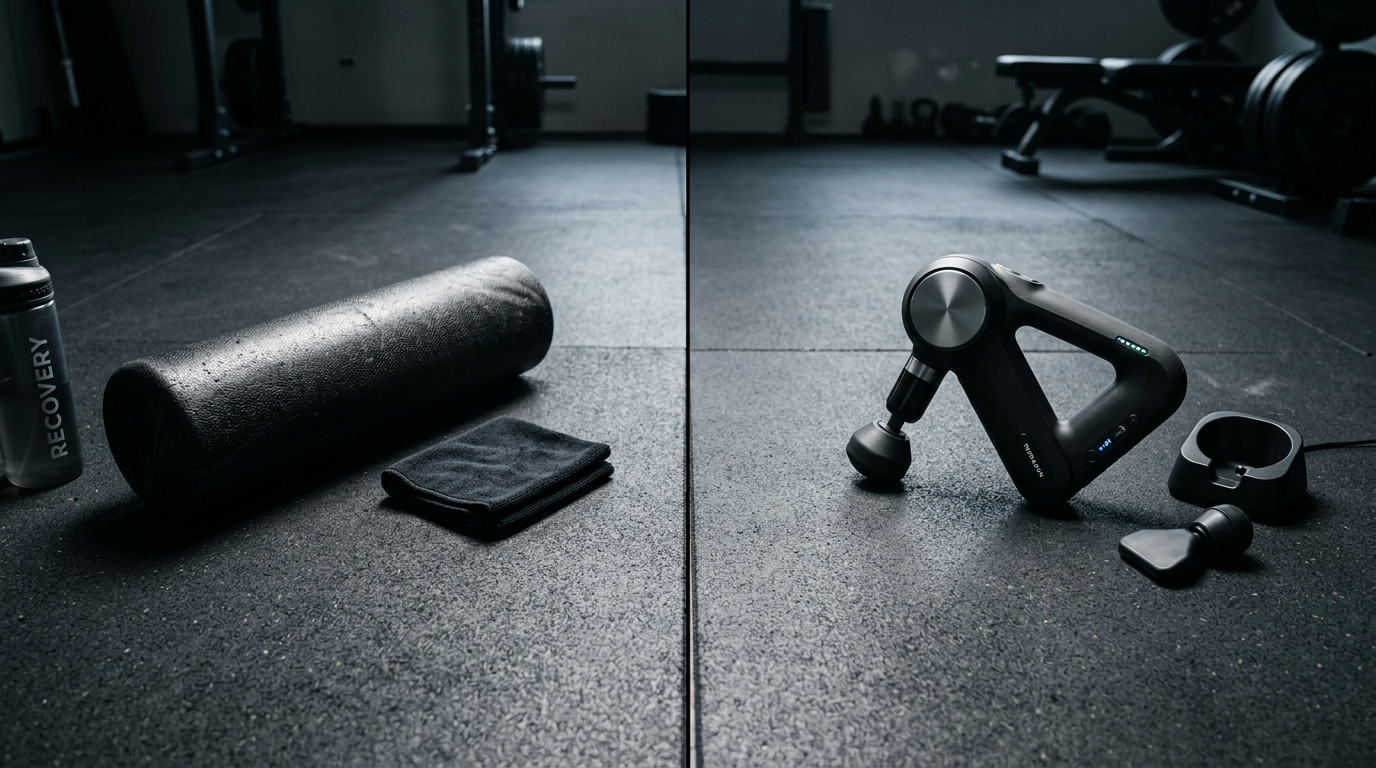
If you've spent any time in a gym, physical therapy clinic, or wellness influencer's Instagram feed over the past decade, you've encountered both of these tools. Foam rollers have been a staple of warm-ups and cool-downs since the early 2010s. Massage guns — or percussion therapy devices, if you want the clinical term — exploded onto the scene around 2018 and haven't slowed down since. Both claim to improve recovery, reduce soreness, increase range of motion, and generally make your muscles feel better. But they work through fundamentally different mechanisms, and understanding those differences is the key to knowing which one deserves space in your gym bag.
Here's the honest starting point: both tools work. The research supports each of them for specific outcomes. The real question isn't "which is better" in the abstract — it's which is better for you, given your goals, training style, pain tolerance, and budget. A competitive CrossFit athlete with chronic hip tightness has different needs than a desk worker with neck and shoulder tension. The right tool changes depending on the job.
We've used both extensively — foam rollers for years, massage guns since the first Theragun hit the market — and we've also dug into the clinical literature to separate what's proven from what's marketing. This guide gives you the honest comparison so you can make an informed decision. For a head-to-head of the top massage gun models specifically, see our Theragun vs Hypervolt comparison.
How Foam Rolling Works: Myofascial Release
Foam rolling is a form of self-myofascial release (SMR). The concept is straightforward: you use your body weight to press a muscle against a firm cylindrical surface, then slowly roll back and forth. The pressure targets the fascia — the thin connective tissue that wraps around every muscle, bone, and organ in your body — as well as the muscle tissue itself.
The Mechanisms
Mechanical pressure: Rolling creates direct compressive force on the tissue. This physically deforms the fascia and muscle, helping break up adhesions (commonly called "knots") and increasing tissue compliance. Think of it as ironing out wrinkles in a stubborn material.
Neurological response: When you apply sustained pressure to a muscle, your nervous system responds by reducing the resting tension (tone) in that muscle. This is mediated by Golgi tendon organs and mechanoreceptors in the fascia. The result is a temporary reduction in muscle stiffness — which is why you feel looser after rolling.
Increased blood flow: The compression-and-release cycle of rolling creates a pumping effect that drives blood into the tissue and pushes metabolic waste out. A 2015 study in the Journal of Strength and Conditioning Research found that foam rolling increased arterial blood flow to the quadriceps for up to 30 minutes post-rolling.
What the Research Says
The evidence base for foam rolling is robust and growing. A 2019 meta-analysis in Frontiers in Physiology examined 49 studies and concluded that foam rolling:
- Increases range of motion by an average of 4% without decreasing muscle performance — a meaningful advantage over static stretching, which can temporarily reduce force production.
- Reduces delayed onset muscle soreness (DOMS) when performed after exercise, with the largest effects seen at 24–72 hours post-exercise.
- Has no significant effect on athletic performance when used as a warm-up, though it doesn't impair it either.
The evidence is strongest for short-duration rolling (30–120 seconds per muscle group) at moderate pressure. More isn't necessarily better — excessive rolling or rolling on already inflamed tissue can increase irritation.
How Massage Guns Work: Percussion Therapy
Massage guns deliver rapid, repetitive percussive strokes to muscle tissue. The device's head oscillates at high frequency (typically 1,400–3,200 percussions per minute), driving into the muscle at varying depths depending on the amplitude (stroke length) and pressure applied.
The Mechanisms
Rapid percussive force: Unlike the slow, sustained pressure of foam rolling, massage guns deliver quick, repeated impacts. This creates a different neurological response — the rapid stimulation is thought to override pain signals through a mechanism called gate control theory. Essentially, the percussive input "drowns out" the pain signals being sent from sore or tight muscles.
Vibration-induced relaxation: The high-frequency vibration stimulates muscle spindles and triggers a reflexive relaxation response. This is similar to what happens during whole-body vibration therapy, which has its own body of supporting research.
Targeted pressure: The biggest practical advantage of a massage gun is precision. You can target specific trigger points, small muscle groups, and hard-to-reach areas (like the subscapularis or deep hip rotators) that are nearly impossible to reach with a foam roller.
What the Research Says
The research on percussive therapy is newer but growing rapidly. A 2020 study in the Journal of Clinical and Diagnostic Research found that percussion therapy applied for five minutes to the calf muscles immediately increased range of motion by approximately 5.4 degrees — comparable to the effect of foam rolling.
A 2021 study in the Journal of Sports Science and Medicine compared massage gun treatment to a control group and found significant reductions in DOMS and improvements in pain pressure threshold at 24, 48, and 72 hours post-exercise.
A 2022 systematic review in the International Journal of Sports Physical Therapy concluded that percussive therapy devices are "effective for short-term improvements in flexibility and pain reduction," though the authors noted that long-term benefits need more study.
For a detailed breakdown of the best devices on the market, see our best massage gun guide.
Head-to-Head Comparison
Pain Reduction and Soreness
Foam roller: Effective for broad muscle groups. The rolling motion covers large surface areas efficiently. The pressure is self-regulated by body weight, which means you can easily back off sensitive areas. The downside: some areas are genuinely painful to roll, especially the IT band and deep hip flexors.
Massage gun: Equally effective for soreness, with the advantage of precision. You can work a specific knot for 30 seconds without repositioning your entire body. The vibration also provides immediate sensory relief that many users describe as more pleasant than foam rolling. The downside: it's easy to overdo it. Holding a massage gun on one spot too long or using too high a speed on sensitive tissue can cause bruising or increased inflammation.
Winner: Tie. Both reduce DOMS comparably. Massage guns win for targeted areas; foam rollers win for large muscle groups.
Range of Motion
Foam roller: Strong evidence for acute ROM improvements, particularly in the quads, hamstrings, and calves. The effect lasts approximately 10–30 minutes, making it an excellent pre-workout tool.
Massage gun: Comparable ROM improvements in the studies that exist, though the evidence base is smaller. Particularly effective for smaller muscle groups and joints where a foam roller is impractical (shoulders, ankles).
Winner: Slight edge to foam rolling for overall ROM, primarily because the research base is larger and more established.
Convenience and Portability
Foam roller: Bulky. A standard 36-inch roller doesn't fit in a gym bag. Compact travel rollers exist but sacrifice functionality. Using a foam roller requires floor space, which isn't always available. And rolling certain body parts (upper back, hip flexors) requires you to get into awkward positions on the ground.
Massage gun: Fits in a backpack. Can be used standing, sitting, or lying down. Works at your desk, on the couch, or in a hotel room. Doesn't require you to contort yourself on the floor of a crowded gym.
Winner: Massage gun, decisively.
Cost
Foam roller: A high-density foam roller costs $15–35. A textured or vibrating roller runs $30–80. Total lifetime cost is low — a quality roller lasts 2–5 years.
Massage gun: Entry-level models start around $50–80. Mid-range options (Ekrin, Bob and Brad) run $130–200. Premium devices (Theragun Pro, Hypervolt 2 Pro) cost $300–400+. Replacement heads and batteries add to the long-term cost. For a detailed comparison of the top models, check our Theragun vs Hypervolt review.
Winner: Foam roller, by a wide margin.
Learning Curve
Foam roller: Moderate. Proper form matters — rolling too fast, rolling directly on joints, or putting excessive pressure on the lower back are common mistakes. It takes a few sessions to learn the right speed, pressure, and body positioning for each muscle group.
Massage gun: Low. Point it at the sore muscle and turn it on. The intuitive nature of the device is a genuine advantage. That said, there's a risk of overuse — "more is better" doesn't apply, and aggressive use can cause tissue damage.
Winner: Massage gun, with the caveat that simplicity can enable misuse.
Browse All Products
Explore our evidence-based product reviews across every health category.
When to Use Each Tool
Use a Foam Roller When:
- Pre-workout warm-up. 60–90 seconds per major muscle group increases ROM without reducing force production. Roll your quads, hamstrings, adductors, and calves before a leg session.
- Large muscle group recovery. Post-workout rolling of the quads, glutes, and upper back is efficient and effective.
- You're on a budget. A $20 foam roller delivers 80% of the recovery benefit of any tool on the market.
- You want active recovery. The physical act of rolling engages your core, requires body awareness, and involves gentle movement — it's a mild workout in itself.
Use a Massage Gun When:
- Targeting specific trigger points. A knot in your trap, a tight spot in your calf, a stubborn adhesion in your piriformis — the massage gun's precision makes quick work of these.
- Traveling or short on time. Two minutes with a massage gun on your quads is faster and more convenient than getting on the floor with a roller.
- Hard-to-reach areas. Upper traps, forearms, shins, feet, neck — areas where a foam roller is impractical or impossible.
- Pre-event activation. Some athletes use massage guns on low settings before competition to "wake up" specific muscles without the fatigue of foam rolling.
Can You Use Both? (Yes, and Here's How)
The best recovery routine isn't either/or — it's a combination. Here's how we'd structure a comprehensive soft tissue routine:
Pre-workout (5 minutes): Foam roll major muscle groups (quads, hamstrings, glutes, upper back) for 60 seconds each. This provides broad tissue preparation and ROM improvement.
Post-workout (5–10 minutes): Use the massage gun on any specific areas of tightness or soreness. Focus on trigger points and areas that feel restricted. 30–60 seconds per spot, moderate pressure.
Rest days: Longer foam rolling session (10–15 minutes) as active recovery. This is also a good time to explore pneumatic compression if you have access — our NormaTec 3 review covers when that makes sense.
Before bed: Light massage gun work on the neck, traps, and feet can promote relaxation. Keep the speed low and the pressure gentle.
This combined approach gives you the broad coverage of foam rolling and the precision of percussion therapy. You can also layer in other recovery modalities — cold plunging for systemic inflammation, compression gear for specific joints, and prioritizing sleep above all else.
Get smarter about health tech
Deal alerts, new reviews, and health tips — delivered weekly. No spam.
Unsubscribe anytime. We respect your inbox.
Best Foam Rollers and Massage Guns
Foam Rollers Worth Buying
- TriggerPoint GRID ($30–35): The textured surface provides varied pressure. Hollow core is durable and holds shape. The standard against which other rollers are measured.
- LuxFit High-Density Roller ($15–20): Simple, effective, inexpensive. A solid 36-inch smooth roller that does what you need without gimmicks.
- Hyperice Vyper 3 ($150–180): A vibrating foam roller that combines rolling with vibration therapy. The vibration adds a neurological component that enhances the myofascial release effect. Premium price, but genuinely different from a standard roller.
Massage Guns Worth Buying
- Theragun Pro Plus ($400+): The benchmark for amplitude and power. Deep tissue capability that cheaper guns can't match. Expensive but exceptional.
- Hypervolt 2 Pro ($300–350): Quieter than the Theragun, excellent build quality, strong motor. Our pick if noise is a concern.
- Ekrin B37S ($150–170): Best value in the mid-range. 80% of the performance of premium guns at half the price.
FAQ
Is a massage gun better than a foam roller?
Neither is universally better. Massage guns offer more precision, convenience, and ease of use. Foam rollers are cheaper, better for large muscle groups, and have a longer research track record. For most people, owning both is ideal — but if forced to choose one, a foam roller provides more versatile coverage at a lower price point.
Can a massage gun replace foam rolling?
Largely, yes — with caveats. A massage gun can address most of the same tissue work as a foam roller. However, rolling has a unique benefit: it requires active body positioning and engagement that provides a mild core workout and body awareness component. If you only own a massage gun, you're not missing much physiologically, but you might miss the movement component.
How long should I foam roll or use a massage gun?
For foam rolling: 30–120 seconds per muscle group. Slow, deliberate rolls work better than rapid back-and-forth. For massage guns: 30–60 seconds per muscle group or trigger point. Avoid staying on any single spot for more than 2 minutes. More time isn't better for either tool — excessive use can increase inflammation rather than reduce it.
Can I use a massage gun on my neck?
Yes, but with caution. Use a soft attachment head, the lowest speed setting, and avoid the front of the neck (where arteries and the trachea are located). Stick to the side and back of the neck — the upper trapezius and levator scapulae are the target muscles. If you have any cervical spine issues, consult a physical therapist first.
Should I foam roll before or after a workout?
Both are beneficial, but for different reasons. Pre-workout rolling increases range of motion and tissue readiness without impairing strength — making it an excellent warm-up addition. Post-workout rolling helps reduce DOMS and promote recovery. If you can only do one, post-workout rolling generally provides more perceived benefit.
Do massage guns help with cellulite?
There's no credible scientific evidence that massage guns reduce cellulite. Cellulite is a structural condition related to fat distribution, connective tissue architecture, and genetics. While massage temporarily increases blood flow and may briefly change the appearance of skin, the effect is cosmetic and temporary. Any product claiming to "cure" cellulite with percussion therapy is making an unsupported claim.
Featured Products
Products mentioned in this article

Related Guides
More articles you might find helpful
Wonderfeel Youngr vs NOVOS Boost (2026): Which NMN Wins?
*Updated July 2026*
Most Accurate CGM in 2026: MARD Scores Compared (Every Sensor)
*Updated July 2026*
Dexcom Stelo vs Abbott Lingo (2026): Accuracy, Price, App Compared
*Updated July 2026*

Written by
Steve Luu
Health tech researcher