Best Theragun Alternatives for Percussion Therapy in 2026
Key Takeaway
Theragun established the premium percussion massager category, but competitors have closed the gap significantly — in some cases matching or surpassing Therabody's flagship on specific specs at a lower price. Whether you are priced out of the Theragun PRO Plus (around $649) or simply want to evaluat
Affiliate Disclosure: BetterVitals may earn a commission from purchases made through links in this article, at no additional cost to you. This supports our independent research and analysis. We only recommend products we believe in after thorough evaluation.
Medical Disclaimer
This article is for educational purposes only and is not a substitute for professional medical advice, diagnosis, or treatment. Always consult your healthcare provider before making health decisions.
Best Theragun Alternatives for Percussion Therapy in 2026
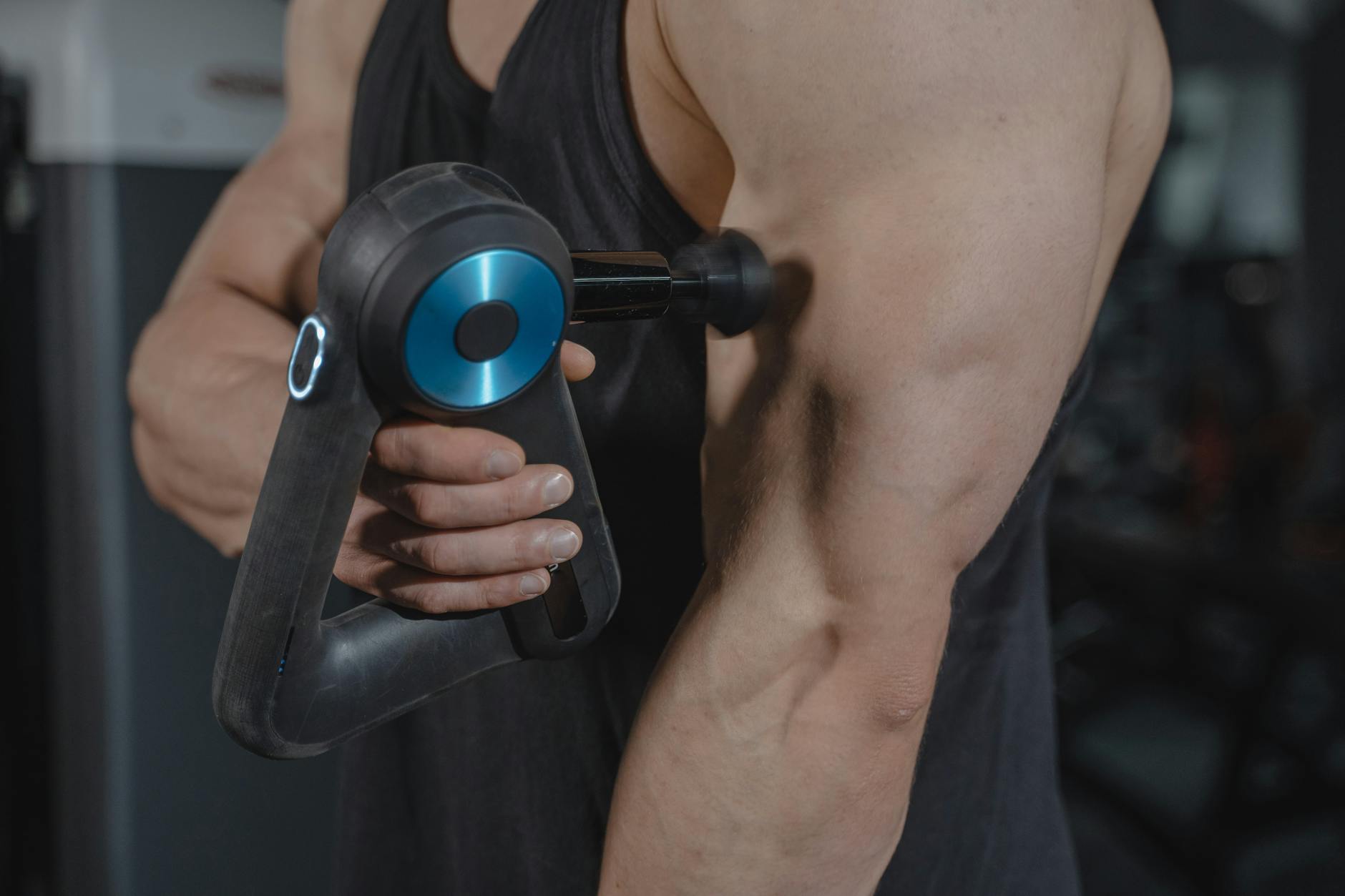
Theragun established the premium percussion massager category, but competitors have closed the gap significantly — in some cases matching or surpassing Therabody's flagship on specific specs at a lower price. Whether you are priced out of the Theragun PRO Plus (around $649) or simply want to evaluate the field before buying, this guide covers the best percussion therapy devices available in 2026 and, just as importantly, how to judge them.
Before diving in, a quick reality check on what these devices are. Percussion massagers are wellness and recovery tools, not medical treatments. The evidence suggests they can improve short-term range of motion and reduce the perception of delayed-onset muscle soreness (DOMS), likely by increasing local blood flow and modulating how your nervous system registers muscle tension. What the evidence does not show is that they "flush lactic acid," break up scar tissue, or accelerate healing of injured tissue. Set expectations accordingly and a good massage gun becomes a genuinely useful part of a recovery routine.
How Percussion Therapy Actually Works
A percussion massager drives a padded head rapidly in and out against the muscle, delivering repeated pressure pulses several thousand times per minute. Two things appear to happen. First, the rapid mechanical input increases local circulation and warms the tissue, which can transiently improve flexibility and range of motion. Second, the strong vibratory stimulus is thought to influence the nervous system's sensory processing — a "gate control" effect in which the flood of sensation dampens the signals your brain interprets as tightness or soreness.
The practical upshot: percussion is excellent for pre-workout activation, easing the tightness of DOMS a day or two after hard training, and releasing everyday tension in the neck, shoulders, and back. It is not a substitute for progressive rehab, mobility work, or professional care when something is actually injured.
What Defines a Quality Percussion Massager
Before comparing devices, here is what actually matters:
Amplitude (stroke depth): The most important spec. Most consumer guns run 10-12mm. The Theragun PRO Plus reaches 16mm, as do premium competitors like the Achedaway Pro. Greater amplitude means the head travels farther and reaches deeper muscle layers — this is the Theragun's core performance differentiator.
Stall force: How much pressure you can apply before the motor bogs down and stops. The Theragun PRO is rated around 60 lbs; many competitors sit at 25-40 lbs. Higher stall force matters for dense muscle groups (glutes, hamstrings) and firm trigger-point work where you lean in hard.
Noise level: Roughly 40-65 dB is the practical range. Above 65 dB is too loud for evening use or shared, quiet spaces.
Percussions per minute (PPM): The usable range matters more than the top number. Something like 1,750-3,200 PPM covers most applications, from gentle warm-up to aggressive recovery.
Ergonomics and battery: A comfortable grip angle and a battery that lasts multiple sessions turn a spec sheet into something you will actually reach for. An awkward, heavy device with a two-hour battery gets left in a drawer.
Best Theragun Alternatives Ranked
1. Hyperice Hypervolt 2 Pro — Best Value Premium
Amplitude: ~14mm | Stall Force: ~40 lbs | Price: ~$299
Hyperice's Hypervolt 2 Pro closes most of the performance gap with the Theragun PRO Plus at less than half the price. Five speed settings (roughly 1,800-3,200 PPM), a pressure sensor with three force zones, and QuietGlide operation around 52 dB. It pairs with the Hyperice app for guided routines and app-controlled speed.
Best for: Serious home users who want near-premium performance without the flagship price.
2. Achedaway Pro — Best for Deep Tissue Depth
Amplitude: 16mm | Stall Force: 80 lbs | Price: ~$249
The Achedaway Pro matches the Theragun's 16mm amplitude for hundreds less and exceeds its stall force with a rated 80 lbs — making it technically superior on the two most important performance metrics. Four speed settings and a brushless motor with minimal vibration reaching the hand. Weaker brand recognition, but the specs are legitimate.
Best for: Performance-focused buyers who want Theragun-class depth and power at mid-range pricing.
3. Bob and Brad Air 2 — Best Budget Professional-Grade
Amplitude: 16mm | Stall Force: ~50 lbs | Price: ~$130
Bob and Brad (the popular physical-therapist YouTube channel) designed the Air 2 with clinical use in mind, and it shows in specs that punch well above its price. A 16mm amplitude, a quiet brushless motor (~45 dB), six speed settings, and a charging case are all included, and the roughly 6-hour battery life is exceptional.
Best for: Budget-conscious buyers who want professional-depth percussion without premium pricing.
4. TimTam All New Power Massager Pro — Best for Heat + Percussion
Amplitude: 16mm | Stall Force: ~55 lbs | Price: ~$299
TimTam was the first to offer a heated percussion attachment, making it the original combined heat-plus-percussion device. The heated tip warms quickly, pre-warming tissue before deep percussion — the same combination Theragun later adopted as a premium feature. Core performance specs match or exceed the Theragun for most applications.
Best for: Chronic-tension sufferers and athletes who want heat plus percussion at flagship depth for meaningfully less.
5. Ekrin B37 — Best for Extended-Use Comfort
Amplitude: 12mm | Stall Force: 56 lbs | Price: ~$230
The Ekrin B37 does not match the Theragun's amplitude (12mm vs 16mm), but its 15-degree angled handle makes it the most ergonomic option for reaching your own upper back and shoulders. The roughly 8-hour battery is the longest here, and 56 lbs of stall force is competitive. For users who prioritize easy self-application over maximum depth, the ergonomics are a real differentiator.
Best for: Solo users who want to treat their own back and shoulders without contortion or a second person.
Browse All Products
Explore our evidence-based product reviews across every health category.
When Theragun Is Still Worth It
Despite strong competition, the Theragun PRO Plus retains genuine advantages:
- A rotating multi-angle arm for unassisted back and shoulder access
- Integrated heat, near-infrared light, and vibration modes (no direct competitor matches this exact combination)
- Bluetooth force feedback through the Therabody app
- A swappable battery for zero session interruption
- FDA registration, which supports HSA/FSA eligibility for many buyers
If any of these — particularly the heat-plus-light combination or HSA/FSA eligibility — are priorities, the PRO Plus can justify its premium. For pure percussion depth and power alone, the Achedaway Pro or Bob and Brad Air 2 rival it for far less.
How to Use a Percussion Massager Effectively
Glide the head slowly along the length of the muscle rather than jamming it into one spot — roughly one to two inches per second, spending 30-60 seconds sweeping across a muscle group. Let the weight of the device do the work; you do not need to press hard, and pressing to the point of sharp pain is counterproductive. Keep the head off bones, joints, and the front of the neck, and never grind on a spot that is bruised, acutely painful, or freshly injured.
For a pre-workout warm-up, use a lower speed for 30-45 seconds per muscle to increase blood flow and range of motion. For post-exercise recovery, 1-2 minutes per worked muscle group in the day or two after training is plenty. For everyday tension, brief daily use on the traps, shoulders, and calves is safe.
Common Mistakes
Pressing too hard. More pressure does not mean more benefit and can leave you bruised. Depth comes from amplitude, not from crushing the device into your body.
Working directly on an injury. Acute strains, fresh bruises, and inflamed tendons should be left alone; use the device on surrounding tissue only, and get professional guidance for anything that is not resolving.
Overspending on specs you won't use. If you mainly want to loosen tight shoulders in the evening, a quiet mid-range gun serves you better than a maximal-depth professional unit.
Chasing marketing claims. Ignore "detox" and "lactic acid flush" language. Judge devices on amplitude, stall force, noise, ergonomics, and battery.
Get smarter about health tech
Deal alerts, new reviews, and health tips — delivered weekly. No spam.
Unsubscribe anytime. We respect your inbox.
FAQ
Is amplitude or stall force more important?
Amplitude determines how deep into the muscle the percussion reaches; stall force determines how much pressure you can apply before the motor stalls. For most people targeting large muscle groups, amplitude matters more — 14-16mm reaches deep fibers. For stubborn trigger points and dense areas where you lean in, higher stall force keeps the motor running under load.
How often should I use a percussion massager?
For post-exercise recovery, 2-5 minutes per muscle group within 24-48 hours of training. For chronic tension, brief daily use of 1-3 minutes per area is fine. There is no strong evidence you can "overuse" a massage gun at reasonable session lengths, but if an area is too sore to touch, give it time.
Do massage guns help with injury recovery?
Percussion promotes circulation and may ease DOMS, but it should not be used on acute injuries or directly over injured tissue. For tendinopathy, post-surgical recovery, or persistent pain, use the device near — not on — the affected area, and consult a physical therapist for guidance specific to your situation.
Are percussion massagers safe for everyone?
Most healthy adults can use them safely, but avoid use over the abdomen during pregnancy, over varicose veins or areas of poor circulation, near recent fractures or surgical sites, and if you have a bleeding disorder or take blood thinners without clearing it with your doctor first. When in doubt, ask a clinician.
Do I need the app and smart features?
No. App-guided routines and force feedback are nice to have but not essential. A quiet, well-built gun with good amplitude and a comfortable handle delivers the core benefit; smart features are convenience, not performance.
Bottom Line
The percussion-therapy market has matured to the point that you no longer need to spend flagship money for flagship performance. If deep-tissue depth and power are your priorities, the Achedaway Pro and Bob and Brad Air 2 rival the Theragun for far less. The Theragun PRO Plus still earns its price for anyone who values its rotating arm, heat-and-light combination, or HSA/FSA eligibility. Whatever you choose, treat it as a recovery and tension-relief tool, use it with a light touch, and keep it away from actual injuries.
Affiliate Disclosure: Better Vitals may earn a commission when you purchase through our links. Our recommendations are based on independent research and, where possible, hands-on testing.
Featured Products
Products mentioned in this article

Related Guides
More articles you might find helpful
Wonderfeel Youngr vs NOVOS Boost (2026): Which NMN Wins?
*Updated July 2026*
Most Accurate CGM in 2026: MARD Scores Compared (Every Sensor)
*Updated July 2026*
Dexcom Stelo vs Abbott Lingo (2026): Accuracy, Price, App Compared
*Updated July 2026*

Written by
Steve Luu
Health tech researcher