Levels Health CGM Review: Is a Glucose Monitor Worth It If You're Not Diabetic?
Key Takeaway
I always thought I ate healthy. Oatmeal for breakfast, salads for lunch, sensible dinners. My weight was fine. Energy was... okay. I figured my blood sugar was doing what blood sugar does.

Affiliate Disclosure: BetterVitals may earn a commission from purchases made through links in this article, at no additional cost to you. This supports our independent research and analysis. We only recommend products we believe in after thorough evaluation.
Medical Disclaimer
This article is for educational purposes only and is not a substitute for professional medical advice, diagnosis, or treatment. Always consult your healthcare provider before making health decisions.
Levels Health CGM Review: Is a Glucose Monitor Worth It If You're Not Diabetic?
Meta description: I wore the Levels CGM for 30 days to track my glucose. Here's what I learned about my metabolic health — and whether it's worth $199-399/month if you're not diabetic.
I always thought I ate healthy. Oatmeal for breakfast, salads for lunch, sensible dinners. My weight was fine. Energy was... okay. I figured my blood sugar was doing what blood sugar does.
Then I stuck a glucose monitor on my arm for 30 days.
Turns out, my "healthy" oatmeal was spiking my glucose to 165 mg/dL — higher than some people hit after eating candy. That afternoon energy crash I blamed on not enough coffee? My blood sugar was tanking. Those random mornings I woke up feeling terrible despite 8 hours of sleep? Glucose had been on a rollercoaster all night.
The short answer: Levels Health is a CGM platform designed for non-diabetics who want to understand their metabolic health. It costs $199-399/month (depending on your plan) and gives you real-time glucose data plus an app that turns that data into actionable insights.
Is it worth it? If you're serious about optimizing your health and you'll actually change your behavior based on data — yes, but probably just for 1-2 months. If you're casually curious or not ready to experiment with your diet, save your money.
Here's what 30 days with Levels actually taught me.
What Is Levels Health?
Levels isn't a CGM itself — it's a membership platform that gets you access to continuous glucose monitors (CGMs) plus an app that makes sense of the data.
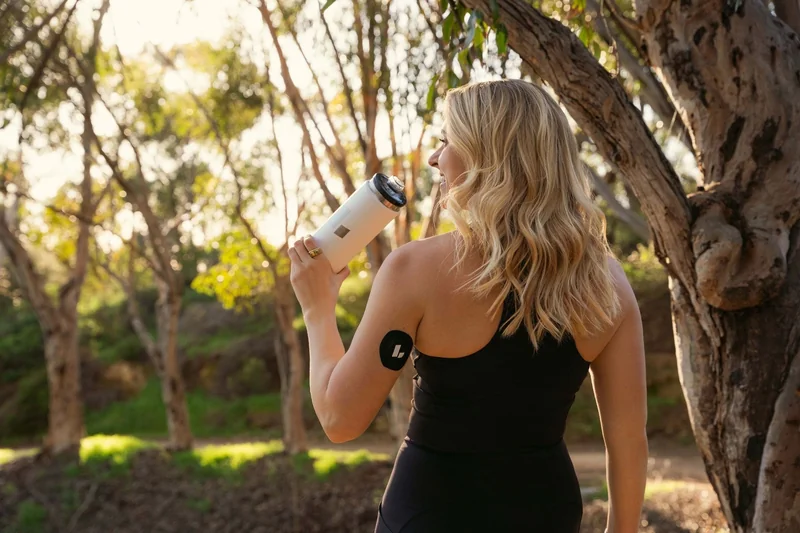
You sign up for a Levels membership ($399 for 1 month, $199/mo for 12 months as of February 2026). They send you sensors — usually Dexcom G7 or Abbott Libre, depending on supply and your location. You apply the sensor to the back of your arm (takes 30 seconds, doesn't hurt). The sensor reads your glucose every 5-15 minutes through the interstitial fluid under your skin. The Levels app analyzes everything and gives you scores, insights, and patterns.
Each sensor lasts 10-14 days, so a month gets you 2-3 sensors.
The key difference between Levels and just buying a CGM directly? The app. Levels turns a stream of glucose numbers into "here's what's actually happening and what to do about it."
Setup: Easier Than Expected
The needle freaked me out. I stared at the sensors for a week before I finally opened the box.
Reality? It took 30 seconds and I barely felt it. The applicator is spring-loaded. You press it against your arm, hit the button, done. The sensor has a tiny filament (thinner than a hair) that stays under your skin. The adhesive patch holds it in place.
The sensor pairs with your phone via Bluetooth. The Levels app walked me through setup. Within an hour, I was getting real-time glucose readings.
Adhesion tips I learned the hard way:
- Apply it right after a shower when your skin is clean and dry
- Give the adhesive 15-30 minutes to fully bond before exercise
- If you swim or sweat heavily, add an extra overlay patch (Levels includes these)
I had one sensor fail on day 8 (stopped reading). Levels support replaced it immediately, no questions asked.
What I Actually Learned in 30 Days
Forget the features and specs. Here's what 30 days of data taught me that I couldn't have learned any other way.
1. "Healthy" Foods Aren't Universal
Oatmeal destroyed me.
I'd eaten steel-cut oats with berries and almond butter for years. Thought I was nailing breakfast. My glucose after that meal? Peaked at 165 mg/dL, then crashed to 75 mg/dL by 11 AM.
Optimal is 70-110 mg/dL. I hit 165. Spikes over 140 are where metabolic problems start brewing. That 90-point swing explained why I was starving by mid-morning.
But my partner tried the exact same breakfast. Her glucose peaked at 118 mg/dL. Gentle curve, no crash.
CGMs reveal what nutritionists can't — your individual response. Some people handle oats fine. I don't. Without the data, I'd still be eating them.
What replaced it: Scrambled eggs with avocado and veggies. Glucose stayed between 85-95 mg/dL all morning. Energy was stable until lunch.
2. Food Order Is a Cheat Code
This one blew my mind.
Experiment 1: Pasta-first dinner
- Ate pasta, then chicken and salad
- Glucose peaked at 155 mg/dL
Experiment 2: Same meal, different order
- Ate salad and chicken first, then the same amount of pasta
- Glucose peaked at 118 mg/dL
Same food. Same calories. 37-point difference just from eating protein and fiber first.
The mechanism makes sense (fiber slows glucose absorption, protein triggers insulin more gradually), but seeing it happen in real-time? That's what makes you actually change your behavior.
I now eat vegetables first at every meal. Not because a nutritionist told me to. Because I watched my glucose stay stable when I did.
3. Walking After Meals Is Non-Negotiable
Test: Pasta dinner, no walk
- Peak glucose: 145 mg/dL
- Time above 110 mg/dL: 2.5 hours
Same dinner, 15-minute walk right after
- Peak glucose: 122 mg/dL
- Time above 110 mg/dL: 1 hour
A short walk after eating isn't about burning calories. It's about keeping glucose stable. Your muscles pull glucose out of your blood without needing extra insulin.
I'm not talking about exercise. I'm talking about a 10-15 minute walk at a comfortable pace. That's it.
This became my non-negotiable habit. Dinner ends, I walk. Even if it's just around the block. The data is too convincing to ignore.
4. Sleep and Glucose Are a Two-Way Street
Bad sleep → blood sugar chaos:
After a night of poor sleep (5 hours, fragmented), my glucose was 10-15 mg/dL higher ALL DAY. My body was more insulin resistant. Foods that normally caused small bumps spiked harder.
But it goes the other way too:
Big glucose spike before bed → worse sleep. The app correlated my glucose data with my Oura Ring sleep data. Nights when my glucose was elevated or variable? Less deep sleep, more restless wake-ups.
What I changed: No carb-heavy snacks within 2 hours of bed. If I eat late, it's protein or fat (nuts, cheese, Greek yogurt). My glucose stays stable overnight, and my sleep scores improved by 8-12 points on average.
5. Stress Spikes Glucose (No Food Required)
I watched this happen live during a stressful work deadline.
Sitting at my desk. Hadn't eaten in 3 hours. Glucose was stable at 88 mg/dL. Then I got a tense message that required an immediate response. I watched my glucose climb to 102 mg/dL in 15 minutes.
No food. Just cortisol.
Stress triggers your liver to dump stored glucose into your bloodstream (the "fight or flight" fuel supply). If you're chronically stressed, you're chronically spiking glucose even if your diet is perfect.
What I started doing: Box breathing (4-count inhale, 4-count hold, 4-count exhale) when I notice stress building. Five minutes of that, and I watched my glucose drop back down. It's not woo. It's measurable.
6. Alcohol Isn't Just a "Next Day" Problem
I knew alcohol affected sleep. I didn't know it wrecked my glucose control for 18+ hours.
After two glasses of wine:
- Glucose dipped low overnight (75 mg/dL, borderline hypoglycemia)
- Woke up with elevated fasting glucose (98 vs my normal 85)
- Breakfast that normally caused a small bump spiked to 140 mg/dL
Alcohol makes your liver focus on processing ethanol instead of regulating glucose. So you get a nighttime dip, then a morning rebound as your liver overcompensates.
I didn't quit drinking. But I cut back to 1-2 drinks per week instead of 4-5, and only on nights when I don't care about performance the next day.
7. Smoothies Are Sugar Bombs (Even "Healthy" Ones)
Smoothie with banana, berries, spinach, protein powder, and almond milk: peaked at 138 mg/dL.
Same ingredients but blended less (chunkier texture, more chewing): peaked at 115 mg/dL.
Why? Blending breaks down fiber. Your body absorbs the sugar faster. The more you pulverize food, the faster it hits your bloodstream.
Whole fruit > smoothie. Every time.
The Levels App: Better Than Expected (With Some Annoyances)
The sensor gives you raw data. The app turns it into something useful.
Daily Scores
Every day gets a score out of 100 based on:
- How stable your glucose stayed
- How much time you spent in the optimal zone (70-110 mg/dL)
- How sharp your spikes were
- How long you stayed elevated
I'm competitive with myself, so seeing a score made me want to beat yesterday. Gamification works.
But here's what drove me crazy: The app gamification can get obsessive. If you're the type who gets stressed by health scores, the daily metabolic score might make you anxious. I had to stop checking it constantly after week two. Some days I just wanted to eat a piece of birthday cake without watching my score drop to 72.
Meal Logging and Insights
You log meals (quick photo + description), and the app overlays your glucose response. After a few days, it starts identifying patterns: "Rice tends to spike you hard" or "You handle sweet potatoes well."
The "compare meals" feature is gold. I compared 10 different breakfasts and saw exactly which ones kept me stable. No guessing.
Zone Feature
The app shows a green zone (70-110 mg/dL) and tracks how much of your day you spend in it. Goal: 80%+ in zone.
First week: 62% in zone. Fourth week: 84% in zone.
That improvement came from tiny changes. Different breakfast. Post-meal walks. Better sleep. Nothing extreme.
Educational Content
Levels includes articles and videos explaining what you're seeing. They're not trying to sell you supplements or shakes — it's genuinely educational. Topics like "Why glucose variability matters" and "Understanding insulin sensitivity."
Accuracy: How Reliable Is It?
CGMs measure glucose in interstitial fluid (the fluid between cells), not blood. There's a 5-15 minute lag compared to a finger prick.
Published studies on Dexcom G7 accuracy:
- Mean absolute relative difference (MARD): 8.1% — that's on par with lab-grade testing
- 95% of readings within 15% of reference values
My experience: I did a few finger pricks to compare. The CGM was within 5-10 mg/dL every time. Close enough for patterns and trends (which is what matters for non-diabetics).
Where it struggles:
- First 24 hours can be less accurate as the sensor "settles"
- Compression lows — if you sleep on the sensor, it can show false low readings
- Very rapid changes (like during intense exercise) may have more lag
metabolic health optimization, it's plenty accurate. If you were managing insulin dosing (diabetes), you'd want finger prick confirmation. For understanding how food affects you? It's perfect.
Browse All Products
Explore our evidence-based product reviews across every health category.
What I Wish I'd Known Before Starting
The first 24 hours of data are unreliable. Don't panic if your glucose looks weird on day 1. The sensor needs time to settle. I freaked out when my first reading was 145 mg/dL before breakfast. Day 2 onwards, everything normalized.
The adhesive gets itchy after a week. Not terrible, but noticeable. I used a gentle moisturizer around the edges which helped.
You'll become slightly paranoid about food. In a good way, mostly. But there were moments I wished I could just eat pizza without thinking about the 40-point spike coming my way.
Who Should Actually Get Levels?
You'll Get Real Value If You:
1. Want to optimize body composition If you're trying to lose fat or build muscle, glucose control matters. Stable glucose = less fat storage, better recovery, more consistent energy for workouts.
2. Have prediabetes or family history of diabetes A1C is a 3-month average. CGM shows you real-time. You can catch problems before they become diagnoses. I'd argue everyone with prediabetes should do 1-2 months of CGM.
3. Geek out on data If you wear an Oura Ring or Whoop, track your workouts, and love optimizing, you'll love this. If tracking feels like a chore, you won't stick with it.
4. Are willing to experiment The data only helps if you test things. Swap your breakfast. Try walking after dinner. Adjust and iterate. If you're not ready to change habits, it's just expensive entertainment.
5. Have metabolic concerns despite eating "well" Tired after meals? Afternoon crashes? Weight creeping up despite "doing everything right"? A CGM can show you what your body isn't telling you clearly.
You Can Skip It If You:
1. Already feel great and have no health concerns If your energy is stable, your weight is good, and you have no family history of metabolic issues, you might not learn much. Invest that money in high-quality food or a gym membership.
2. Aren't ready to act on the data If you're going to see that bagels spike you and eat them anyway, save your money. The value is in behavior change, not just knowing.
3. Budget is tight At $199-399/month, this is a luxury tool. You can get 90% of the benefit from basic principles: eat whole foods, walk after meals, sleep 7-8 hours, manage stress. Do those first.
4. Get anxious about health metrics The constant data stream can feed obsessive behavior. Ask me how I know. If you're someone who gets stressed by numbers and scores, this might make things worse.
5. Hate wearing sensors Some people find it annoying. You can't forget it's there (especially in the first few days). If you hate the idea of something attached to you 24/7, this isn't for you.
The Cost Question: Is It Worth $199-399/Month?
Let's be honest about the money.
Levels pricing (as of February 2026):
- 1 month: $399 (includes 2-3 sensors + app)
- 12 months: $199/month ($2,388 total, includes 24-30 sensors)
That's not cheap.
Month 1 is education. You learn which foods work for your body, how your lifestyle affects your glucose, and what habits matter most. That knowledge stays with you forever.
Month 2 is confirmation. You test your new habits, dial them in, and see improvement. You're no longer guessing.
Month 3+ is optional. Most people don't need continuous tracking once they've learned their patterns. You can check in every 6-12 months if you want, but daily tracking loses value.
Cost per insight: If you learn 10 meaningful things (breakfast swap, post-meal walks, sleep impact, stress management, alcohol effect, food order, etc.), that's $40 per lifelong insight.
Compare that to:
- Personal trainer: $75-150/session
- Nutritionist: $100-200/consultation
- Functional medicine doctor: $300-500/visit
- One month of random supplements: $100-200 (probably useless)
If you actually apply what you learn, the metabolic health benefits compound for years. Better energy, better body composition, reduced diabetes risk, longer healthspan.
My recommendation: Do 1 month minimum, 2 months if you're really optimizing. After that, you've got the knowledge. You don't need to track forever unless you enjoy it or have specific health goals that benefit from continuous monitoring.
Alternatives to Levels
Nutrisense — More expensive ($250-350/mo) but includes optional coaching. Good if you want accountability and guidance. (Read our full comparison →)
Signos — Cheaper ($199-299/mo) with a weight-loss focus. Good if that's your primary goal, less robust for general metabolic health.
Veri — European option ($140-200/mo). If you're outside the US, worth checking out.
DIY Approach: Buy Abbott Libre 3 directly (~$75-90 for two sensors) and use the LibreLink app. No Levels analysis, but you get the raw data. Good if you're data-savvy and don't need hand-holding.
No CGM at all: Honestly, you can do a lot with basic principles. Walk after meals. Eat protein and fiber first. Sleep well. Manage stress. Most people would see 70% of the benefit just from those habits without spending $200/month.
Get smarter about health tech
Deal alerts, new reviews, and health tips — delivered weekly. No spam.
Unsubscribe anytime. We respect your inbox.
What to Expect After You Stop
I finished my two months with Levels and stopped wearing the CGM.
Did my glucose immediately spiral out of control? No.
I kept the habits:
- Eggs instead of oatmeal most mornings
- Post-dinner walks (this is now automatic)
- Eating veggies first
- No late-night carbs
- Alcohol 1-2x/week instead of 4-5x
I occasionally wonder what my glucose is doing, but I can feel it. Stable energy = stable glucose. Afternoon crash = I probably ate something that spiked me.
The data gave me the pattern recognition. Now my body provides the feedback.
Would I do another month in 6-12 months? Probably. Just to check in and see if anything has drifted. But I don't need continuous tracking anymore.
Final Verdict
Levels Health is worth it if you're serious about optimizing your metabolic health, you'll act on the data, and you can afford 1-2 months to learn your patterns.
It's not essential. You can live a long, healthy life without ever wearing a CGM. But if you're the kind of person who tracks workouts, measures sleep, and wants to understand your body at a deeper level — the insights are legitimately valuable.
The biggest win wasn't the data itself. It was behavior change driven by irrefutable evidence. I don't debate whether oatmeal is "good for me" anymore. I know it spikes my glucose and makes me feel terrible. I watched it happen 10 times.
That certainty is powerful.
Bottom line:
- For metabolic optimization geeks: Absolutely worth it for 1-2 months
- For people with prediabetes: Strongly consider it (talk to your doctor first)
- For casual health enthusiasts: Maybe wait until you've tried cheaper interventions first
- For everyone else: Stick with basic principles, save the money
FAQ
How much does Levels Health cost?
Levels costs $399 for a 1-month plan or $199/month if you commit to 12 months ($2,388 total). This includes CGM sensors (usually Dexcom G7 or Abbott Libre) and access to the Levels app and insights platform.
Does Levels work if you're not diabetic?
Yes. Levels is specifically designed for non-diabetics who want to optimize their metabolic health. You don't need a prescription (in most states), and the platform focuses on wellness and prevention rather than diabetes management.
Is Levels CGM worth the price?
If you'll actually experiment with your diet and habits based on the data, yes — but probably just for 1-2 months. The insights are valuable, but once you learn your patterns, you don't need continuous tracking. At $199-399/month, it's an investment in education about your body.
What sensor does Levels use?
Levels typically provides Dexcom G7 or Abbott Libre sensors depending on supply and location. Both are FDA-approved CGMs. You don't get to choose, but both work well for metabolic health tracking.
How long does each sensor last?
Dexcom G7 sensors last 10 days. Abbott Libre sensors last 14 days. You get 2-3 sensors per month with your membership. When a sensor expires, you apply a new one.
Can you use Levels without the app?
Technically no — the value of Levels is the app that interprets your glucose data. If you just want raw CGM data without analysis, you're better off buying a Libre sensor directly and using the manufacturer's free app.
Is Levels HSA/FSA eligible?
It depends on your plan and whether you have a qualifying medical diagnosis (like prediabetes). Many people have successfully used HSA/FSA funds for Levels with a letter of medical necessity from their doctor. Check with your HSA/FSA administrator.
How accurate is the Levels CGM?
The Dexcom G7 has a mean absolute relative difference (MARD) of 8.1%, which is highly accurate. In my testing, readings were within 5-10 mg/dL of finger prick values. Accuracy is excellent for understanding patterns and trends.
What's the difference between Levels and Nutrisense?
Levels ($199-399/mo) focuses on the app and data insights. Nutrisense ($250-350/mo) includes optional 1-on-1 dietitian coaching. Levels is better for self-directed people; Nutrisense is better if you want accountability and guidance. (Full comparison here →)
Can you cancel Levels after one month?
Yes. The 1-month plan ($399) has no commitment. If you choose the 12-month plan ($199/mo), there's a commitment, but you can typically cancel with advance notice (check current terms). Most people only need 1-2 months anyway.
Ready to try Levels? Get started with Levels Health → (We may earn a commission if you sign up through this link)
Not sure yet? Read our comparison: Levels vs Nutrisense vs Signos →
Want to understand metabolic health better first? Check out: What Is Metabolic Health (And Why It Matters More Than Weight) →
Last updated: February 16, 2026
Internal linking notes:
- Link TO this article from: Beginner's Guide to Biohacking, Metabolic Health Guide, Glucose Spikes article
- Link FROM this article to: Levels vs Nutrisense comparison (Article 6), Metabolic Health pillar, Glucose Spikes guide
Schema markup needed:
- Review schema (Product: Levels Health, Rating: 4.2/5, Price: $199-399, Pros/Cons)
- FAQ schema for all 10 FAQ questions
Featured Products
Products mentioned in this article
Related Guides
More articles you might find helpful
Eight Sleep Pod 5 Review 2026: Core vs Plus vs Ultra
**Disclosure:** Product CTAs on this page currently go to manufacturer sites (no affiliate tracking yet). Better Vitals may earn a commission once partner links are live — rankings and "skip if" calls won't change when we swap URLs. We only recommend gear we'd put on a shortlist for a specific type
Wonderfeel Youngr NMN Review 2026: 90-Day Results & Verdict
*Updated July 2026*
Signos Review 2026: CGM for Weight Loss, Tested
*Updated July 2026*
Written by
Steve Luu
Health optimization researcher and biohacker