Jinfiniti NAD Test Review 2026: Is Your NMN Actually Working?
Key Takeaway
Here's the uncomfortable truth about the entire NAD+ supplement industry: almost nobody taking NMN or NR has any idea whether it's doing anything. You swallow the capsule, you trust the marketing, and you hope the number that matters — your actual NAD+ level — is moving in the right direction. The J
Affiliate Disclosure: BetterVitals may earn a commission from purchases made through links in this article, at no additional cost to you. This supports our independent research and analysis. We only recommend products we believe in after thorough evaluation.
Medical Disclaimer
This article is for educational purposes only and is not a substitute for professional medical advice, diagnosis, or treatment. Always consult your healthcare provider before making health decisions.
Jinfiniti NAD Test Review 2026: Is Your NMN Actually Working?
Here's the uncomfortable truth about the entire NAD+ supplement industry: almost nobody taking NMN or NR has any idea whether it's doing anything. You swallow the capsule, you trust the marketing, and you hope the number that matters — your actual NAD+ level — is moving in the right direction. The Jinfiniti Intracellular NAD Test exists to close that gap. It's an at-home finger-prick blood test that measures your NAD+ and tells you where you land against an optimal range, turning a faith-based habit into a measurable one.
That single capability is genuinely valuable in a category built almost entirely on assumption. Instead of guessing, you establish a baseline, start or adjust a precursor, and re-test to confirm your levels actually climbed into the target zone. It's the "measure, don't guess" loop that the rest of the longevity space keeps preaching but rarely lets you actually run.
We looked at how the test works, why measuring intracellular NAD+ matters more than simpler assays, the evidence behind it, and the honest caveats — because at roughly $400 per test, this is only worth it for a specific kind of buyer.
Disclosure: BetterVitals may earn a commission if you purchase through our links. This does not influence our editorial ratings. We were not paid by Jinfiniti, and this review is based on publicly available research.
The Short Answer
The Jinfiniti Intracellular NAD Test is the measure-don't-guess companion to any NAD+ supplement — genuinely useful in a category built on faith. It's an at-home finger-prick blood test that measures your intracellular NAD+ and reports where you fall relative to an optimal range, so you can verify whether your NMN or NR is actually raising the biomarker it's supposed to raise. For anyone spending money on NAD+ precursors, that verification is the missing piece.
The honest caveats: at roughly $400 per test it's expensive enough that you can't run it often, NAD+ testing is newer and less standardized than routine bloodwork, and it's only valuable if you actually act on the results. Used at baseline-and-follow-up intervals by someone committed to optimizing, it earns its place. Used once out of curiosity, it's an expensive number. Score: 8.0/10.
What Is the Jinfiniti NAD Test?
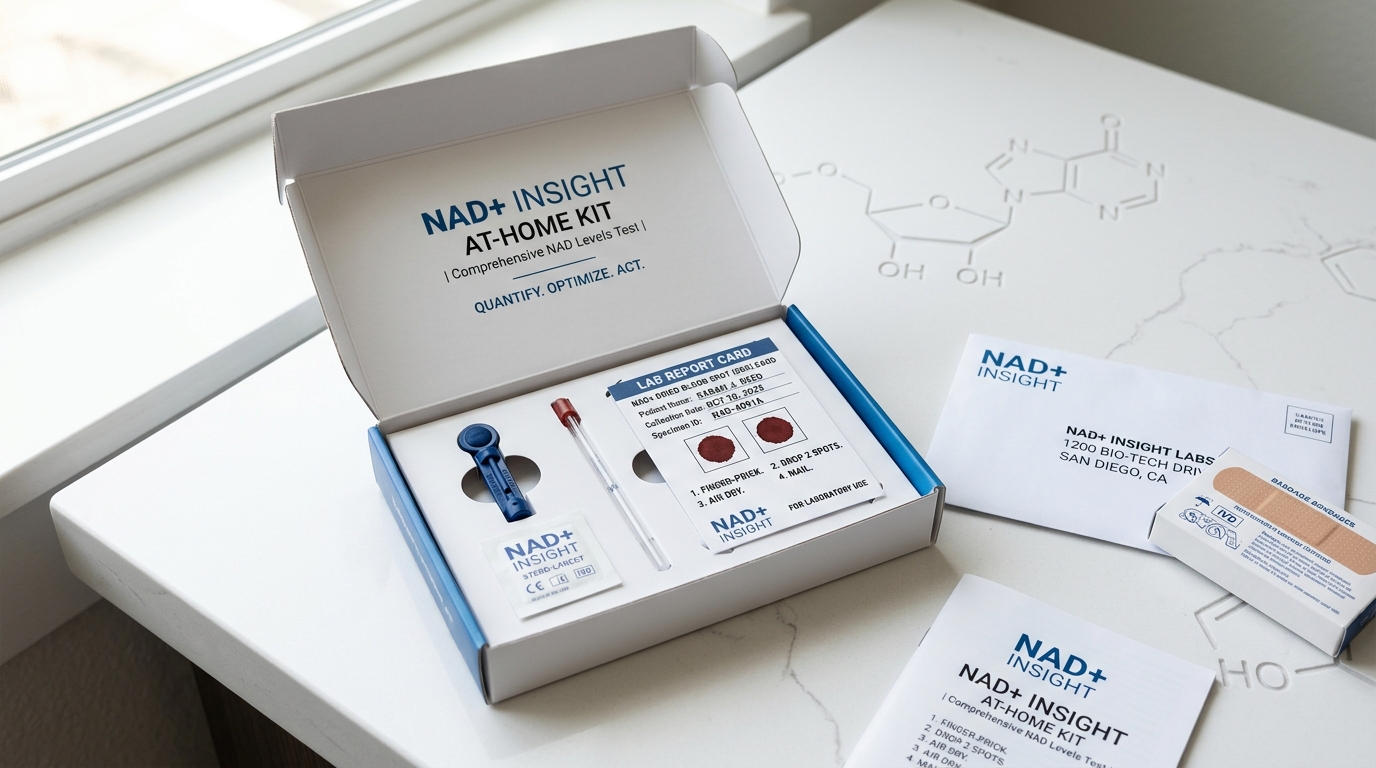
The Jinfiniti Intracellular NAD Test is an at-home lab kit that measures your NAD+ levels from a finger-prick blood sample. You collect a few drops at home, mail the sample back, and receive a report showing your intracellular NAD+ and where it falls against what Jinfiniti defines as an optimal range. It runs around $403 per test.
It comes from Jinfiniti Precision Medicine, a company led by researcher Jin-Xiong She. The NAD test is their flagship offering, but it sits within a broader family — their AgingSOS panels extend measurement to additional aging biomarkers for people who want a wider picture than NAD+ alone.
What makes this test matter isn't novelty for its own sake. NAD+ is a coenzyme central to energy metabolism, DNA repair, and cellular resilience, and it declines with age. The entire NAD+ supplement market is premised on topping it back up — yet until you measure, you have no way to confirm your specific body is responding to your specific dose. This test is the instrument that turns that premise into feedback.
How It Works
The core workflow is a loop, and understanding it is the whole point. You establish a baseline by testing before you change anything. Then you intervene — start an NMN or NR precursor, or adjust the dose of one you're already taking. After several weeks, you re-test to confirm whether your NAD+ actually rose into the target range. If it did, you've verified your protocol works. If it didn't, you've learned something no amount of marketing could tell you, and you can change course.
The critical technical detail is that Jinfiniti measures intracellular NAD+. This matters because NAD+ does most of its work inside your cells, not floating freely in plasma. Simpler assays that measure NAD+ in other compartments can miss the value that actually reflects cellular function. By targeting the intracellular pool, the test aims to report the number that's biologically meaningful for the processes people are trying to support.
That's the mechanism, and it's refreshingly concrete: you get an actual quantity, compared to a reference range, that you can move and re-measure. Compared to the "take it and hope" default of the supplement world, having a needle on the dial changes how you make decisions.
The Evidence & Accuracy
The rationale for measuring NAD+ at all rests on solid ground. A widely cited review by Yoshino et al., "NAD+ Intermediates: The Biology and Therapeutic Potential of NMN and NR" (Cell Metabolism, 2018; PMID 29249689), establishes that NAD+ declines with age across tissues and that boosting it is one of the leading strategies in longevity science. If NAD+ status is both age-sensitive and something you're actively trying to change, then measuring it — rather than assuming — is a defensible thing to want.
There's also a brand-associated study worth citing, with an important label attached. A study published in Frontiers in Aging (2023), associated with Jinfiniti's developer, reports that measured NAD+ levels track with supplementation and health markers. We flag it clearly as developer-associated rather than independent: it supports the test-and-optimize philosophy behind the product, but it isn't the same as third-party validation, and you should weight it accordingly.
Now the accuracy caveats, because this is a YMYL topic and honesty matters more than enthusiasm. NAD+ testing is newer and less standardized than routine clinical labs like a lipid panel or an A1c. That means you should interpret the absolute number cautiously and lean instead on your own trend — the direction and magnitude of change between your baseline and your follow-up on the same test. A rising trend within your own results is more trustworthy than treating any single reading as a precise, universally comparable figure. Used that way, the test does the job it's designed for.
Browse All Products
Explore our evidence-based product reviews across every health category.
NAD Testing vs Taking NMN on Faith
The real comparison here isn't against another lab — it's against the default behavior of almost everyone in this space: taking a precursor blindly and hoping. Here's how measured optimization stacks up against faith-based supplementation.
| Factor | Jinfiniti NAD Test (measured) | Taking NMN on faith |
|---|---|---|
| Up-front cost | ~$400 per test | $0 beyond the supplement |
| Certainty it's working | Confirmed against a target range | None — pure assumption |
| Actionability | Adjust dose based on real feedback | Guess and hope |
| Best case | Verified NAD+ in optimal range | Maybe it worked |
| Worst case | Money spent to learn it didn't work | Years of spend, zero response, never knew |
The blind approach is cheaper on paper, but it carries a hidden cost: you could take Tru Niagen or an NMN product faithfully for years and never know whether your NAD+ actually moved. The test converts that open question into a closed loop. The catch is that the loop only pays off if you're the kind of person who will change your protocol based on what the number says — otherwise you've bought an expensive confirmation of a habit you weren't going to alter anyway.
Pricing and Value
At roughly $403 per test, the Jinfiniti NAD Test is expensive, and there's no way to soften that. It costs more than several months of the NAD+ supplement you'd be verifying. That price is the single biggest constraint on how you should use it: this is not a monthly tracker, and treating it like one would get costly fast.
The value math works when you frame it as a baseline-and-follow-up instrument. One test to establish where you start, a second a couple of months into a protocol to confirm the response — that's two tests to answer a question you'd otherwise never answer at all. Against the cost of taking a precursor indefinitely with zero feedback, spending ~$800 once to confirm your regimen actually works is a defensible one-time diagnostic investment for a committed optimizer.
Where it stops being worth it is frequent re-testing or one-off curiosity. If you're not going to act on the result, or you'd rather put the money toward the supplement itself, the value case collapses. The test earns its price only in the hands of someone running the measure-intervene-retest loop deliberately.
Who Should Buy the Jinfiniti NAD Test
- Anyone already spending money on NMN or NR who wants proof it's working. If you take Tru Niagen or an NMN product and have never verified a response, this is the instrument that answers the question.
- Data-driven optimizers who will act on results. The test rewards people who'll adjust dose, switch precursors, or confirm-and-continue based on the number.
- People choosing between precursors. If you're weighing options from our best NMN supplement roundup, a baseline plus a follow-up tells you which one actually moves your NAD+.
- Committed longevity spenders. If you're already investing in a serious protocol, verifying its centerpiece is a rational use of funds.
Get smarter about health tech
Deal alerts, new reviews, and health tips — delivered weekly. No spam.
Unsubscribe anytime. We respect your inbox.
Who Should Skip It
- Anyone who doesn't take (or plan to take) NAD+ precursors. With nothing to verify and no protocol to adjust, the test has nothing to act on — it's pointless without a supplement in the picture.
- People who won't change anything based on the result. If you'll keep your habit either way, you're paying ~$400 for a number that changes nothing.
- Budget-conscious buyers. At this price, the money is often better spent on the supplement itself — like NOVOS Boost — than on measuring it.
- Anyone wanting a precise, clinically standardized figure. NAD+ testing is newer and less standardized than routine labs; if you need lab-grade absolute precision, temper your expectations.
The Verdict: 8.0/10
The Jinfiniti Intracellular NAD Test does something the rest of the NAD+ industry conspicuously avoids: it lets you check your work. In a category where nearly everyone supplements on faith, having an at-home way to measure your intracellular NAD+, compare it to an optimal range, and confirm your precursor is actually working is genuinely valuable. The intracellular focus is the right technical call, and the underlying science that NAD+ declines with age is well established.
It isn't higher than 8.0 for equally honest reasons. At ~$400 per test it's pricey enough to limit you to baseline-and-follow-up intervals, NAD+ testing is newer and less standardized than routine bloodwork so you should trust your own trend over any single absolute number, and — most importantly — it's only worth buying if you'll actually act on the results and you already take or plan to take NAD+ precursors. Meet those conditions and it's the measure-don't-guess companion the category has been missing. Don't, and it's an expensive number. For a comparison of the supplement side of this equation, see our Tru Niagen review.
View Jinfiniti NAD Test details →
Frequently Asked Questions
Does the Jinfiniti NAD Test show if my NMN is working?
Yes — that's its core purpose. By measuring your intracellular NAD+ at baseline and again after weeks on a precursor, it shows whether your NMN or NR actually raised your NAD+ into the target range. This turns a faith-based supplement habit into a verifiable one, which is the single most useful thing it does. Just remember the answer is only actionable if you're willing to adjust your protocol based on it.
Why does intracellular NAD+ matter more than other measurements?
NAD+ does most of its work inside your cells — powering energy metabolism, DNA repair, and other core processes. Simpler assays that measure NAD+ in other compartments can miss the value that actually reflects cellular function. By targeting the intracellular pool, the Jinfiniti test aims to report the biologically meaningful number rather than a proxy.
How much does the Jinfiniti NAD Test cost?
The Intracellular NAD Test runs approximately $403 per test. That price is the main reason to use it at baseline-and-follow-up intervals rather than frequently — it costs more than several months of the supplement you'd be verifying. Jinfiniti also offers broader AgingSOS panels that measure additional aging biomarkers for people wanting a wider picture.
Is at-home NAD+ testing accurate?
It's useful but should be interpreted with care. NAD+ testing is newer and less standardized than routine clinical labs, so you should treat any single absolute number cautiously and rely instead on your own trend between baseline and follow-up. A rising trend within your own results on the same test is more trustworthy than comparing one reading against universal reference points.
Is the research behind the Jinfiniti test independent?
Partly. The general science that NAD+ declines with age and that boosting it is a leading longevity strategy is well established in independent literature, such as the Yoshino et al. 2018 review in Cell Metabolism. However, a 2023 Frontiers in Aging study reporting that measured NAD+ tracks with supplementation is developer-associated, not independent — it supports the test-and-optimize approach but shouldn't be read as third-party validation.
Should I buy the test if I don't take NAD+ supplements?
No. The test's entire value is verifying and optimizing a precursor protocol, so without an NMN or NR supplement to measure — and no intention to adjust one — there's nothing for the result to act on. If you're not yet supplementing but plan to, start with a quality precursor like NOVOS Boost first, then consider testing to confirm it's working.
Featured Products
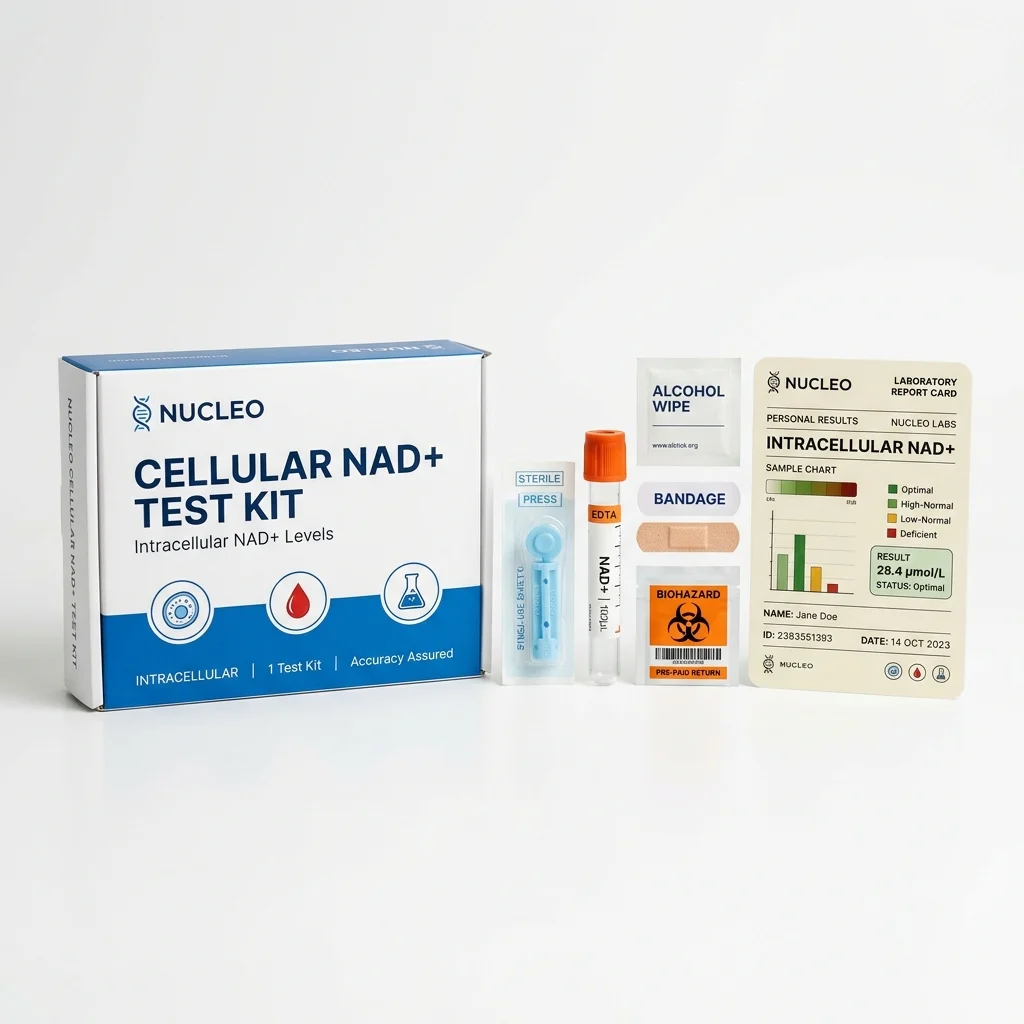
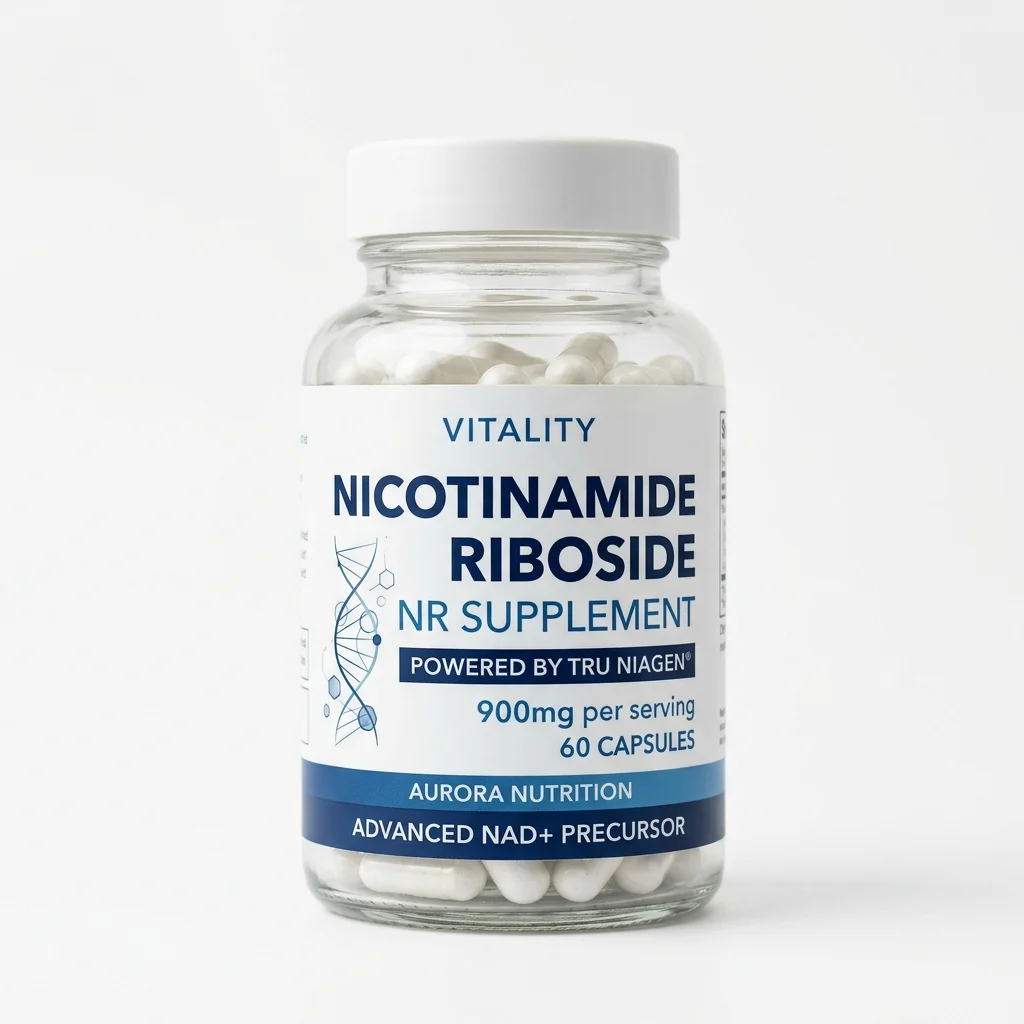
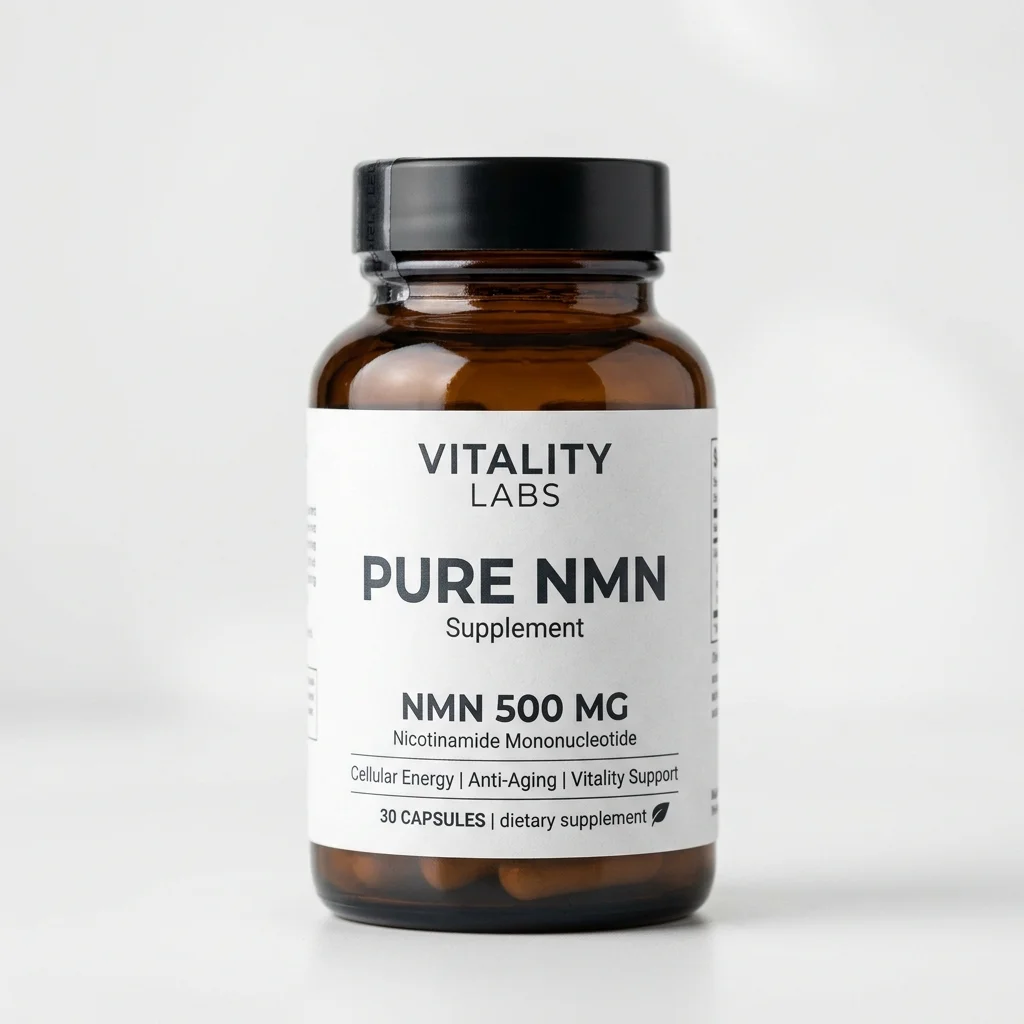
Products mentioned in this article
Related Guides
More articles you might find helpful
Eight Sleep Pod 5 Review 2026: Core vs Plus vs Ultra
**Disclosure:** Product CTAs on this page currently go to manufacturer sites (no affiliate tracking yet). Better Vitals may earn a commission once partner links are live — rankings and "skip if" calls won't change when we swap URLs. We only recommend gear we'd put on a shortlist for a specific type
Wonderfeel Youngr NMN Review 2026: 90-Day Results & Verdict
*Updated July 2026*
Signos Review 2026: CGM for Weight Loss, Tested
*Updated July 2026*

Written by
Steve Luu
Health tech researcher