Whoop 4.0 vs Garmin Fenix 8: Which Is Better in 2026?
The Verdict
This is a comparison between two athlete tools with almost opposite designs, so the recommendation depends on what your training actually looks like. If you run, ride, swim, or hike and need to see pace, distance, routes, and structured workout data in real time, the Garmin Fenix 8 is the clear choice — best-in-class GPS accuracy, 40+ sport profiles, rugged build, and battery life measured in weeks, at a steep $999.
Whoop 4.0 does none of that. It is a screenless band with no GPS whose entire purpose is answering one question exceptionally well: how hard did you push, and how recovered are you? For gym-based athletes, team-sport players, and anyone whose limiting factor is managing training load rather than measuring workouts, Whoop's strain and recovery system is the better daily tool — at a fraction of the upfront cost, but with a $24/month subscription that never ends.
Endurance and outdoor athletes: Fenix 8. Load-management and recovery obsessives: Whoop. Serious multisport athletes with budget to spare sometimes run both, and that is not as crazy as it sounds.
How They Compare in Practice
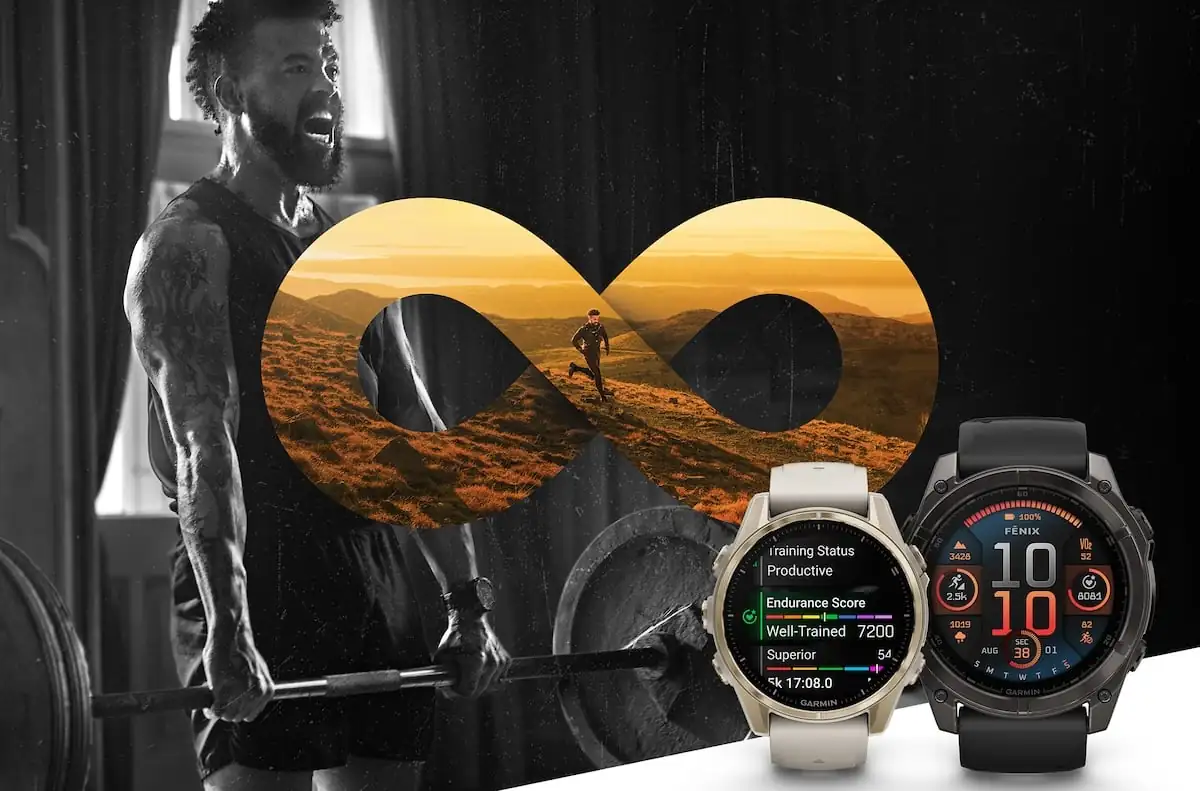
Form factor sets the tone for everything else. The Fenix 8 is a substantial multisport watch — people with smaller wrists genuinely find 47mm-class watches uncomfortable, and it announces itself in a way a fabric band never does. The Whoop 4.0 is screenless: no time, no notifications, no mid-run pace. You check everything in the app afterward, which some athletes find freeing and others find maddening.
Battery life favors Garmin dramatically — up to 29 days in watch mode versus days-not-weeks for Whoop — though heavy GPS use shortens any watch's runtime.
Data focus is the deeper split. Garmin measures the workout itself: GPS pace and routes, Training Load, VO2 Max estimates, and recovery guidance across 40+ sport profiles. Whoop measures what the workout did to you: a daily Strain score, a Recovery score, and journal-based correlations between habits and readiness. Garmin has added recovery analytics over the years, but Whoop's behavioral coaching loop remains its signature strength.
| Whoop 4.0 | Garmin Fenix 8 | |
|---|---|---|
| Screen / GPS | None / None | Yes / Best-in-class |
| Cost model | $24/month membership | $999 one-time |
| Battery | Days | Up to 29 days |
| Core question | "Am I recovered?" | "How was the workout?" |
Both track heart rate optically at the wrist, so expect trend-grade accuracy during high-intensity intervals, not chest-strap precision.
Which Should You Choose?
Choose the Garmin Fenix 8 if you are a runner, cyclist, triathlete, or outdoor adventurer who needs GPS accuracy, on-wrist workout data, and multi-day battery for long efforts. The $999 price only makes sense if you will use the depth — casual users should look at cheaper Garmins or a Fitbit.
Choose Whoop 4.0 if your training is gym-, team-, or class-based, GPS is irrelevant to you, and your real problem is overtraining or under-recovering. Whoop's strain-based coaching is the best tool we know for calibrating effort against readiness.
Choose neither if you mainly want notifications and step counts — an Apple Watch or basic tracker fits better, and if sleep insight is your top priority, an Oura Ring outperforms both.
Be honest about the money: Whoop's $24/month reaches roughly $288 per year indefinitely, while the Fenix 8 is a large one-time hit that you then own outright. Over three to four years the totals converge more than the sticker prices suggest.
Affiliate Disclosure: BetterVitals may earn a commission from purchases made through links in this article, at no additional cost to you. This supports our independent research and analysis. We only recommend products we believe in after thorough evaluation.

Pros & Cons Comparison
Whoop 4.0
Pros
- No-screen distraction-free design
- Advanced strain management
Cons
- Subscription-only, no purchase option
Garmin Fenix 8
Pros
- 29-day battery life
- Built-in HRV status tracking
Cons
- Bulky for everyday wear
Who Should Choose Which?
Whoop 4.0
Best For
- Athletes training 4+ days per week who want strain-based load management
- Fitness enthusiasts seeking data-driven recovery guidance
- Team sport athletes (Whoop offers team features for coaches)
- Users who want to correlate daily habits with measurable recovery outcomes
Not Ideal For
- Casual users who primarily want step counting or notification display
- Runners and cyclists who need built-in GPS for pace and route tracking
- Budget-conscious users—the $24/month subscription adds up to $288/year
- Sleep-first users (Oura Ring provides more accurate sleep staging)
Garmin Fenix 8
Best For
- Endurance athletes (runners, cyclists, triathletes) who need best-in-class GPS accuracy
- Outdoor adventurers who need rugged durability and multi-day battery life
- Multisport athletes who train across running, swimming, cycling, and hiking
- Data-driven trainers who want deep analytics (Training Load, VO2 Max, Recovery)
Not Ideal For
- Casual fitness users who want a simple step counter (a Fitbit or basic Garmin is cheaper)
- Users who prioritize smartwatch features over training analytics (Apple Watch is better)
- People with smaller wrists who find 47mm+ watches uncomfortable
- Sleep-first users (Oura Ring provides better sleep data at one-third the price)
Evidence Comparison
Whoop 4.0
Garmin Fenix 8
No evidence data available
Not sure which is right for you?
Take our personalized wearables assessment to get a tailored recommendation based on your needs and preferences.
Frequently Asked Questions
Common questions about this topic
Related Comparisons
See how these products compare to others in the same category