Nutrisense vs Signos: Which Is Better in 2026?
The Verdict
Start with your goal, because these platforms are built for different ones. If your primary aim is weight loss, Signos is the more targeted tool: it carries FDA-cleared weight management claims, uses AI to prompt things like exercise timing in response to your glucose, and explicitly supports people on GLP-1 medications like Ozempic and Wegovy. If your aim is broader — understanding your metabolism, managing blood sugar, building better eating habits with expert help — Nutrisense is the stronger platform, pairing Abbott Libre sensors with registered dietitian consultations that no AI coach fully replaces. Price won't settle it for you: Nutrisense runs $225–399/month and Signos $199–399/month with a 3-month commitment, so both are significant ongoing investments. Our general lean is Nutrisense for most readers, simply because human dietitian guidance is the rarer and more broadly useful asset. But for a goal-oriented dieter — especially one already on a GLP-1 — Signos' narrower focus is a feature, not a limitation.
How They Compare in Practice
The daily experience diverges around coaching style. Nutrisense is conversational and human-paced: you log meals, your registered dietitian reviews the data, and guidance arrives as considered, personalized advice. It feels like working with a professional — thoughtful, accountable, but not instant.
Signos is real-time and machine-paced. Its AI coaching reacts to your glucose as it moves — nudging you toward things like a walk when your levels suggest the timing is right. For weight-loss users this immediacy is the draw: the intervention happens in the moment. It's also the only platform of the two with FDA-cleared weight management claims and explicit GLP-1 medication support, which matters for the growing group monitoring glucose alongside Ozempic, Wegovy, or Mounjaro.
Both are built on established CGM sensor hardware (Nutrisense uses Abbott Libre), so treat readings the same way with either: good for trends and meal responses, not laboratory precision, in non-diabetic use.
On cost and commitment: Nutrisense runs $225–399/month; Signos runs $199–399/month with a 3-month minimum, so a Signos trial realistically totals $600–1,200 before you can walk away. One more honest note that applies to both: many users identify their main food triggers within a few months, after which continuous monitoring hits diminishing returns.
Which Should You Choose?
Choose Signos if weight loss or body composition is your primary goal, you respond well to real-time AI prompts, or you're on a GLP-1 medication and want glucose monitoring built around that context.
Choose Nutrisense if you want a human dietitian interpreting your data, your goals are broader than weight (energy, blood sugar habits, metabolic education), or you're a first-time CGM user who'd benefit from structured expert onboarding.
Think twice about both if you've already identified your food triggers from previous CGM use — continuous monitoring adds less at that stage — or if a multi-hundred-dollar monthly commitment strains the budget, in which case a ~$99/month OTC sensor is the saner experiment.
Both are legitimate, well-built platforms; they've simply specialized differently. Match the tool to the goal — human coaching for broad metabolic health, AI-driven and FDA-cleared programming for weight loss — and you're unlikely to regret either.
Affiliate Disclosure: BetterVitals may earn a commission from purchases made through links in this article, at no additional cost to you. This supports our independent research and analysis. We only recommend products we believe in after thorough evaluation.

Pros & Cons Comparison
Nutrisense
Pros
- 1:1 dietitian included
- Integrates with Oura and Garmin
Cons
- Coaching quality varies by dietitian
Signos
Pros
- RD access included in subscription
- Weight loss focused algorithms
Cons
- Less suited for performance athletes
Who Should Choose Which?
Nutrisense
Best For
- First-time CGM users who want professional guidance interpreting glucose data
- People who prefer structured nutrition coaching over self-directed data analysis
- Users with specific dietary goals (weight management, blood sugar optimization) who benefit from expert accountability
- Those who want an all-inclusive package with sensors and dietitian in one subscription
Not Ideal For
- Experienced biohackers who prefer self-directed data exploration (Levels offers better software tools)
- Budget-conscious users — monthly costs of $225–399 add up quickly over multiple months
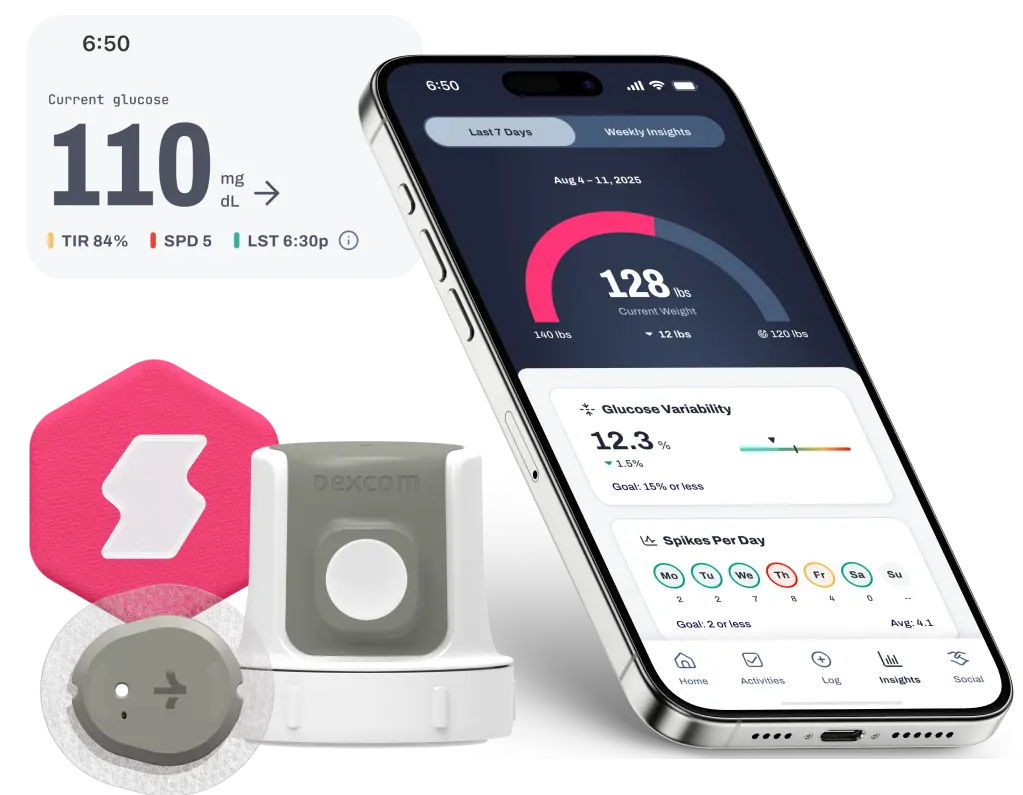
- People who only want raw glucose data without coaching (Dexcom Stelo is $99/mo)
- Users seeking a weight-loss-specific program with AI exercise timing (Signos is more targeted)
Signos
Best For
- Users whose primary goal is weight loss and body composition improvement
- People on GLP-1 medications (Ozempic, Wegovy, Mounjaro) who want glucose monitoring support
- Goal-oriented individuals who respond well to AI-driven coaching and real-time exercise prompts
- Those who want an FDA-cleared weight management tool backed by glucose data
Not Ideal For
- Users seeking broad metabolic education beyond weight loss (Levels is more comprehensive)
- People who prefer human dietitian guidance over AI coaching (Nutrisense includes an RD)
- Budget-conscious users — 3-month commitment at $199–399/mo totals $600–1,200
- Those who have already identified their food triggers and no longer need continuous monitoring
Not sure which is right for you?
Take our personalized metabolic assessment to get a tailored recommendation based on your needs and preferences.
Frequently Asked Questions
Common questions about this topic
Related Comparisons
See how these products compare to others in the same category